Cognitive Development Adding Up to 5 Worksheets for Ages 3-8 - Page 4
95 filtered results
-
From - To
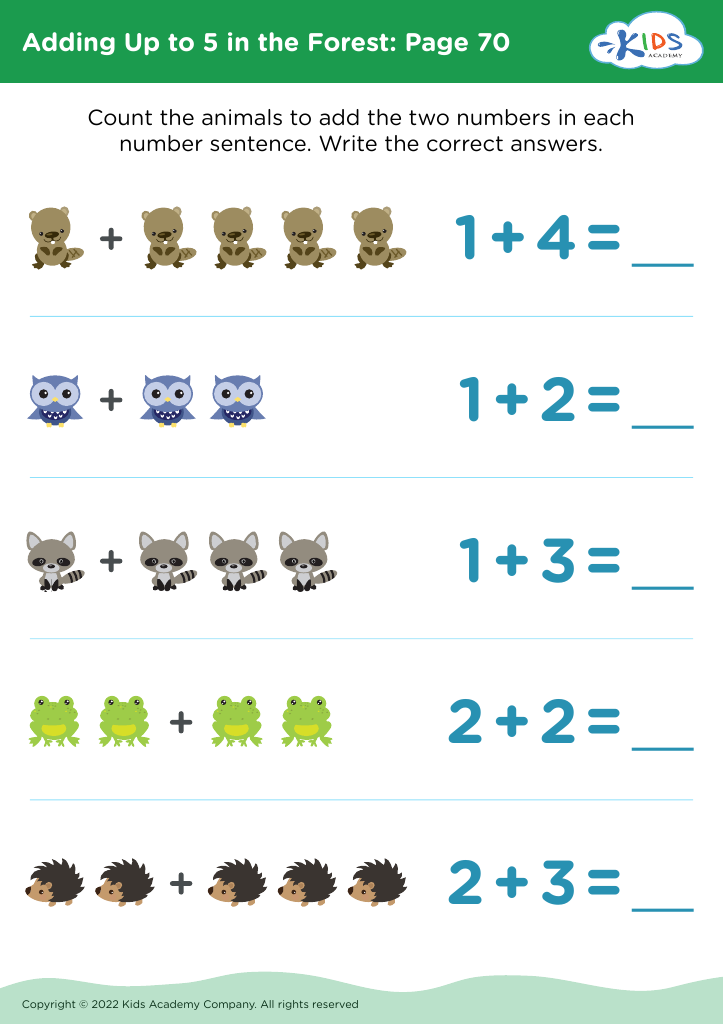
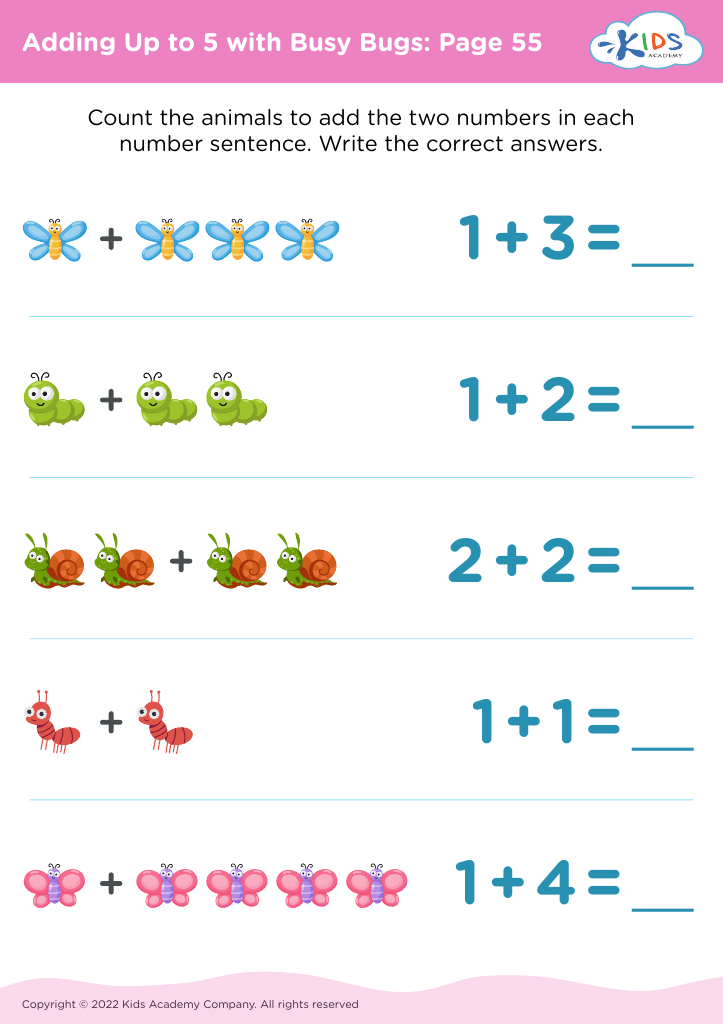
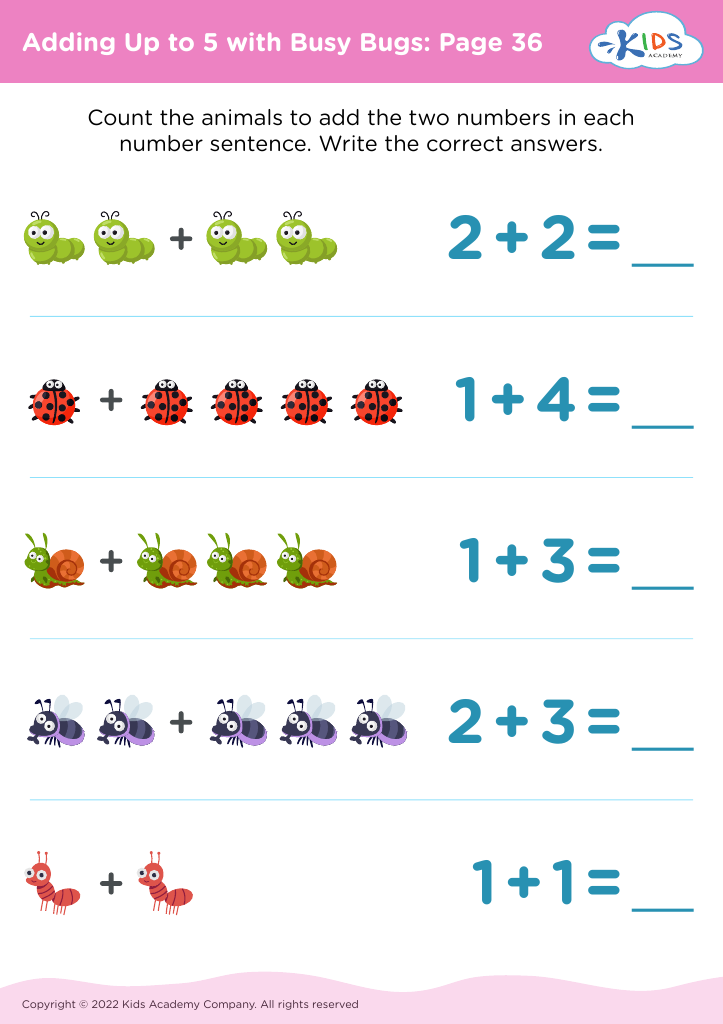
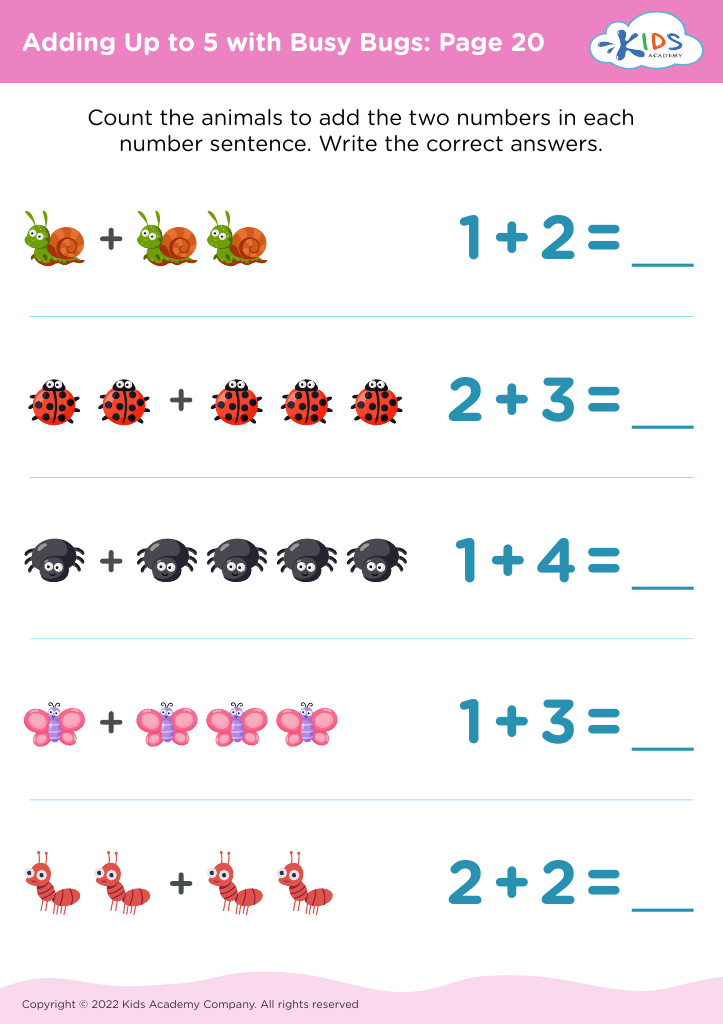
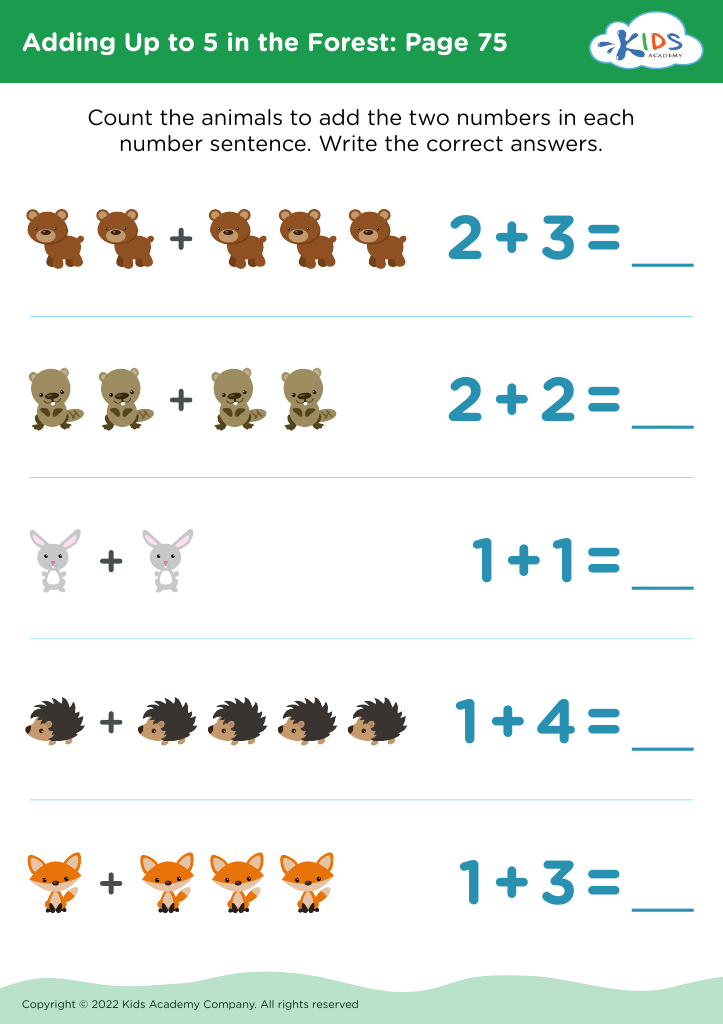
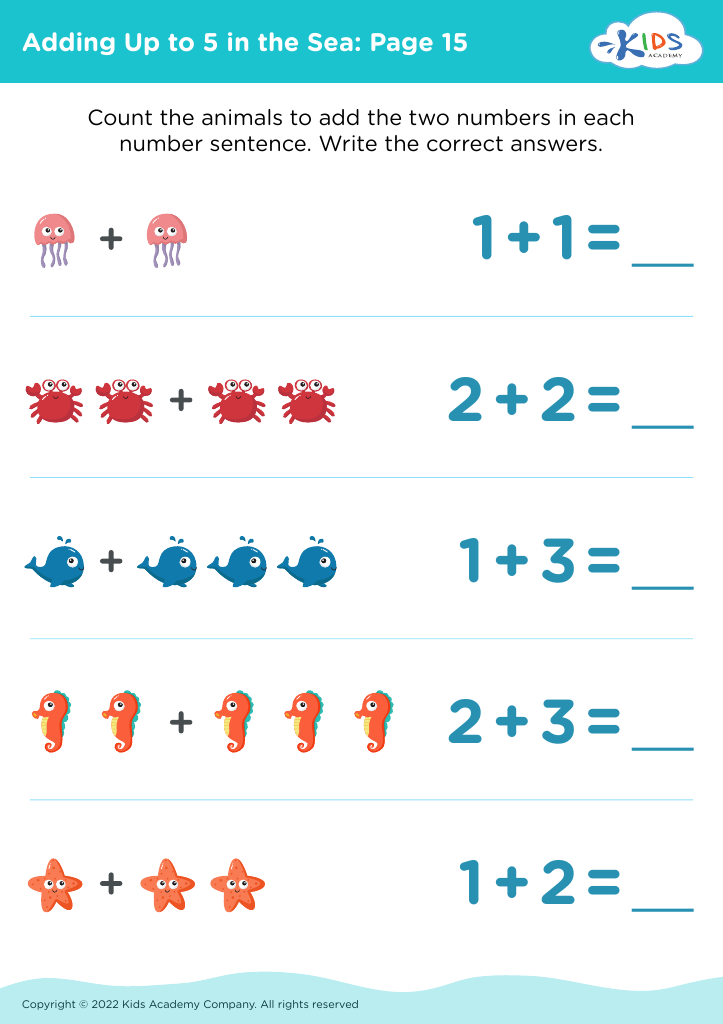
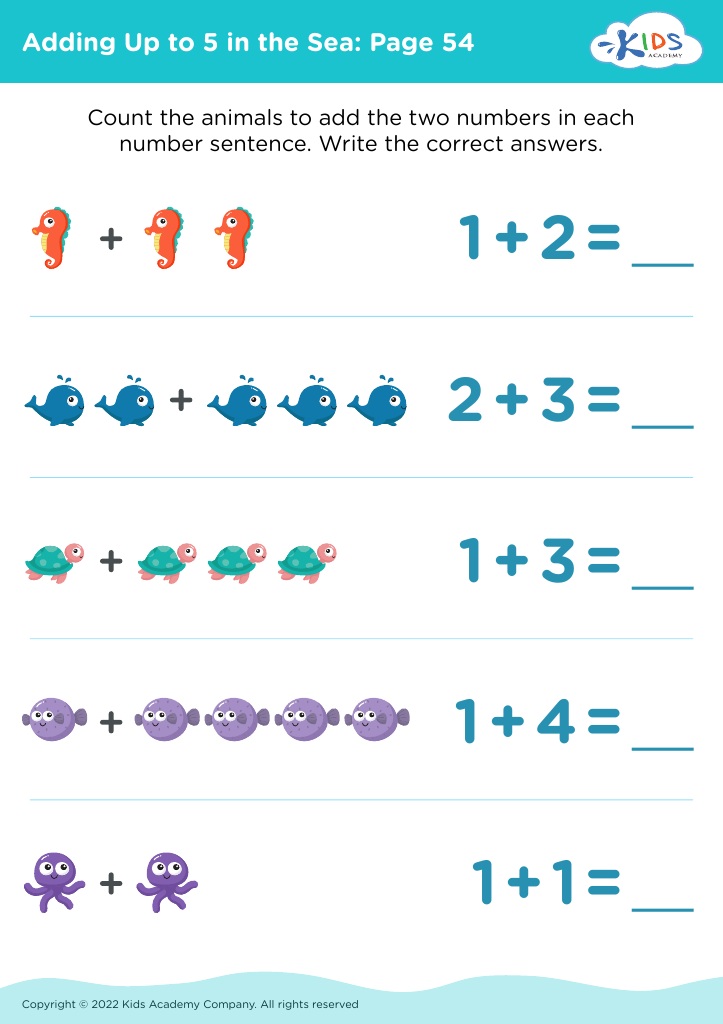
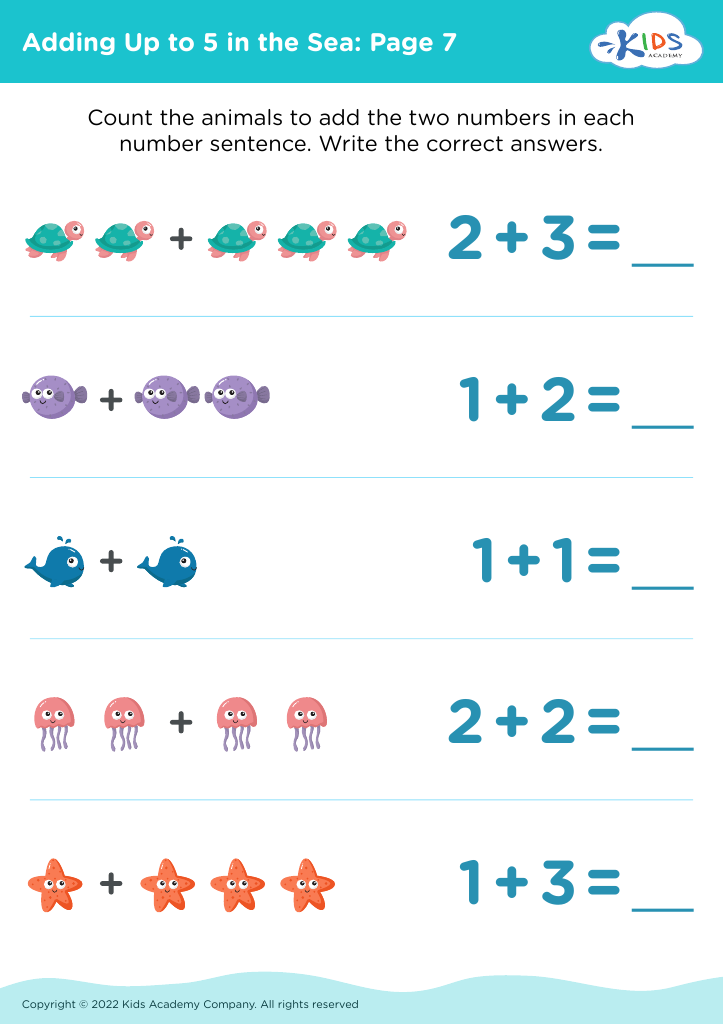
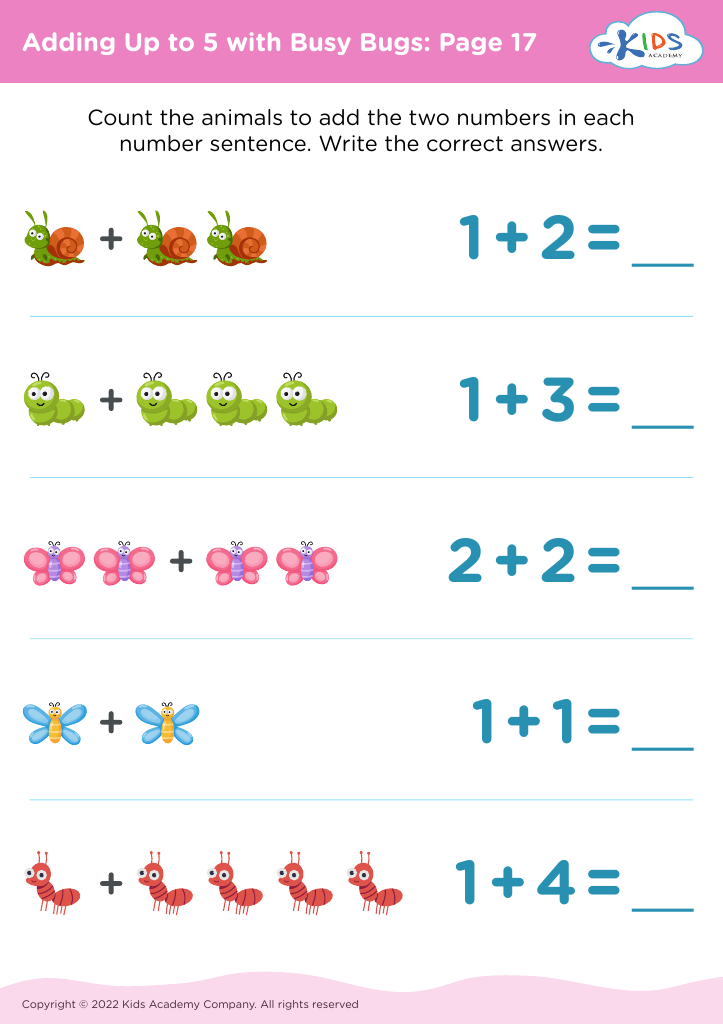
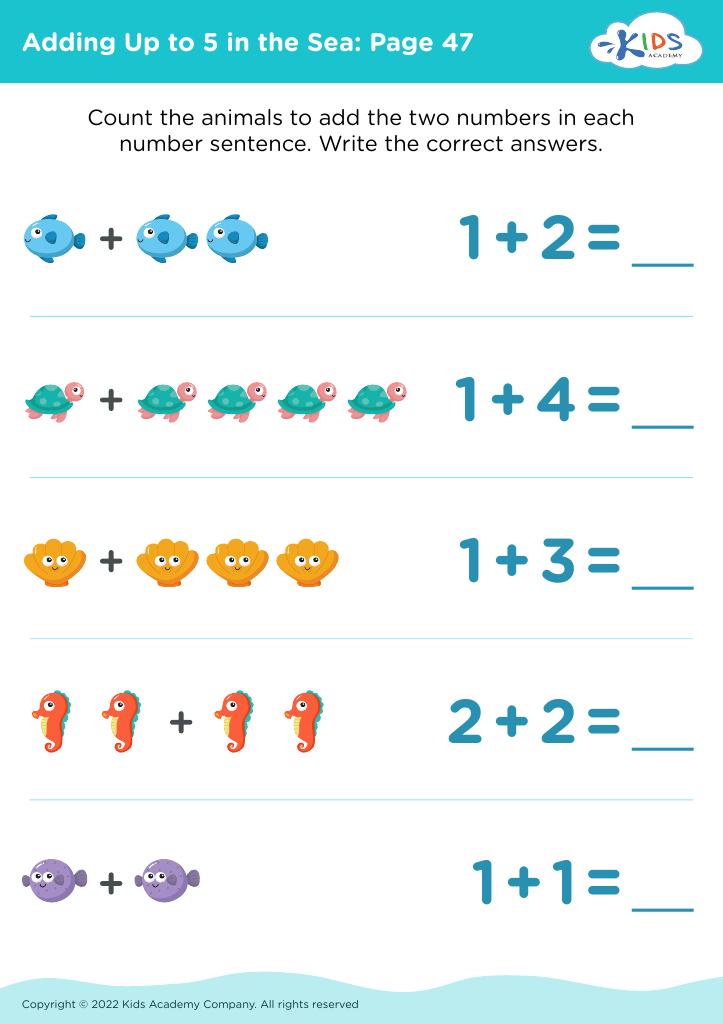
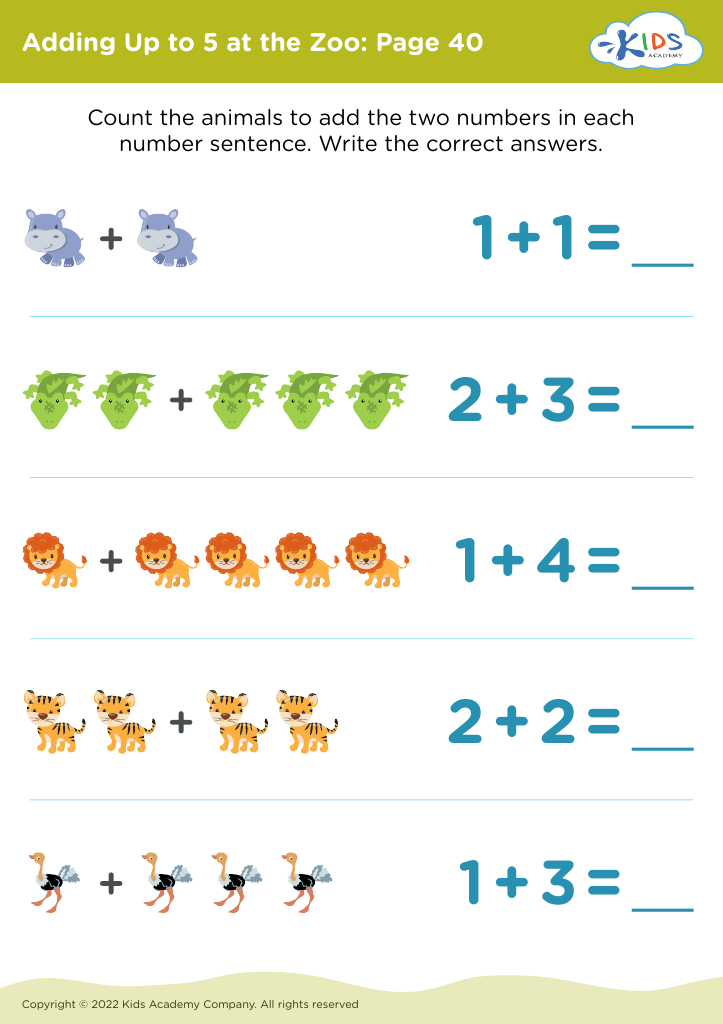
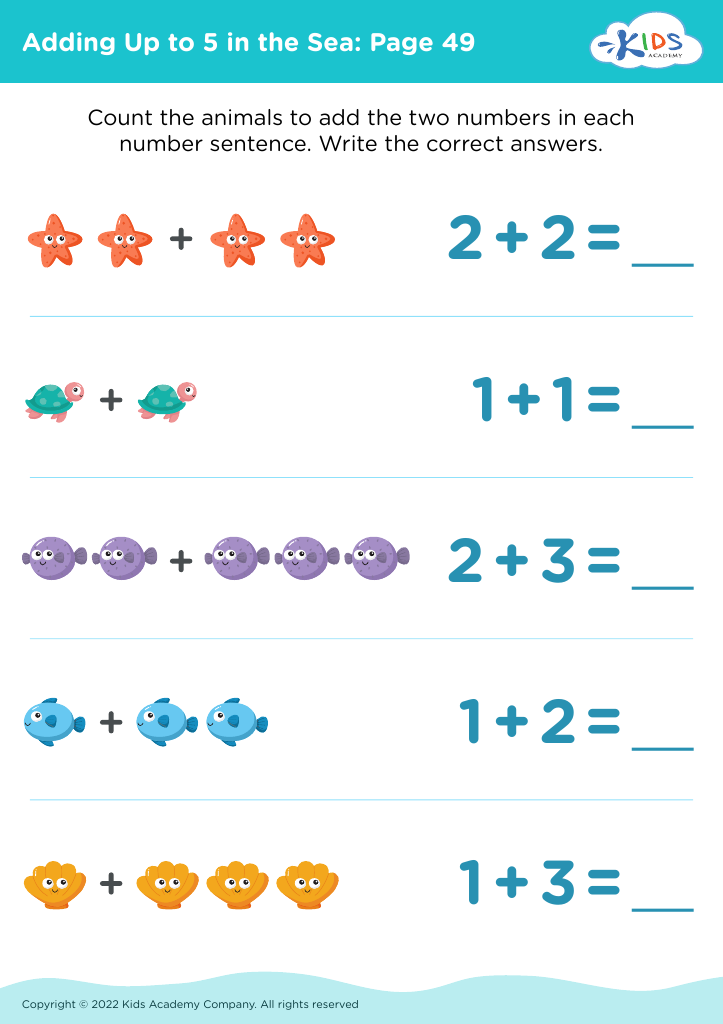
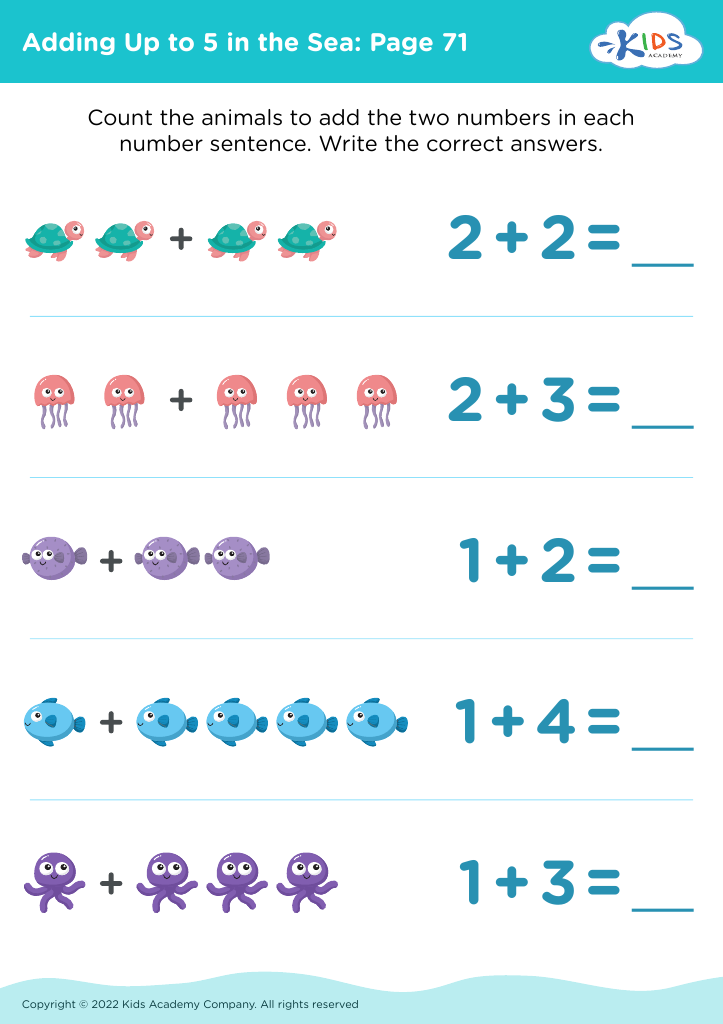
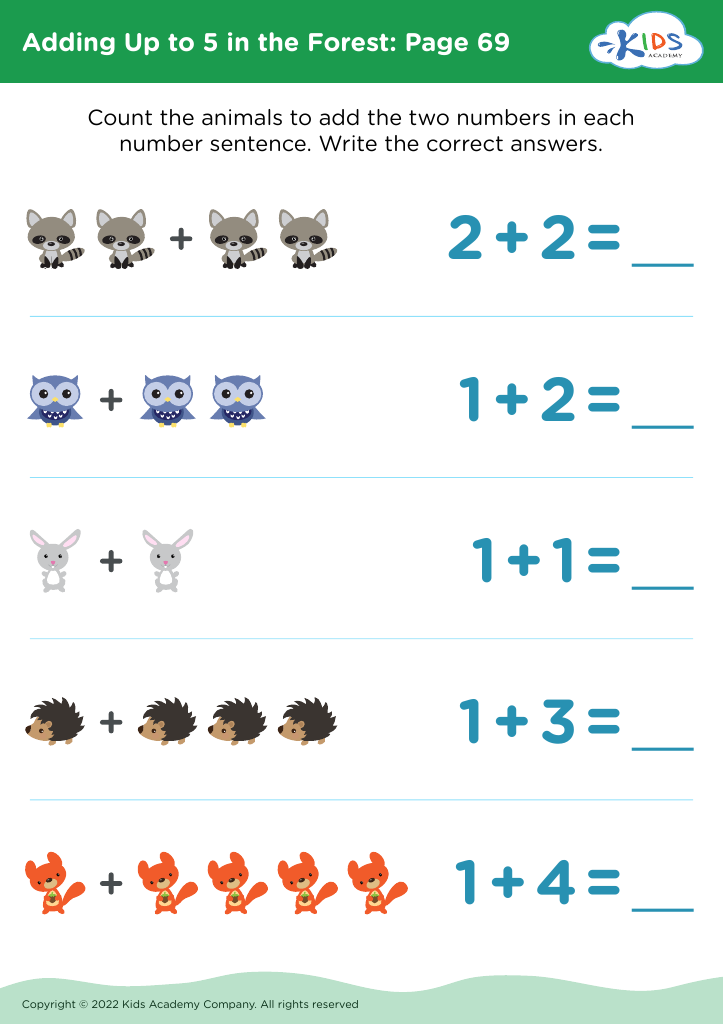
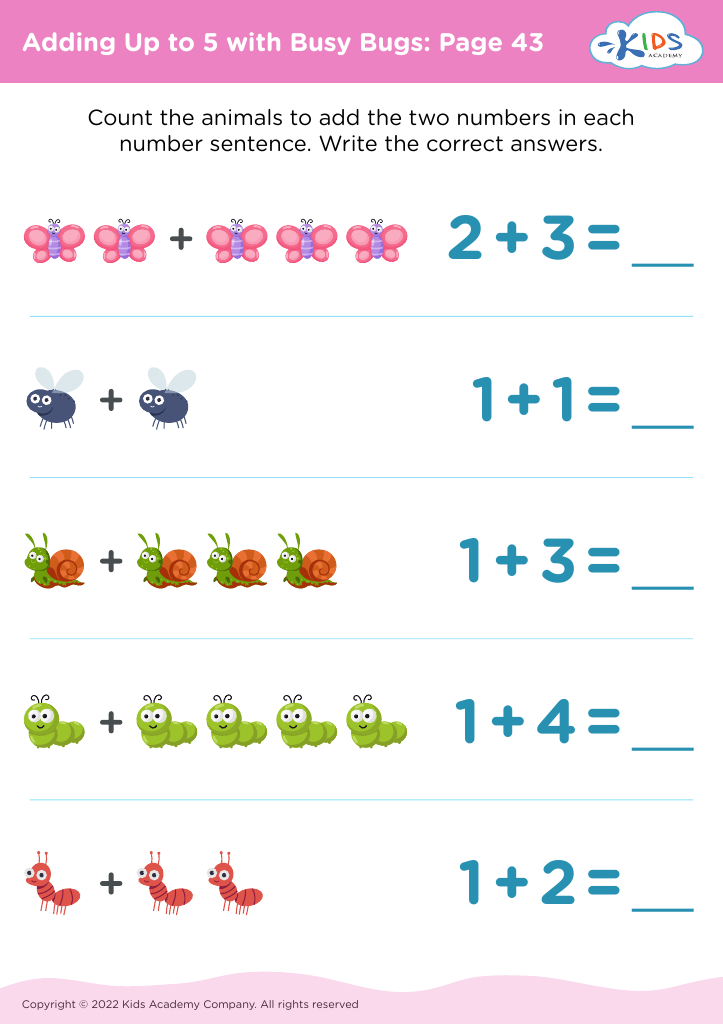
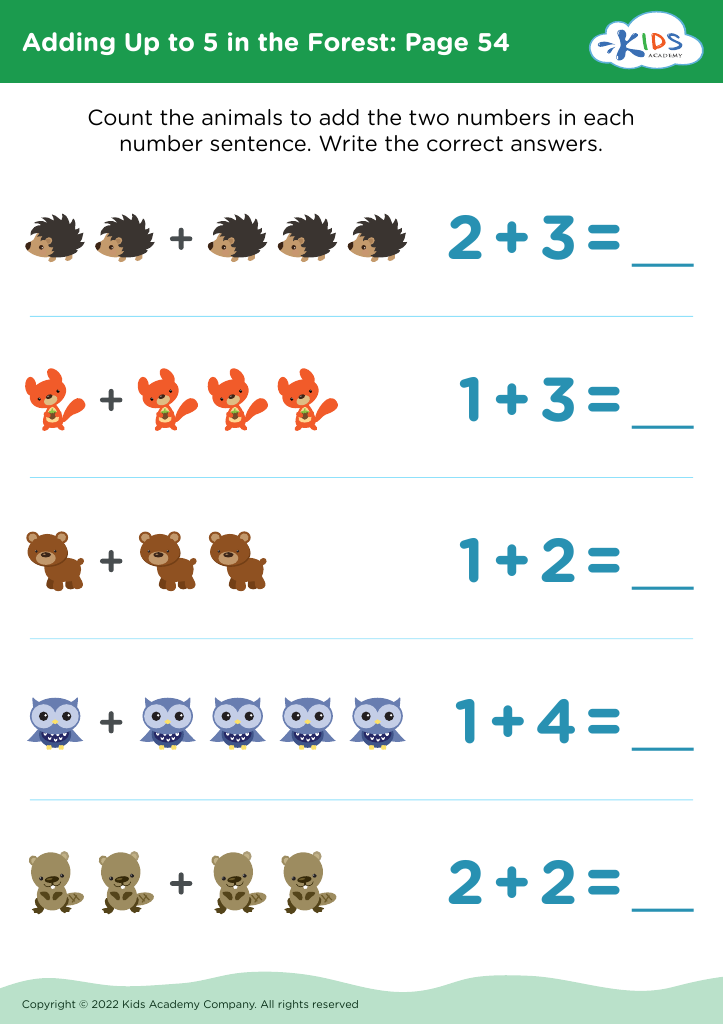
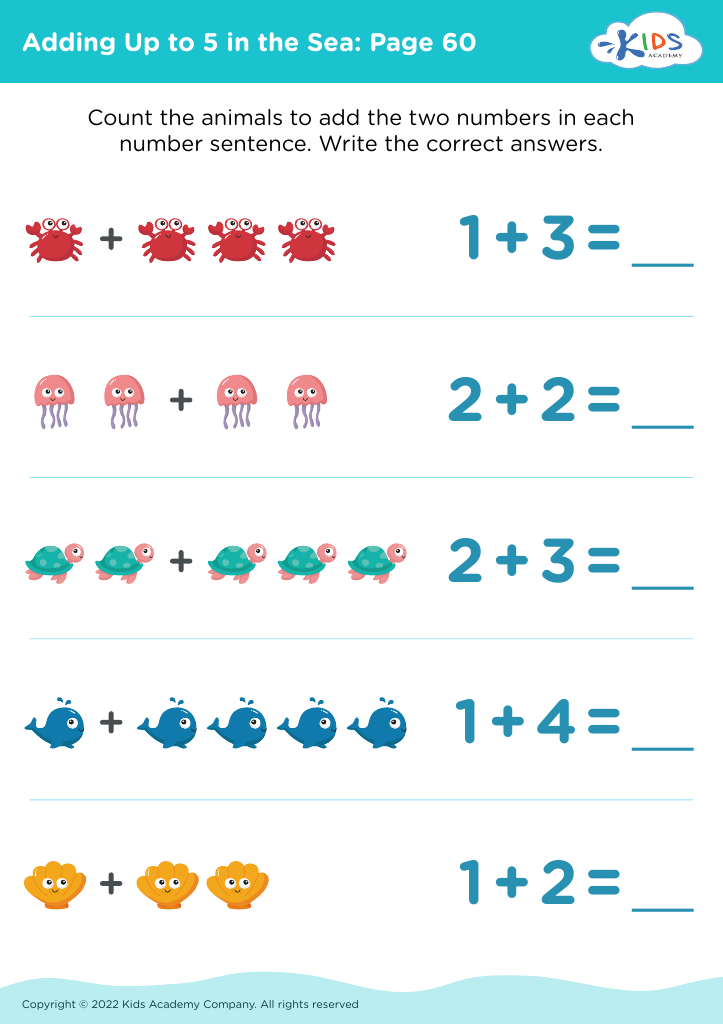
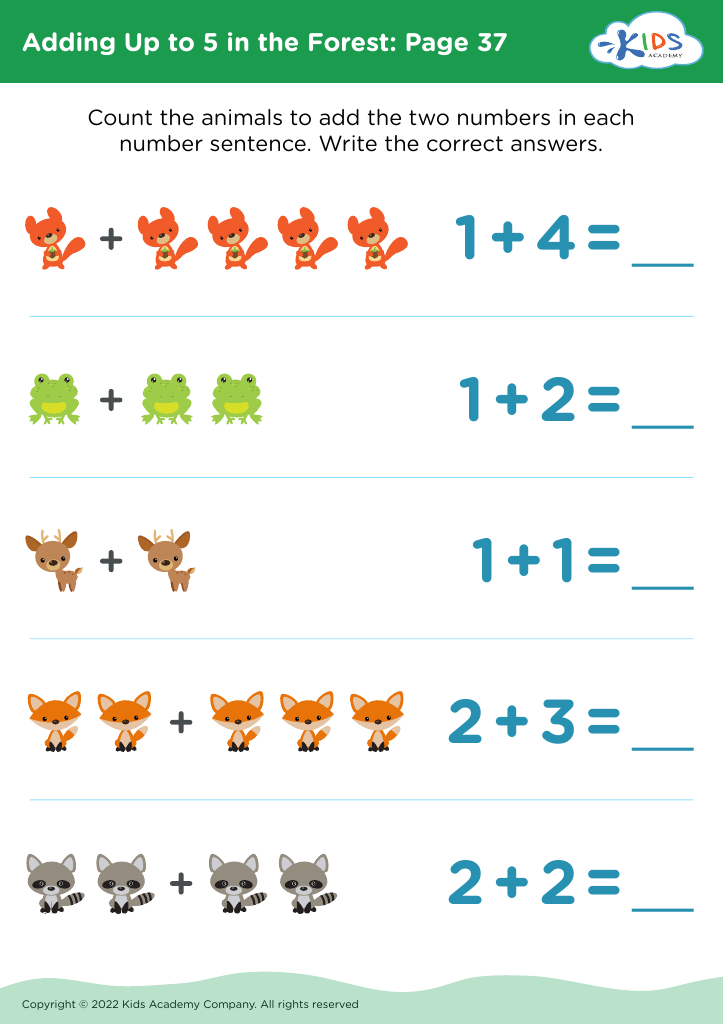
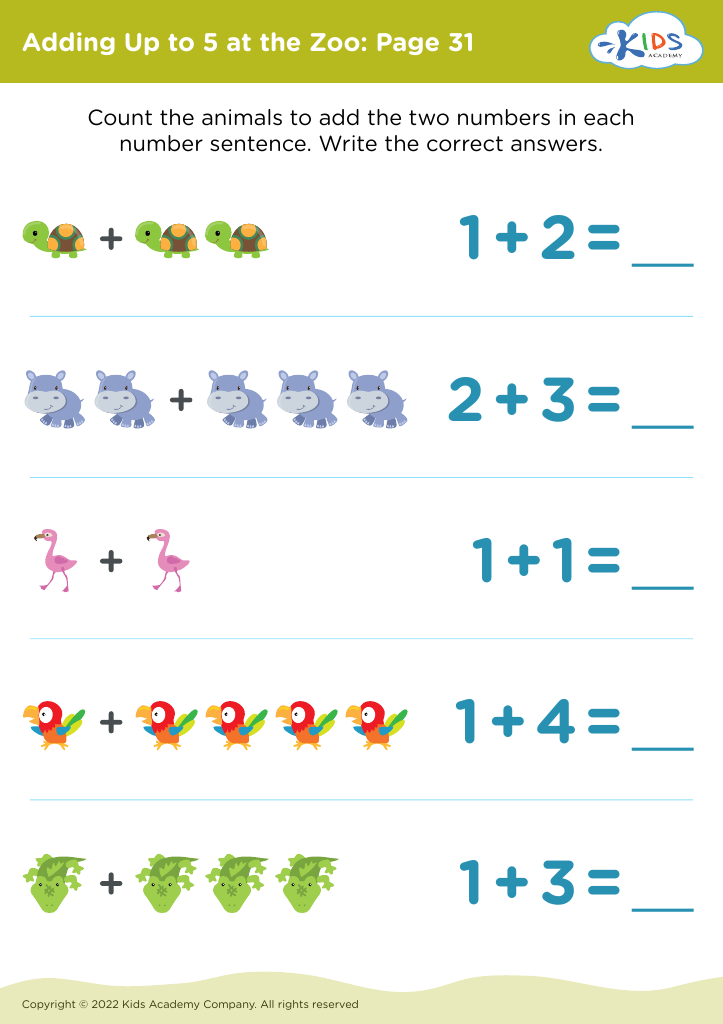
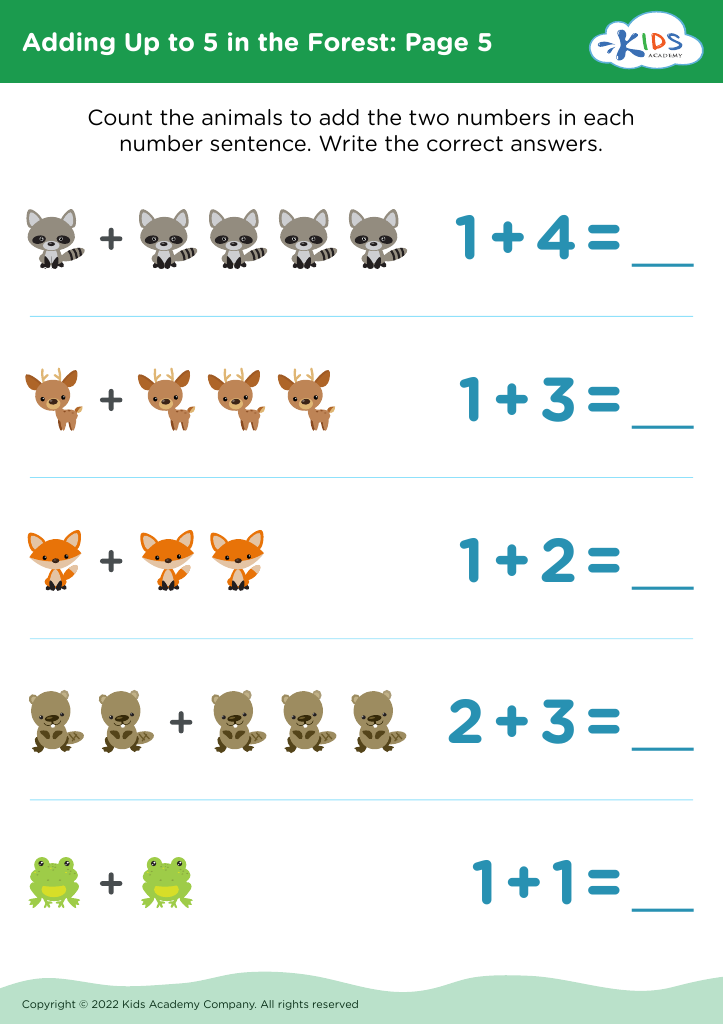
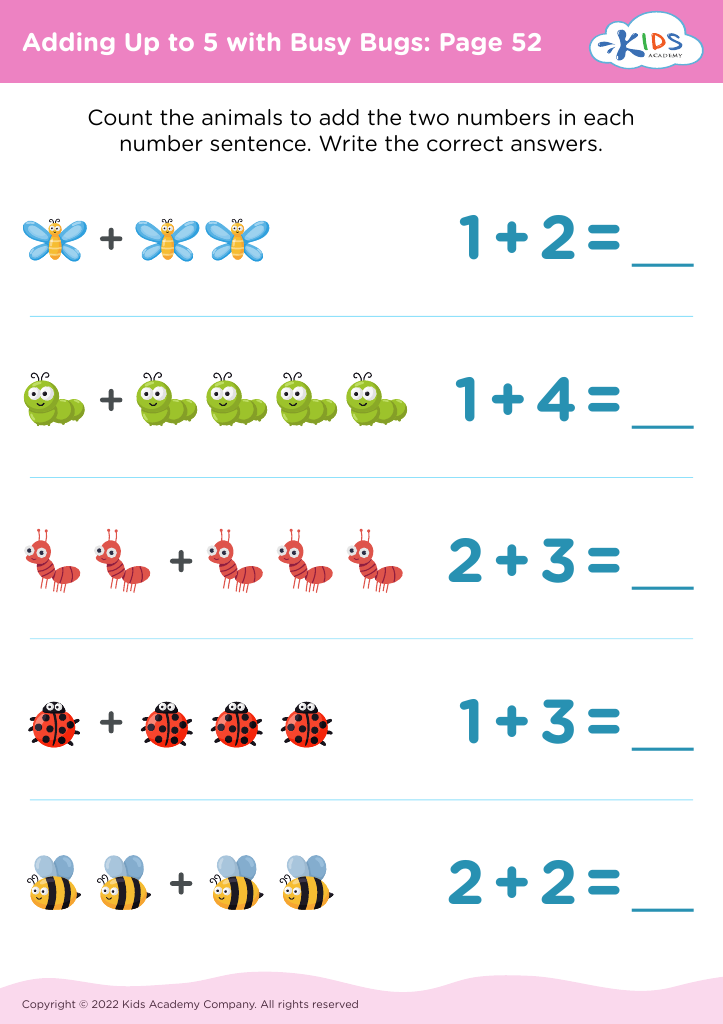
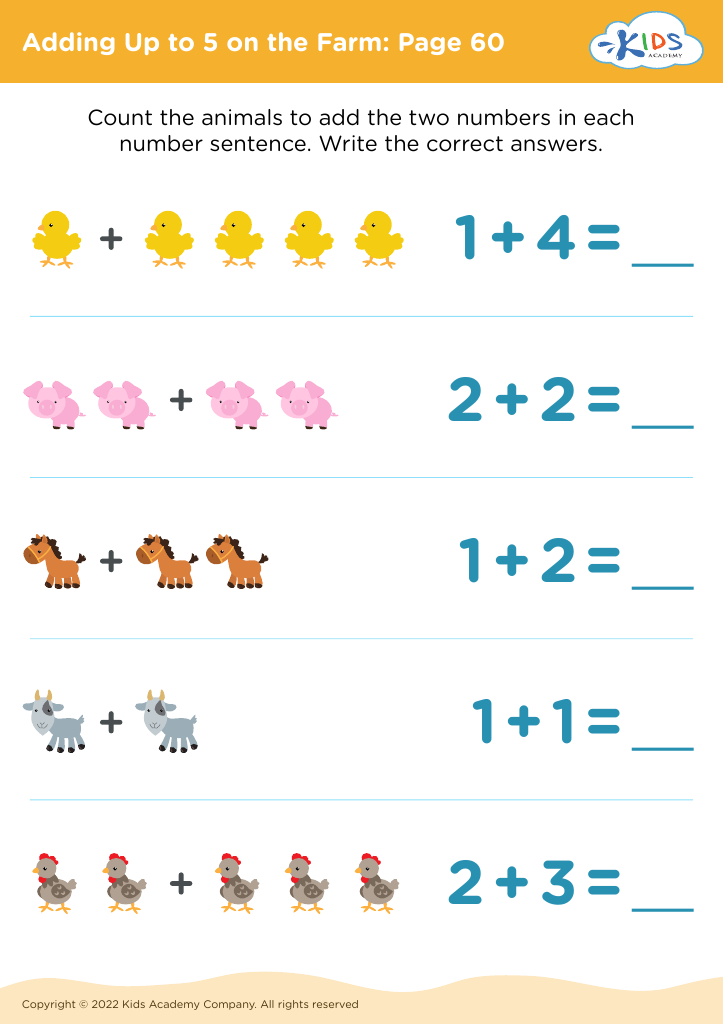
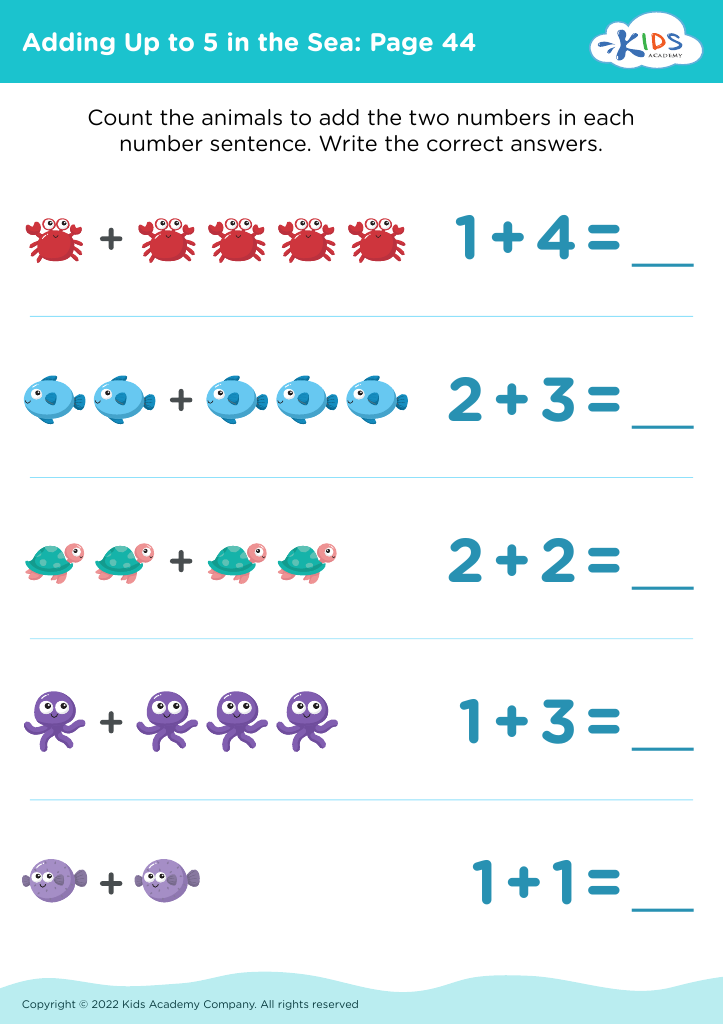








Cognitive development in early childhood is crucial as it lays the foundation for future learning and problem-solving skills. Focusing on adding up to 5 for children aged 3-8 is particularly significant, as it promotes early mathematical understanding, which is essential for academic success. During these formative years, children's brains are highly adaptable, meaning that exposure to math concepts can enhance their ability to analyze, compare, and think critically.
Parents and teachers should care about cognitive development in this area because it fosters a more profound understanding of numbers and quantities. Mastering simple addition not only helps children perform basic math but also nurtures their confidence in addressing more complex problems later on. Engaging activities like counting objects, using play, or integrating math games help make learning enjoyable, further stimulating cognitive growth.
Additionally, early numerical comprehension builds essential life skills such as budgeting, problem-solving, and logical reasoning. By prioritizing cognitive milestones like adding up to 5, educators and parents equip children with the tools necessary for lifelong learning. This foundational knowledge sets the stage for a positive attitude toward education and prepares children for more advanced mathematical concepts as they progress in their schooling.








