Hand-eye Coordination Adding Up to 5 Worksheets for Ages 3-8
15 filtered results
-
From - To
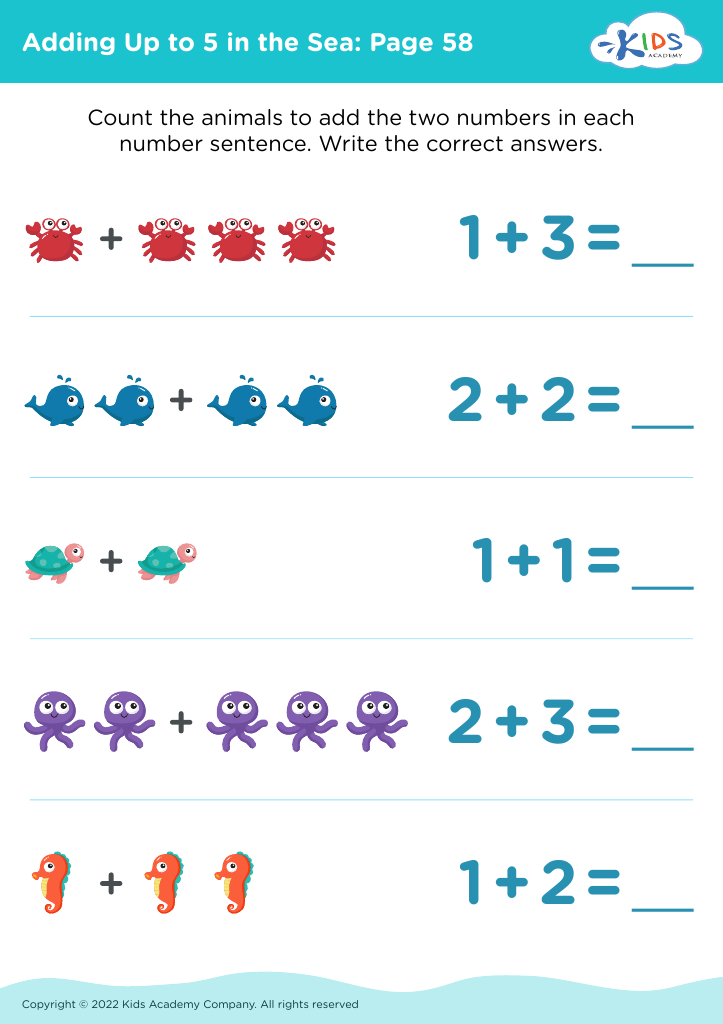
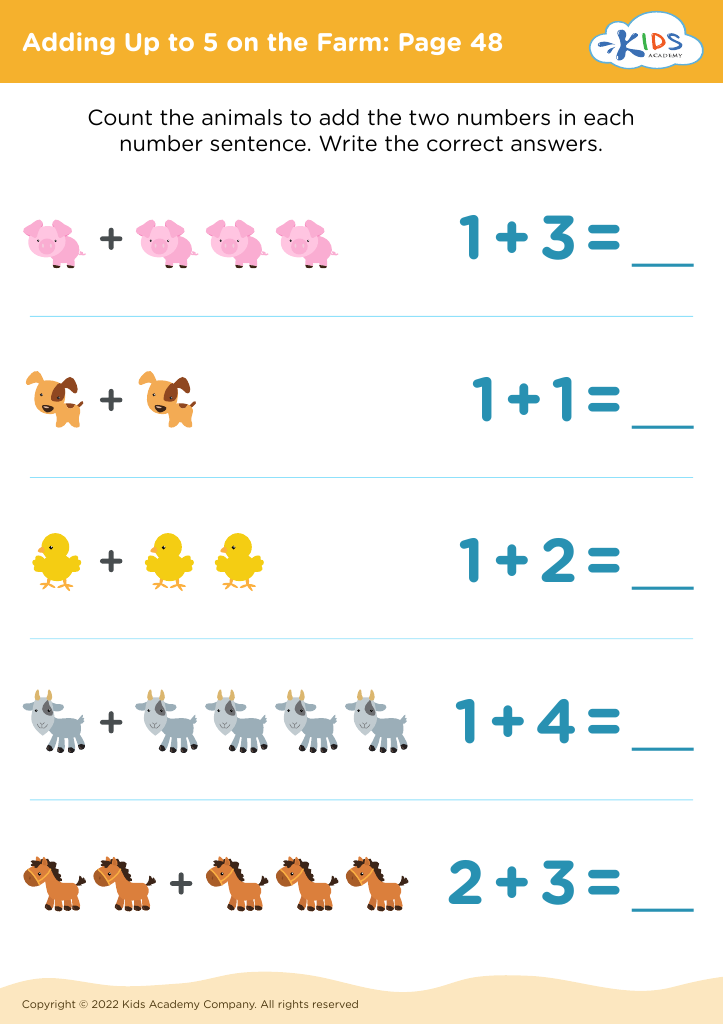
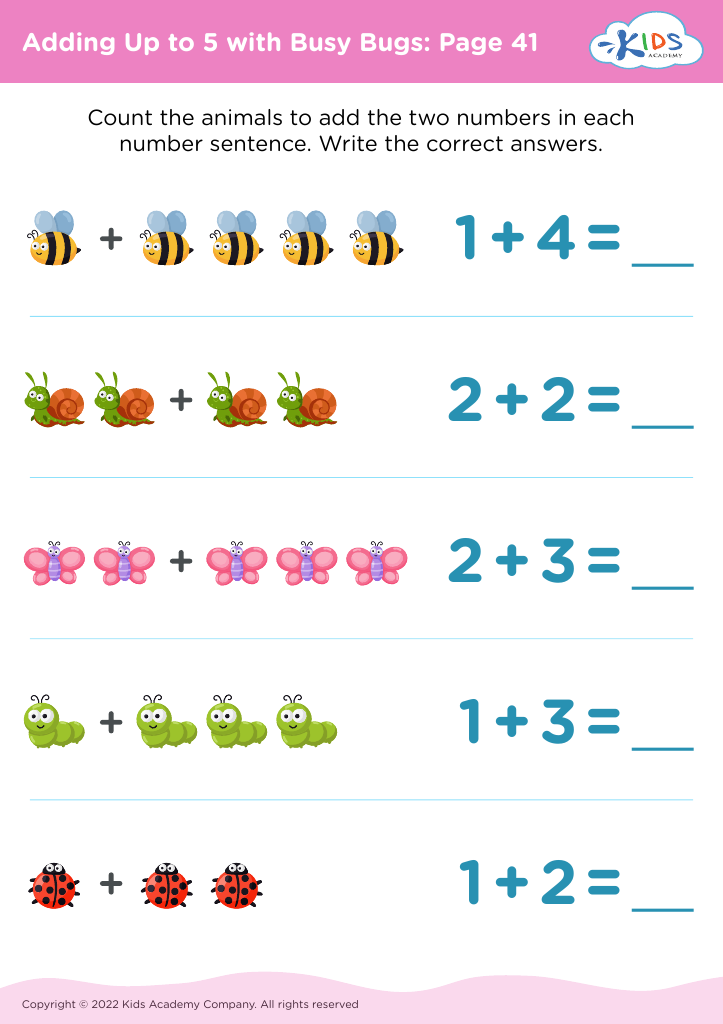
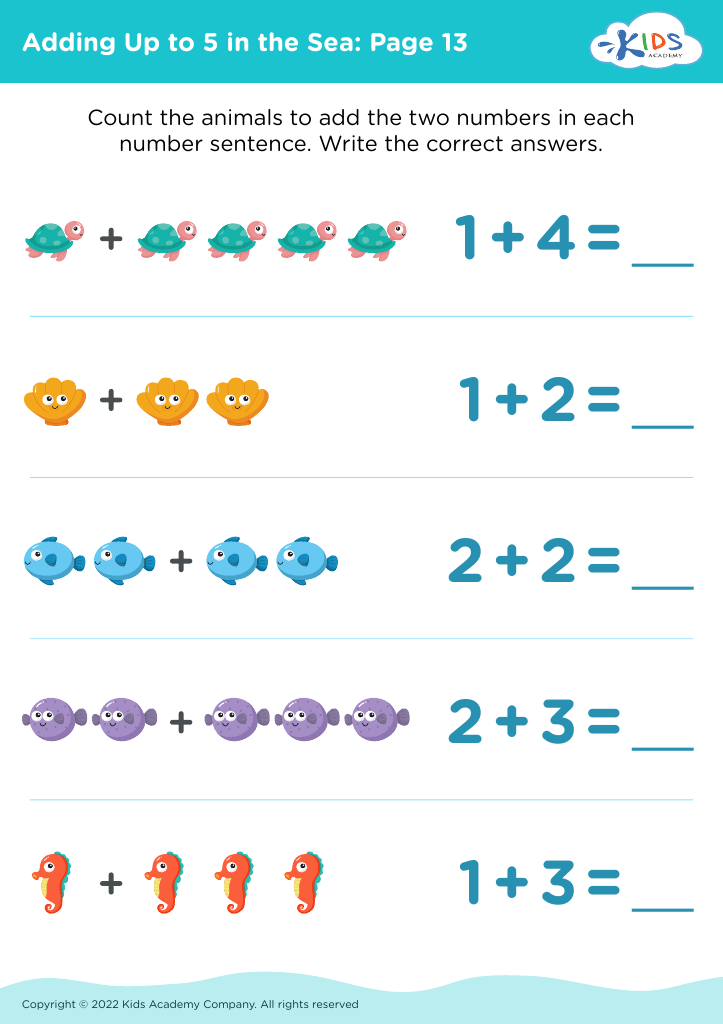
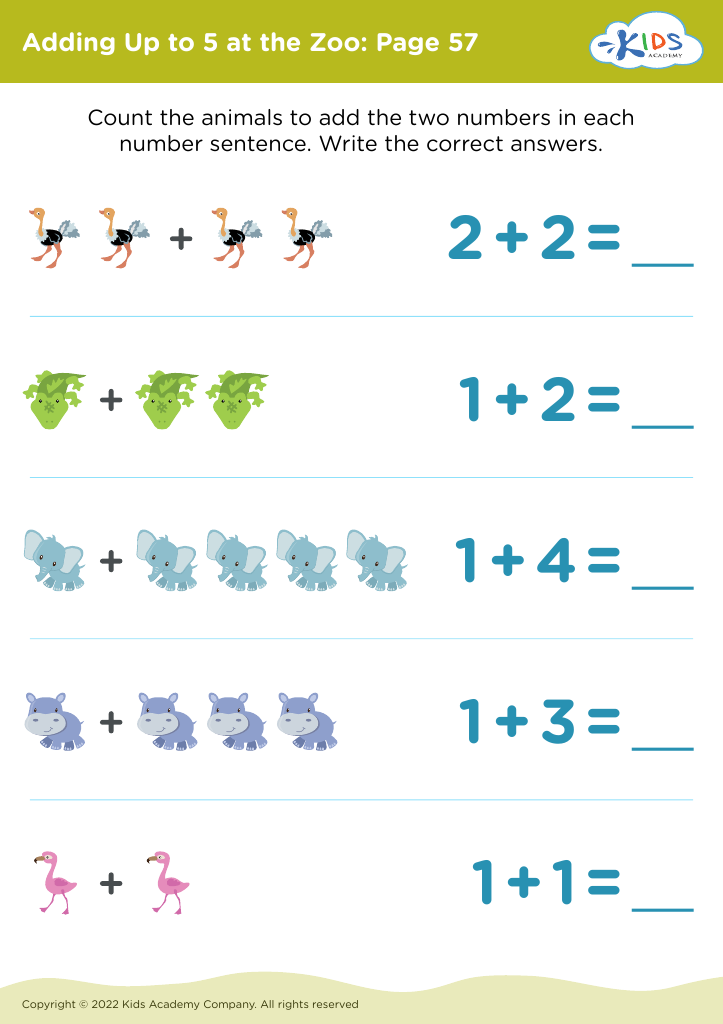
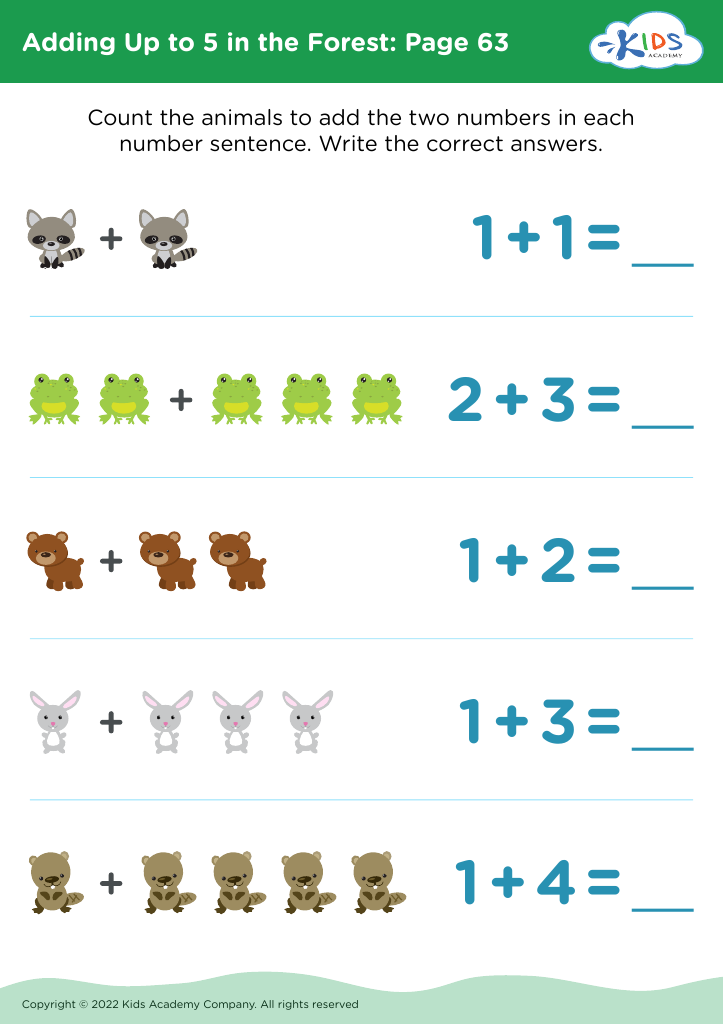
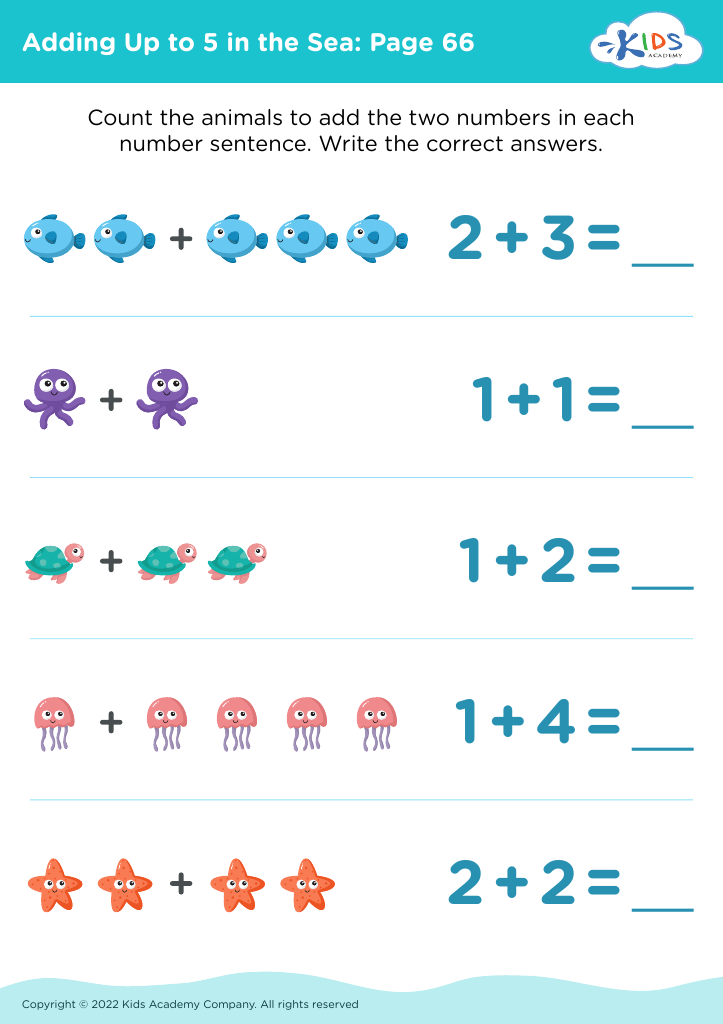
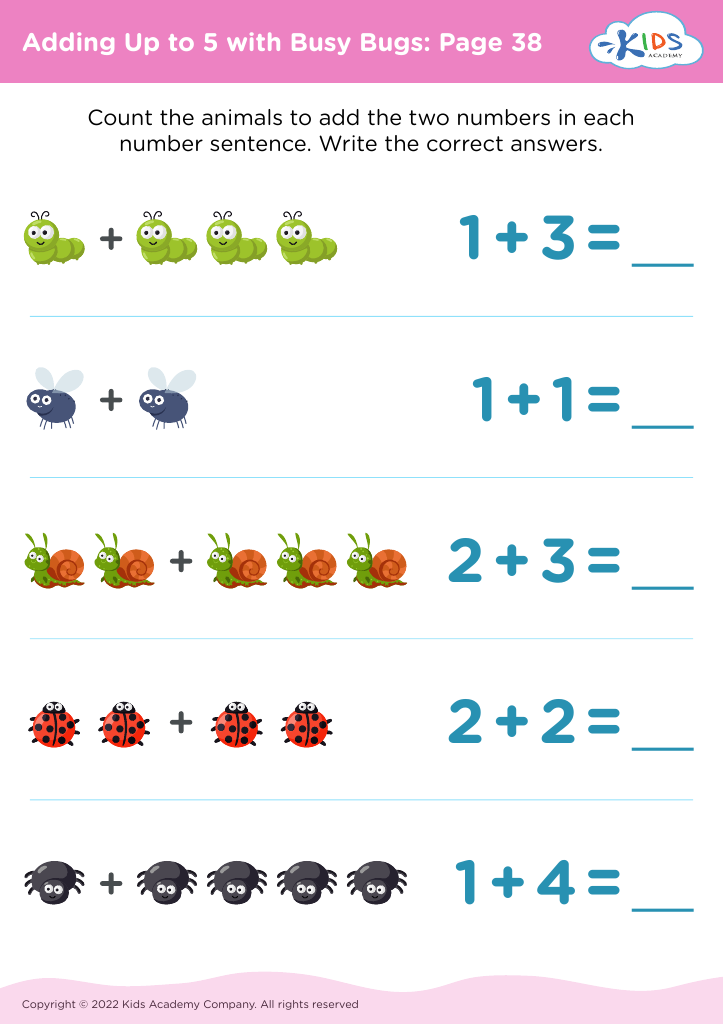
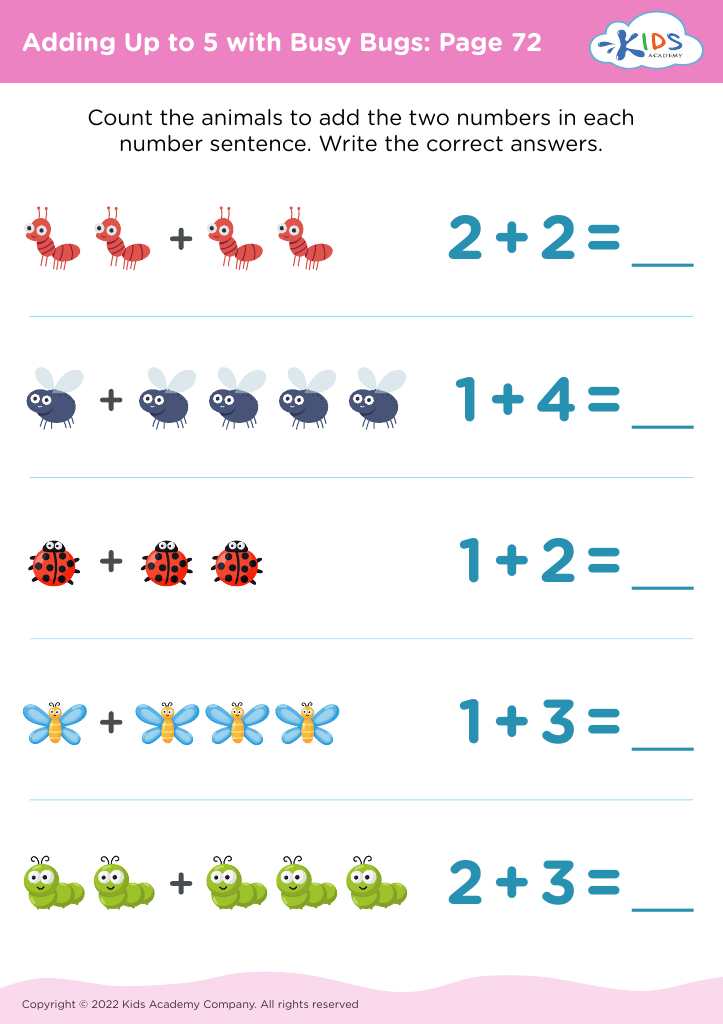
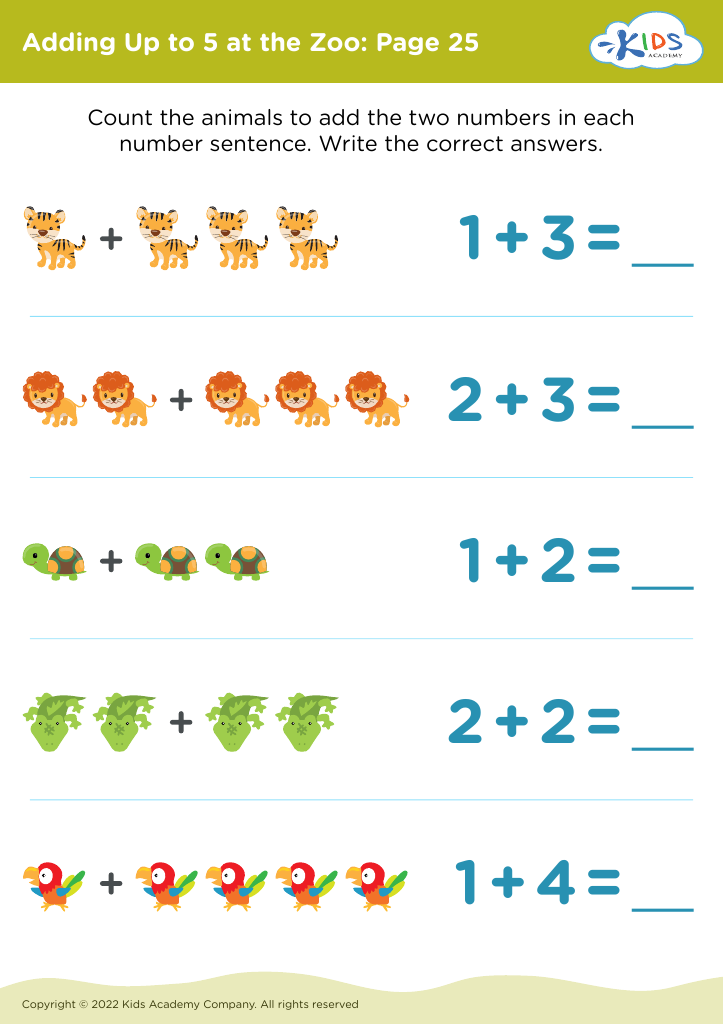
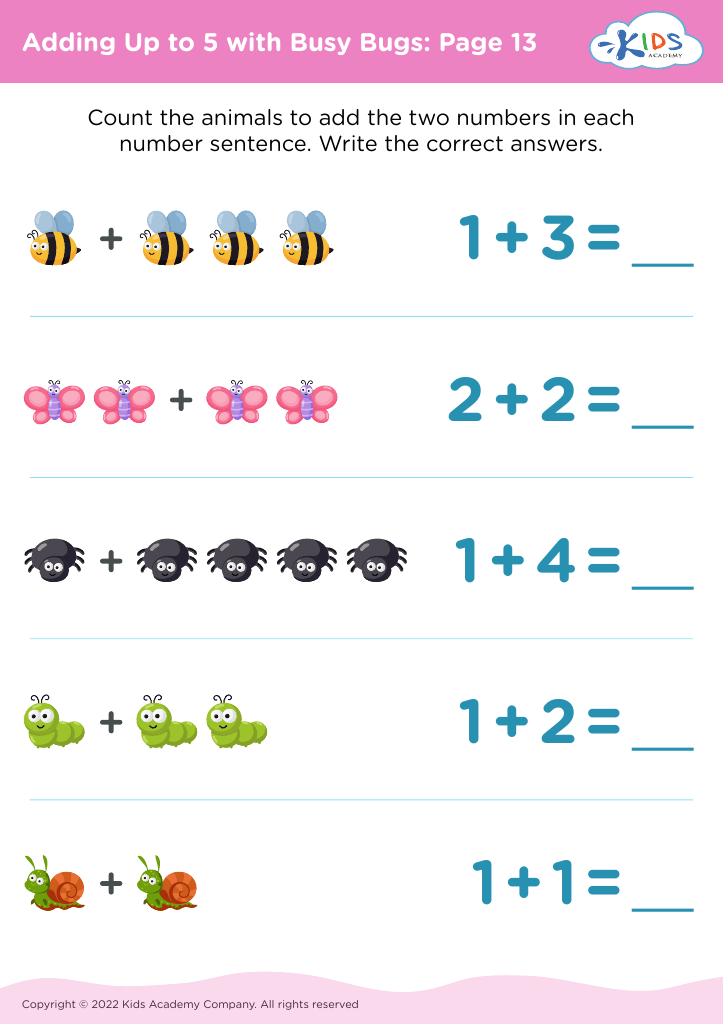
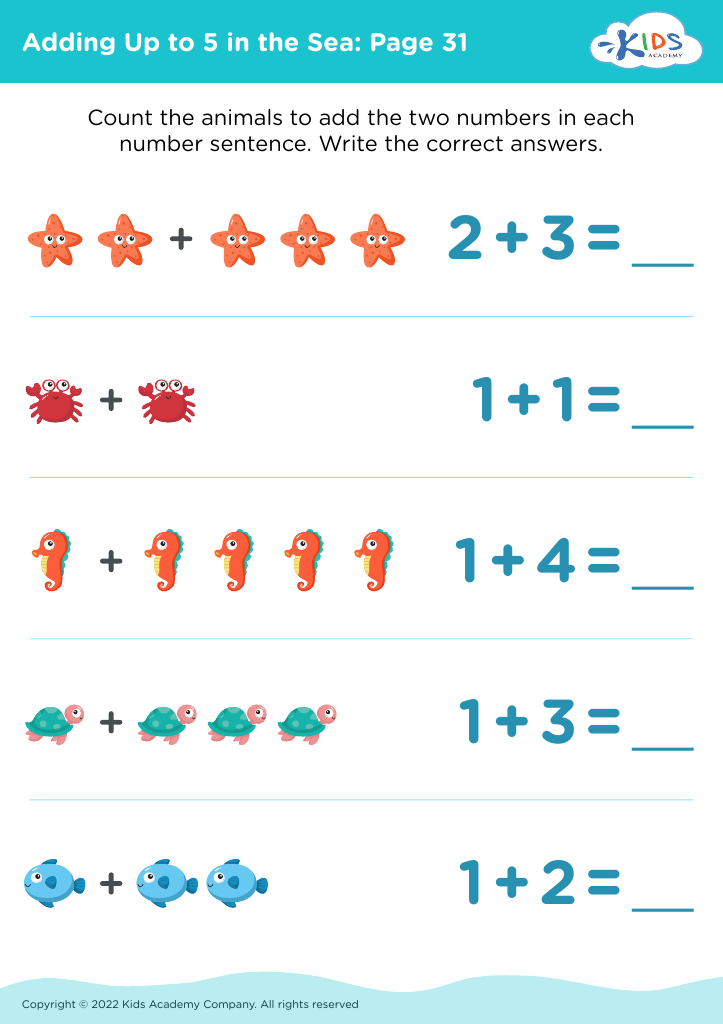
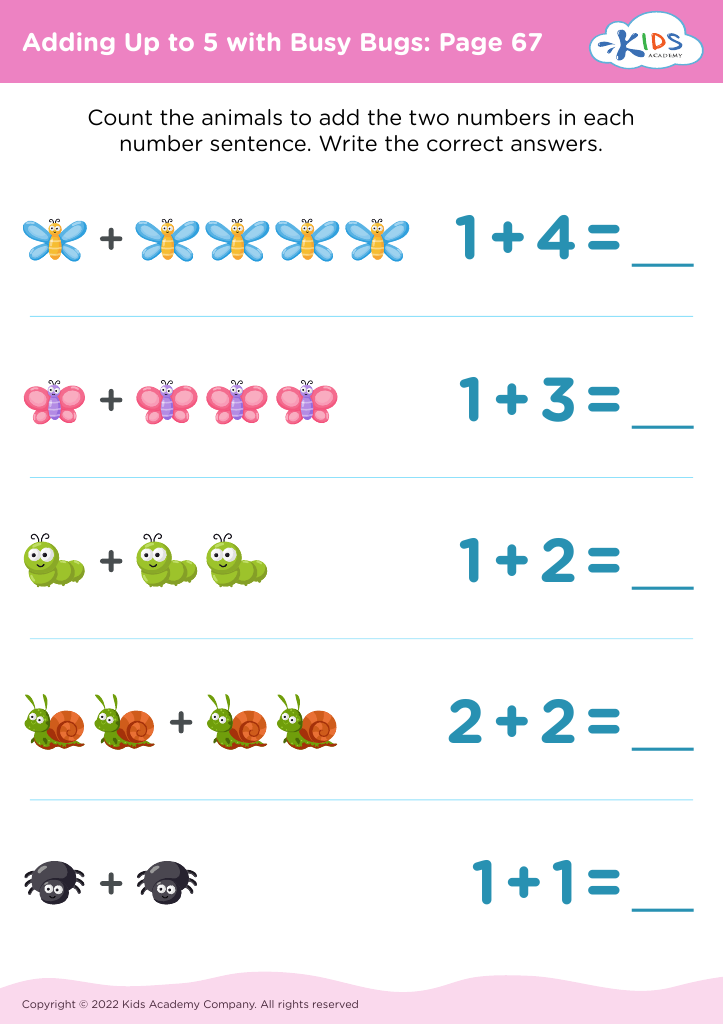
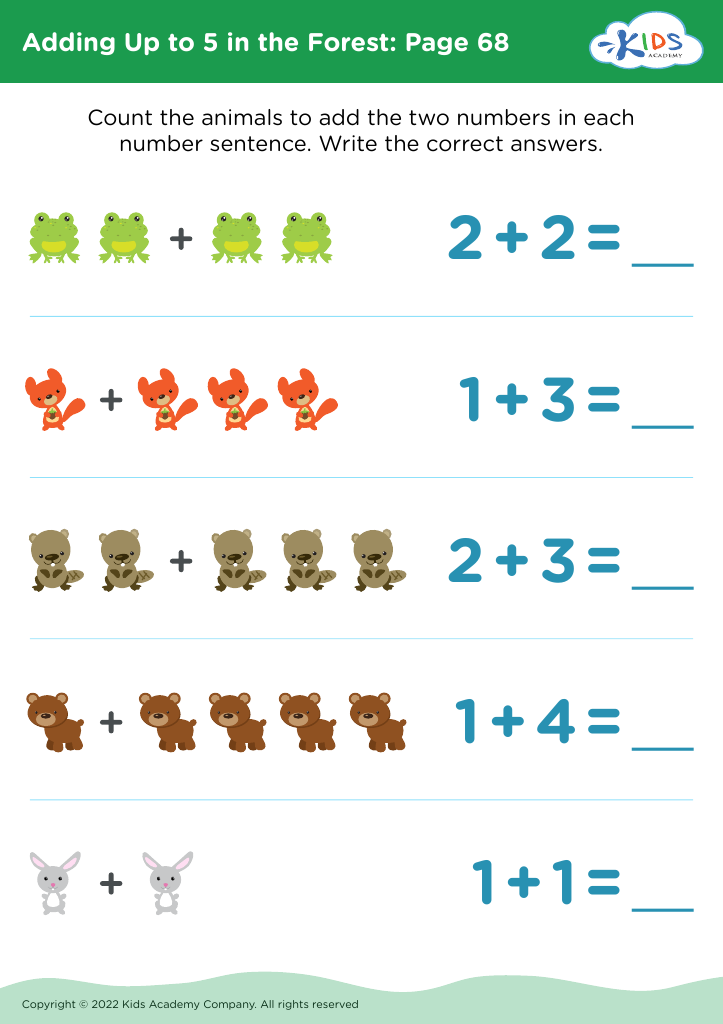
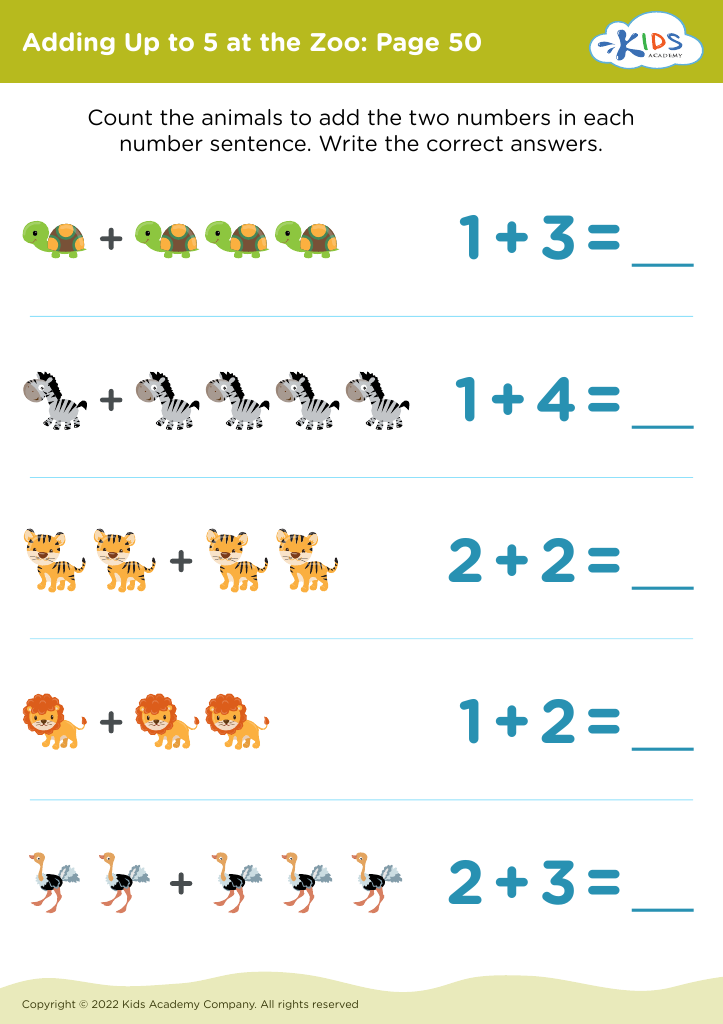
Enhance your child's hand-eye coordination while introducing them to basic math with our "Adding Up to 5" worksheets designed for ages 3-8. These engaging worksheets combine fun activities with essential skills, helping little learners develop their fine motor abilities as they practice counting and simple addition. Each worksheet is tailored to encourage both math comprehension and hand-eye coordination, allowing children to connect physical movement with cognitive learning. Perfect for classroom or home use, these worksheets make learning interactive and enjoyable. Foster a love for math and skills that support overall development with our dynamic and printable resources!




%20(1).jpg)

.jpg)

Hand-eye coordination is a fundamental skill that greatly impacts a child's development, particularly in ages 3-8. During these formative years, children are e xploring their environment, developing fine motor skills, and engaging in activities that require coordination between visual input and physical movement. Enhancing hand-eye coordination contributes to a child’s ability to perform tasks such as writing, drawing, and manipulating objects, which are essential throughout their educational journey.
One vital area where this skill applies is in early math concepts, like adding up to 5. When children practice counting and simple addition using physical objects (like blocks or fingers), they simultaneously refine their hand-eye coordination. This not only makes learning engaging but also helps in grasping foundational math concepts in a tactile way.
Parents and teachers should prioritize activities that promote hand-eye coordination, as these skills will assist in academic achievement and everyday tasks. By integrating fun games and learning tools into playtime, educators and caregivers can foster both cognitive and motor skills. Ultimately, strong hand-eye coordination sets the stage for a child’s confidence and success in various activities, laying a solid foundation for their future learning experiences.








