Improve concentration Adding Up to 5 Worksheets for Ages 3-8
7 filtered results
-
From - To
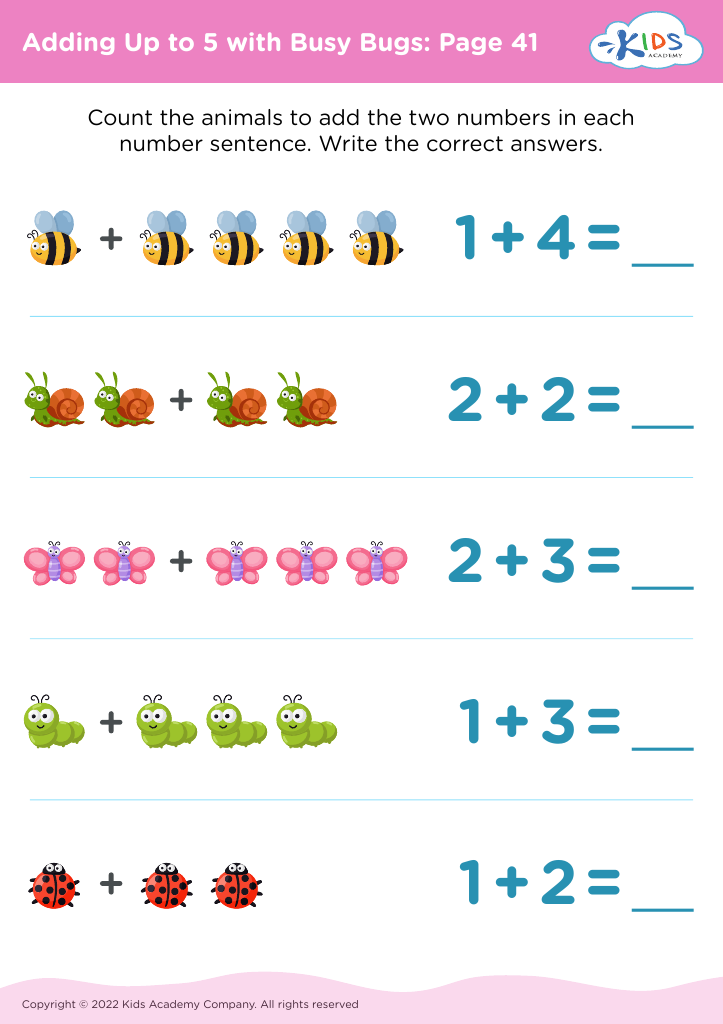
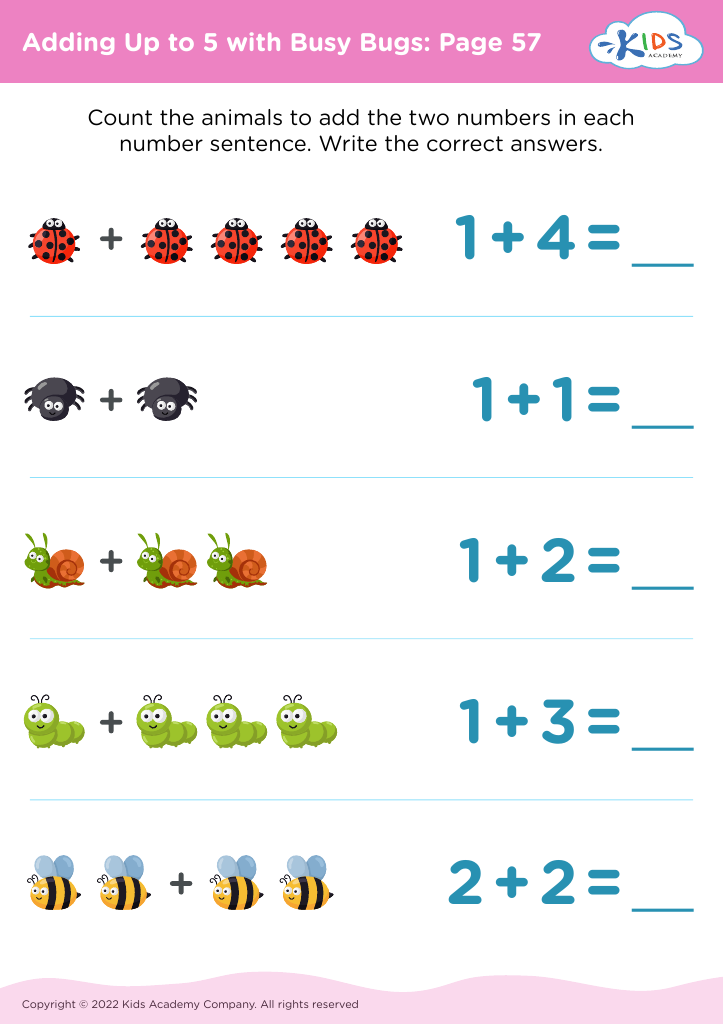
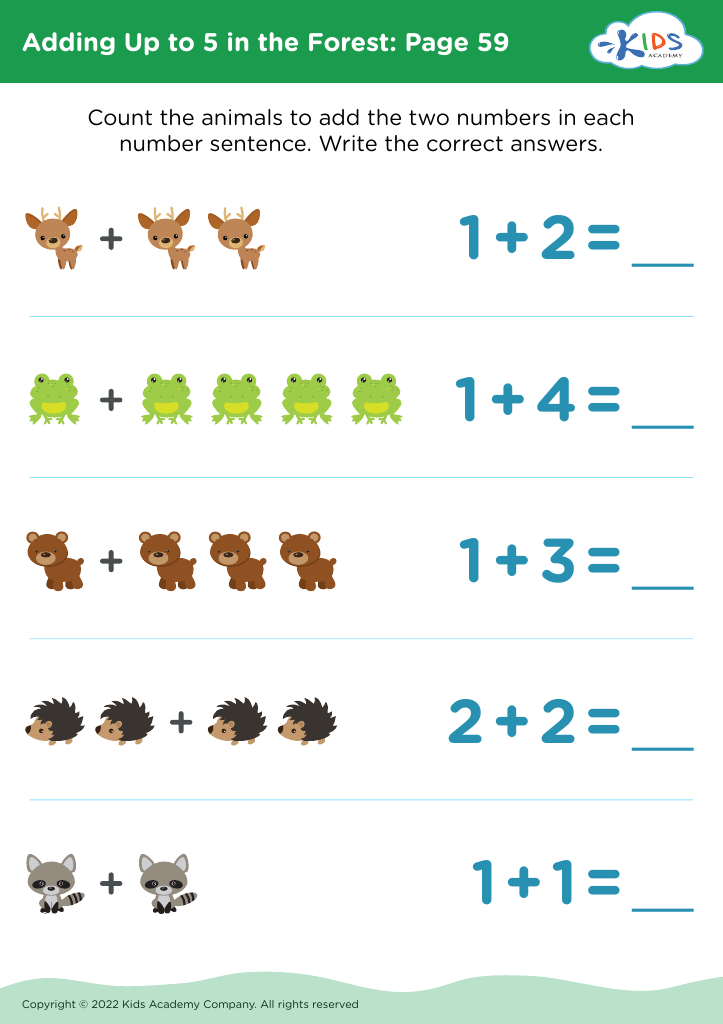
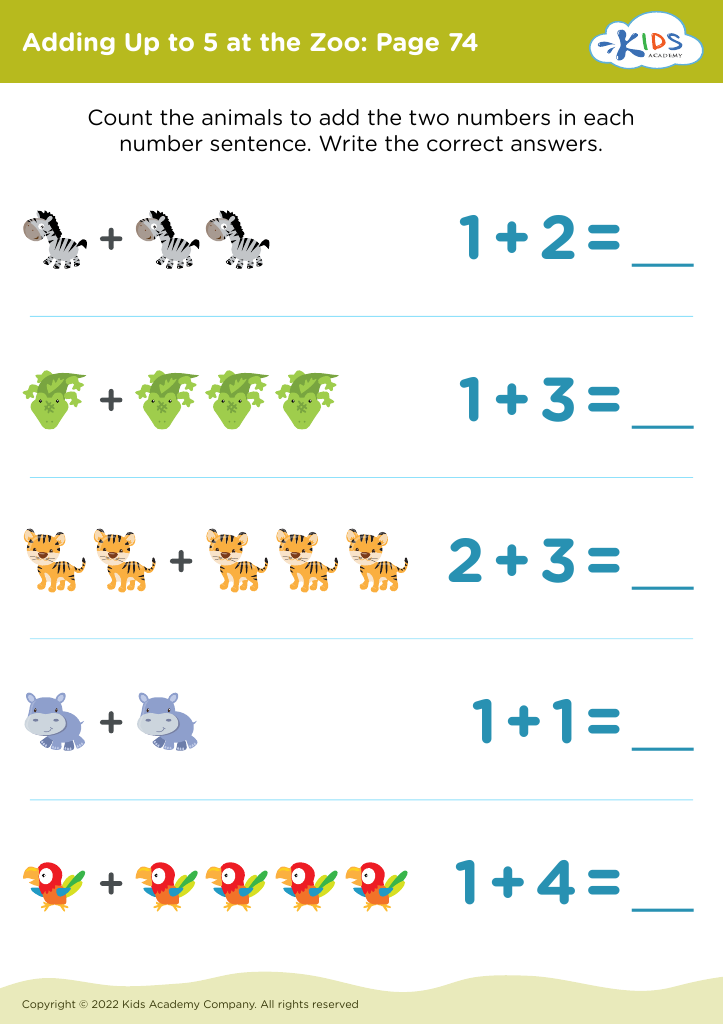
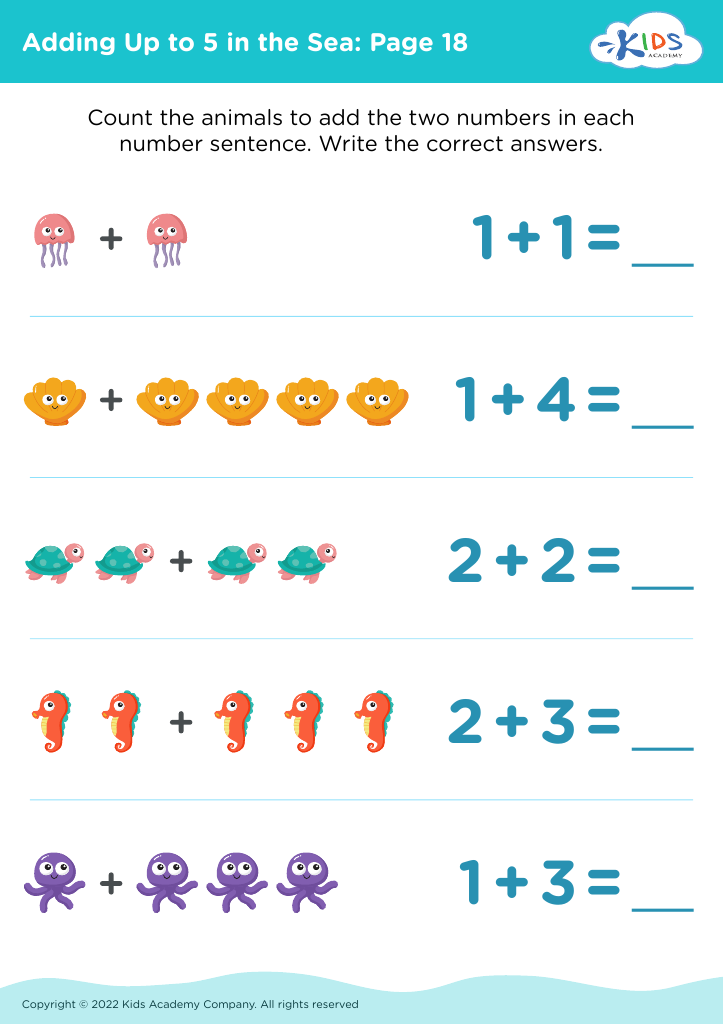
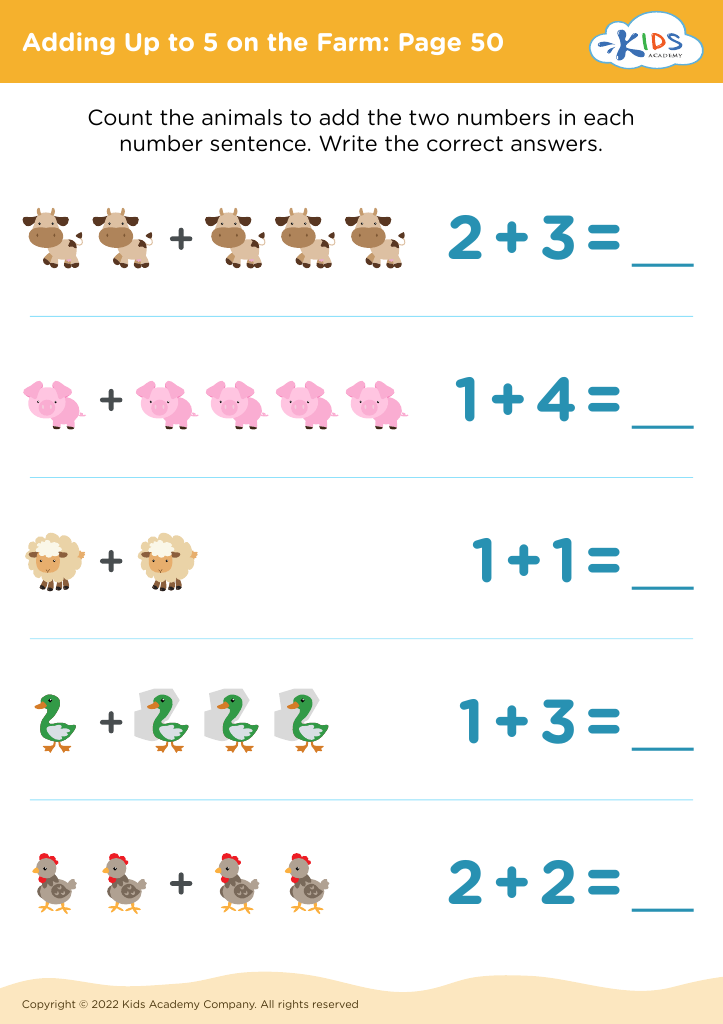
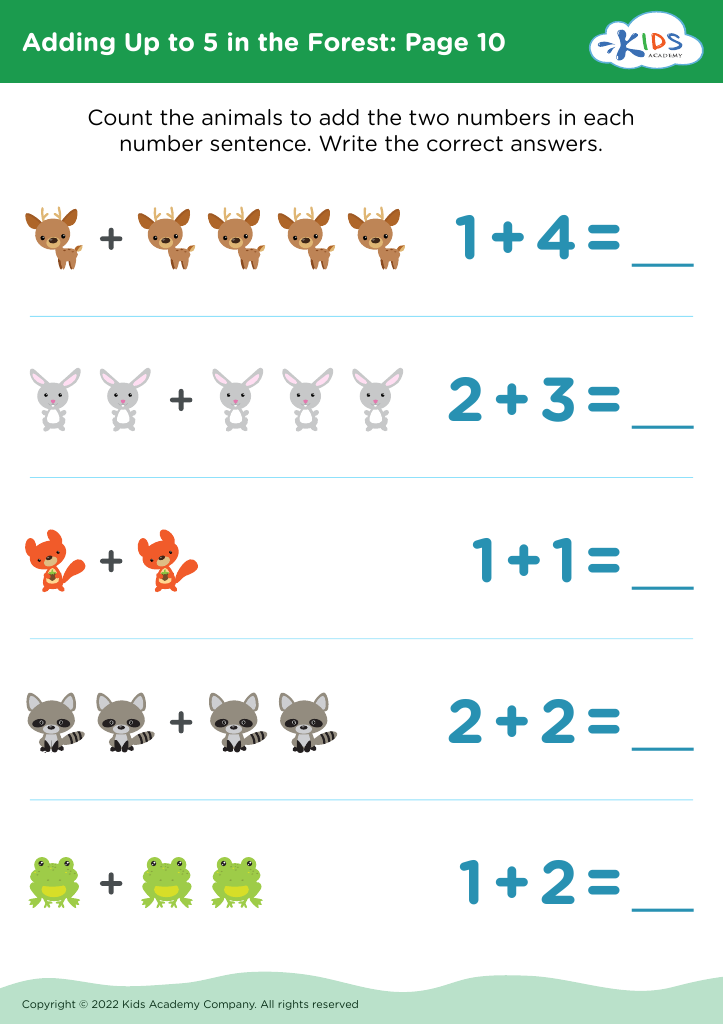
Enhance your child's focus and mental acuity with our "Improve Concentration: Adding Up to 5 Worksheets" designed for ages 3-8. These engaging worksheets feature fun activities that not only teach basic addition skills but also promote concentration and cognitive development. With colorful illustrations and various problem-solving tasks, your little ones will enjoy learning while staying focused. Perfect for homeschooling or supplementary practice, these worksheets encourage critical thinking and build essential math foundations in a playful manner. Download now to spark your child’s interest in math and track their progress as they master adding up to 5!




.jpg)
%20(1).jpg)


Improving concentration in young children, particularly when learning basic math concepts like adding up to 5, is crucial for their overall cognitive development and future academic success. Ages 3-8 are formative years when a child's brain undergoes significant growth and development; therefore, nurturing focus during this period lays the groundwork for more complex learning.
For parents and teachers, fostering concentration can lead to more effective learning experiences. When children are able to concentrate, they are more likely to engage actively with the material, understand the relationships between numbers, and develop problem-solving skills. Activities centered around adding up to 5 not only make learning fun through interactive games and visuals but also improve their attention span and patience.
Moreover, concentrating on such foundational skills helps children build confidence. A strong grasp of math basics enhances their ability to tackle future concepts and reduces anxiety around numerical tasks. With improved concentration, children learn to follow directions better and work collaboratively, building social skills alongside academic ones.
Ultimately, prioritizing concentration in learning math provides children with the necessary tools to achieve long-term success, creating a solid educational framework that can be applied across all subjects.








