Nature appreciation Adding Up to 5 Worksheets for Ages 3-8
5 filtered results
-
From - To
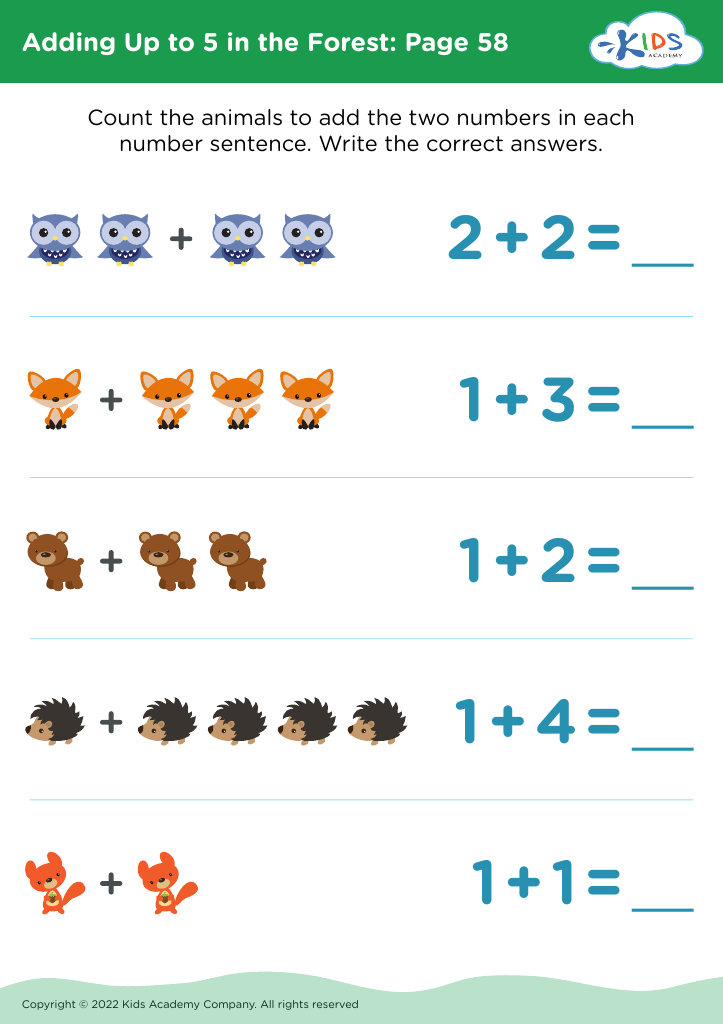
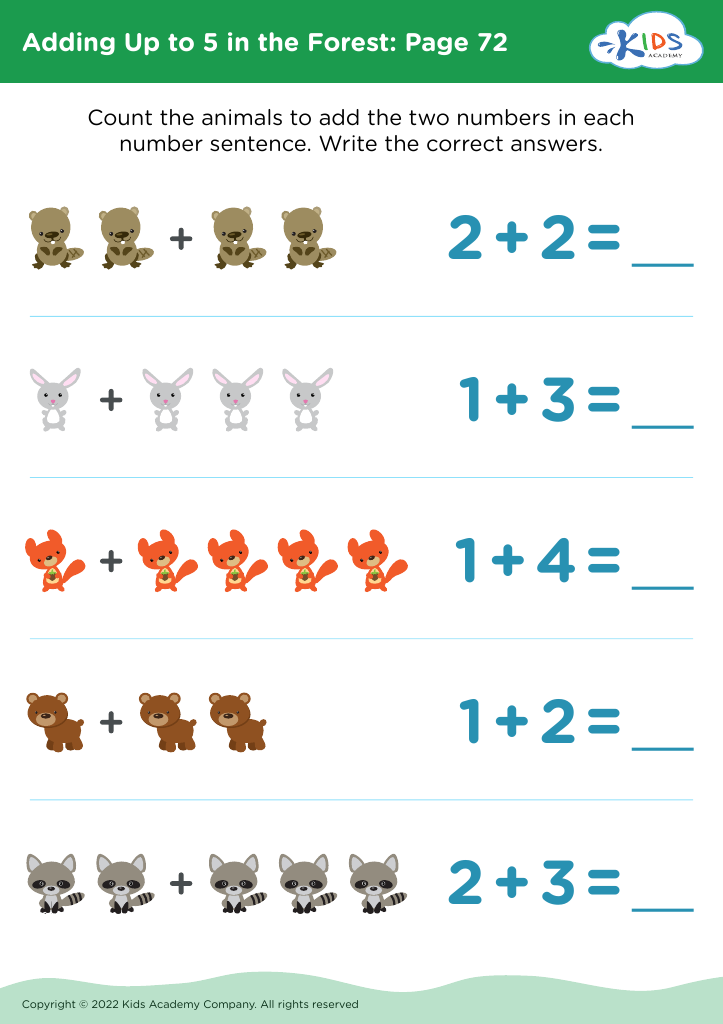
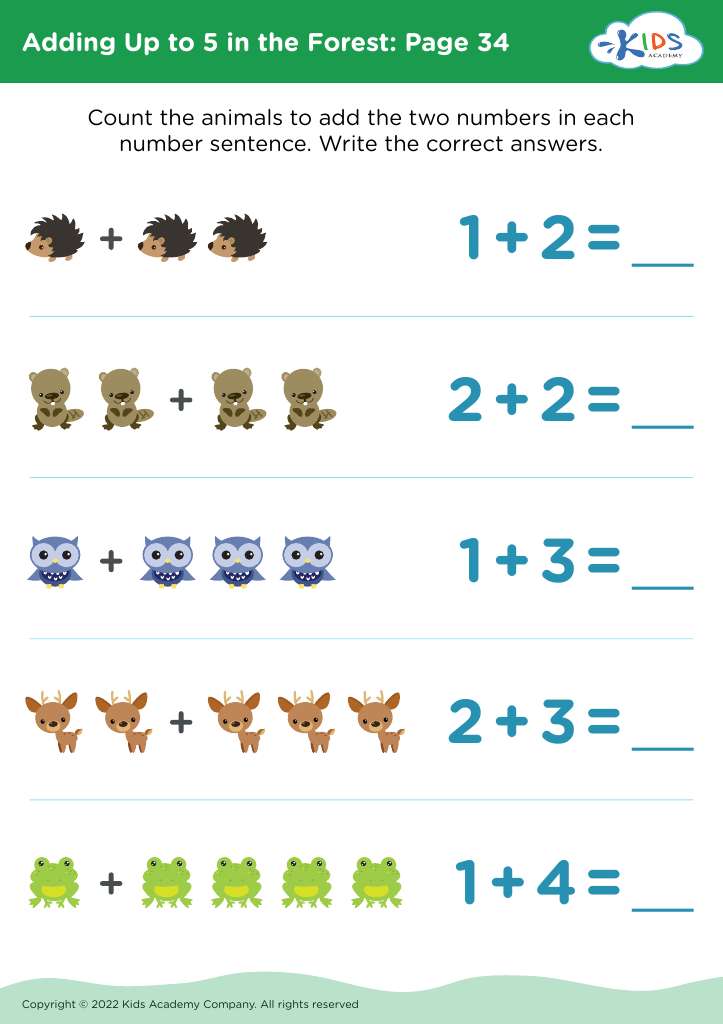
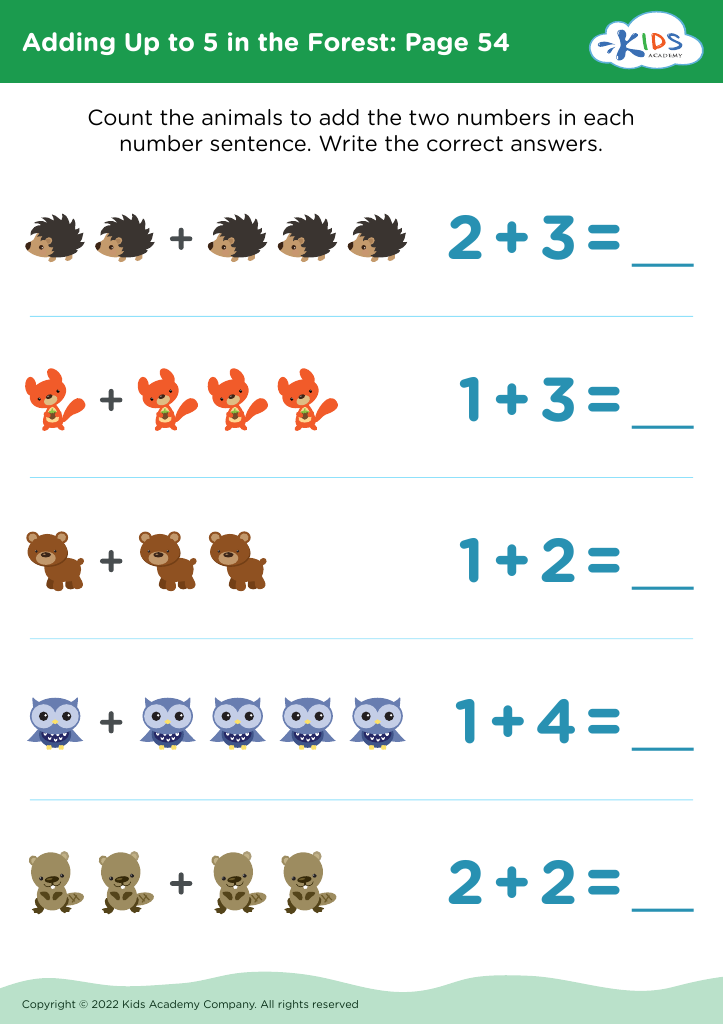
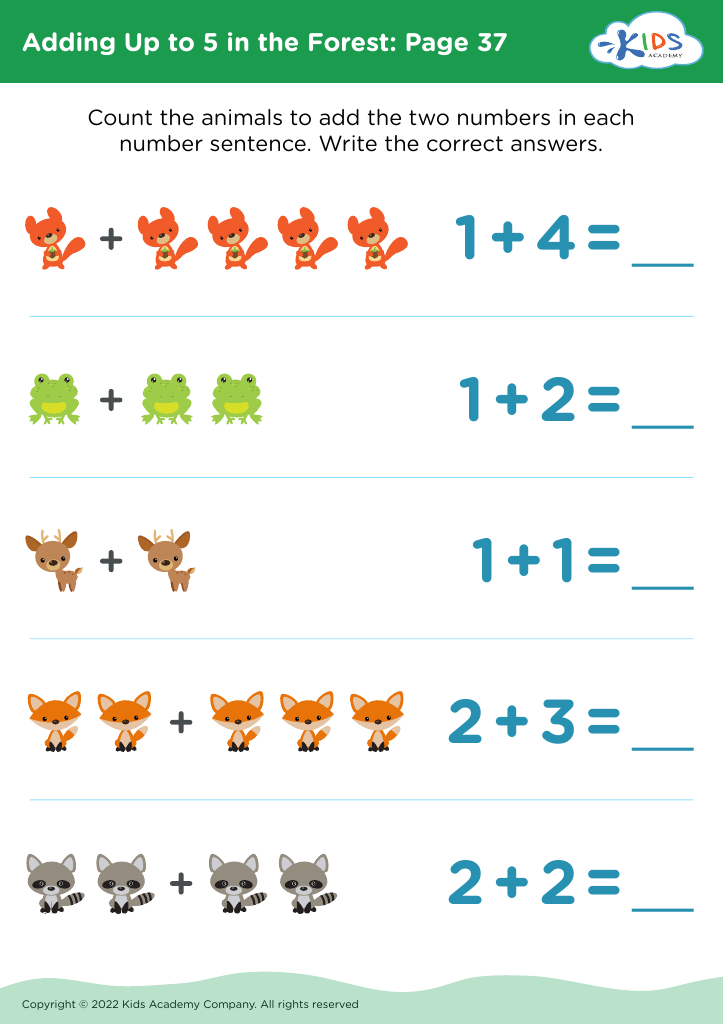
Explore the beauty of nature while learning essential math concepts with our "Nature Appreciation Adding Up to 5 Worksheets" designed for children ages 3-8. These engaging worksheets combine exciting nature themes with foundational math skills, encouraging children to enhance their counting abilities and develop an appreciation for the environment. Each worksheet features vibrant illustrations and interactive activities that make learning fun and enjoyable. Perfect for classrooms or at-home learning, these resources foster a love for nature while helping young learners master addition up to 5. Start your child's educational journey today by diving into these captivating worksheets that inspire curiosity!



.jpg)




Nature appreciation is essential for children aged 3 to 8, influencing their development, well-being, and learning. Firstly, engaging with nature fosters curiosity and a sense of wonder, which are critical for early learning. When parents or teachers encourage outdoor exploration, children ask questions, observe, and learn about environmental processes, nurturing critical thinking skills and creativity.
Promoting nature appreciation also has physical benefits. Outdoor activities help children develop motor skills while encouraging them to stay active and healthy. Moreover, being in nature has been linked to improved mental health, reducing stress and anxiety, which can lead to better focus and behavior in school settings.
Understanding nature cultivates a sense of responsibility and empathy towards the environment. As children learn about ecosystems and the importance of biodiversity, they develop a caring attitude towards living things and a desire to protect their surroundings.
Additionally, nature appreciation plays a crucial role in academic success. Outdoor play and experiential learning enhance cognitive development, paving the way for better performance in subjects like science and math. In summary, parents and teachers should prioritize nature appreciation to foster holistic development and instill a lifelong love for the environment in young children.








