Problem-Solving Skills Adding Up to 5 Worksheets for Ages 3-8 - Page 2
37 filtered results
-
From - To


.jpg)



%20(1).jpg)

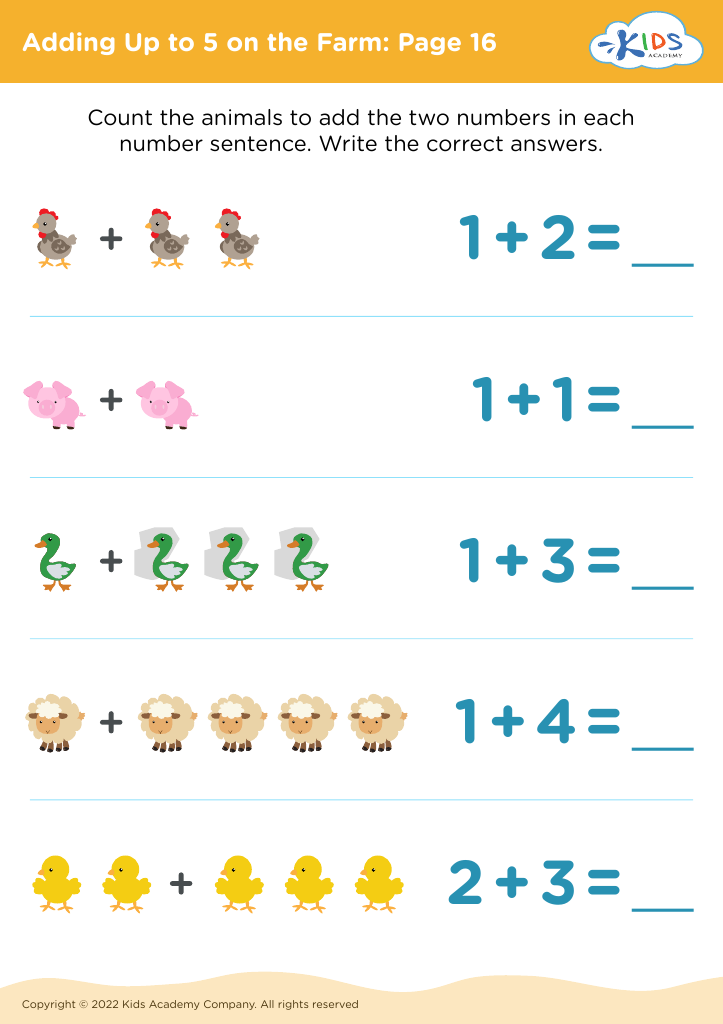
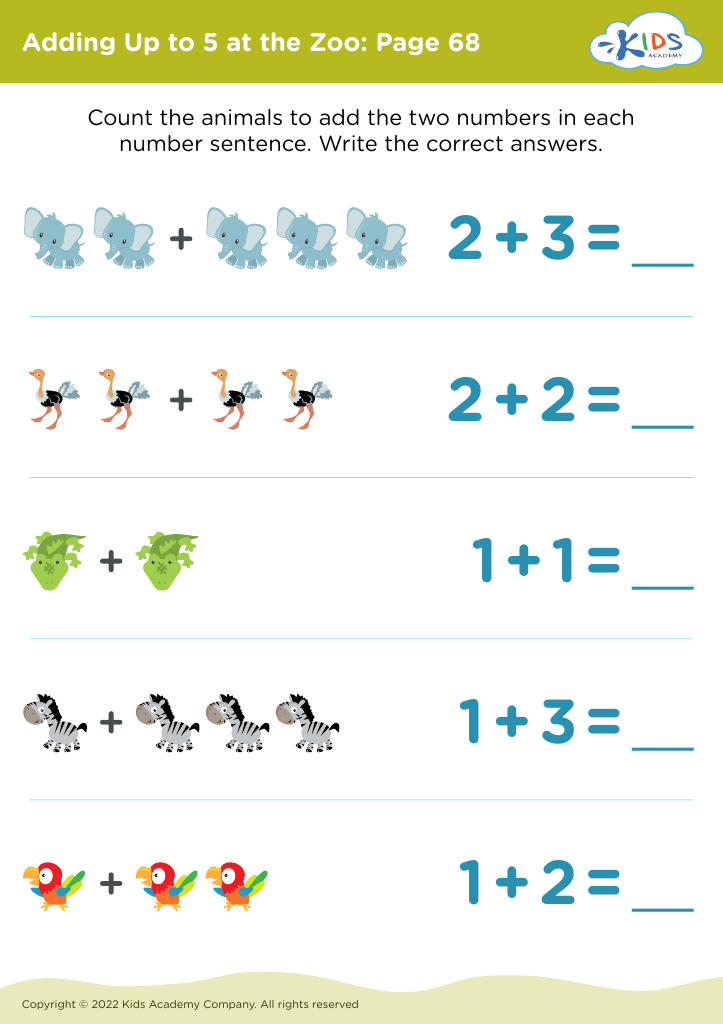
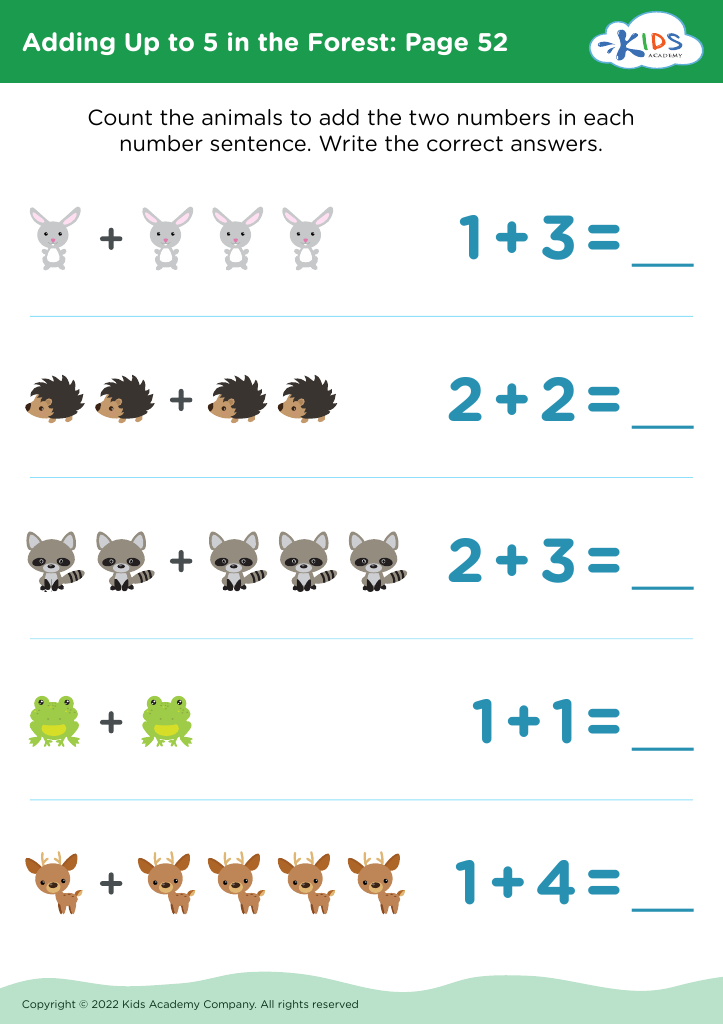
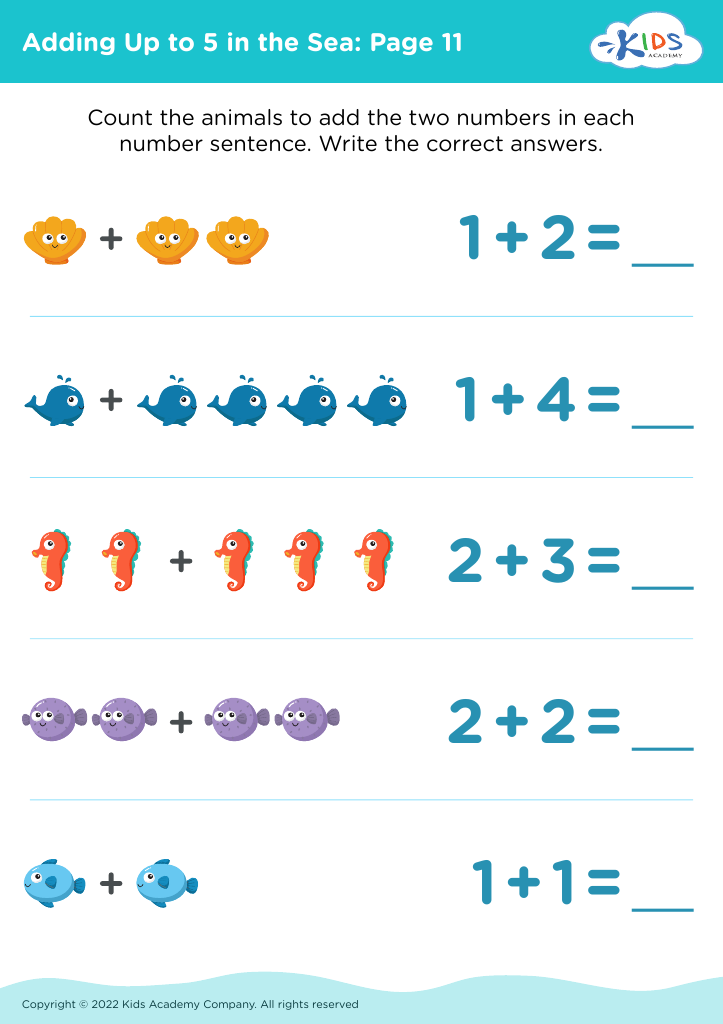
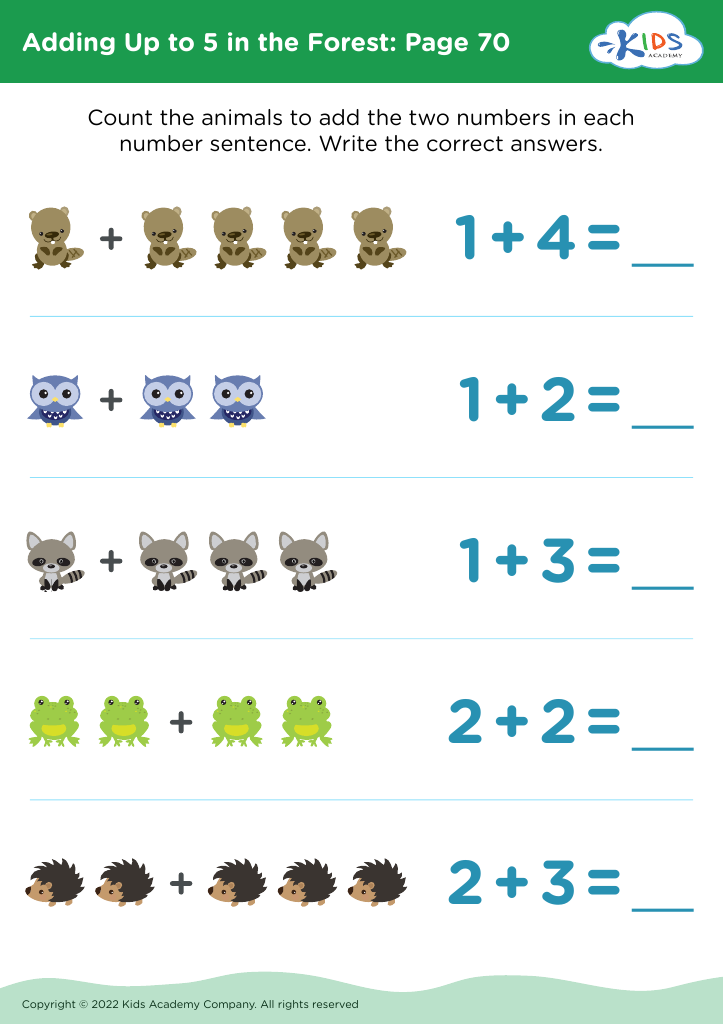
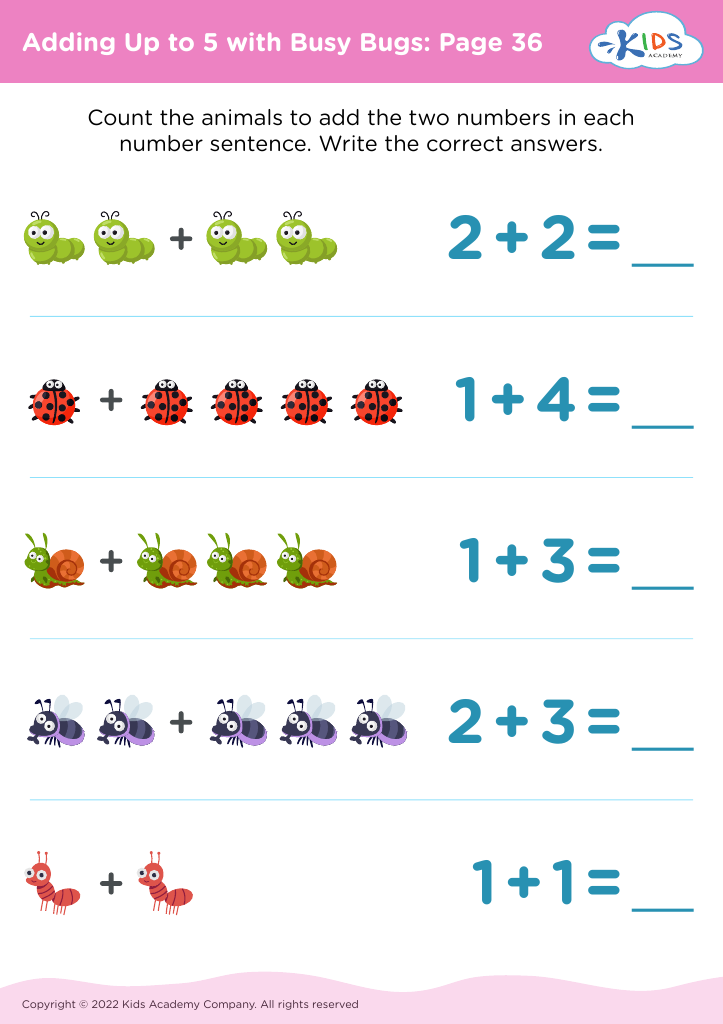
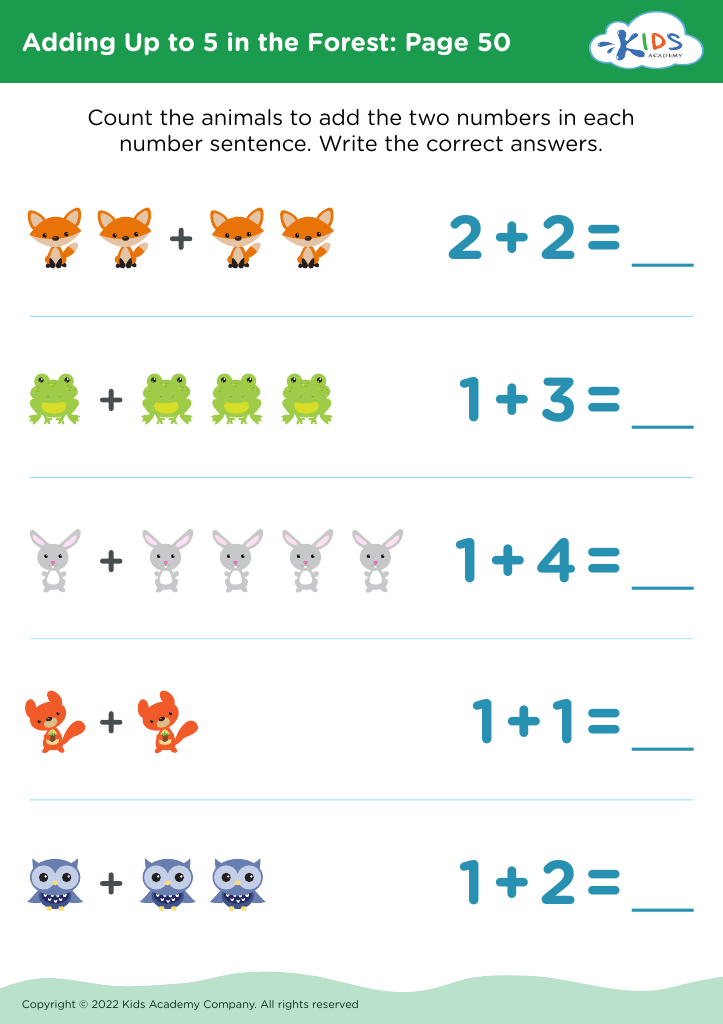
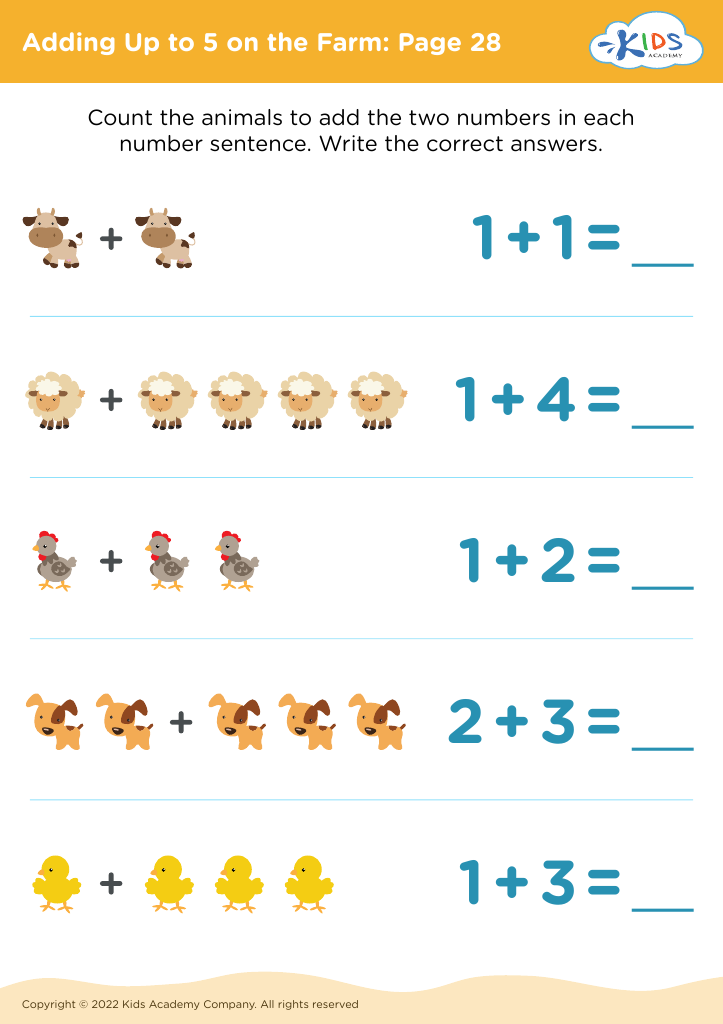
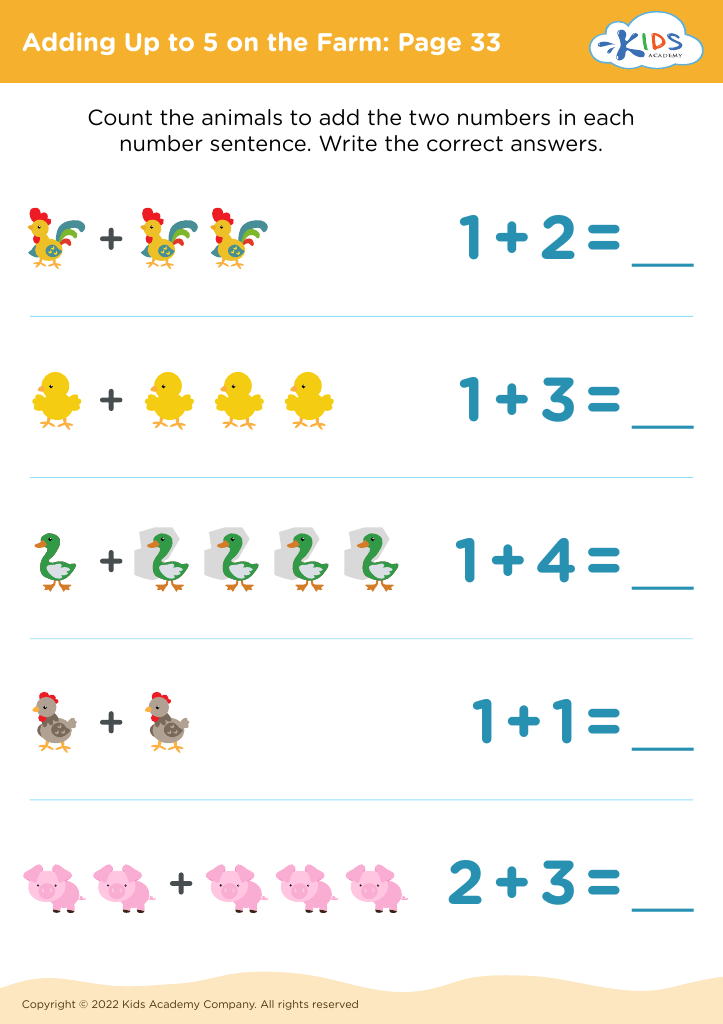
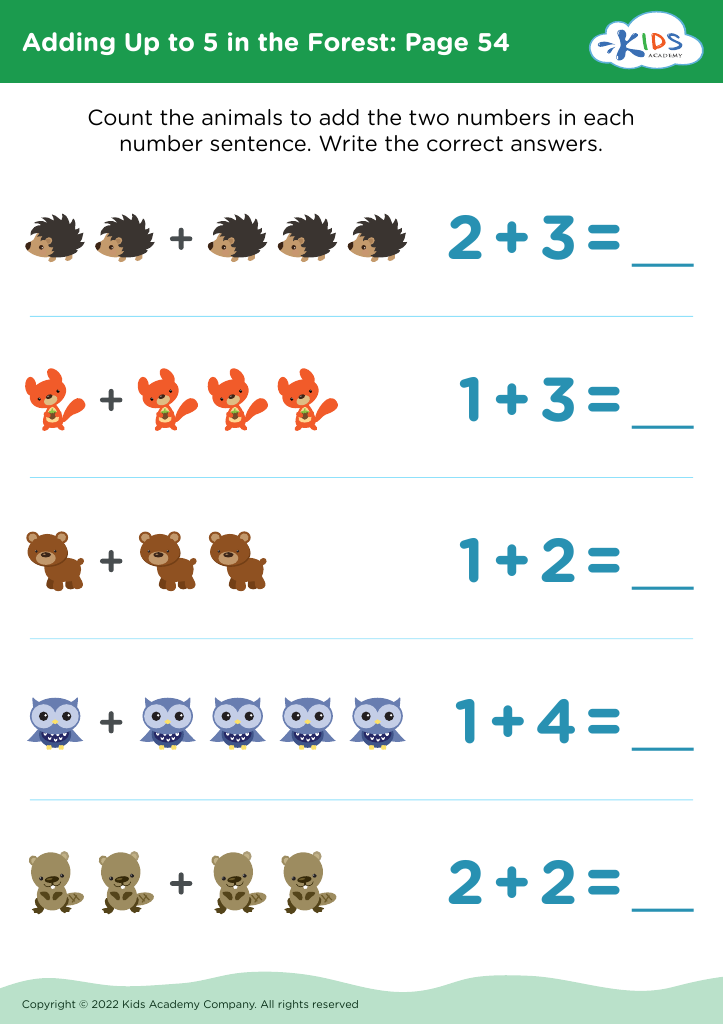
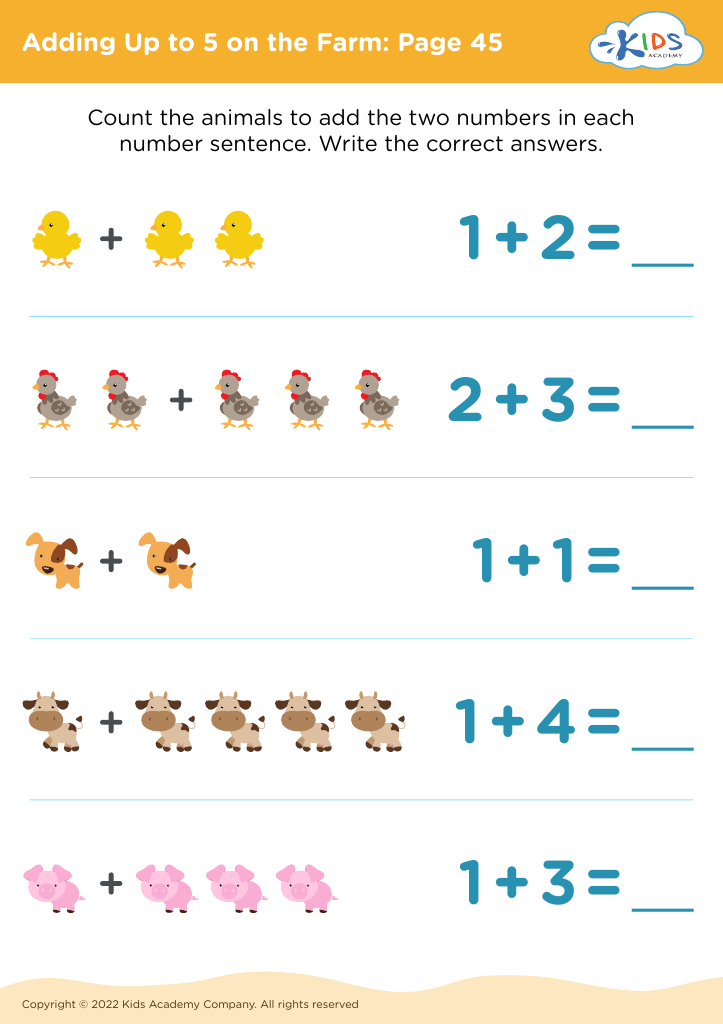
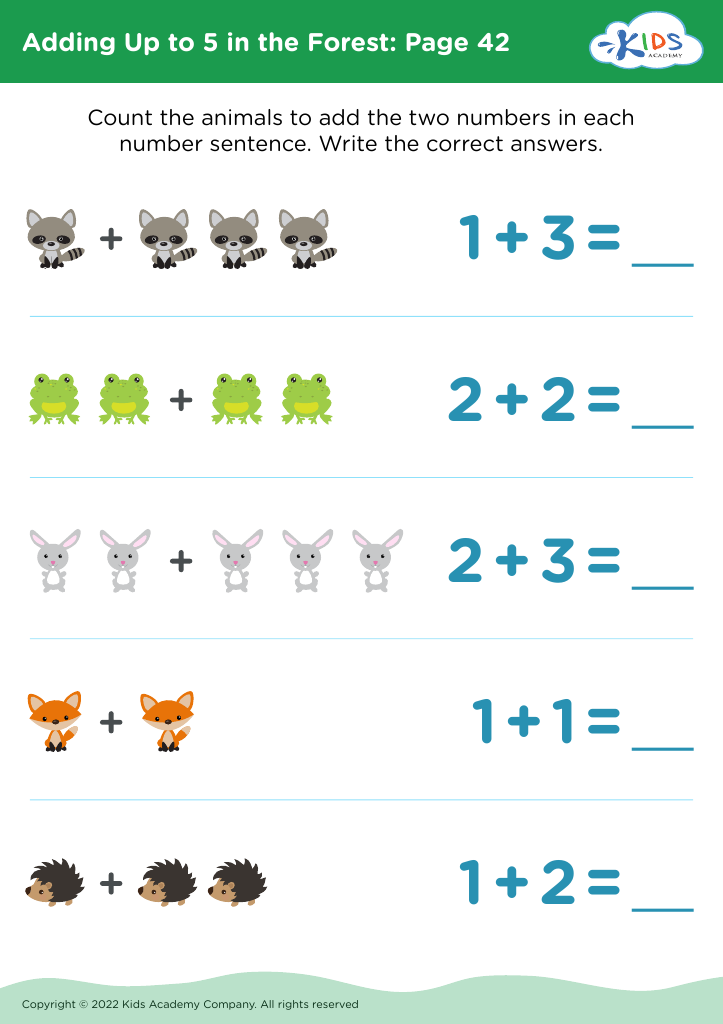
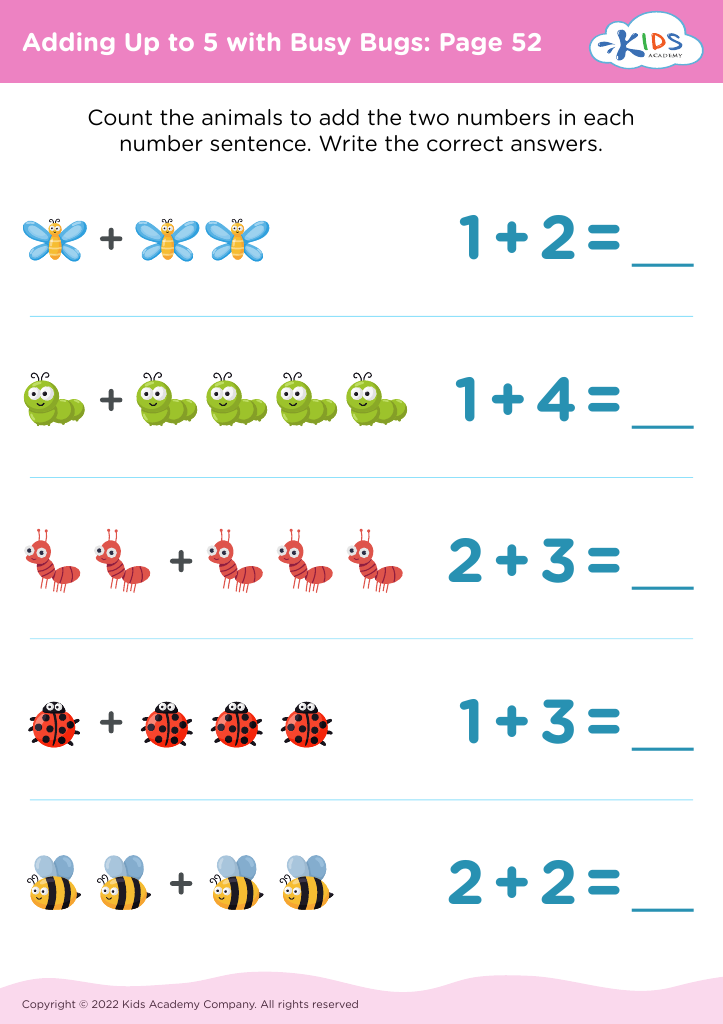
Problem-solving skills, particularly when it comes to adding up to 5, are foundational for children ages 3-8 as they lay the groundwork for critical thinking and mathematical understanding. At this developmental stage, children are naturally curious and actively explore their environment. Teaching them to solve simple addition problems not only enhances their cognitive skills but also fosters a sense of achievement and confidence.
For parents and teachers, nurturing these skills provides an opportunity to engage children in meaningful conversations about numbers and their relationships. Fun, interactive methods, such as games and hands-on activities, can illustrate these concepts and make learning enjoyable, encouraging a positive attitude toward math. Furthermore, acquiring problem-solving skills at an early age helps children develop strategies to address challenges, which can translate to various areas in life.
Moreover, building a solid mathematical foundation prepares students for more advanced concepts in the future. As they progress through their education, the ability to think critically and solve problems will benefit not only their academic performance but also their capabilities in everyday situations. Therefore, prioritizing these early problem-solving experiences enriches both a child's learning journey and their overall development.








