Understanding number relationships Adding Up to 5 Worksheets for Ages 3-8
3 filtered results
-
From - To
Explore our engaging "Understanding Number Relationships Adding Up to 5" worksheets, designed for ages 3 to 8! These interactive activities help young learners grasp foundational math concepts by focusing on the relationships between numbers and developing their addition skills. Each worksheet encourages hands-on practice, enabling children to visualize how numbers combine to total 5. Ideal for classroom environments or home learning, these resources promote critical thinking and foster a love for mathematics. Support your child's early math development with fun and educational exercises tailored to enhance their confidence and ability in understanding number relationships! Download now and inspire your little mathematicians today!
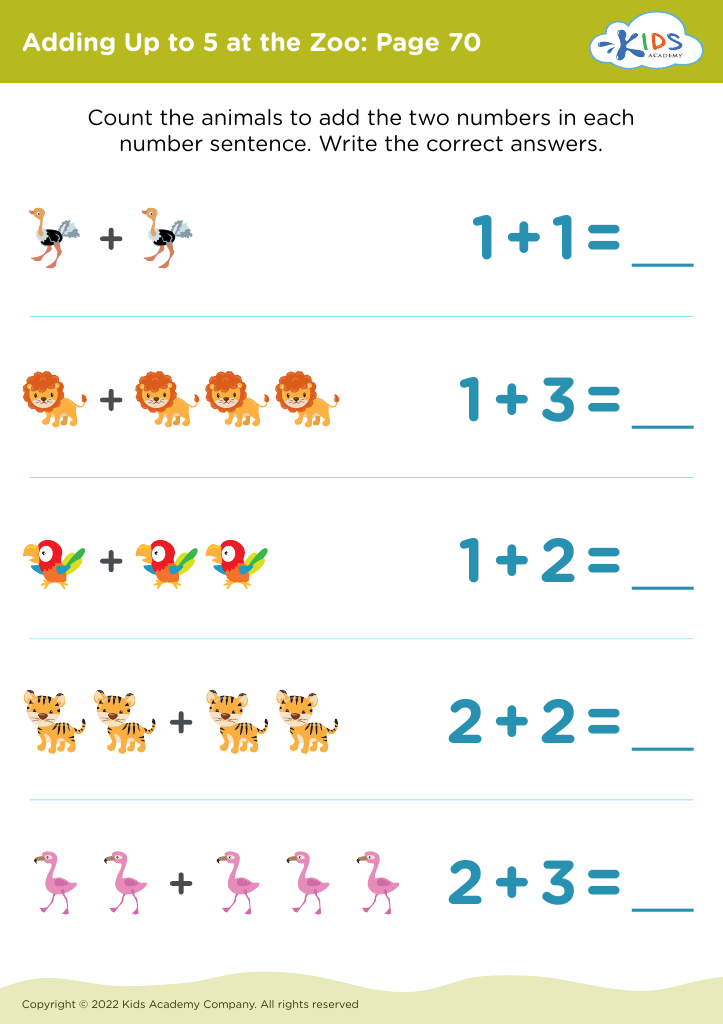
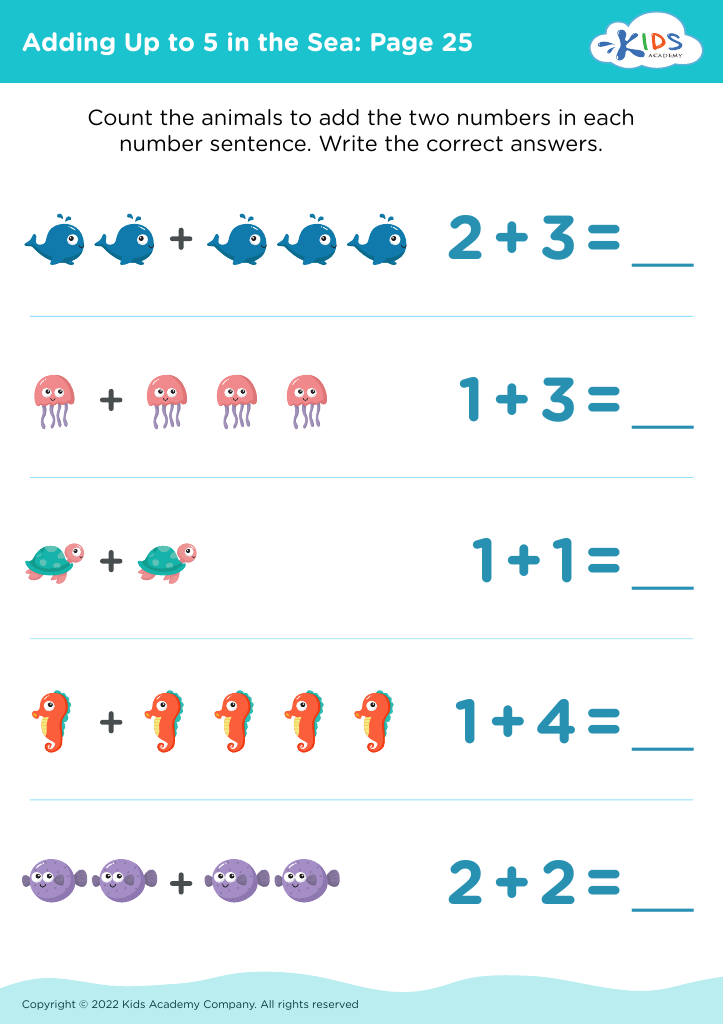
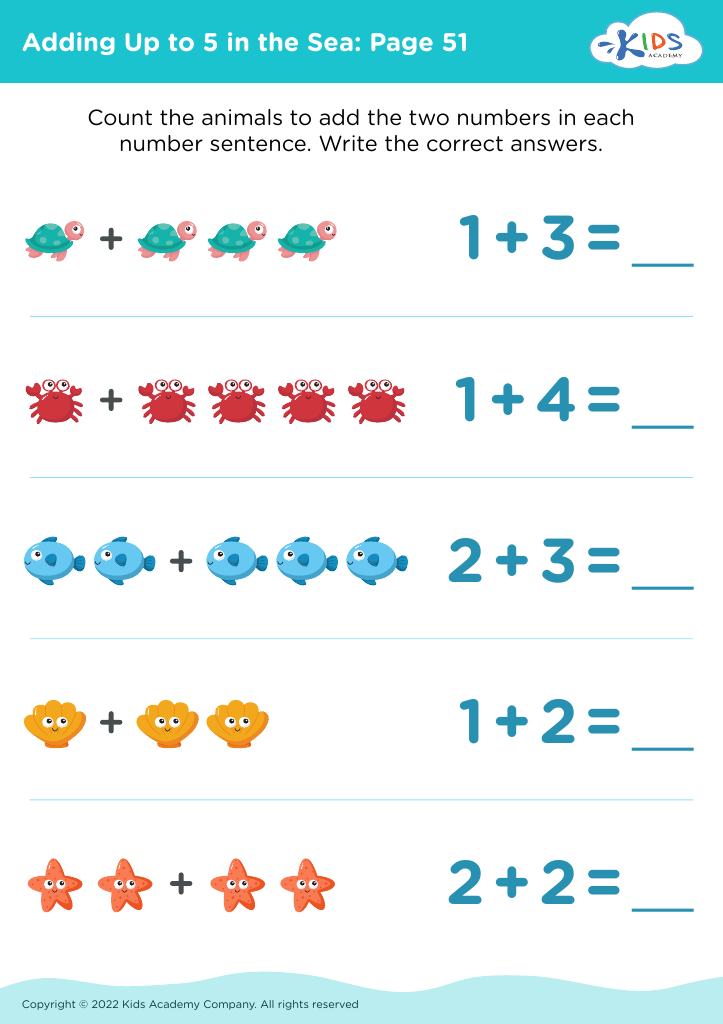








Understanding number relationships, especially when adding up to 5, is foundational for children's mathematical development in the early years. For children aged 3-8, mastering this concept supports their emerging numeracy skills and lays the groundwork for more complex mathematical ideas later on.
When children grasp how numbers work together to reach a total of 5, they develop crucial cognitive skills such as counting, addition, and comprehension of quantity. This foundational understanding also enhances their ability to solve problems and think critically. For parents and teachers, fostering this skill can lead to increased confidence and a positive attitude towards math, which is vital as children progress in school.
Additionally, parents and teachers can weave number relationships into everyday activities—such as counting toys or snacks—which enhances learning through play. Engaging in discussions about how different combinations of numbers add up to 5 encourages mathematical communication and relational thinking.
Ultimately, understanding number relationships contributes to children's academic success and shapes their future enthusiasm for learning math. By nurturing this skill early on, parents and teachers ensure that children build a strong base for lifelong learning and problem-solving abilities. Investing time in this area pays dividends in their educational journey.








