Understanding number value Adding Up to 5 Worksheets for Ages 3-8
3 filtered results
-
From - To
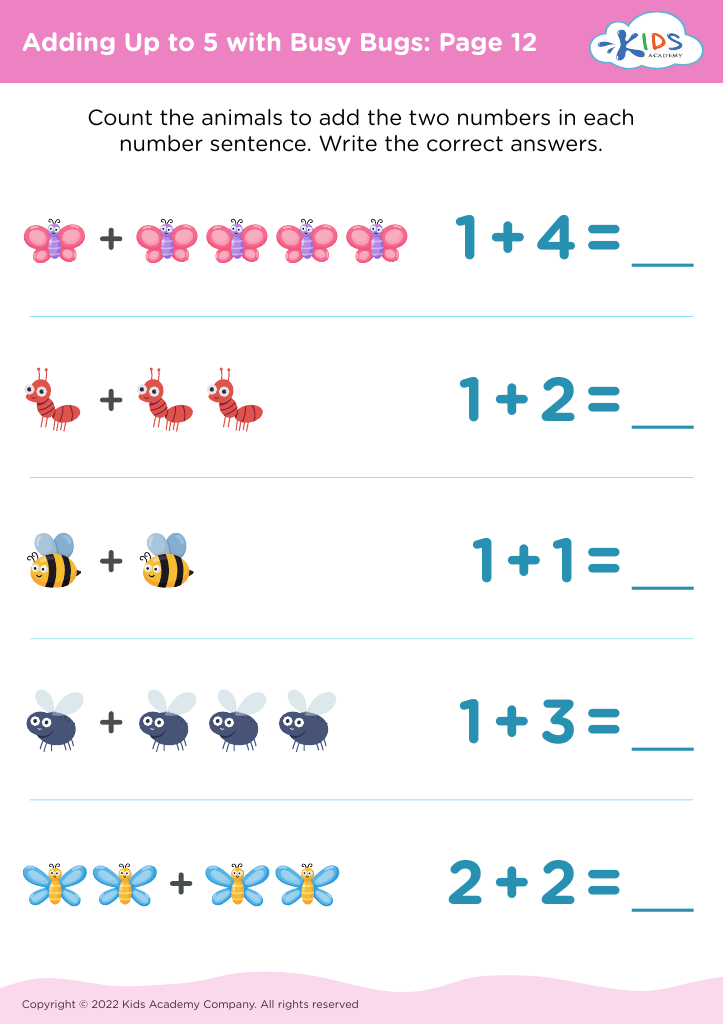
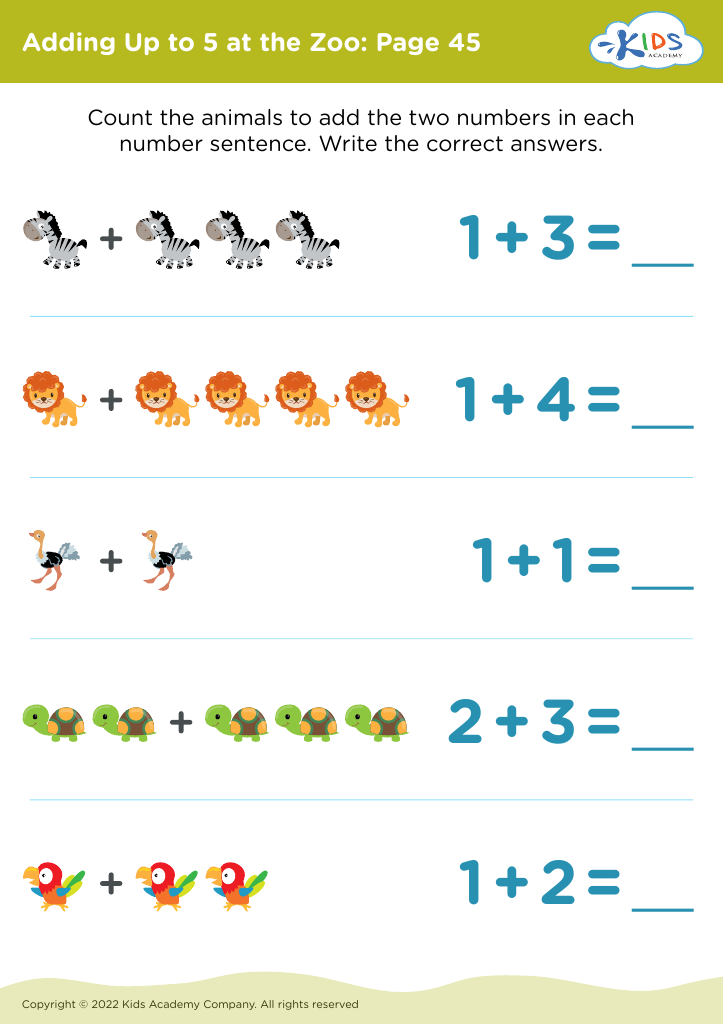
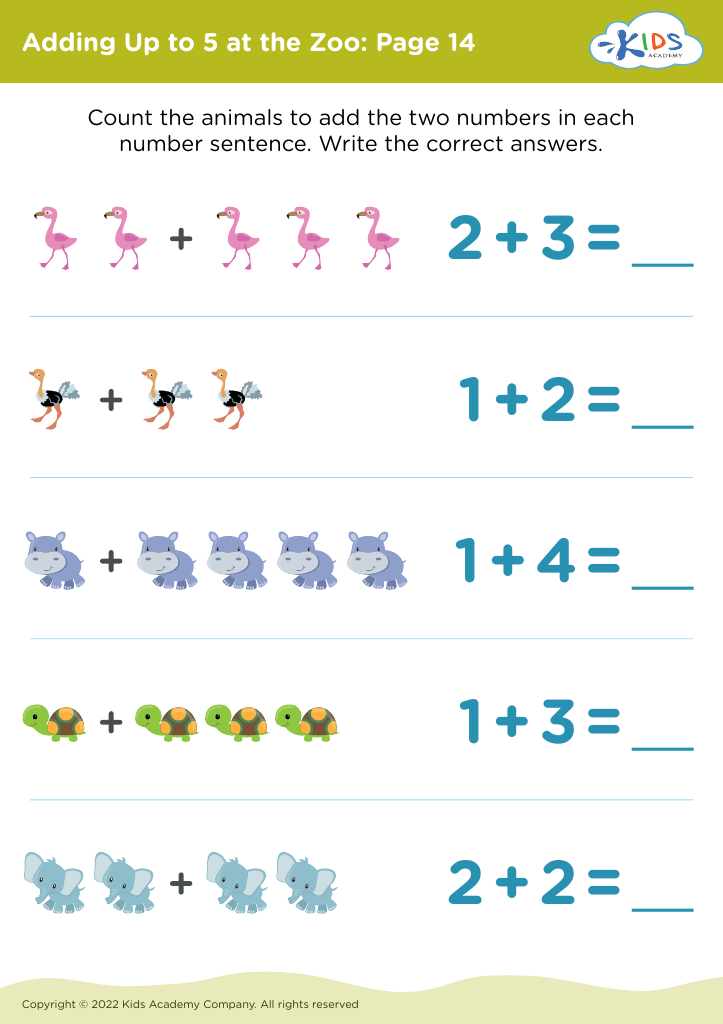
Welcome to our "Understanding Number Value Adding Up to 5" worksheets, designed for children aged 3-8. These engaging activities help young learners grasp the concept of number value through interactive tasks that promote counting, addition, and number recognition. Our worksheets feature vibrant illustrations and fun exercises, making learning enjoyable while developing essential math skills. Kids will practice adding numbers up to 5, enhancing their understanding of quantity and fostering early arithmetic abilities. Perfect for homes or classrooms, these resources encourage curiosity and confidence in mathematics. Download our worksheets today and watch your child's math skills flourish!





%20(1).jpg)


Understanding number value and adding up to 5 is critical for children aged 3 to 8, as it lays the foundational skills for their mathematical development. At this age, children's cognitive abilities are rapidly evolving, making it an ideal time to introduce early math concepts. Grasping number value helps them recognize quantities, compare sizes, and develop basic counting skills.
When children learn to add up to 5, they begin to understand relationships between numbers, and foster their problem-solving skills. This foundational knowledge supports not only math proficiency but also enhances logical thinking and boosts self-confidence. Parents and teachers play a pivotal role in this learning journey; by providing engaging, hands-on activities such as counting objects, using number games, or incorporating math into everyday routines, they create a rich learning environment.
Moreover, early math skills have been linked to future academic success. Those who secure a strong grasp of basic mathematics in their early years are more likely to excel in higher-level mathematics and STEM fields. Therefore, investing time and resources into teaching number value and addition in early childhood education enriches overall development, supports school readiness, and paves the way for a lifelong appreciation of math.








