Visual comprehension Adding Up to 5 Worksheets for Ages 3-8
7 filtered results
-
From - To
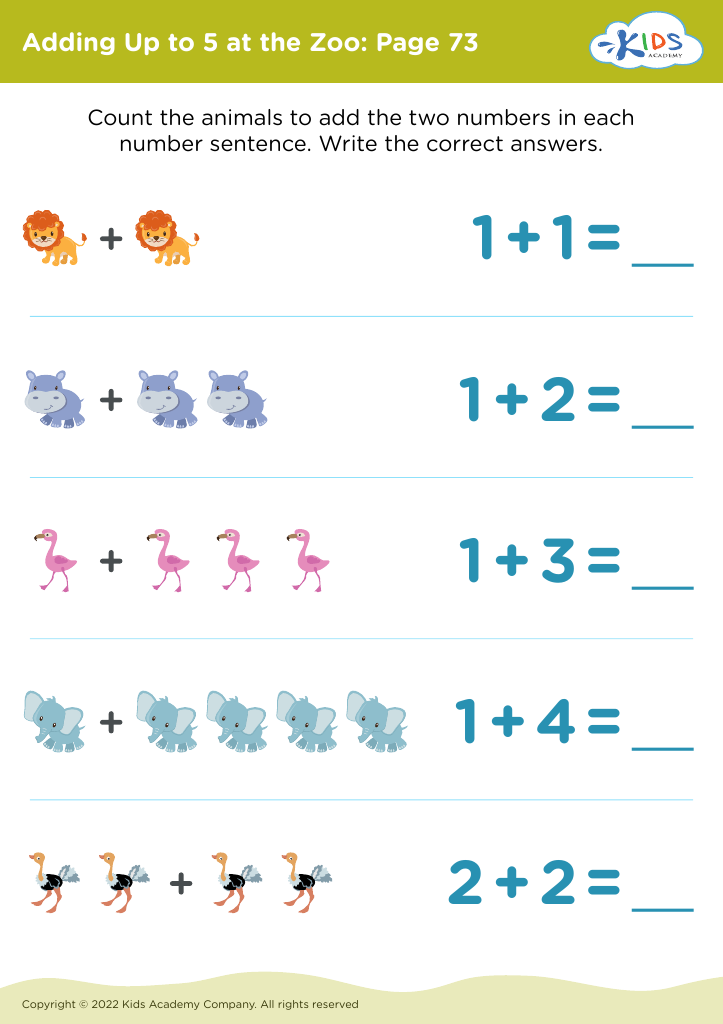
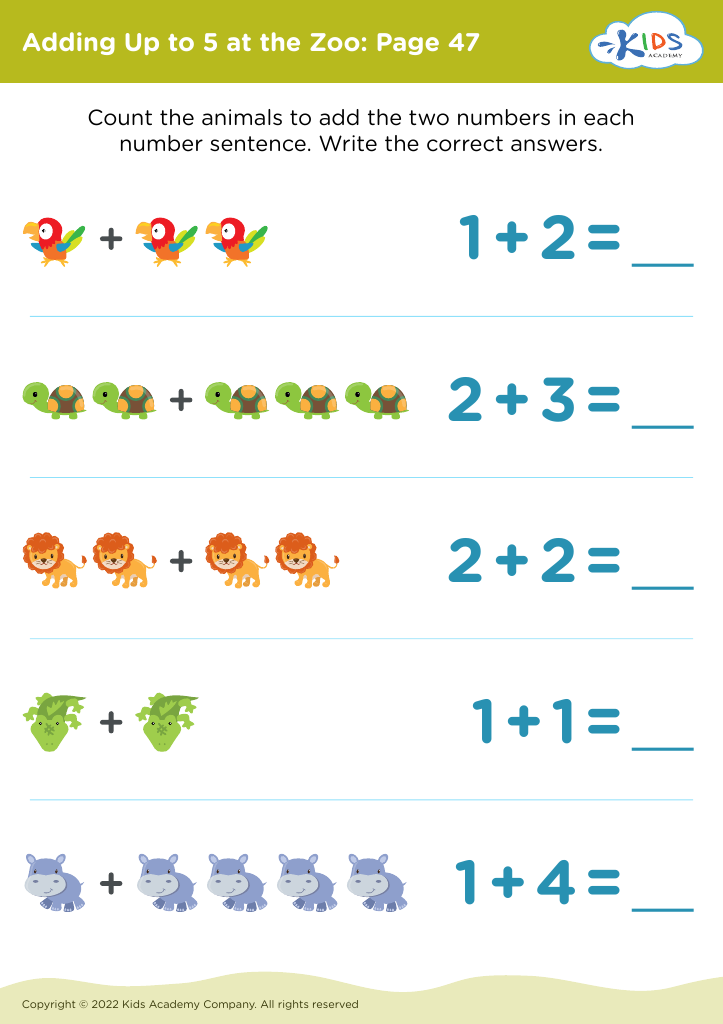
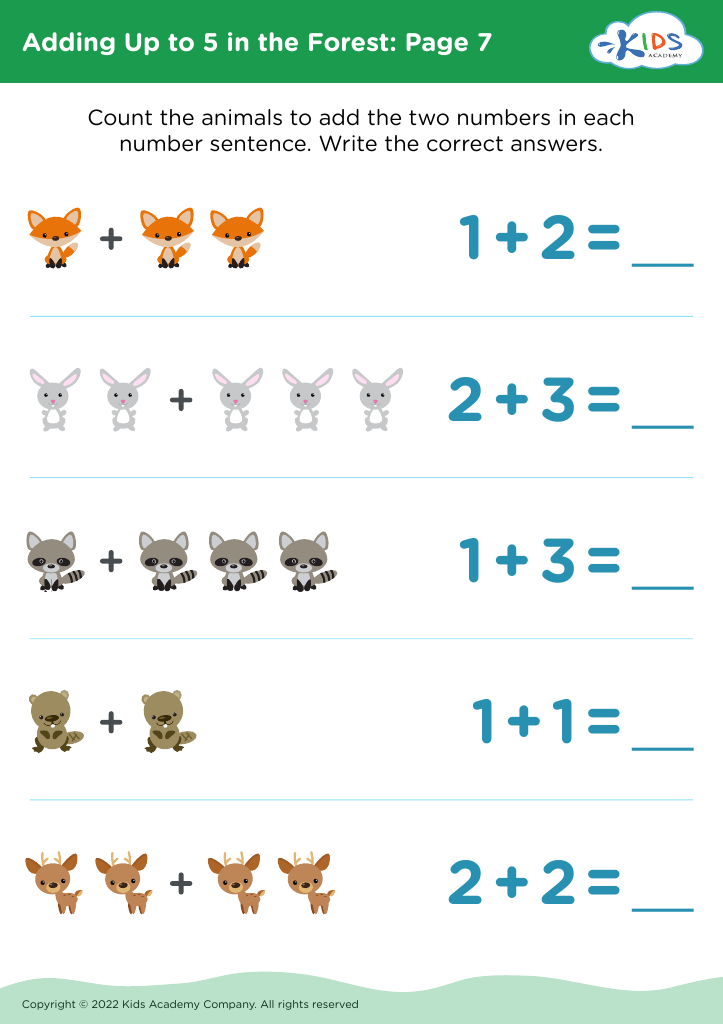
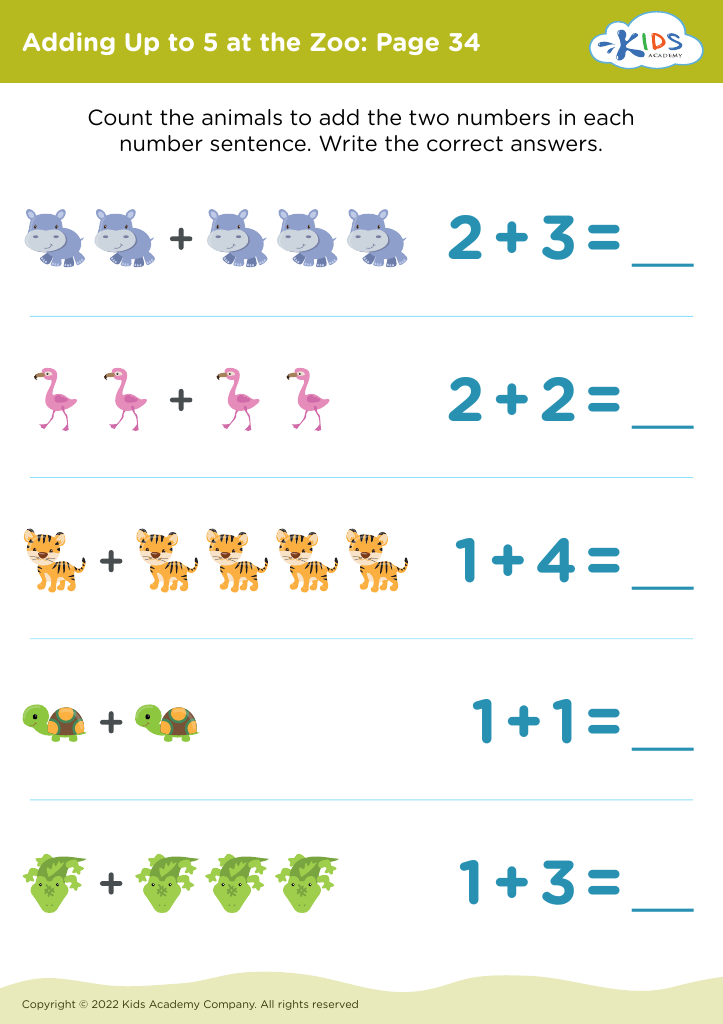
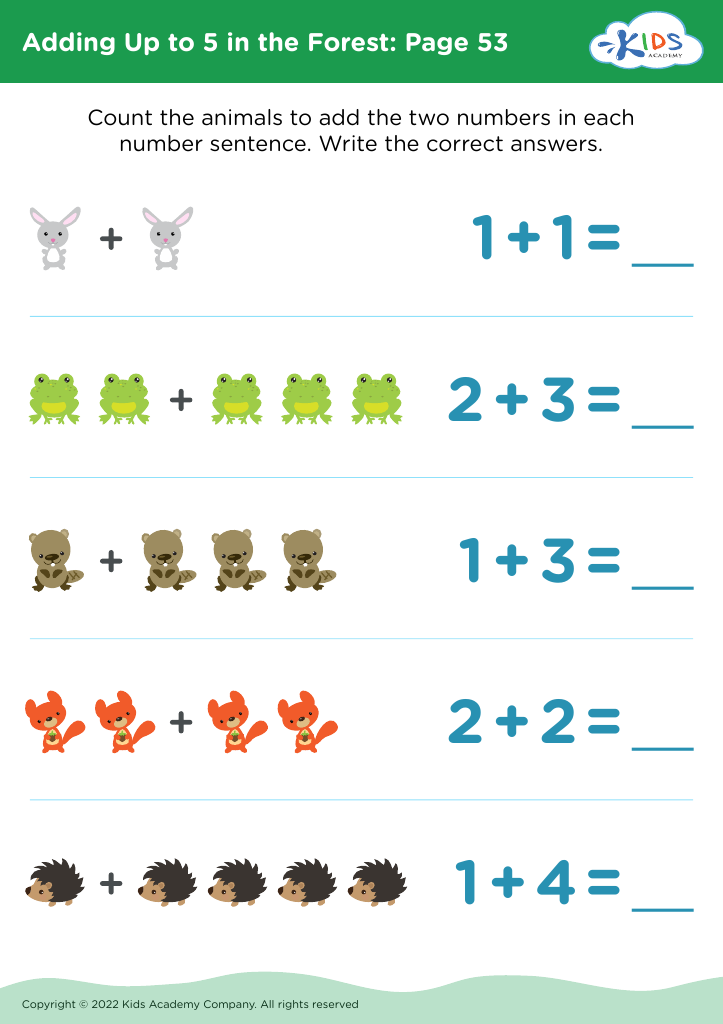
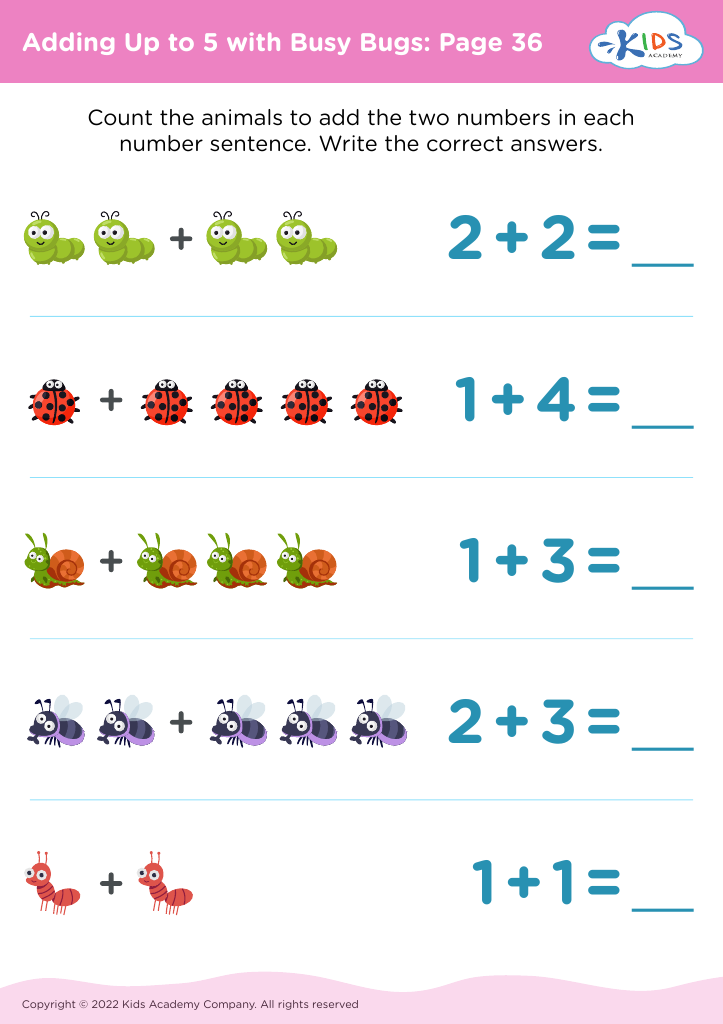
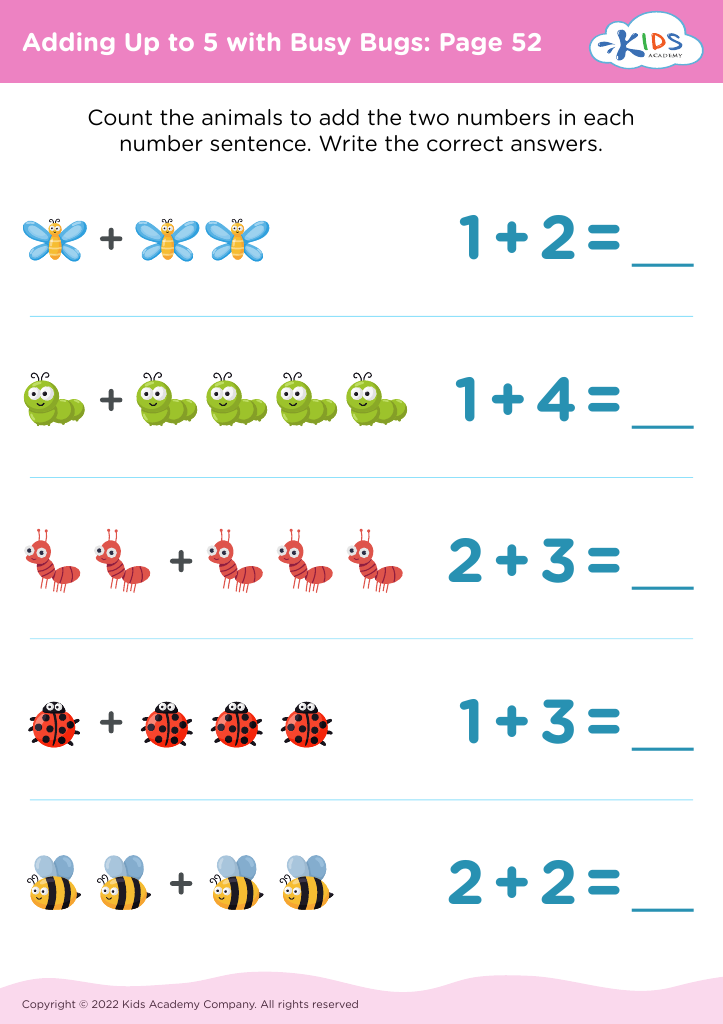
Introduce young learners, ages 3-8, to the excitement of math with our "Visual Comprehension Adding Up to 5 Worksheets." These engaging printables are designed to strengthen their basic addition skills through fun visuals. Perfect for early grade math practice, our worksheets help children grasp the concept of adding up to 5 by using vibrant images that captivate their attention and make learning enjoyable. Developed to enhance visual comprehension and build a solid math foundation, these activities seamlessly blend play with education, encouraging kids to explore numbers while developing critical early learning skills. Unlock your child's math potential today!





%20(1).jpg)
.jpg)

Visual comprehension of adding up to 5 is crucial for children aged 3 to 8 because it lays the foundation for essential math skills and cognitive development. At this developmental stage, children are remarkably perceptive and learn more effectively through visual aids and manipulatives such as counters, pictures, or fingers.
Understanding basic addition through visual means helps solidify the concept of number relationships and arithmetic operations, forming the building blocks for more advanced mathematical thinking. For example, when children see that 2 apples plus 3 apples make 5 apples, they can physically count and visualize the result, making the abstract concept of numbers tangible and relatable.
Additionally, developing proficiency in these basic skills can enhance a child's confidence and fostering a positive attitude towards math. When children experience success in early math learning, it often translates to greater enthusiasm and perseverance in tackling more complex problems later on.
Moreover, visual comprehension in math supports other academic skills, such as pattern recognition, logical thinking, and problem-solving, which are applicable across various subjects. By focusing on these foundational skills, parents and teachers create a robust learning environment that supports a child's overall cognitive development and academic growth, forming a crucial part of their early educational journey.








