Visual learning reinforcement Adding Up to 5 Worksheets for Ages 3-8
5 filtered results
-
From - To
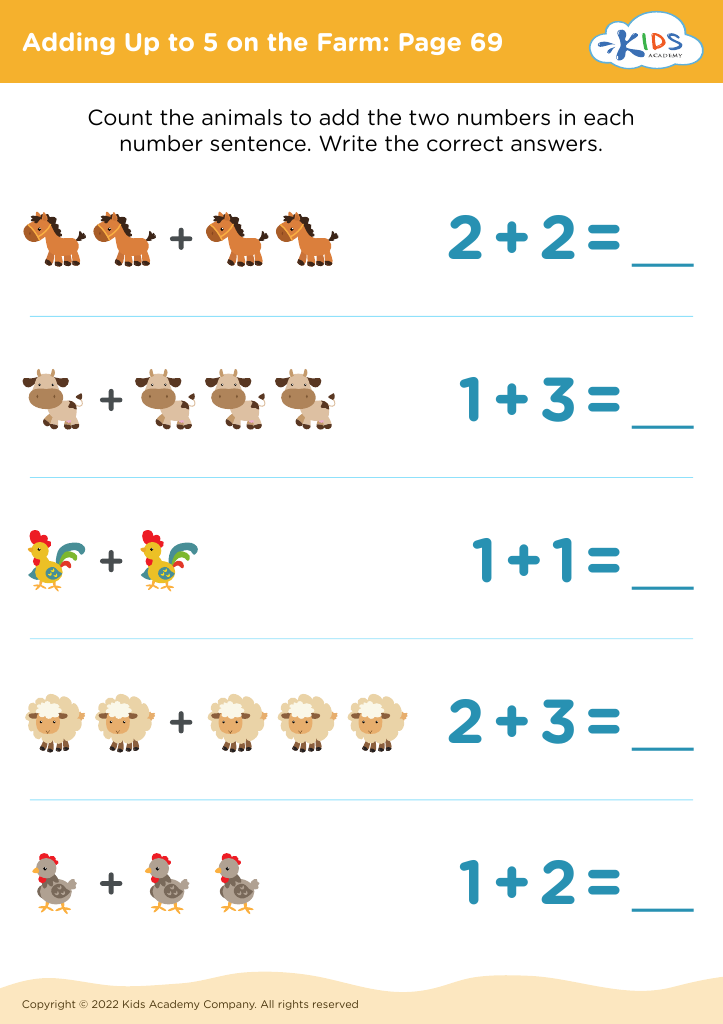
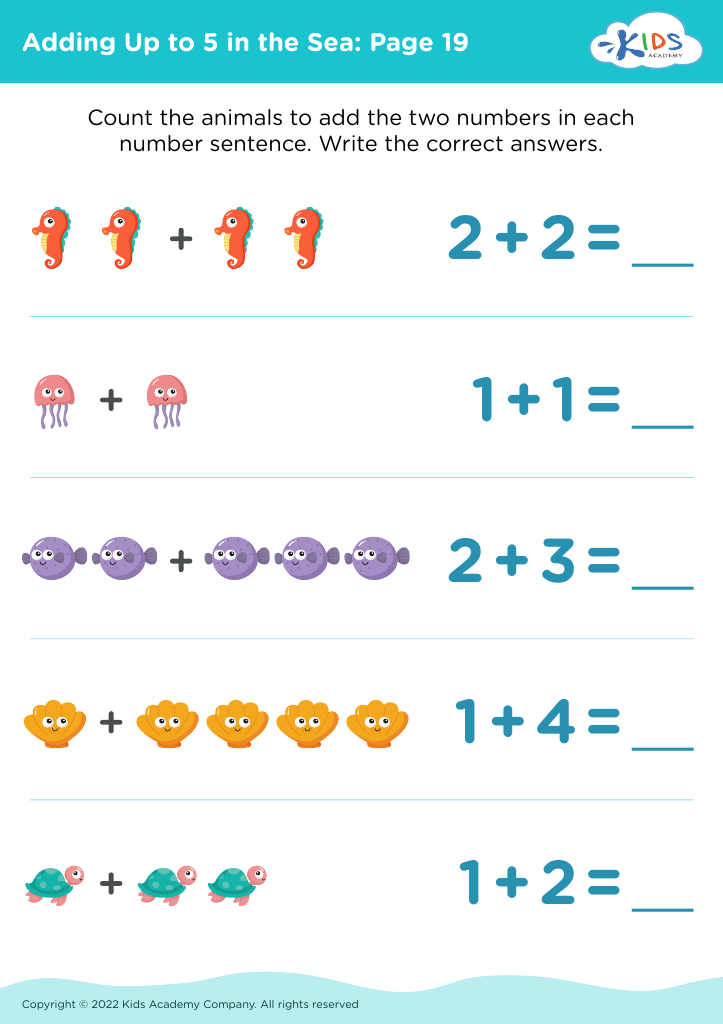
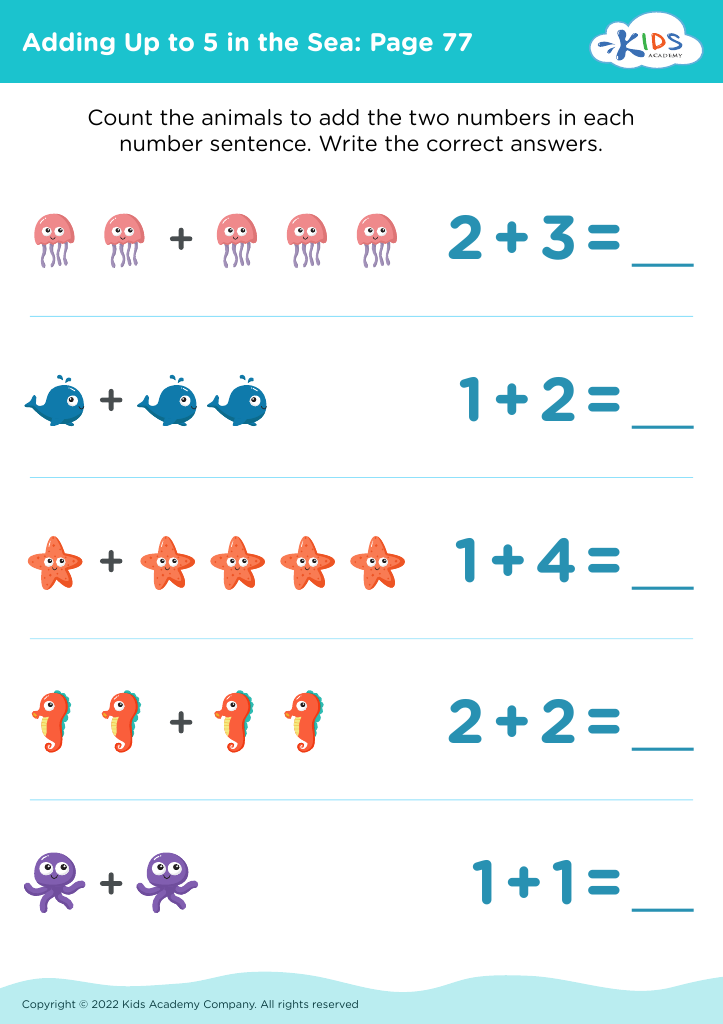
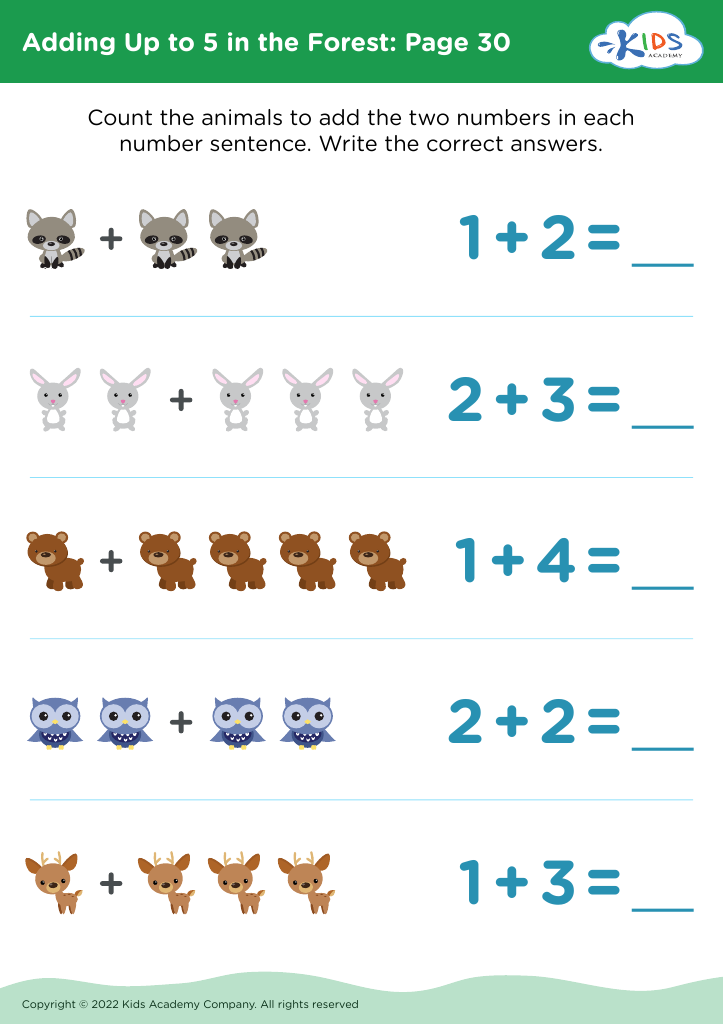
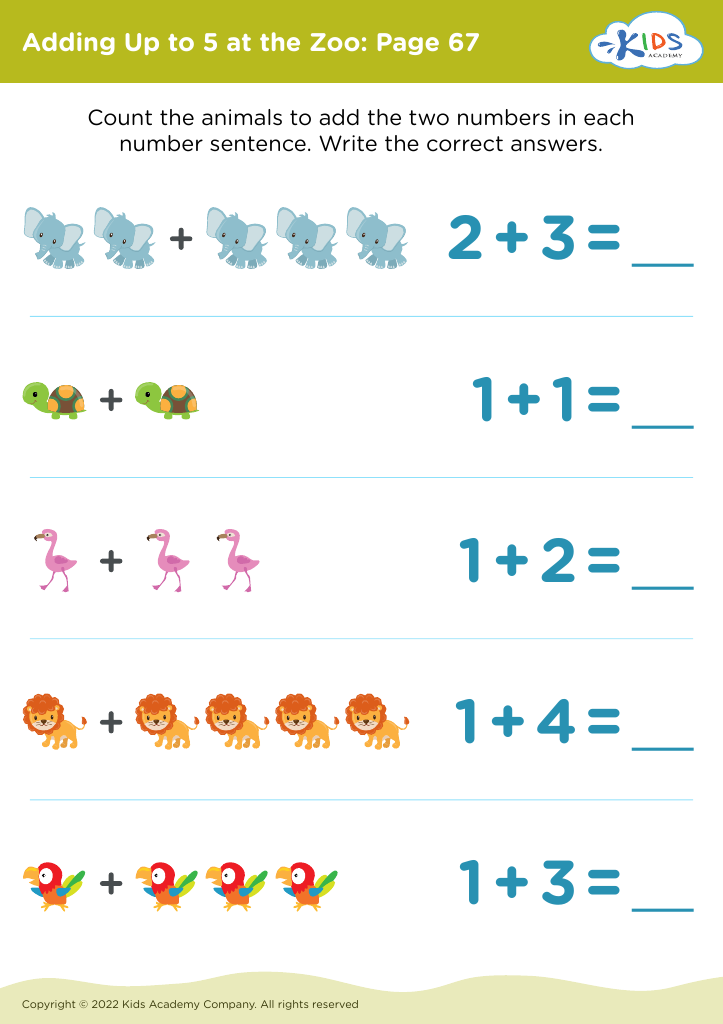
Discover our engaging "Visual Learning Reinforcement: Adding Up to 5 Worksheets" designed for children ages 3 to 8. These printable worksheets make learning basic math concepts fun and interactive, helping young learners grasp the idea of addition through vivid visuals and relatable contexts. Each worksheet incorporates colorful images and playful themes to enhance understanding and retention, promoting a positive learning experience. Perfect for classroom use or at-home practice, these resources are tailored to support various learning styles, boost confidence, and foster a strong foundation in mathematics. Join us in making math enjoyable and accessible for your little ones today!


.jpg)



%20(1).jpg)

Visual learning reinforcement is a crucial strategy for young learners, especially when teaching foundational concepts like addition. For children aged 3 to 8, incorporating visual aids and manipulatives when presenting the concept of adding up to 5 can significantly enhance their understanding and retention.
Visual learning engages children's natural curiosity and helps them make abstract concepts concrete. For instance, using colorful counters, number lines, or drawings allows children to visualize the process of addition, making it easier for them to grasp relationships between numbers. This hands-on approach not only fosters better comprehension but also improves their problem-solving skills.
Furthermore, visual reinforcement caters to different learning styles. Some children are visual learners who thrive when information is presented in a format they can see and manipulate. By employing visual strategies, parents and teachers ensure that they are reaching every student, promoting inclusivity and engagement in the learning process.
Moreover, these early number skills lay the groundwork for future mathematical concepts. As children gain confidence through visualization, they’re more likely to develop a positive attitude toward math, setting the stage for lifelong learning. In essence, visual learning reinforcement isn't just instructional; it's foundational for success in mathematics and beyond.








