Visual-motor skills Adding Up to 5 Worksheets for Ages 3-8
3 filtered results
-
From - To
Enhance your child's visual-motor skills with our engaging "Adding Up to 5 Worksheets for Ages 3-8." These interactive worksheets are designed to make learning math fun while promoting essential hand-eye coordination and fine motor skills. Available for children aged 3-8, these activities challenge young learners to connect numbers and drawings, fostering an early understanding of addition. Through a variety of creative exercises, children will practice identifying numbers and manipulating shapes, reinforcing their literacy and math foundations. Perfect for homeschooling or classroom use, these worksheets will inspire confidence and curiosity in your child's mathematical journey. Download and watch them thrive today!
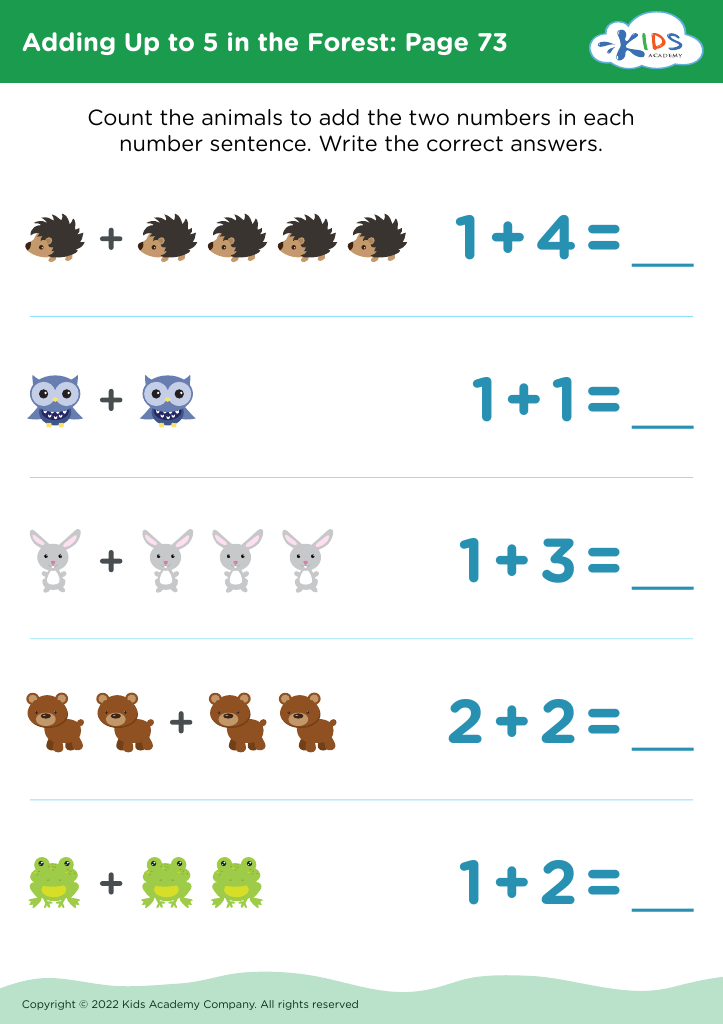
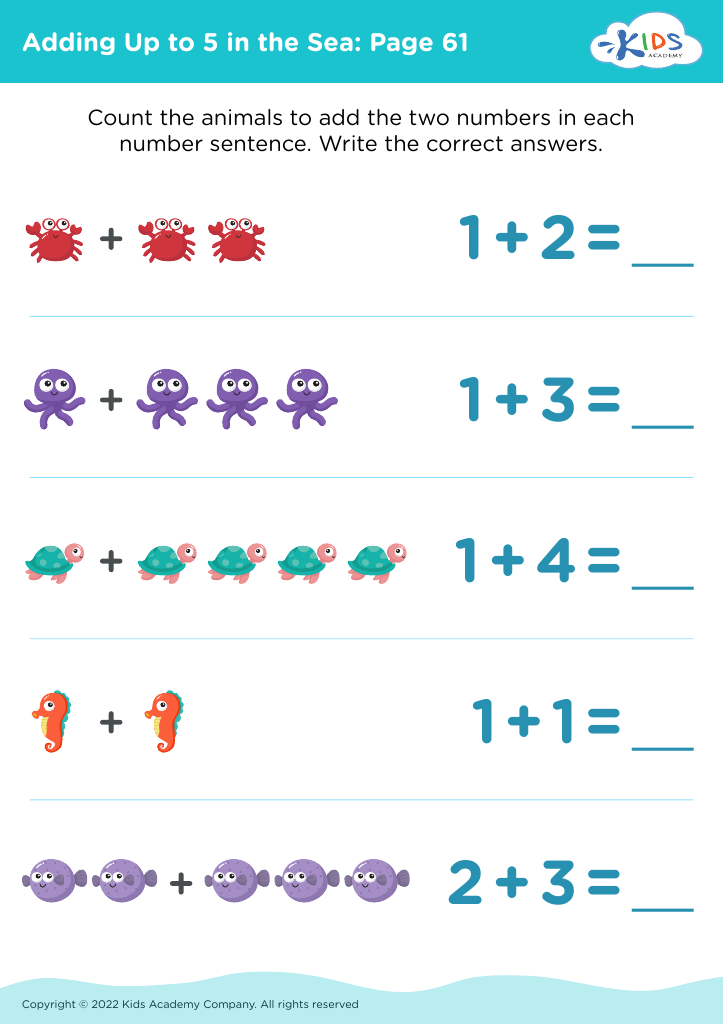
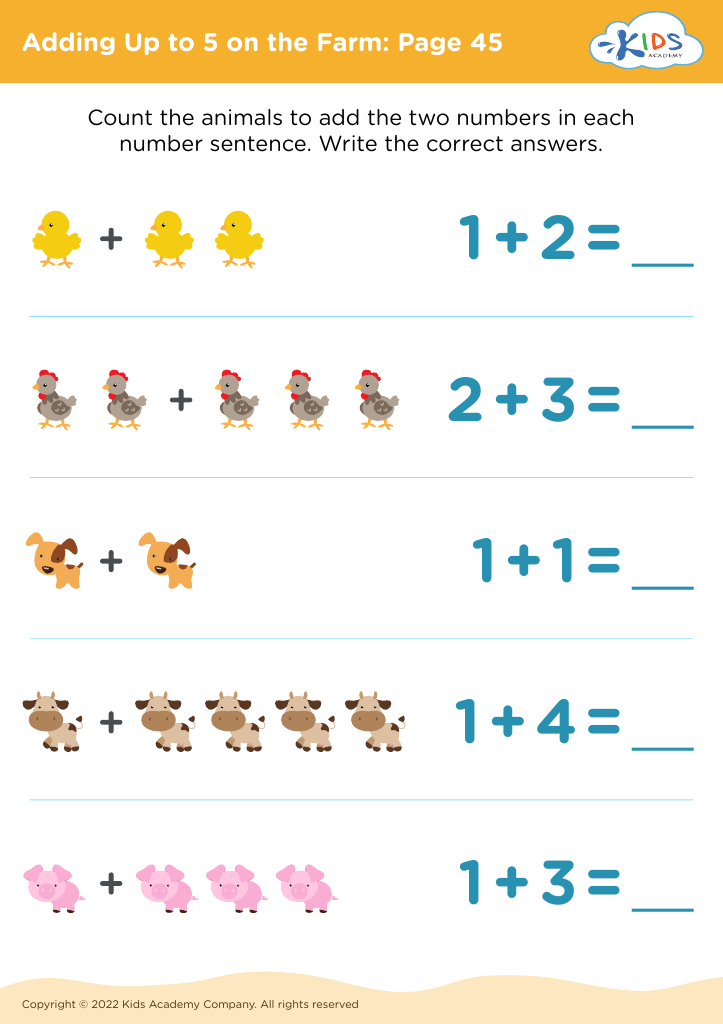








Visual-motor skills are crucial for young children, especially in the context of early mathematics learning, such as adding up to 5. These skills involve the coordination of visual perception and motor control and are vital for tasks that integrate sight with movement, such as writing, drawing, and problem-solving. For children aged 3-8, developing visual-motor skills facilitates their ability to understand numbers and perform simple calculations.
Parents and teachers should care about these skills because they underpin much of early academic success. Children who can accurately draw shapes, write numbers, and connect dots reinforce their understanding of quantities and more complex math concepts as they grow. Effective visual-motor skills also enhance children's ability to follow instructions, work independently, and express their ideas clearly.
Furthermore, these skills play a significant role in children's overall development, leading to higher self-esteem and social competence. By fostering visual-motor skills through engaging activities like puzzles, crafts, or interactive games, adults can support foundational learning experiences that contribute to children’s lifelong academic and social success. Investing in early skill development is essential for building confident, capable learners who enjoy mathematics and other subjects throughout their education.








