Number Recognition Adding up to 50 Misc Worksheets for Ages 3-8
14 filtered results
-
From - To
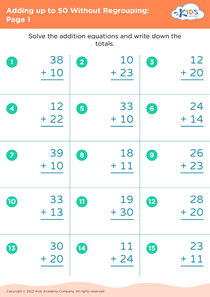
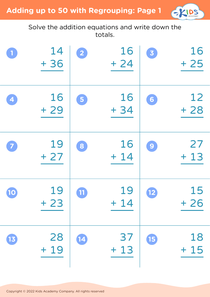
Introducing our engaging collection of "Number Recognition Adding up to 50 Misc Worksheets" designed specifically for children aged 3-8. These worksheets provide a fun and interactive way for young learners to develop essential number recognition skills while mastering addition concepts up to 50. Ideal for homeschooling or classroom use, our diverse activities include colorful visuals, counting exercises, and playful problems that capture children's attention. Enhance your child's early math abilities and foster a love for learning with age-appropriate challenges that cater to various skill levels. Unlock the doorway to math mastery today with these enriching resources!
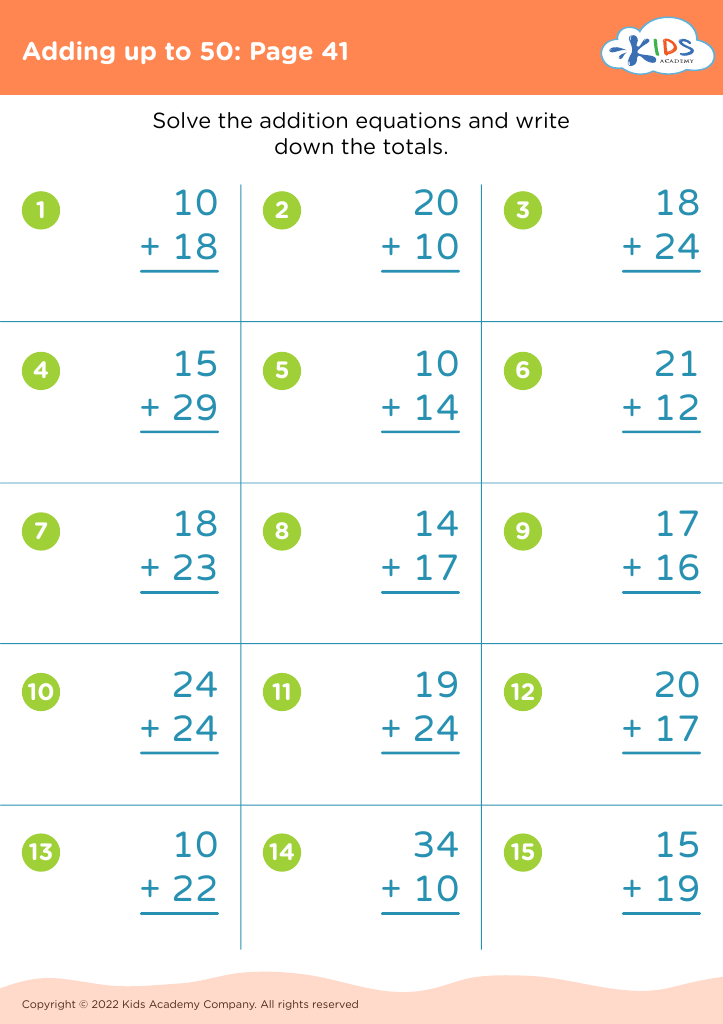
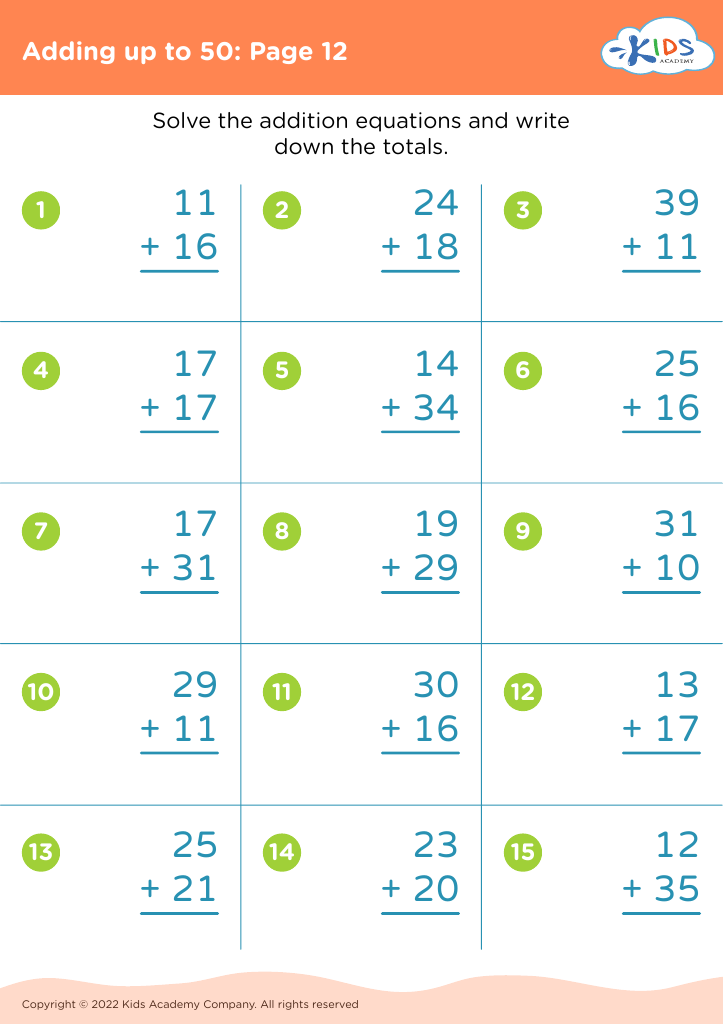
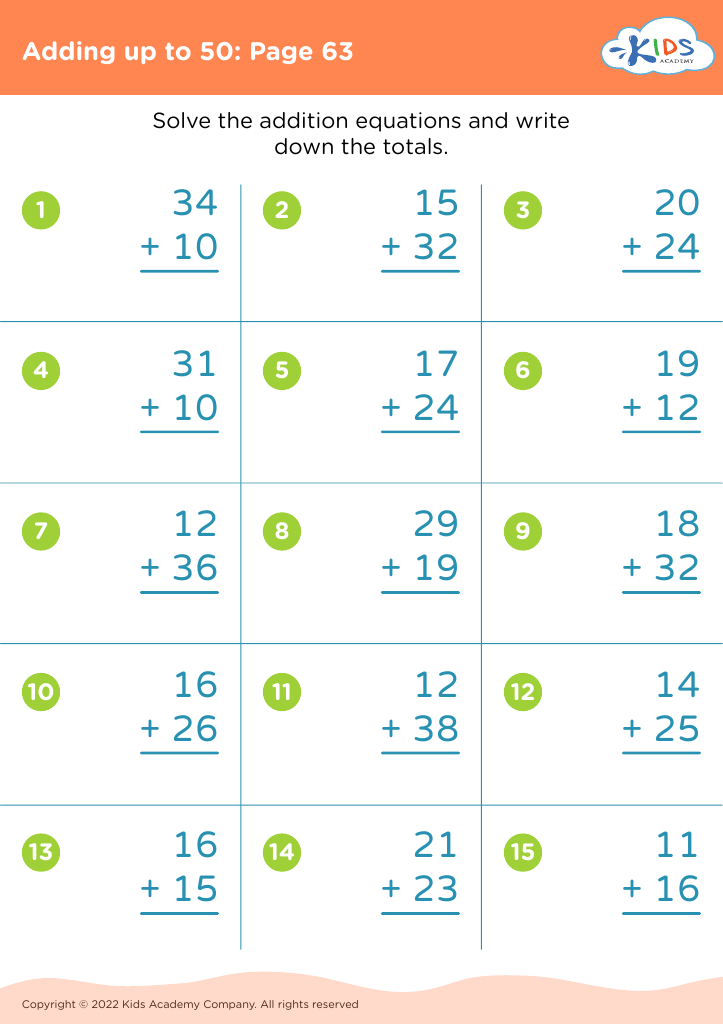
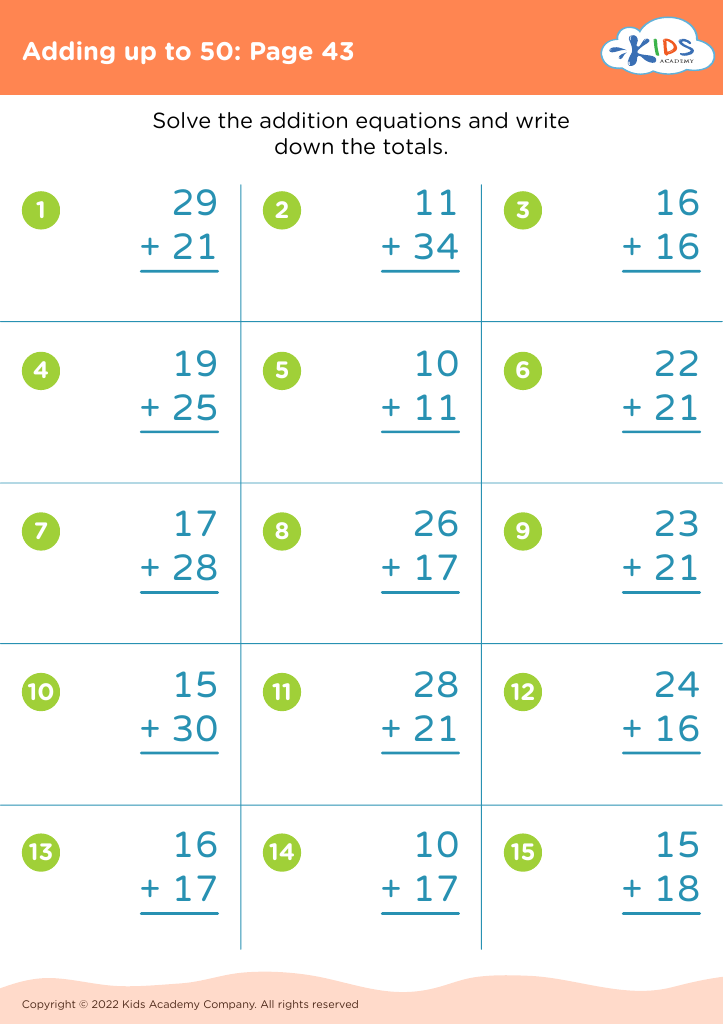
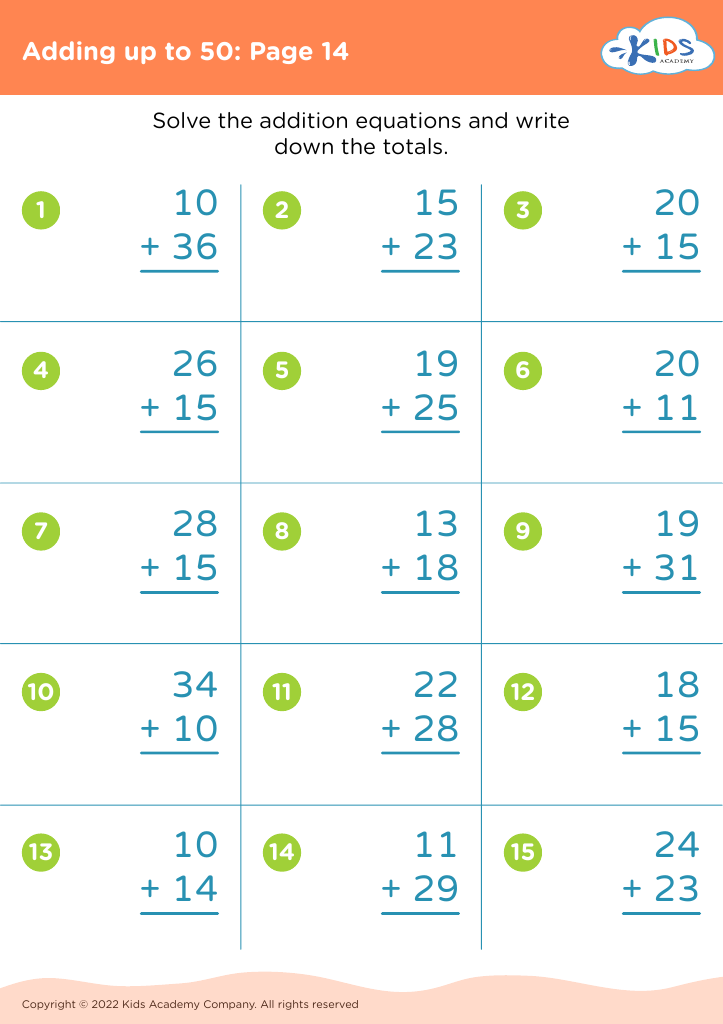
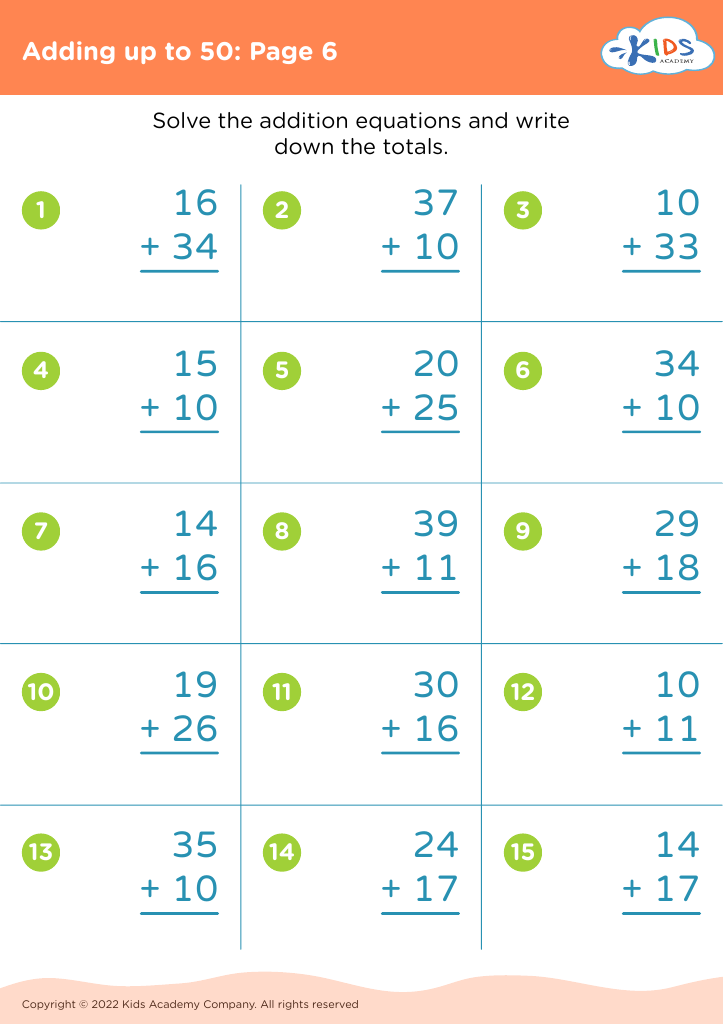
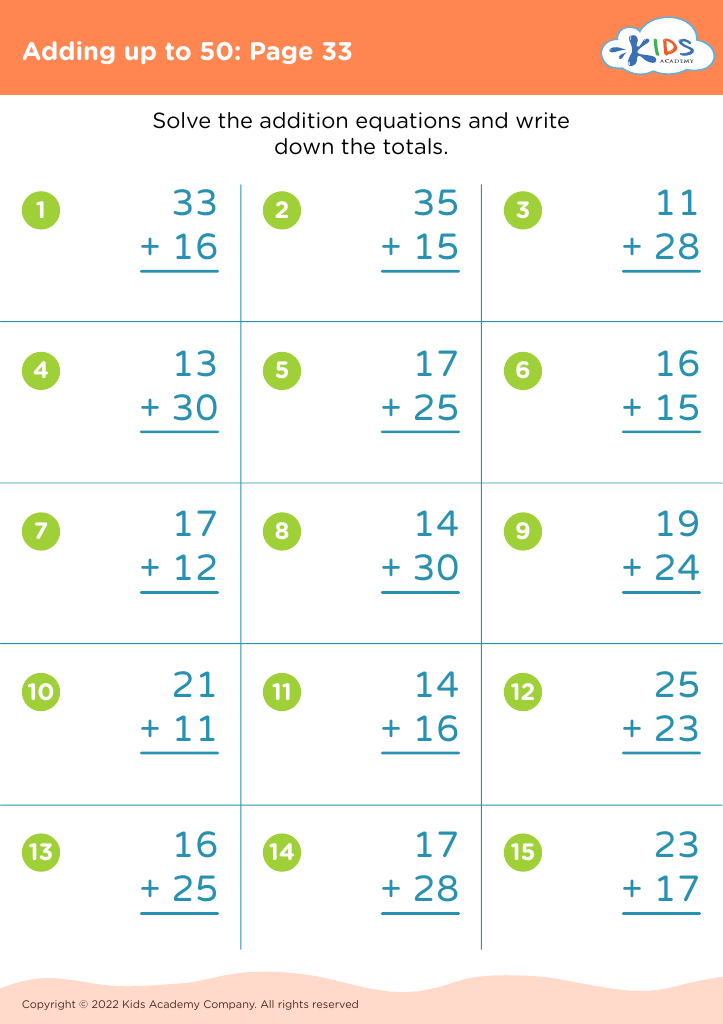
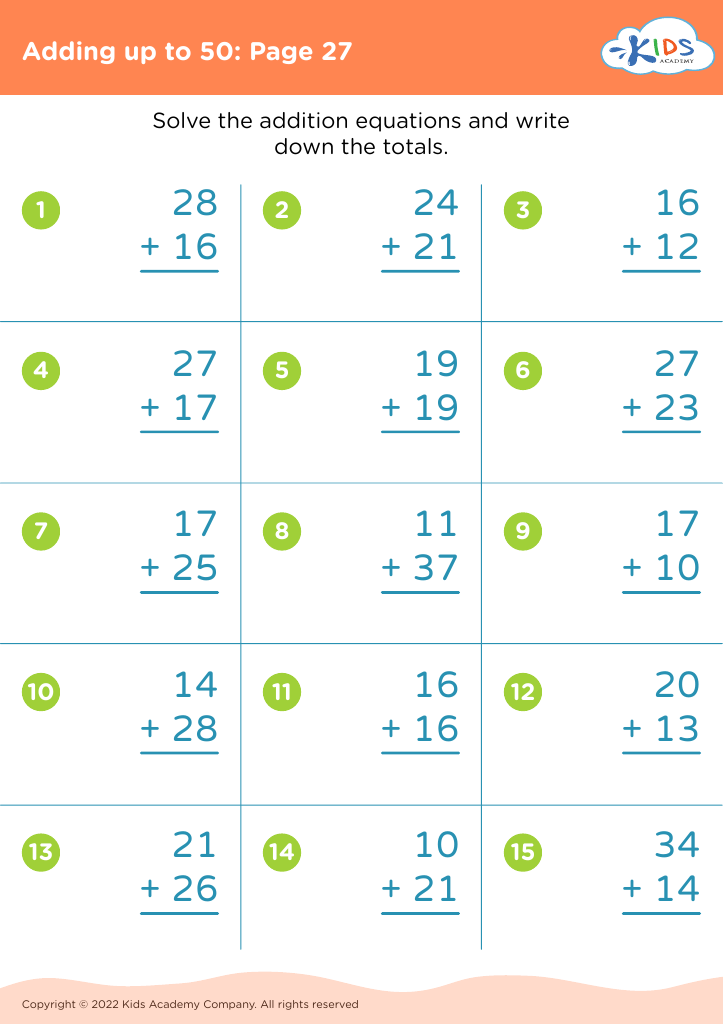
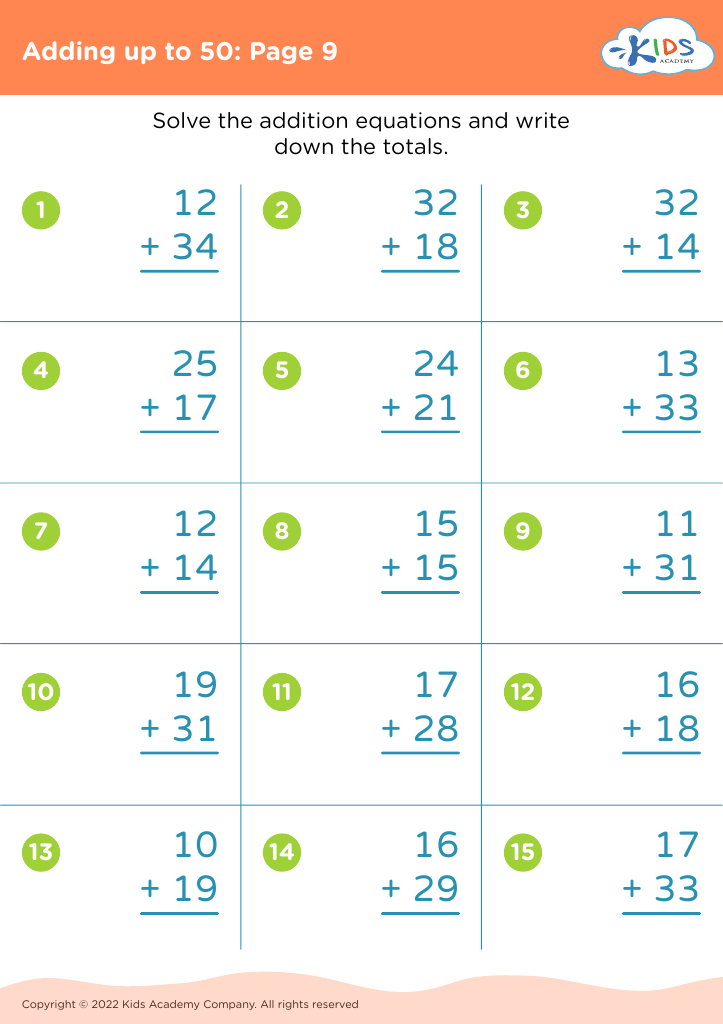
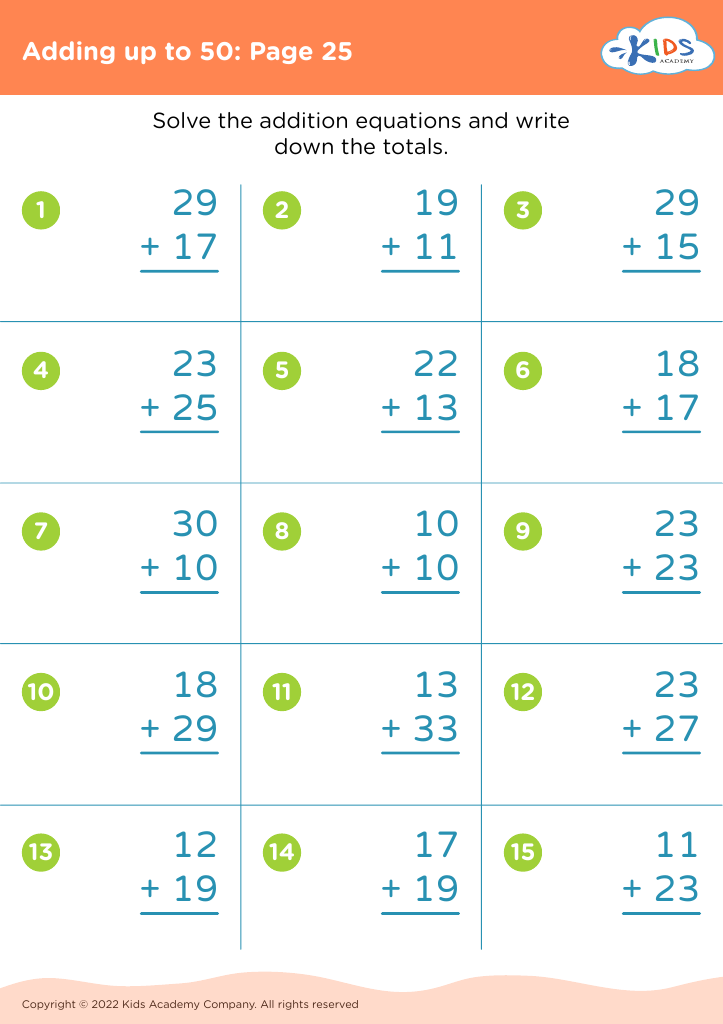
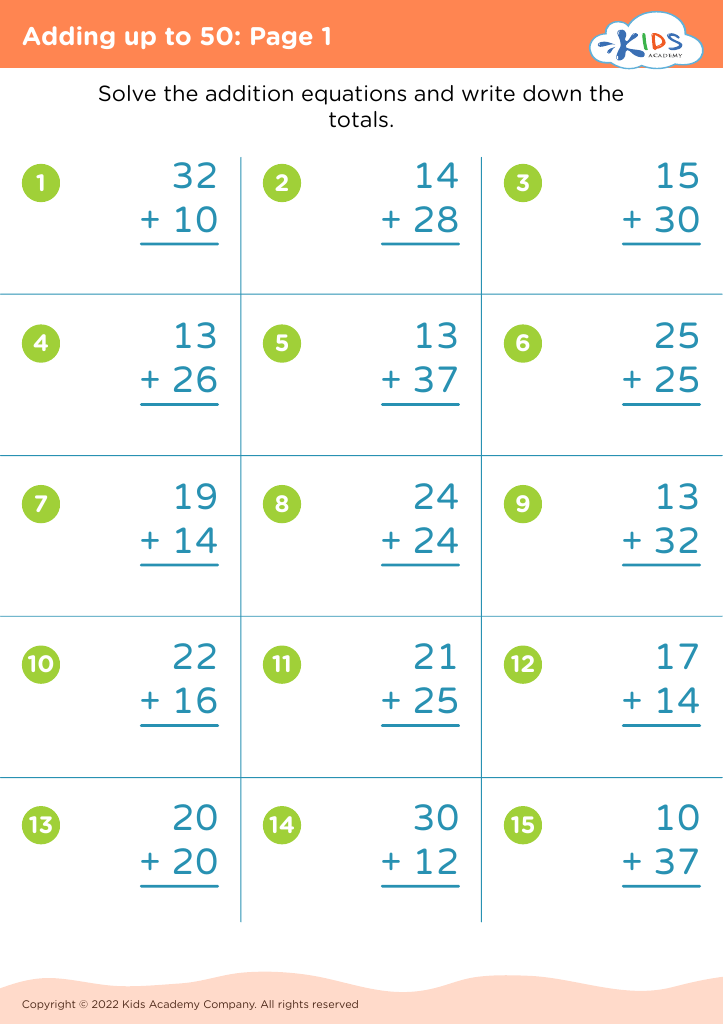
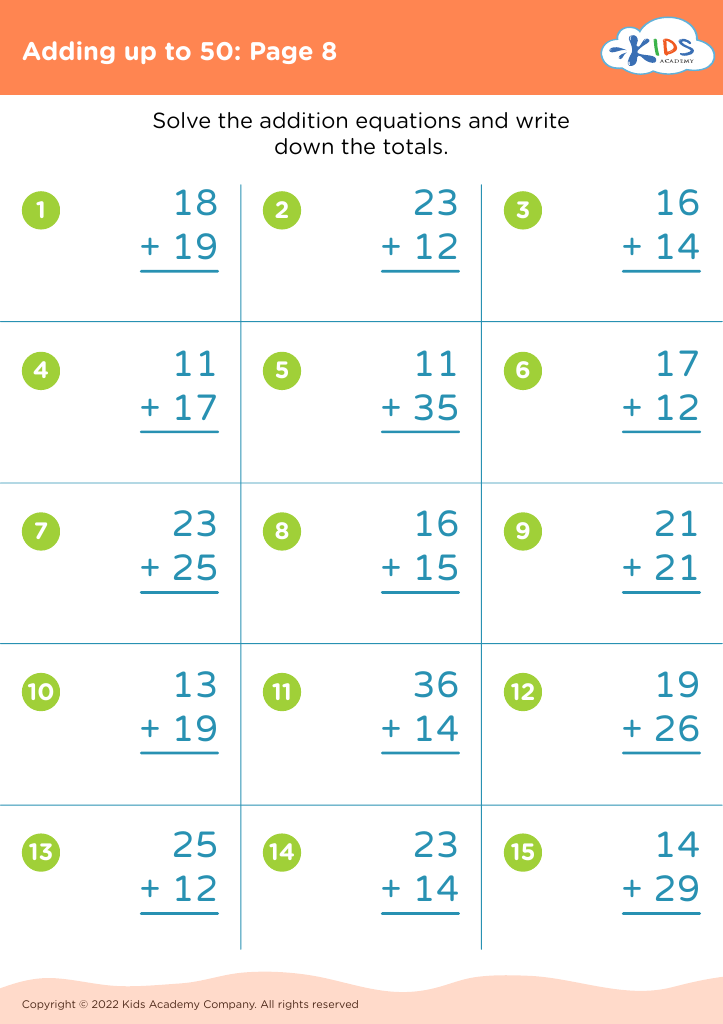
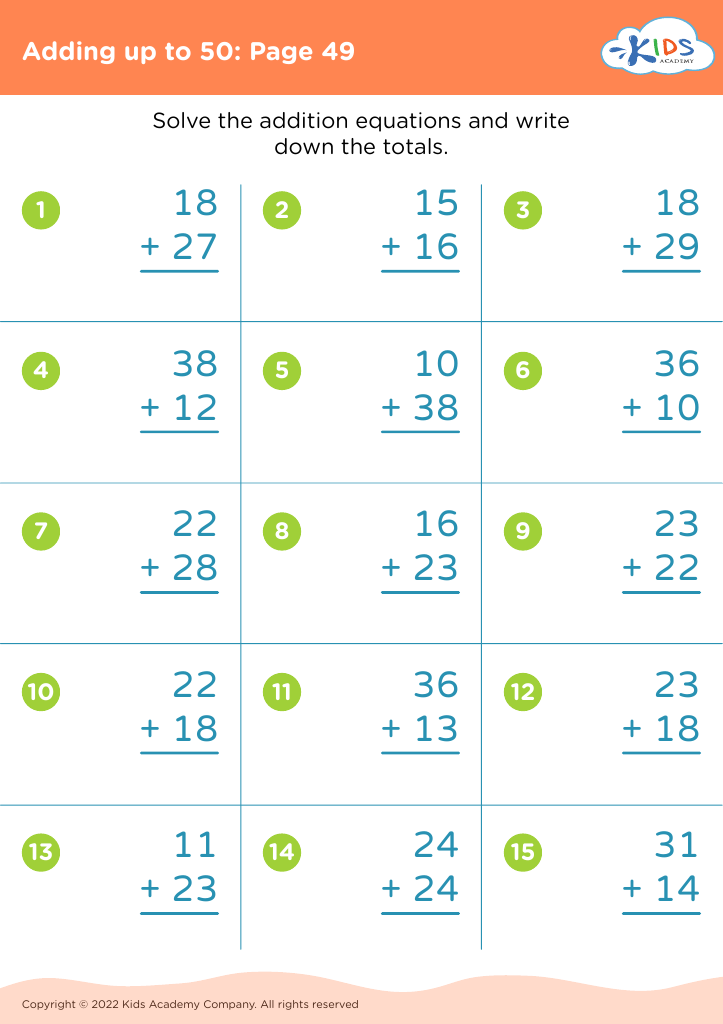
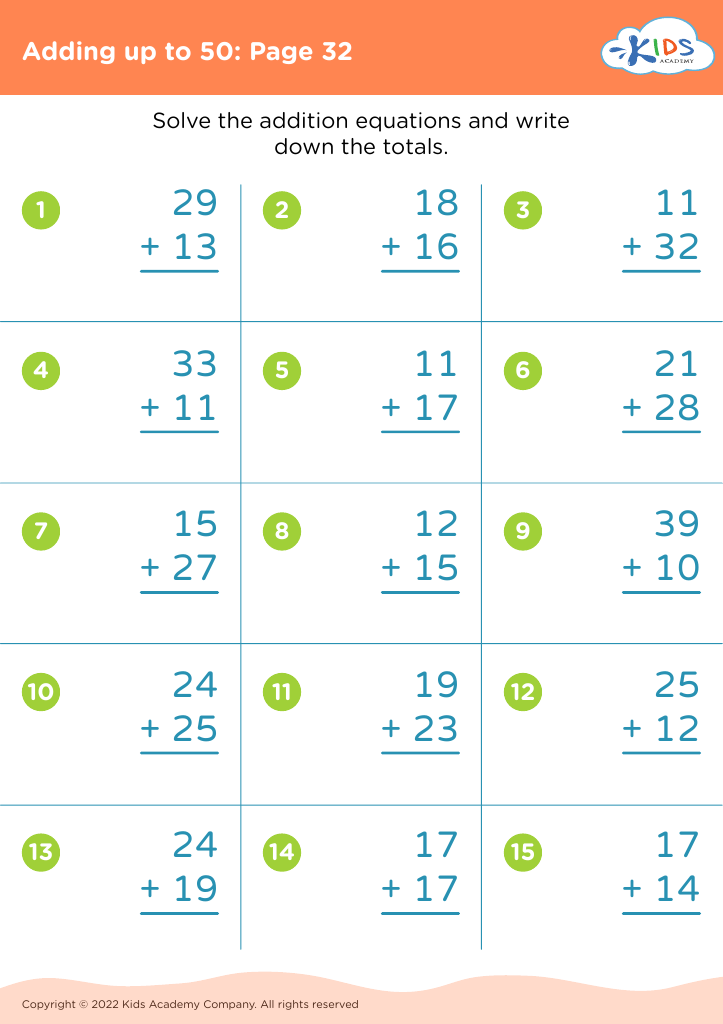


Number recognition and the ability to add up to 50 are foundational skills in early childhood education that significantly influence a child's future academic success. For parents and teachers, fostering these skills in children aged 3-8 is essential for several reasons.
Firstly, understanding numbers enhances cognitive development. Recognizing numbers helps children grasp mathematical concepts and fosters critical thinking skills that are vital for their overall learning. This foundational knowledge sets the stage for more complex math skills as they advance in school.
Secondly, number recognition contributes to daily life skills. Children who can recognize and manipulate numbers are better equipped to handle age-appropriate tasks like reading clocks, managing simple money transactions, and comprehending measurements in cooking or arts and crafts.
Moreover, engaging with numbers can motivate children and build confidence in their abilities. This engagement helps create positive attitudes towards math, often influencing lifelong learning patterns.
Finally, these skills encourage collaboration and communication among peers during group activities, fostering social skills alongside academic development. In conclusion, prioritizing number recognition and addition skills is crucial for personal growth and lays a solid foundation for future learning. Parents and teachers play a vital role in nurturing these abilities, ensuring children are well-prepared for the challenges ahead.