Filters

17 filtered results

Clear all filters
Favorites
With answer key
Interactive

17 filtered results

Difficulty Level

Grade


Welcome to our "Understanding Fractions: Adding Up to 50 with Regrouping" worksheets, designed for children ages 3-8! These engaging and colorful resources help young learners grasp the concept of fractions while mastering the addition of numbers up to 50, featuring regrouping skills. Our carefully crafted worksheets make learning fun and easy, promoting foundational math skills through interactive exercises. By working through these activities, children will build confidence in their mathematical abilities and develop critical problem-solving techniques. Explore our collection today to inspire a love for math as your child discovers the world of fractions in an accessible and enjoyable way!
Check out this FREE Trial Lesson on Adding up to 50 with Regrouping for age 3-8!

Match Objects that Fit Together

Favorites
With answer key
Interactive
  • 3-8
  • Understanding fractions
  • Adding up to 50 with Regrouping
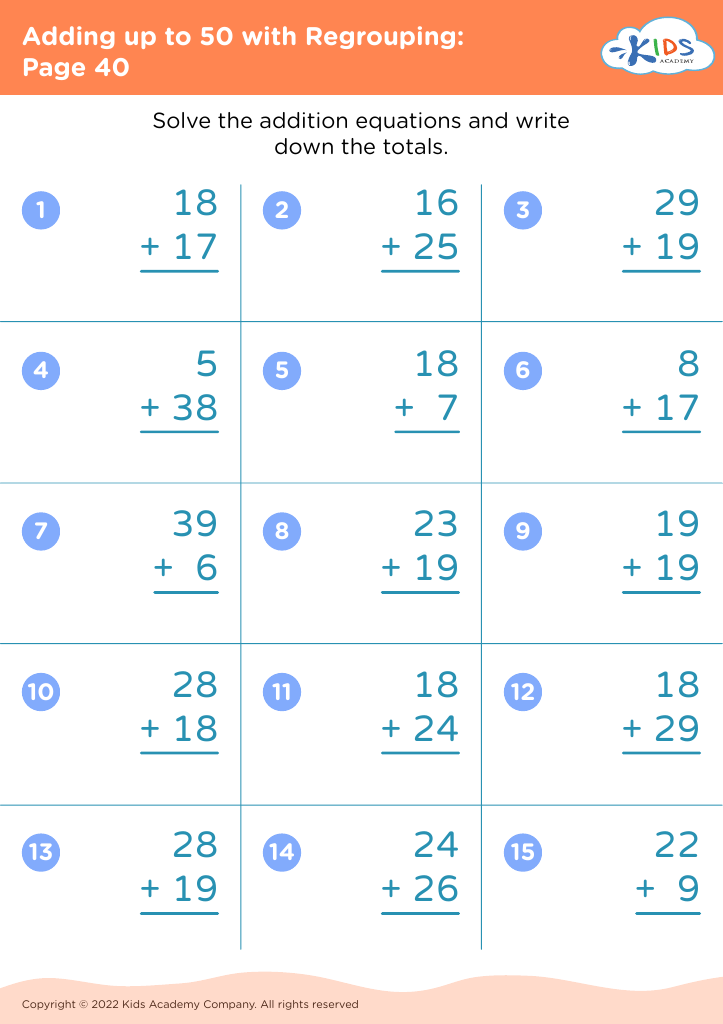
Adding up to 50 with Regrouping: Page 40
Worksheet
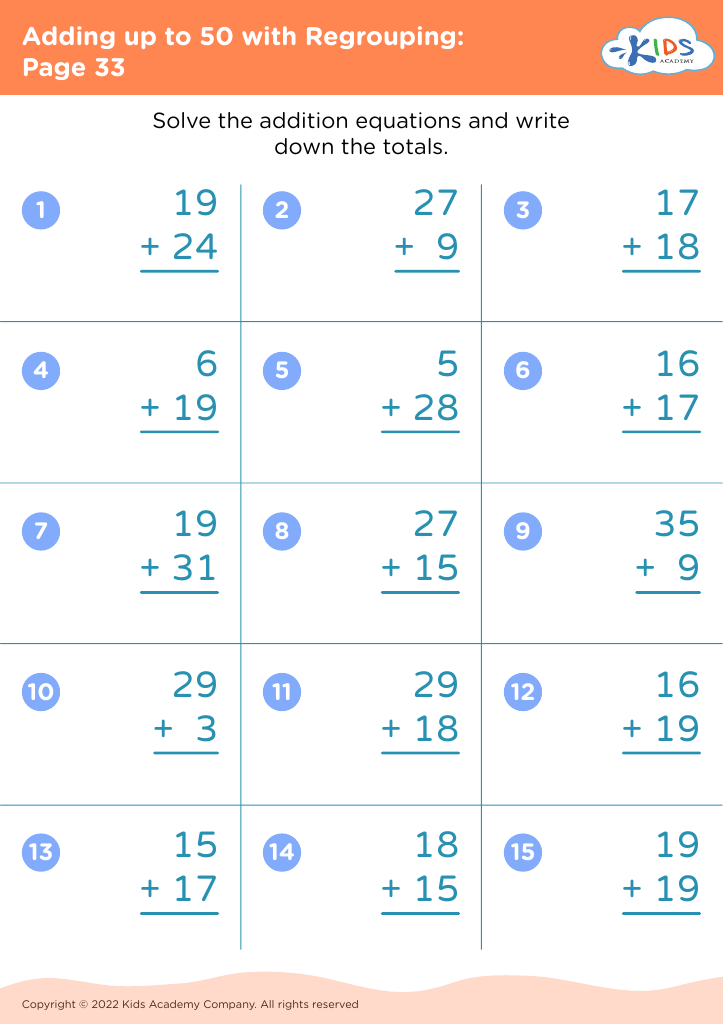
Adding up to 50 with Regrouping: Page 33
Worksheet
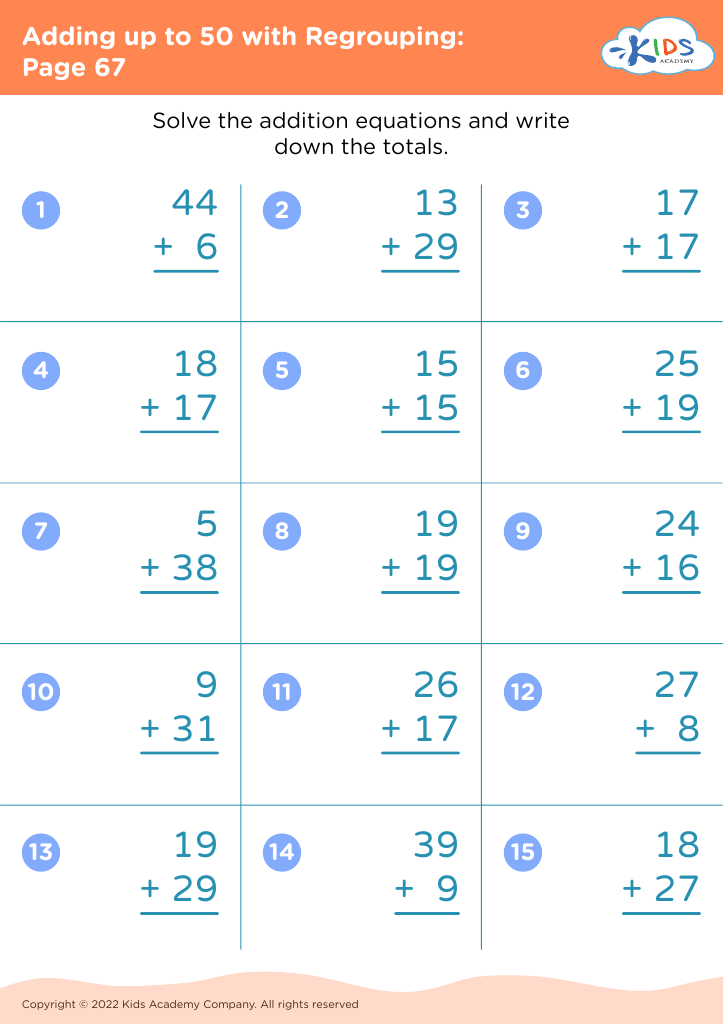
Adding up to 50 with Regrouping: Page 67
Worksheet
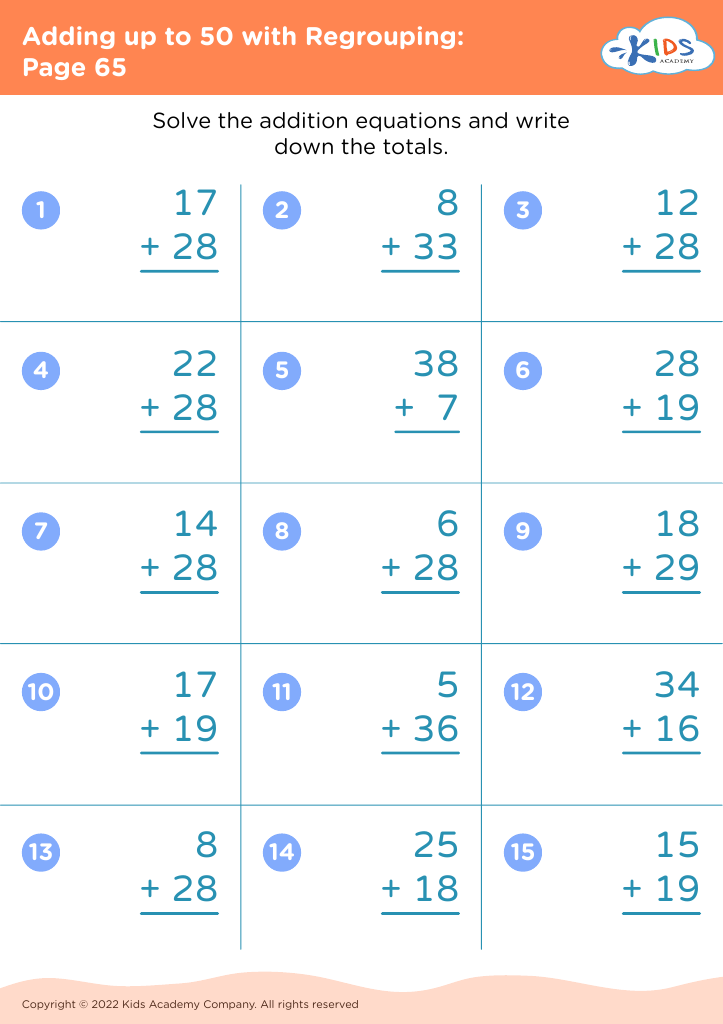
Adding up to 50 with Regrouping: Page 65
Worksheet
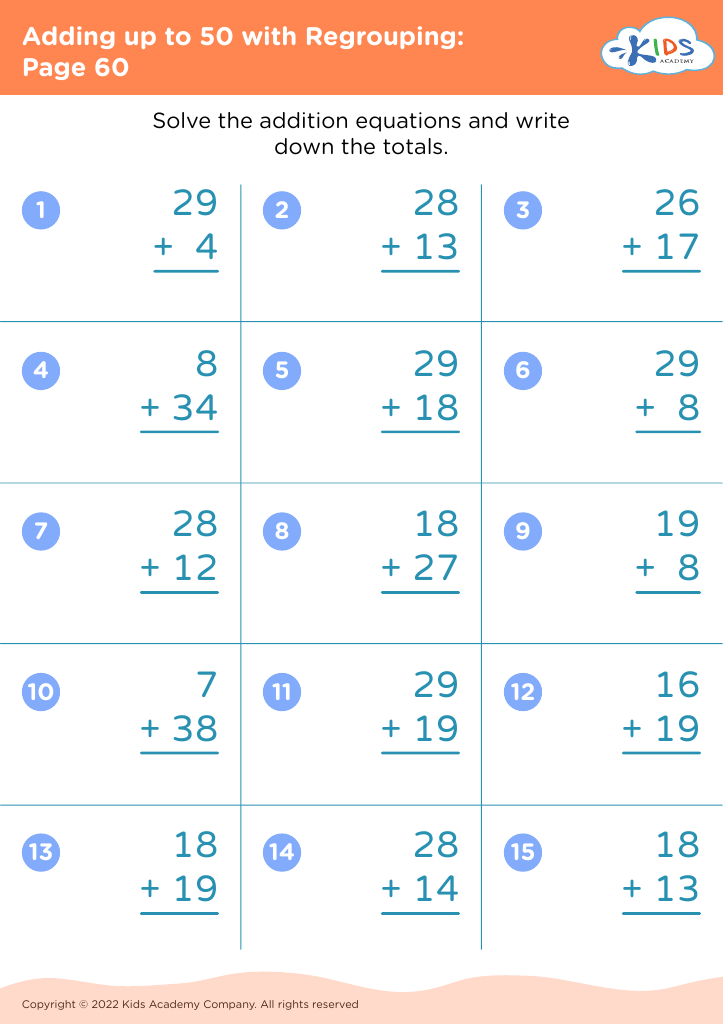
Adding up to 50 with Regrouping: Page 60
Worksheet
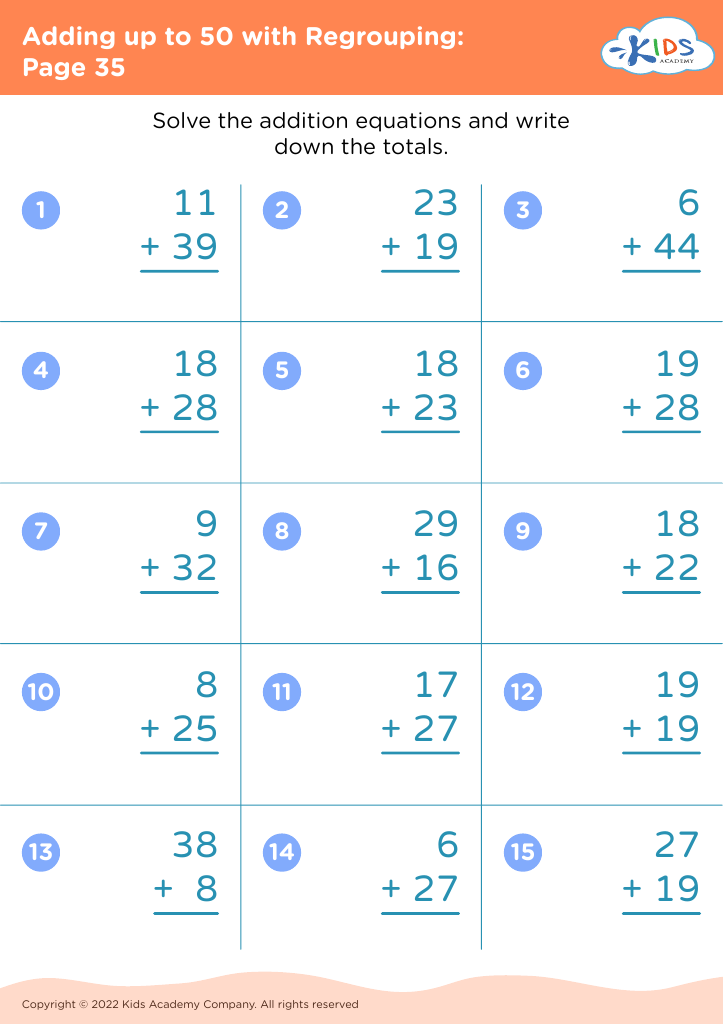
Adding up to 50 with Regrouping: Page 35
Worksheet
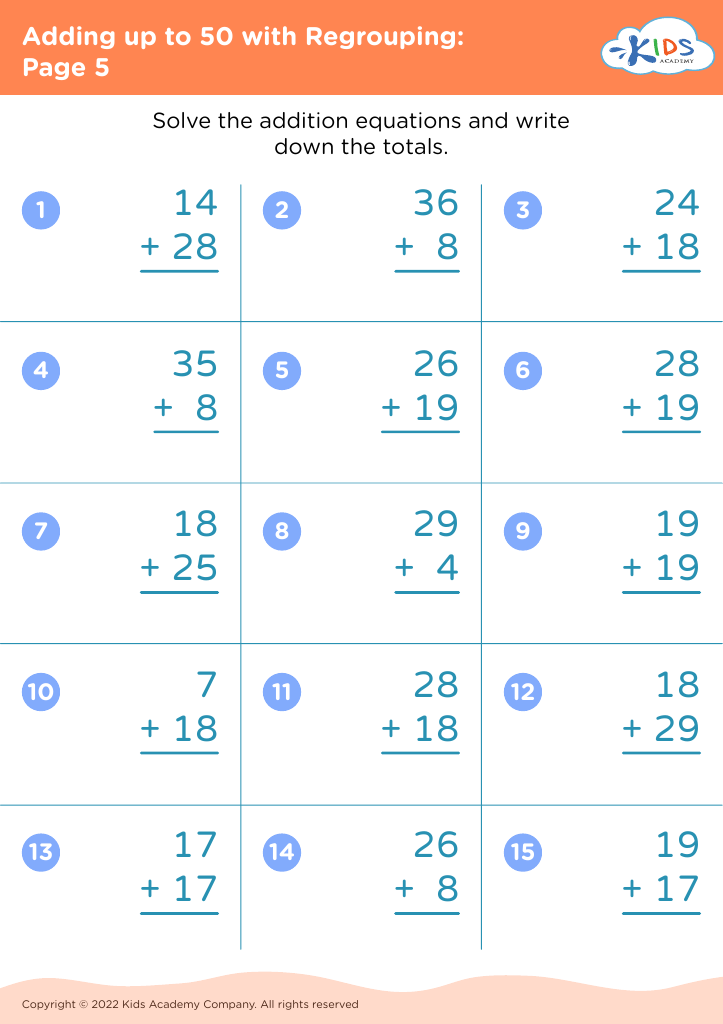
Adding up to 50 with Regrouping: Page 5
Worksheet
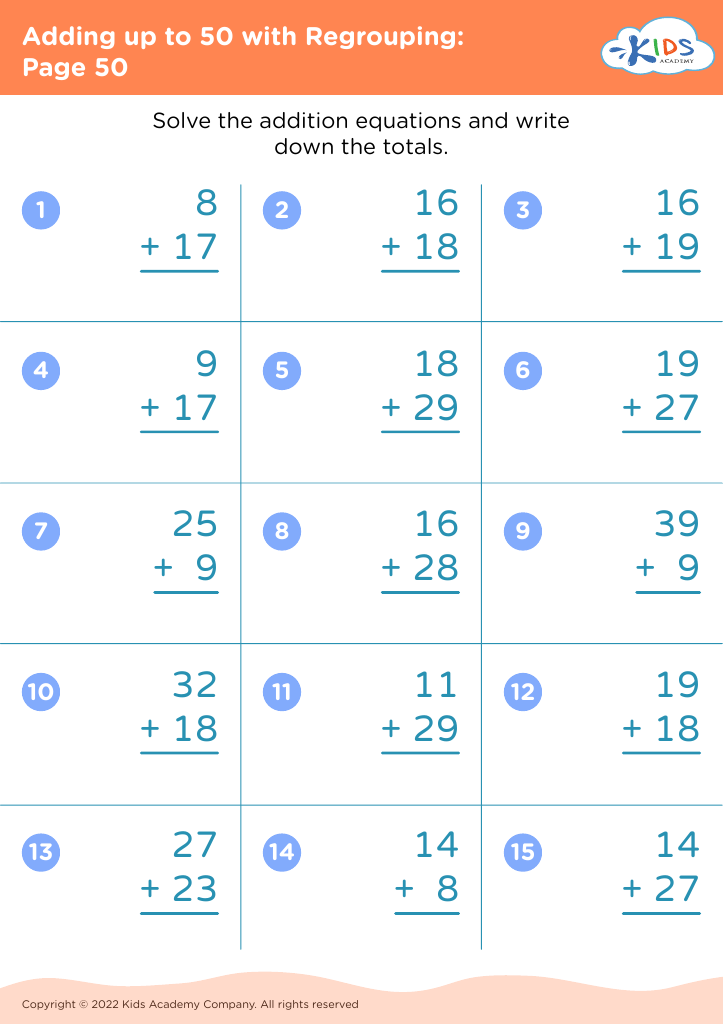
Adding up to 50 with Regrouping: Page 50
Worksheet
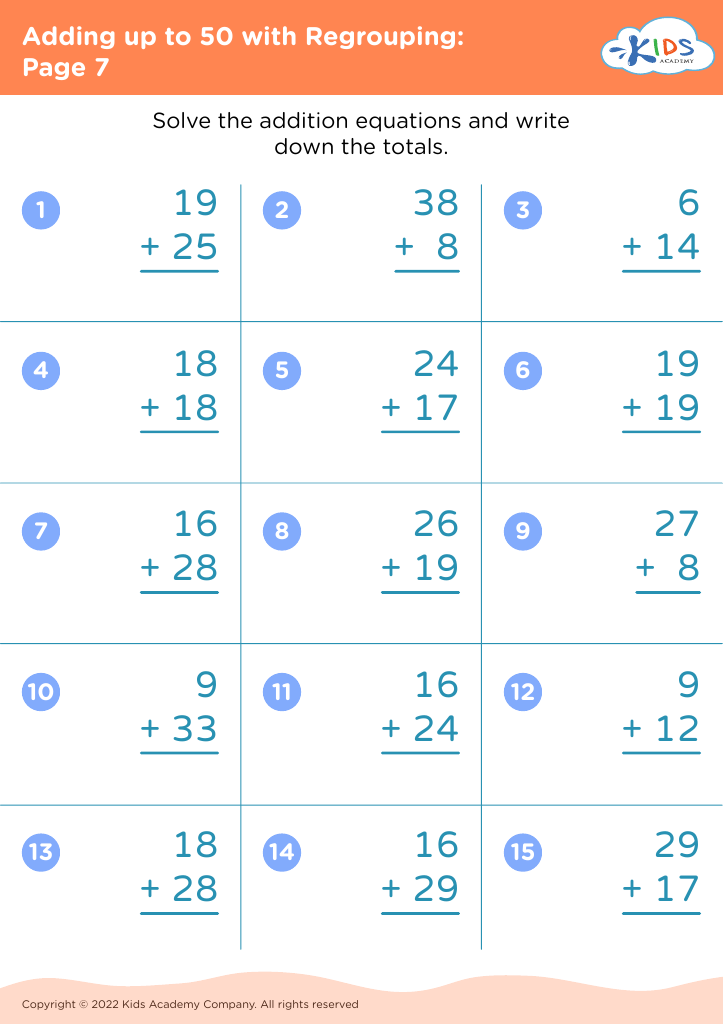
Adding up to 50 with Regrouping: Page 7
Worksheet
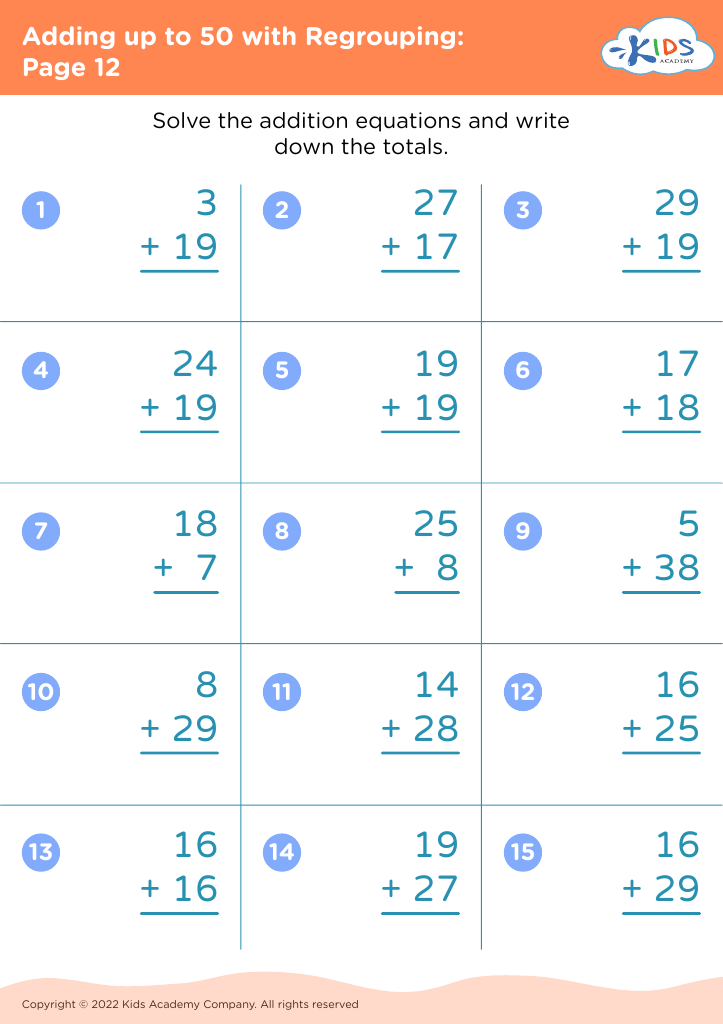
Adding up to 50 with Regrouping: Page 12
Worksheet
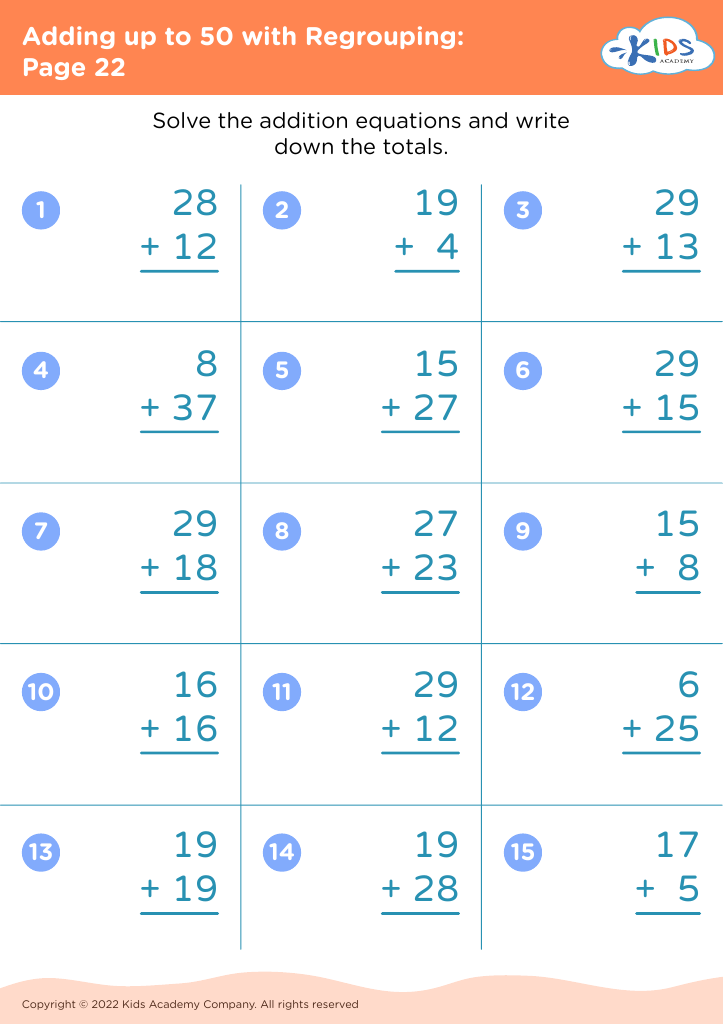
Adding up to 50 with Regrouping: Page 22
Worksheet
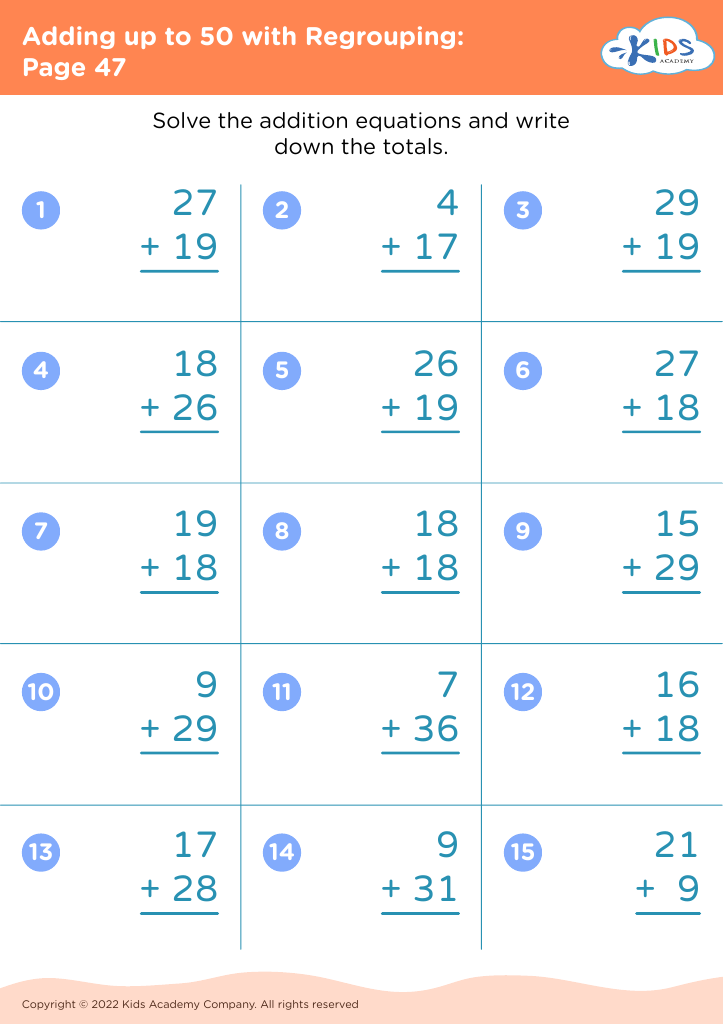
Adding up to 50 with Regrouping: Page 47
Worksheet
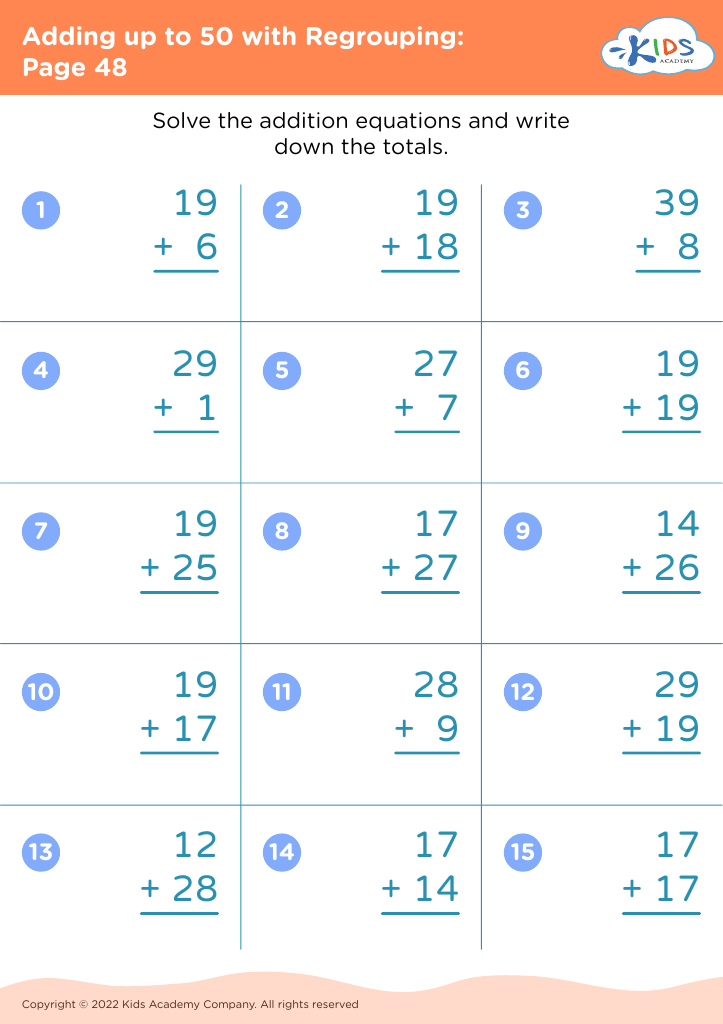
Adding up to 50 with Regrouping: Page 48
Worksheet
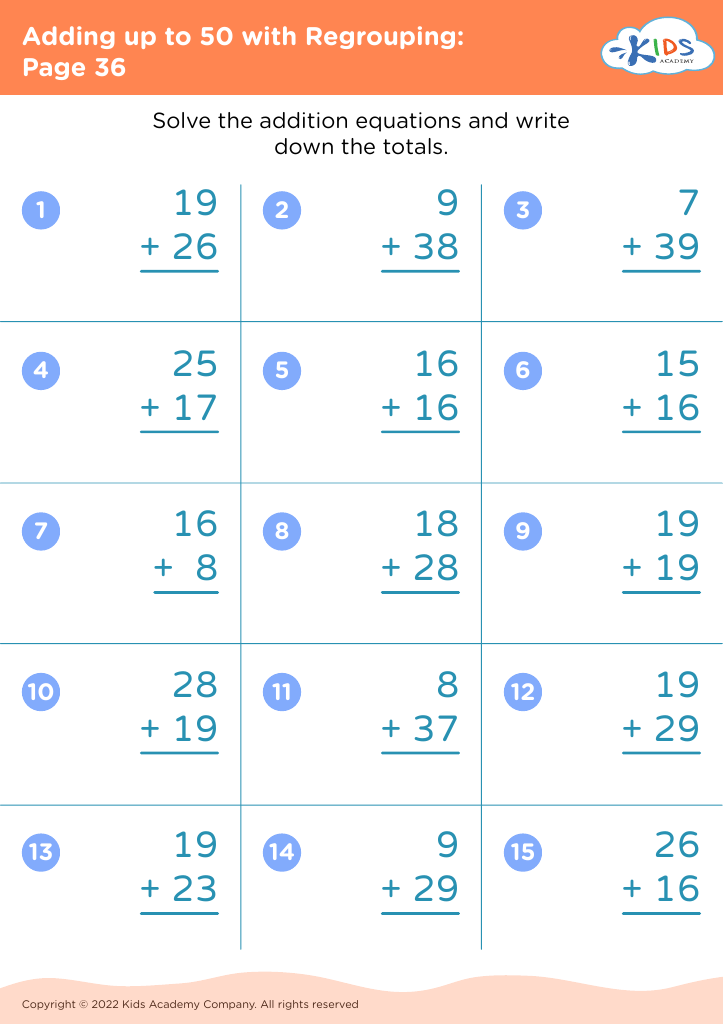
Adding up to 50 with Regrouping: Page 36
Worksheet
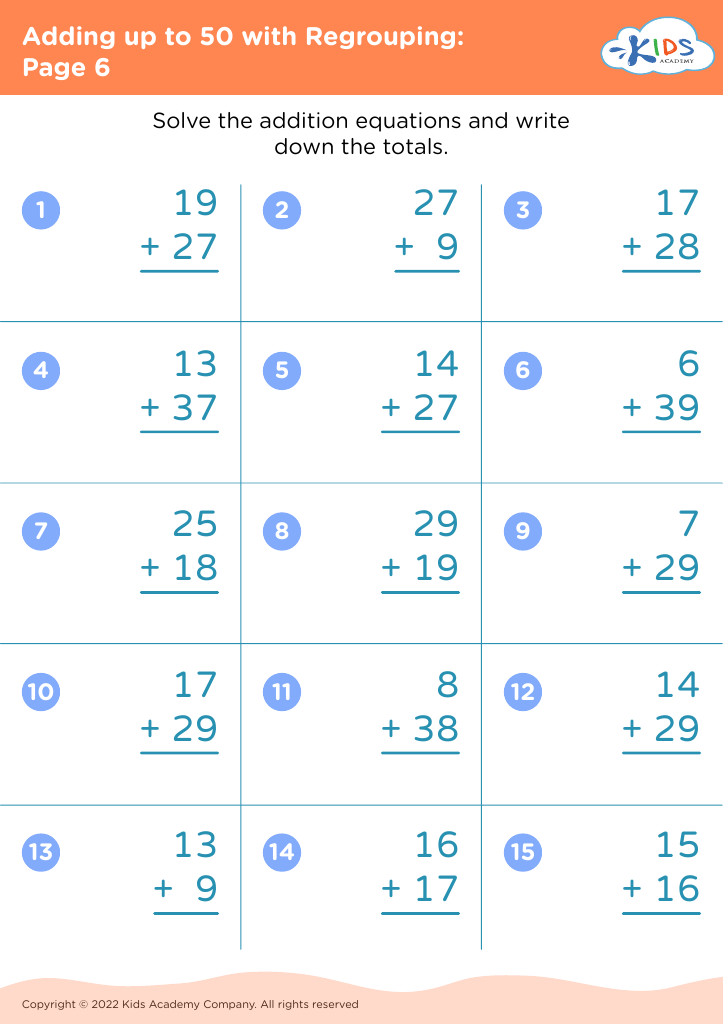
Adding up to 50 with Regrouping: Page 6
Worksheet
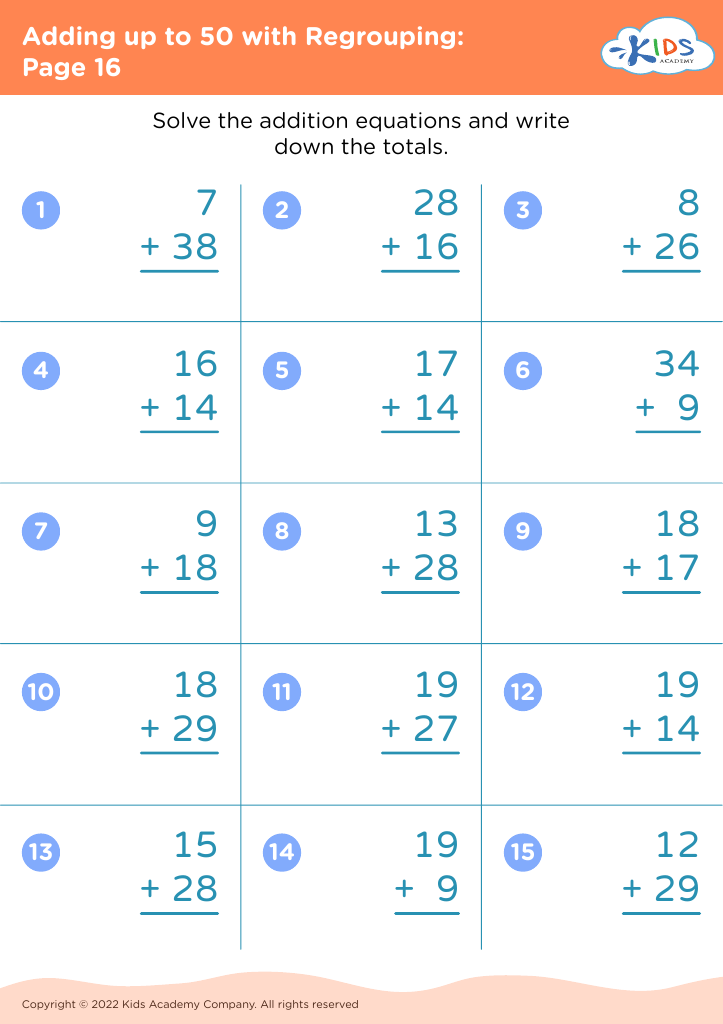
Adding up to 50 with Regrouping: Page 16
Worksheet
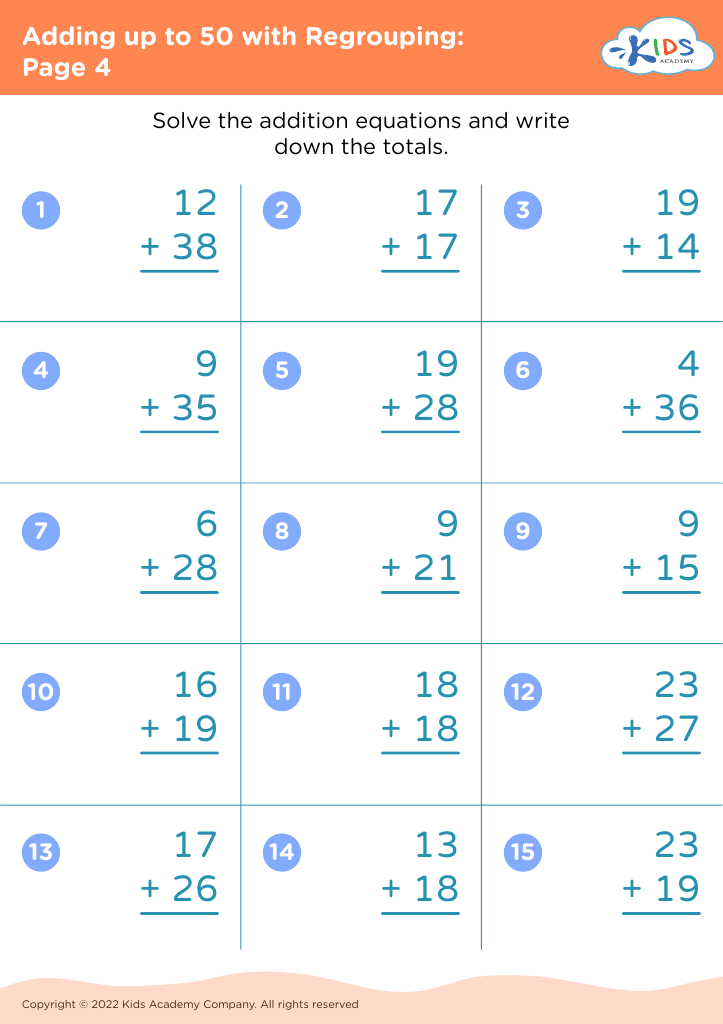
Adding up to 50 with Regrouping: Page 4
Worksheet


Understanding fractions and adding up to 50 with regrouping are foundational concepts in mathematics that play a vital role in a child's cognitive development. For children ages 3 to 8, these skills contribute to building a strong mathematical foundation, which is essential for their future academic success.

Parents and teachers should care about teaching these concepts because they encourage critical thinking, problem-solving, and logical reasoning. Early exposure to fractions helps children grasp concepts of part versus whole, enabling them to understand relationships in various contexts, such as sharing, measuring, and dividing. This lays the groundwork for more complex mathematical operations later on.

Adding up to 50 with regrouping fosters numerical fluency, teaching children how to organize numbers effectively and understand place value. These skills enhance their ability to perform calculations confidently and accurately, which is crucial as they encounter more significant mathematical challenges in higher grades.

Moreover, the ability to work with fractions and regrouping promotes perseverance and a positive attitude towards math. When children see themselves succeed in these areas, it boosts their self-esteem and encourages a love for learning. By prioritizing these skills, parents and teachers set children on a path toward mathematical proficiency and critical life skills.