Number Recognition Adding up to 50 Without Regrouping Worksheets for Ages 3-8
15 filtered results
-
From - To
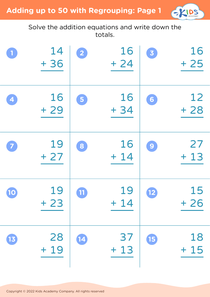
Introduce your young learners to the excitement of math with our "Number Recognition Adding up to 50 Without Regrouping Worksheets," designed specifically for ages 3-8. These interactive worksheets focus on enhancing number recognition skills while building a strong mathematical foundation. Perfectly curated for early grade students, each exercise reinforces learning without the complexity of regrouping, ensuring a positive and frustration-free experience. Engage your child in fun, educational activities that gradually improve their adding proficiency up to 50, while simultaneously boosting their confidence and love for math. Download now to help your child excel in early math skills and enjoy learning!
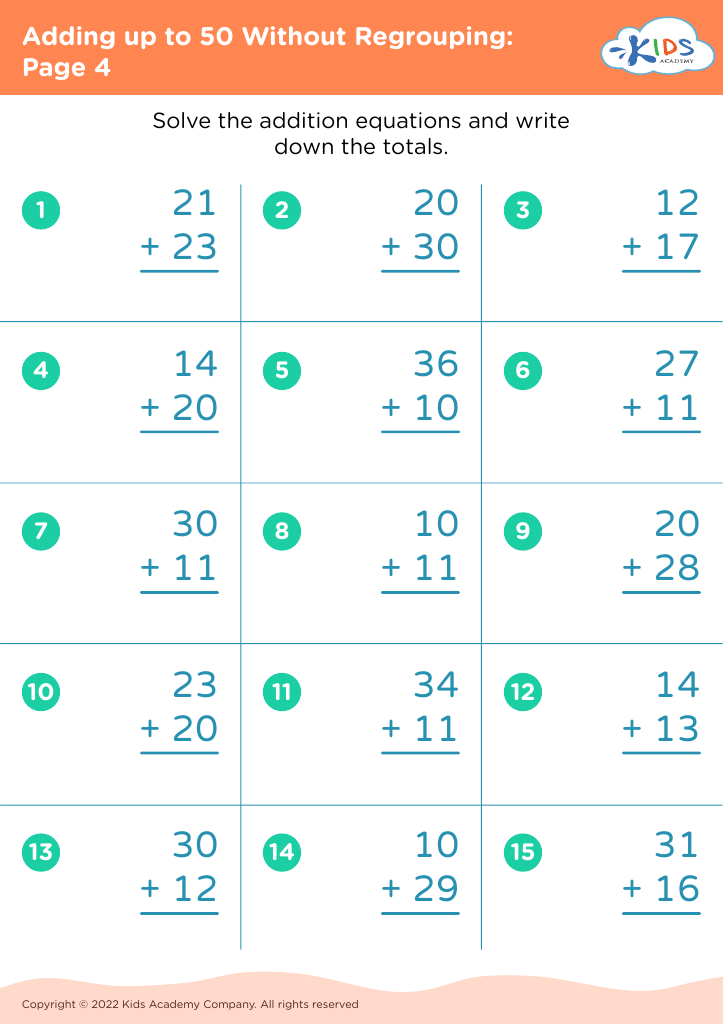
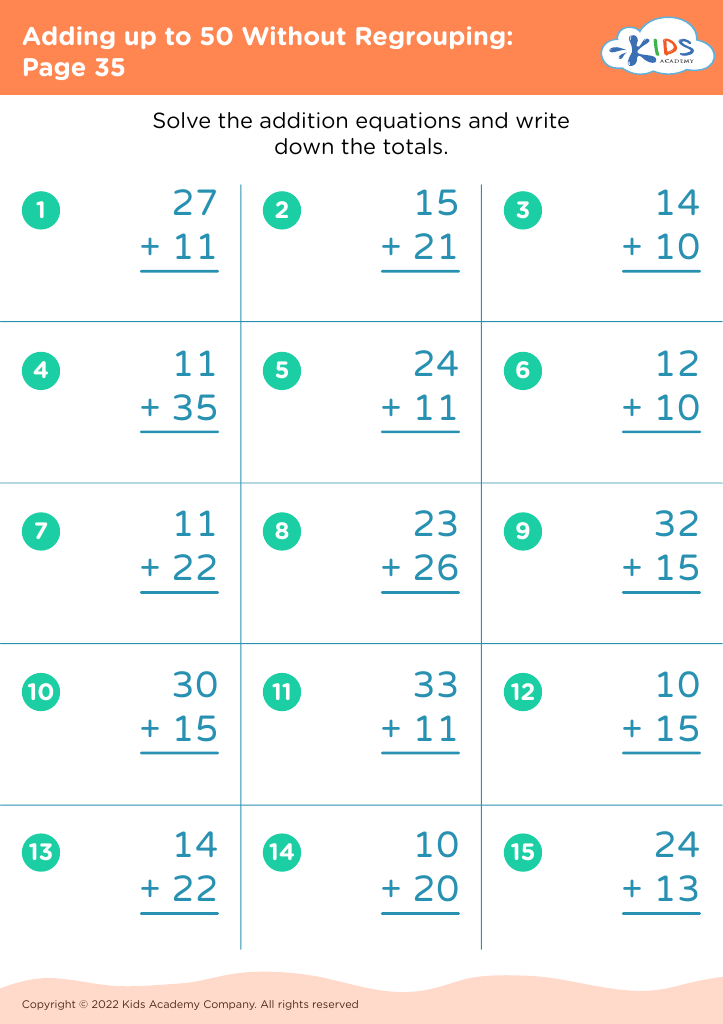
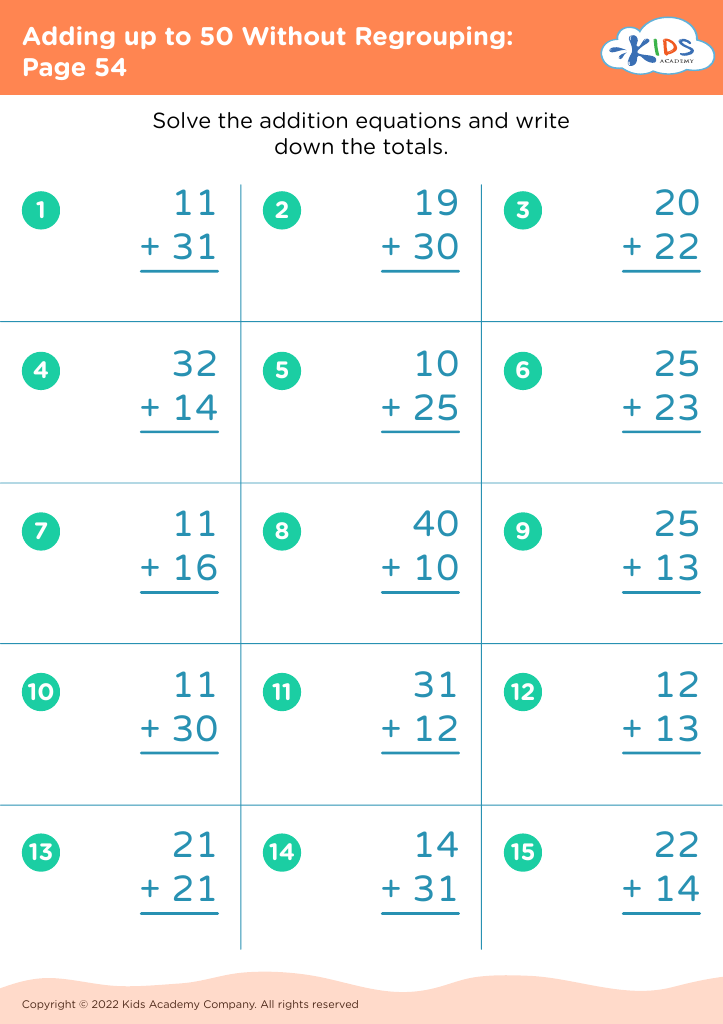
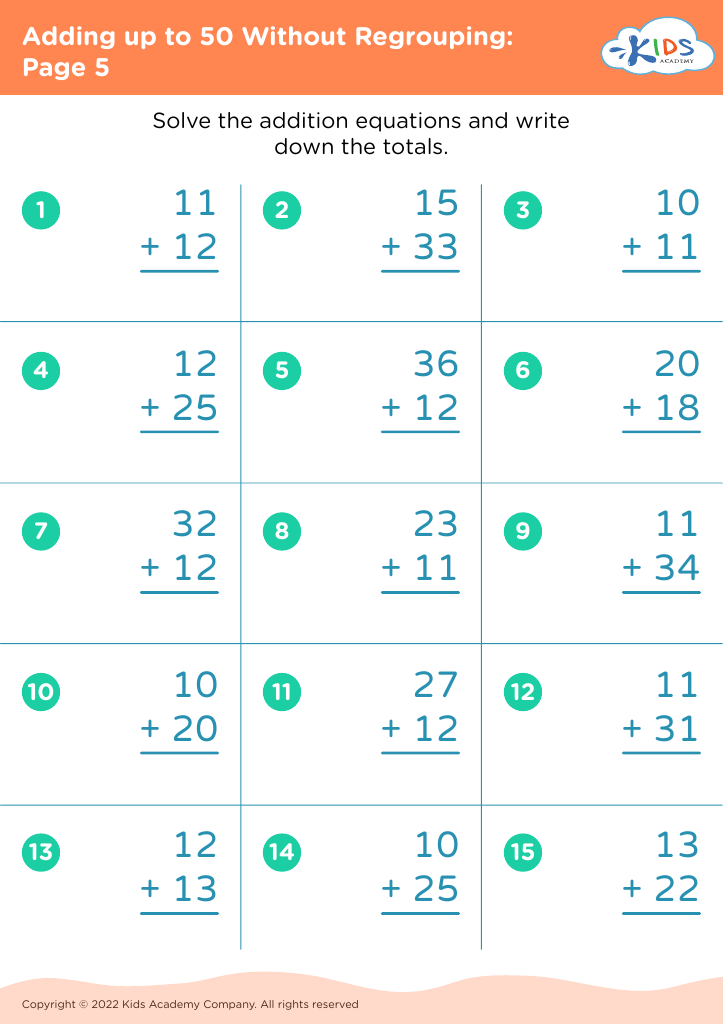
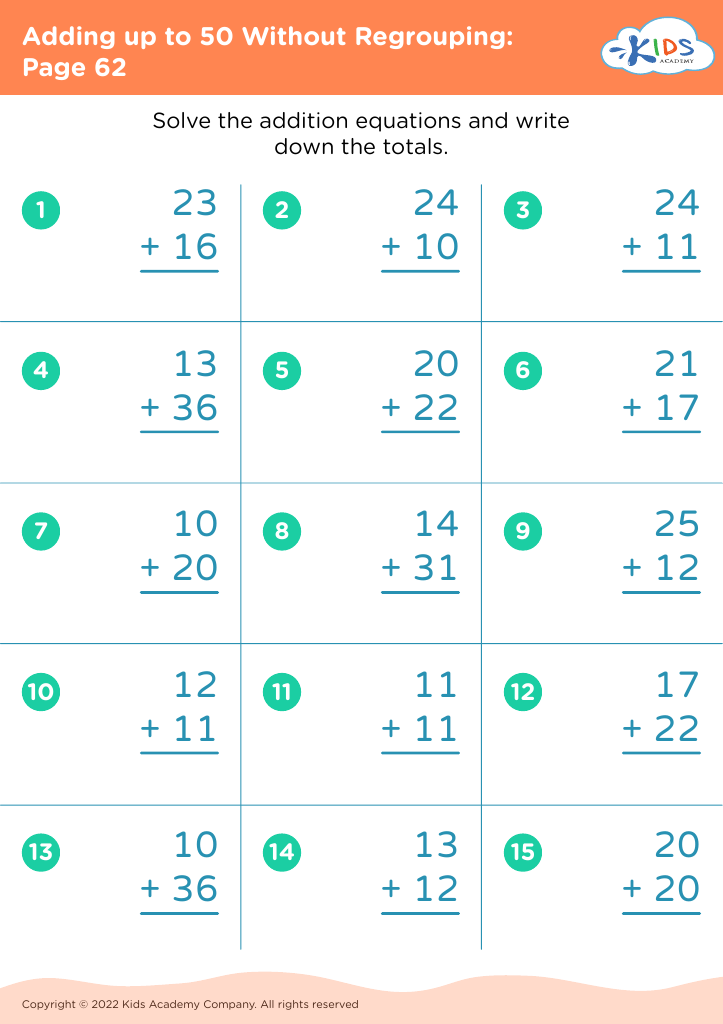
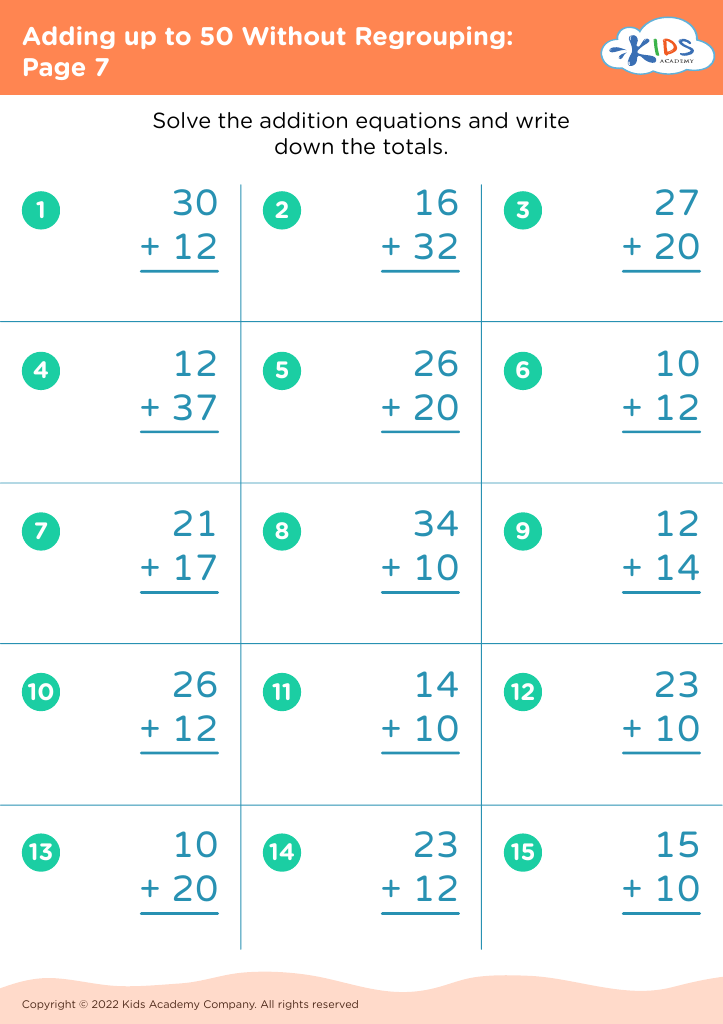
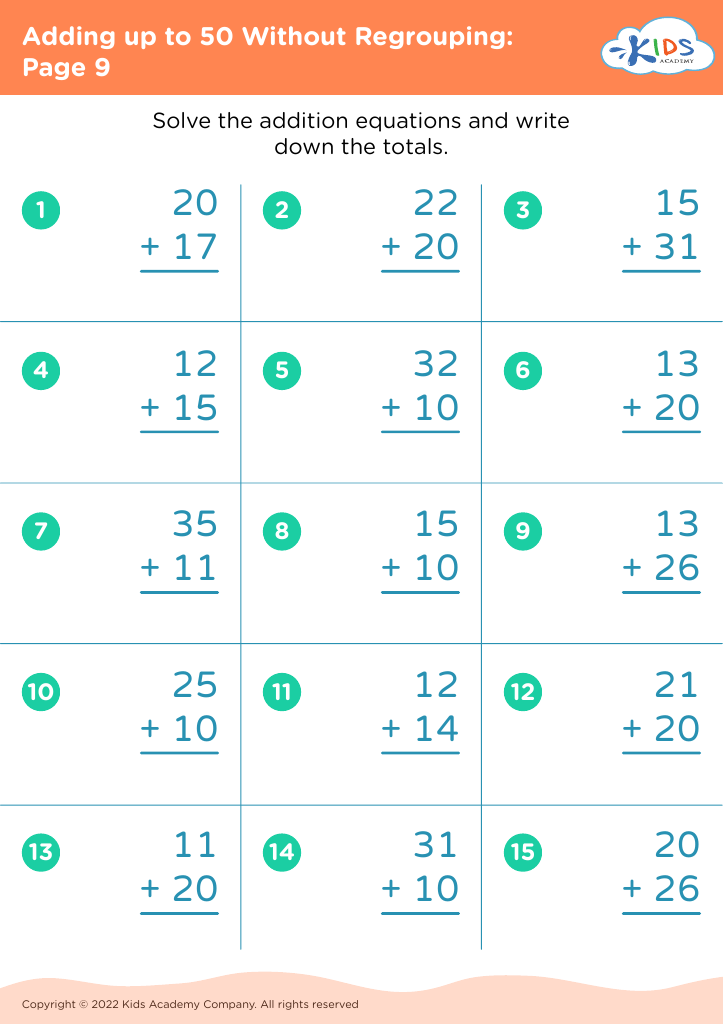
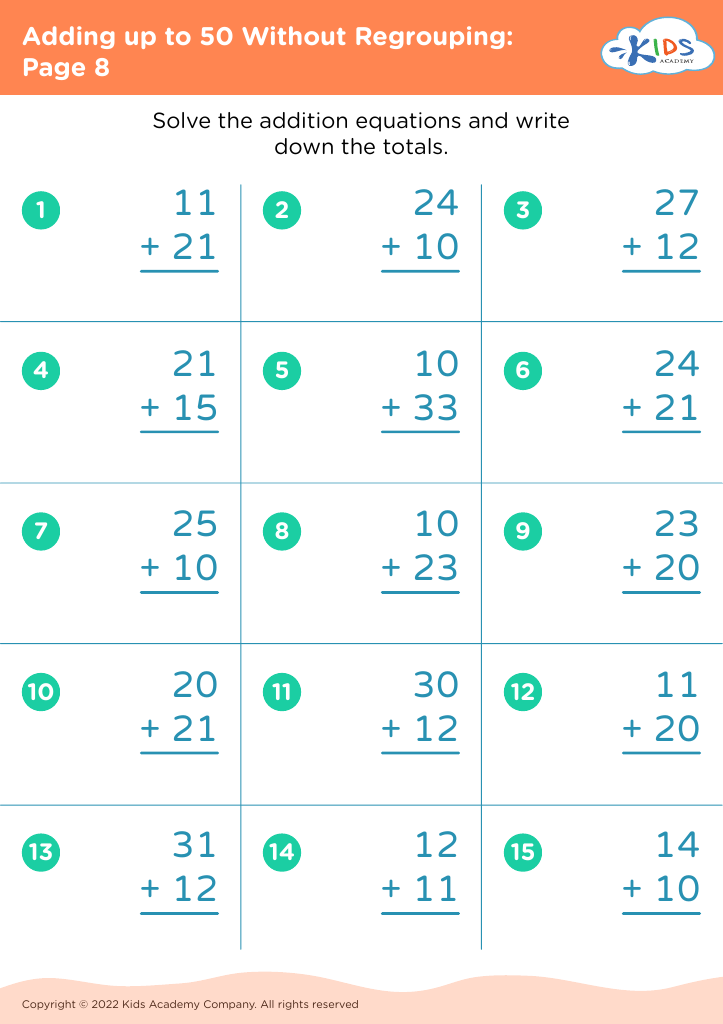
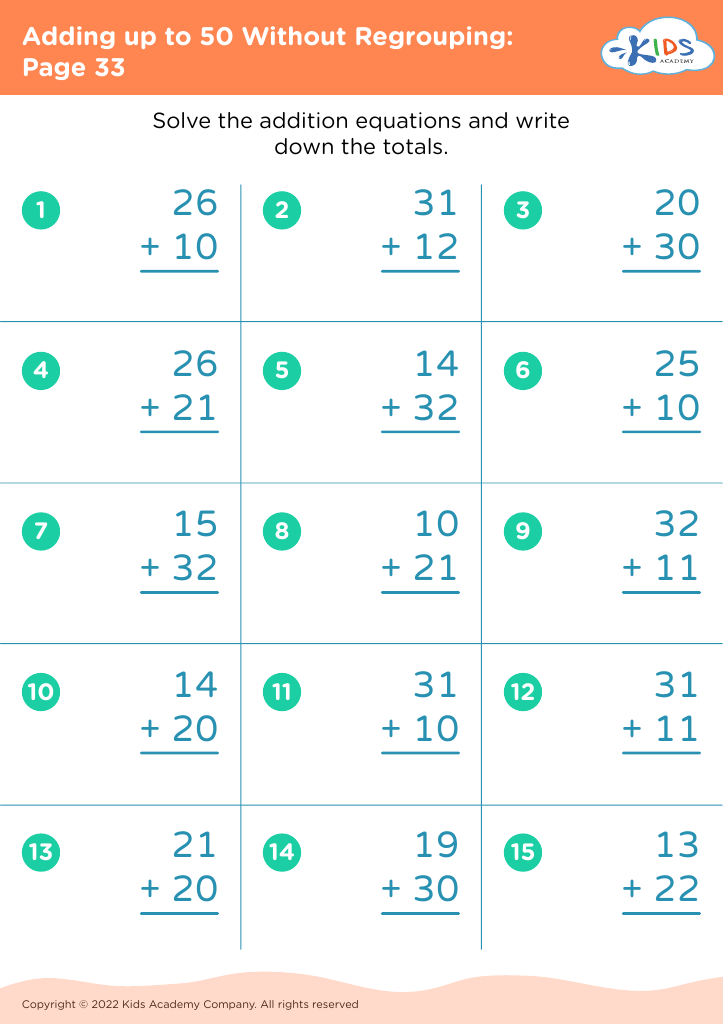
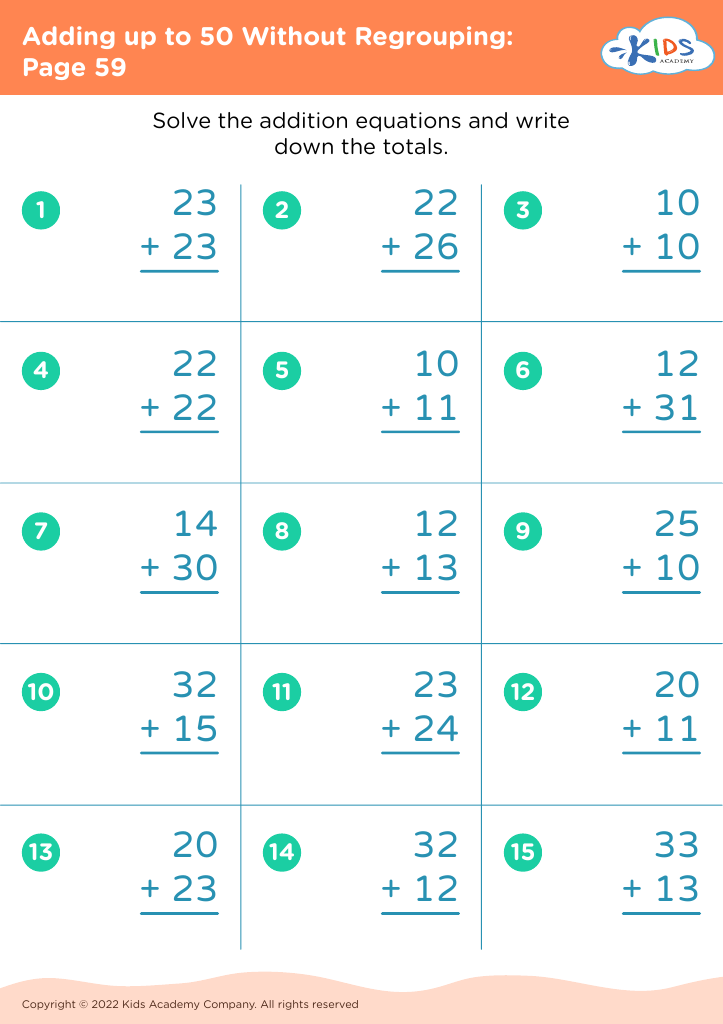
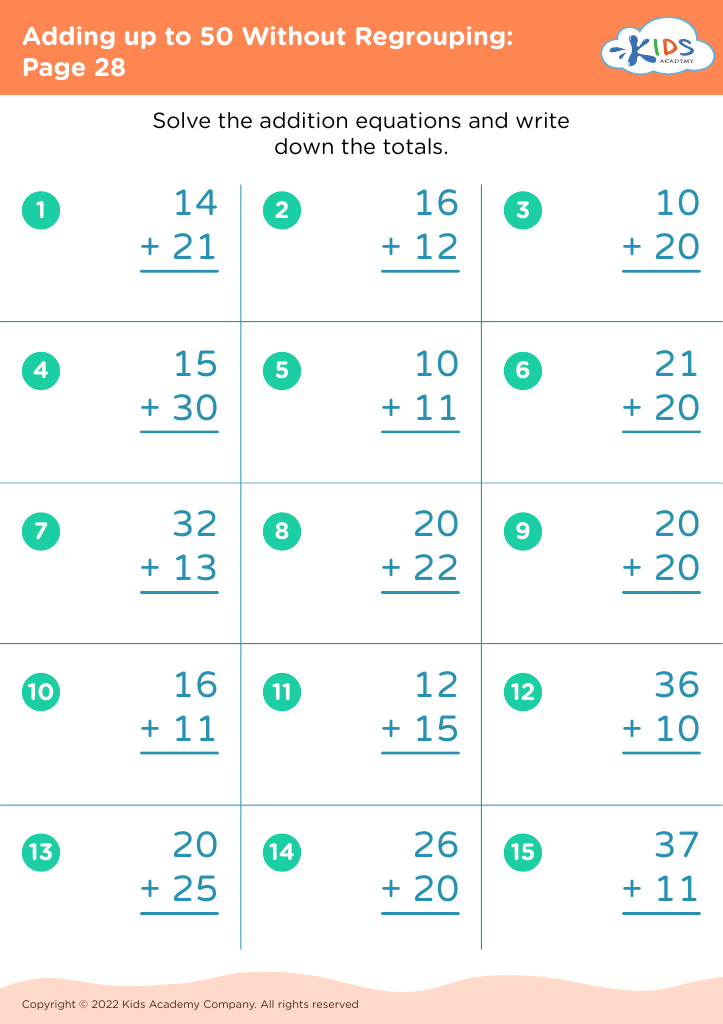
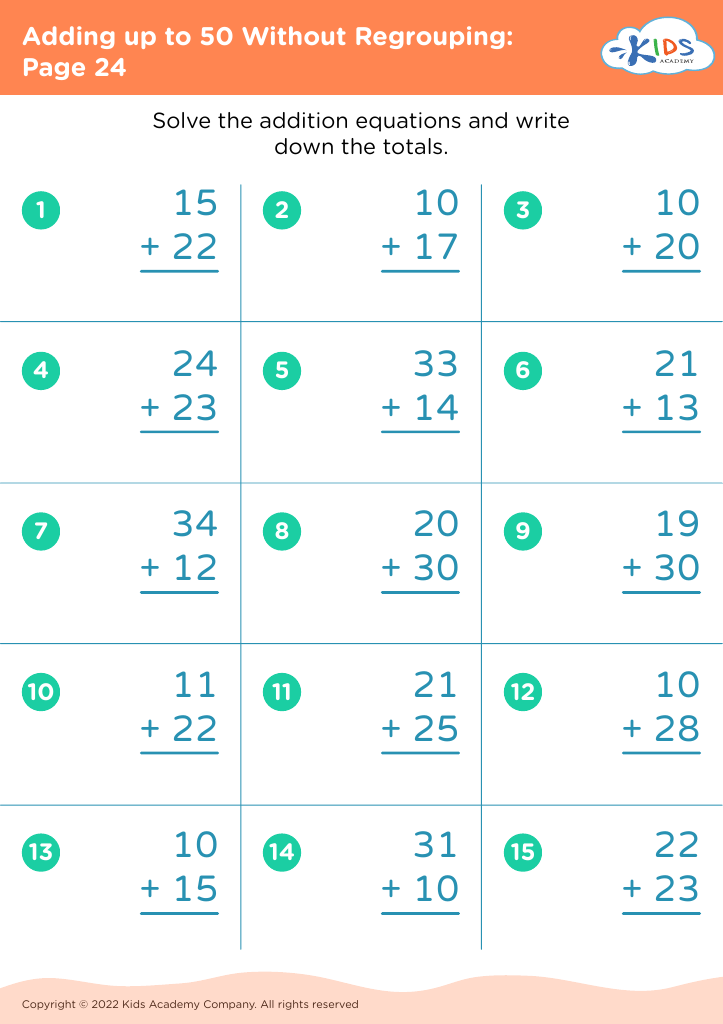
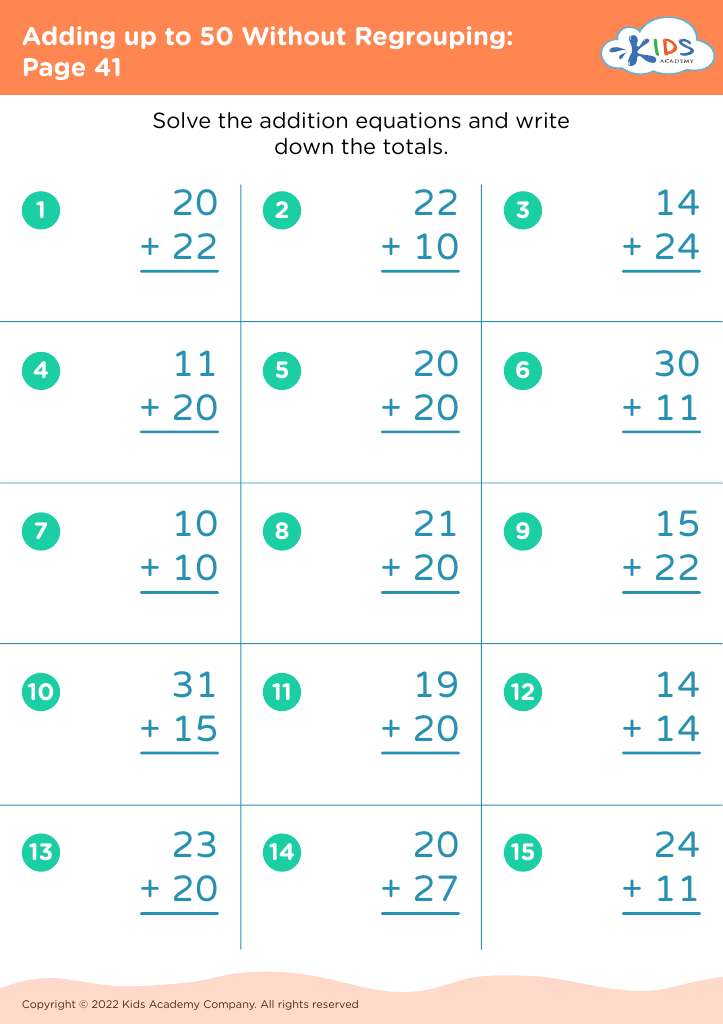
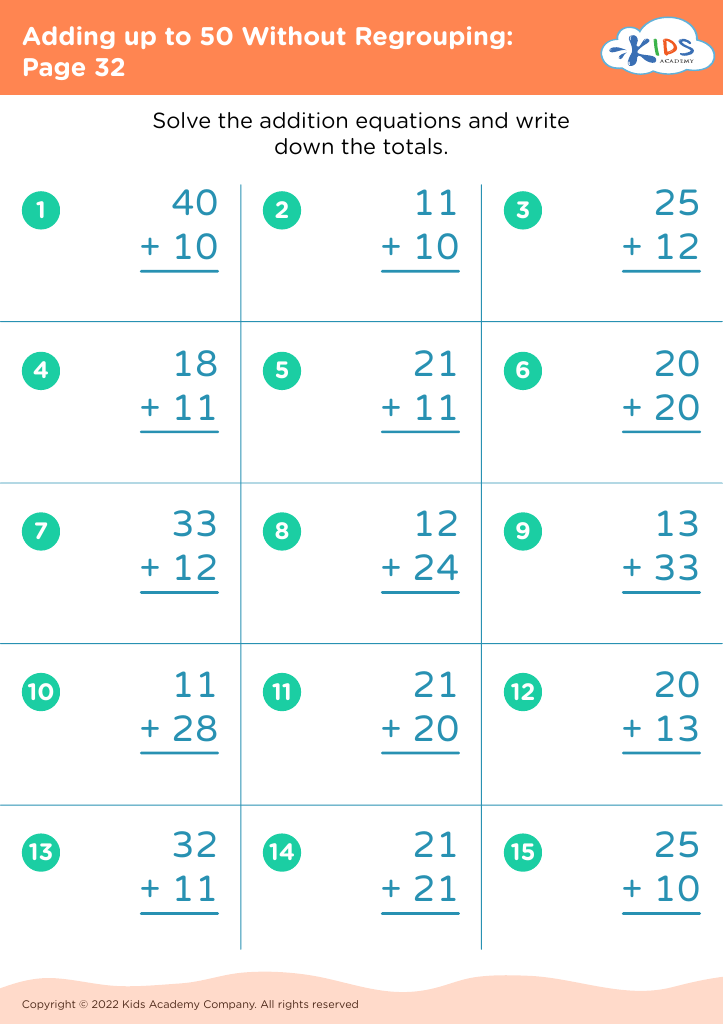
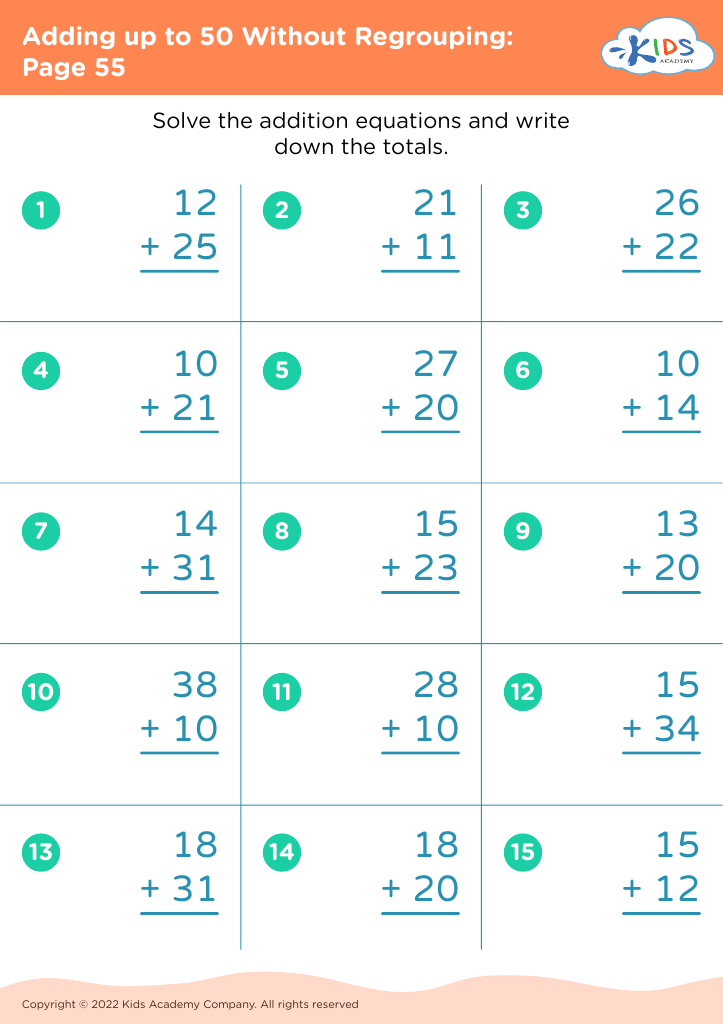


Number recognition and basic addition skills are foundational for children ages 3-8, and mastering these concepts offers multiple long-term benefits. Firstly, recognizing numbers helps children develop a sense of numeracy, which is crucial not only for mathematics but also for daily life activities such as telling time, measuring ingredients, and handling money.
Adding up to 50 without regrouping strengthens a child's ability to perform calculations mentally, boosting cognitive skills such as memory and problem-solving. This specific skill lays the groundwork for more complex arithmetic operations they will encounter later. Additionally, performing addition without regrouping is an essential step towards understanding place value, a fundamental concept in mathematics.
From an emotional perspective, mastering these skills aids in building confidence and a positive attitude towards learning. When children experience success in their early mathematical endeavors, they are more likely to persevere in facing challenging tasks in the future.
For parents and teachers, focusing on number recognition and basic addition prepares children for more advanced topics by giving them a strong mathematical foundation. It sets them up for academic success across various subjects, as many scientific and analytical topics require a solid understanding of basic math principles.
In essence, nurturing these skills at an early age aids holistic development, both intellectually and emotionally, setting the child on a path of lifelong learning and curiosity.