Understand fractions Adding up to 50 Without Regrouping Worksheets for Ages 3-8
4 filtered results
-
From - To
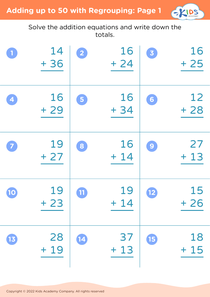
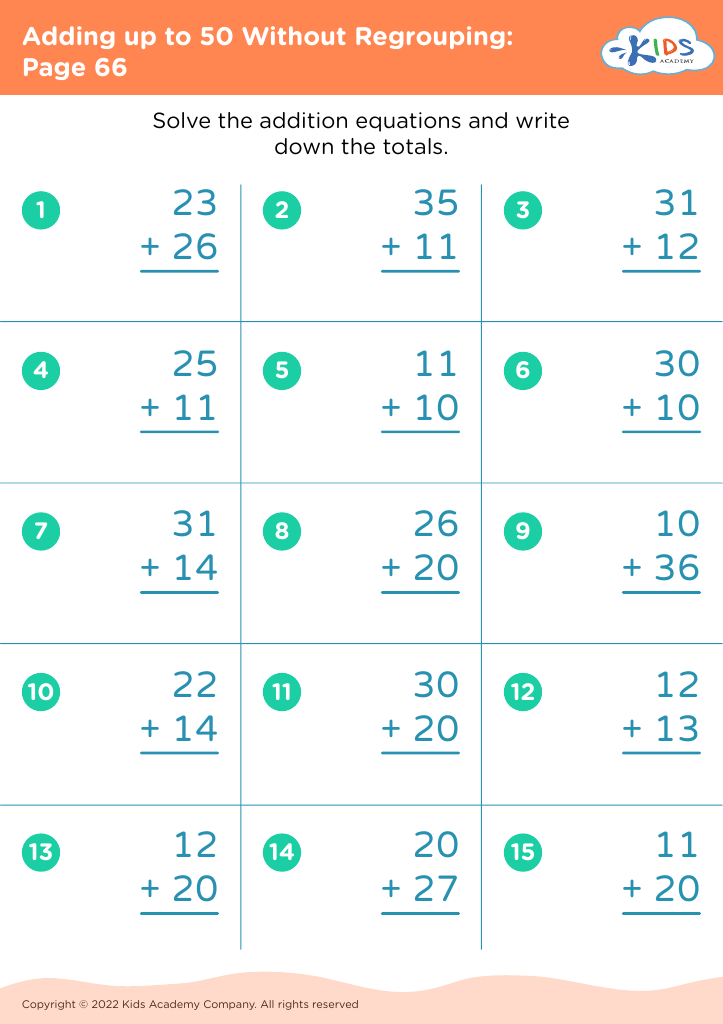
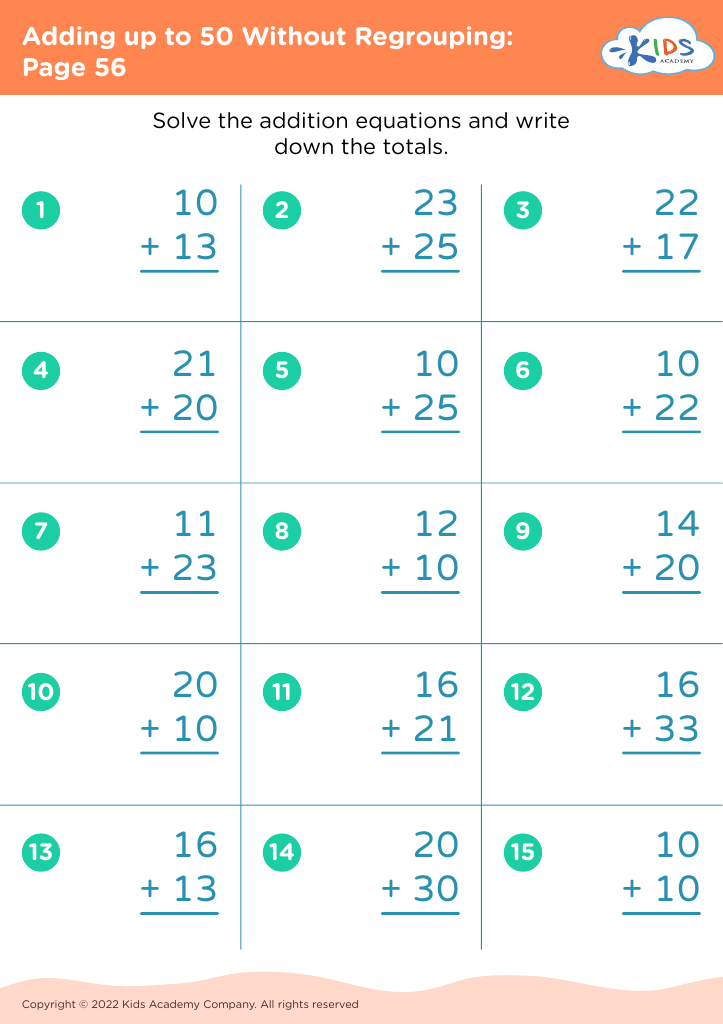
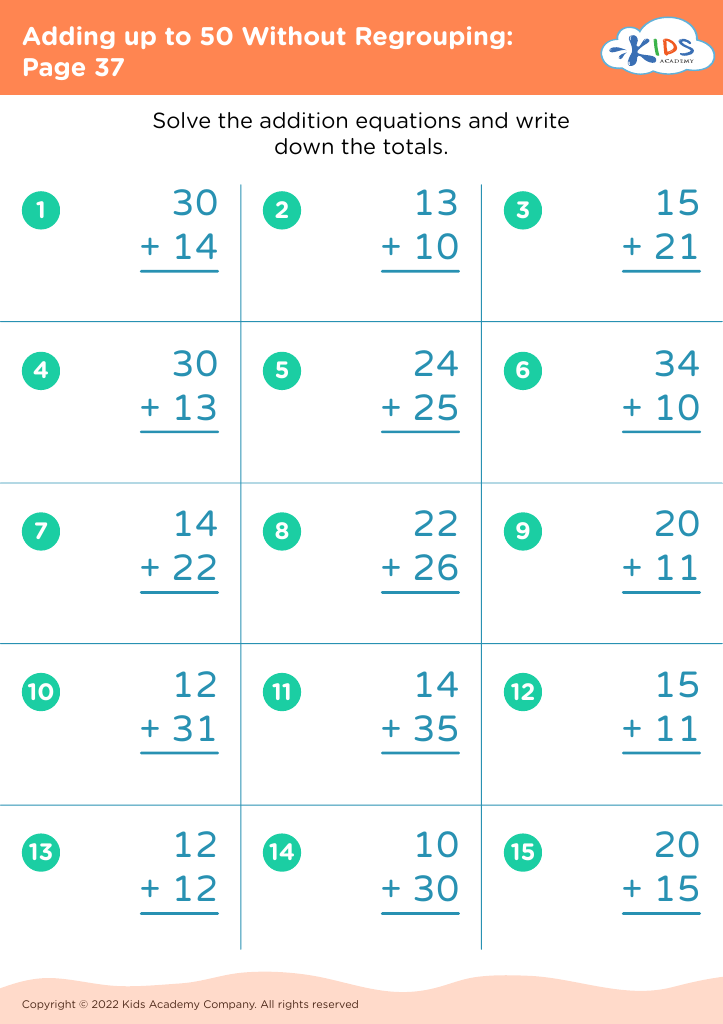
Explore our "Understand Fractions Adding up to 50 Without Regrouping Worksheets" designed for ages 3-8. These engaging and educational worksheets help young learners grasp fundamental math concepts by breaking down complex problems into manageable steps. Children will enjoy interactive activities that make learning fractions fun and intuitive. With colorful visuals and clear instructions, our worksheets ensure a solid understanding without the hassle of regrouping. Ideal for both classroom and at-home practice, these materials will strengthen your child's math skills, build confidence, and lay a strong foundation for future learning. Perfect for any budding mathematician!
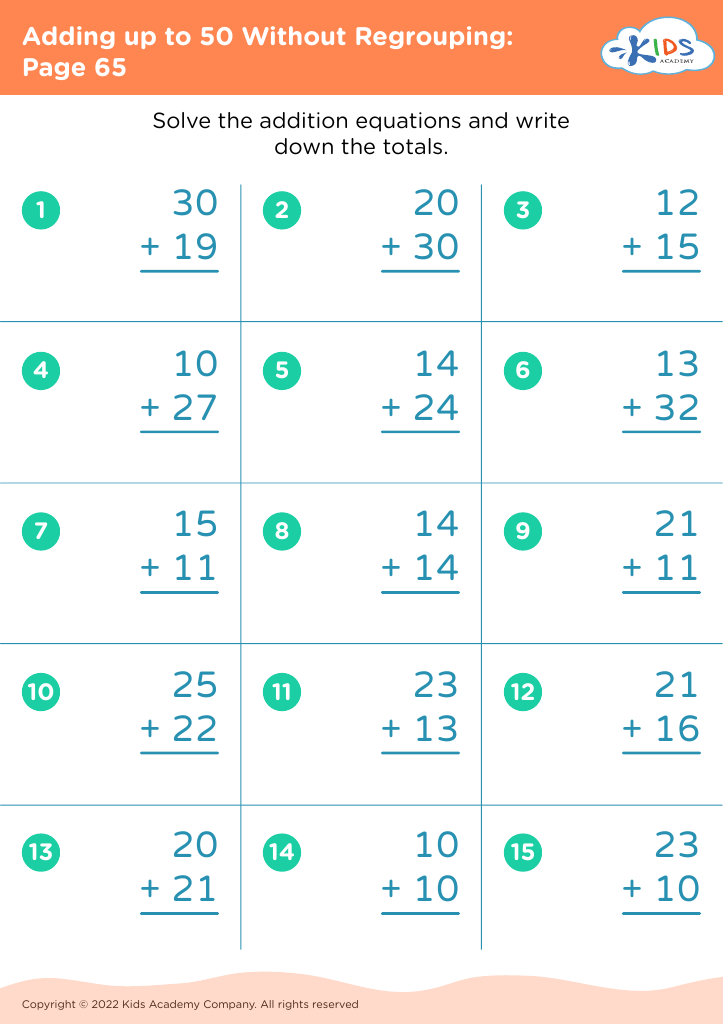


For parents and teachers of children ages 3-8, introducing the concept of fractions and basic addition without regrouping (carrying or borrowing) -- especially with totals not exceeding 50 -- is crucial for several reasons:
Firstly, it lays a solid mathematical foundation. Early exposure to such concepts makes children accustomed to different ways of representing numbers and quantities, fostering numerical literacy and enhancing their problem-solving abilities.
Secondly, understanding fractions and their addition aids in real-life skills. Kids often encounter fractions in daily activities like sharing food (half an apple, quarter of a pizza) or understanding time (half past the hour). Grasping these ideas early gives them practical tools they can use immediately.
Thirdly, addition without regrouping is fundamental to ensuring that children grasp the concept of combining quantities smoothly. This skill develops their confidence in mathematics, making more complex future concepts, such as addition with regrouping, easier to tackle.
Finally, teaching these concepts early aligns with modern educational standards that emphasize early mastery in mathematics to promote long-term academic success. By caring about and focusing on these areas, parents and teachers set children on a path of positive math experiences, empowering them beyond numbers to a broader analytical thinking and logical reasoning.