Basic addition practice Adding up to 50 Worksheets for Ages 3-8
5 filtered results
-
From - To
Unlock your child's math potential with our "Basic Addition Practice Adding up to 50 Worksheets for Ages 3-8." Expertly designed for young learners, these engaging worksheets provide a fun, interactive way to understand basic addition, enhancing both confidence and skill. Suitable for kids aged 3-8, our activities feature colorful designs and easy-to-follow problems, making math both enjoyable and educational. Whether at home or in the classroom, our worksheets offer a solid foundation in addition, ensuring your child is well-prepared for future math challenges. Spark a love for learning and watch their math skills flourish!
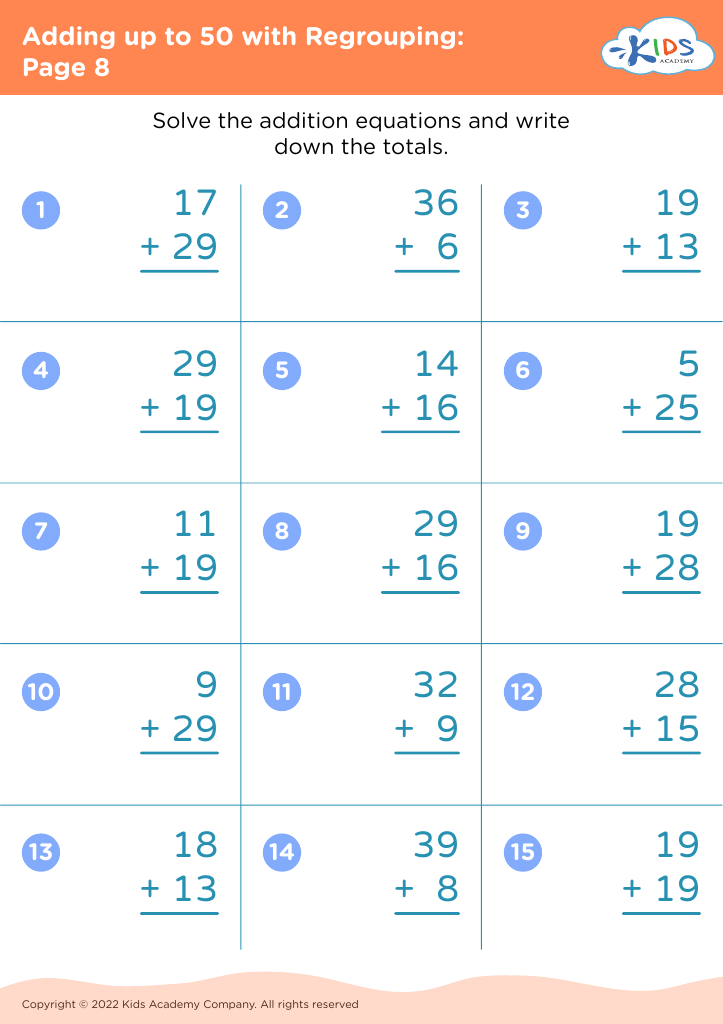
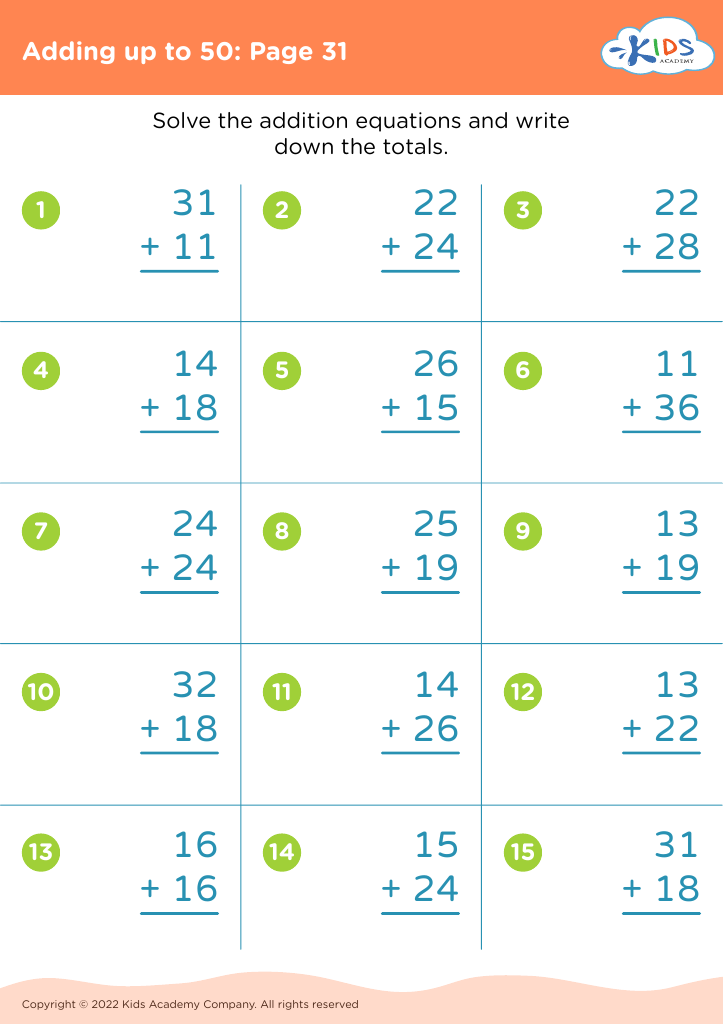
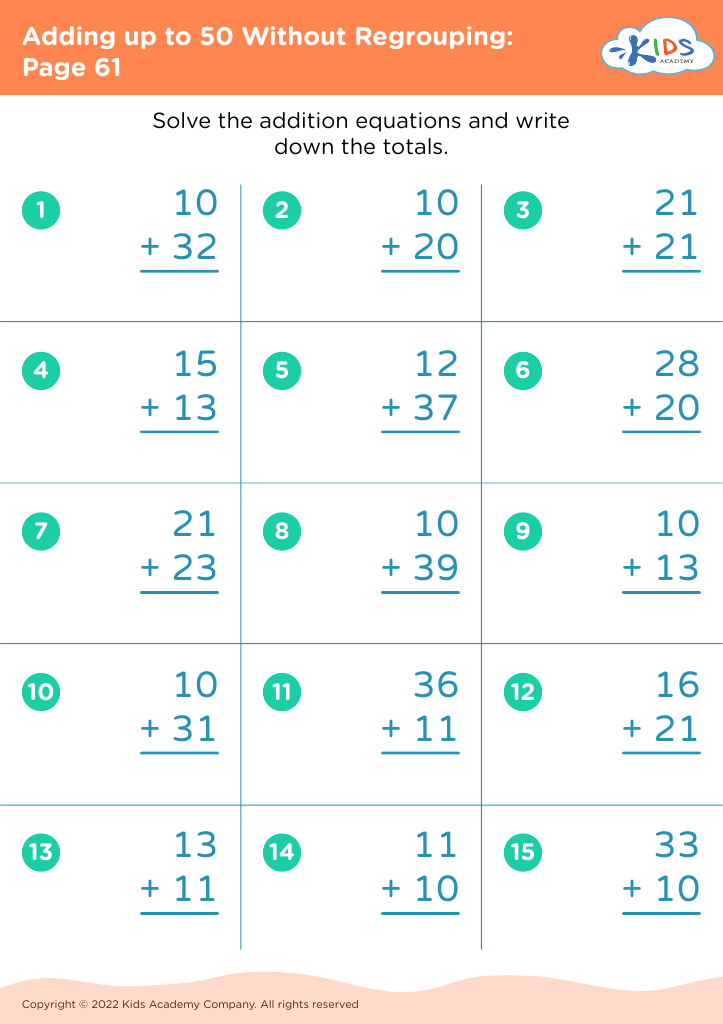
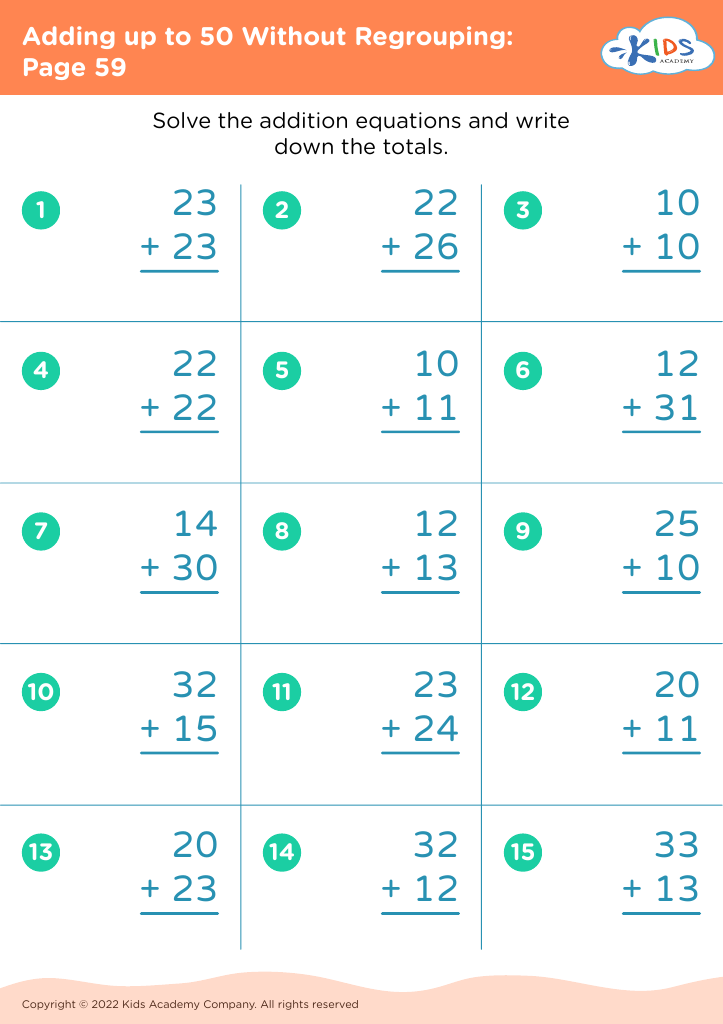
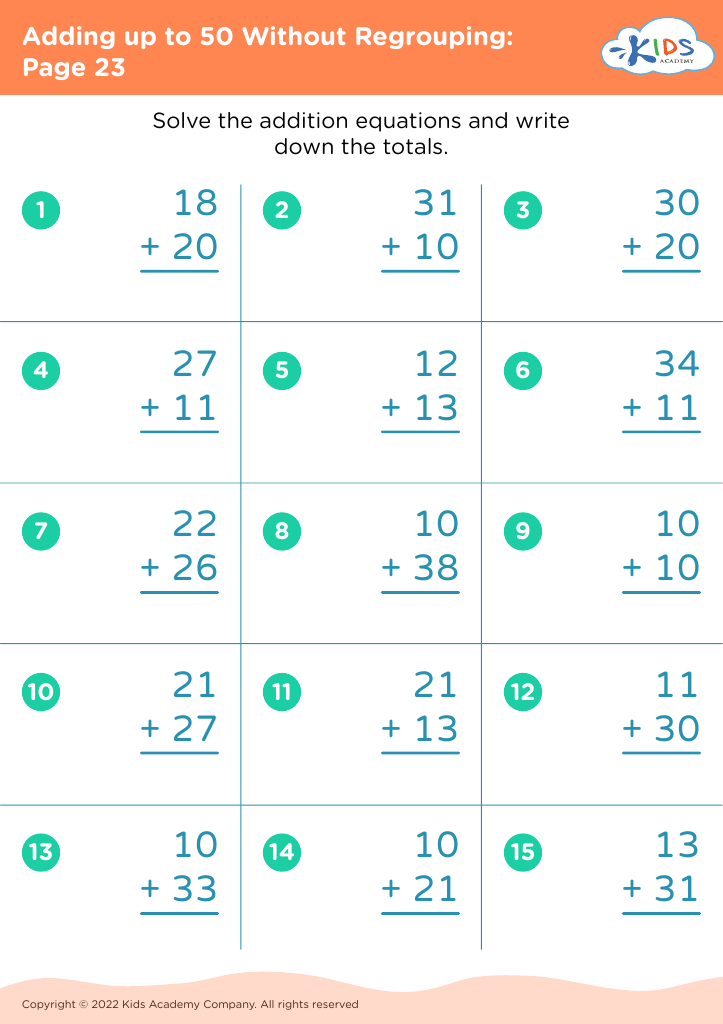




Early math skills are foundational for young learners, making basic addition practice up to 50 crucial for children aged 3-8. Parents and teachers should prioritize this because it sets the stage for future mathematical success and boosts cognitive development. By mastering simple sums, children gain confidence and learn to approach complex problems systematically.
First, early exposure to addition helps develop number sense, an understanding of how numbers work and relate to one another. This foundational skill supports higher-level math concepts like subtraction, multiplication, and division. Moreover, regular practice enhances memory and problem-solving abilities, both of which are critical across all areas of learning.
Engaging in addition exercises also helps children develop logical thinking. This logical approach to problem-solving can extend beyond math, improving their reasoning in everyday situations. Furthermore, early math skills are linked to improved academic performance in later years. Being comfortable with basic arithmetic by the age of 8 can prevent math anxiety, making children more likely to excel in the subject as they grow older.
Finally, consistent practice fosters a growth mindset. Children learn the value of persistence and embrace challenges as opportunities to learn, setting a positive tone for lifelong educational experiences. Thus, early addition practice is not just about numbers; it’s about cultivating confident, skilled, and enthusiastic learners.








