Basic Math Skills Adding up to 50 Worksheets for Ages 3-8
16 filtered results
-
From - To
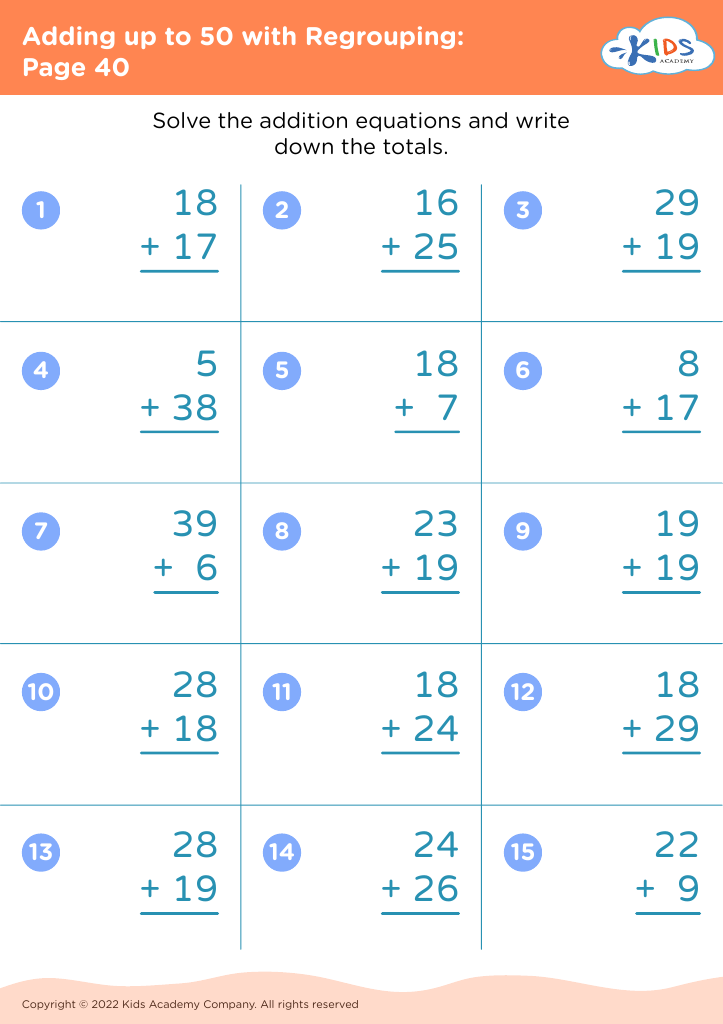
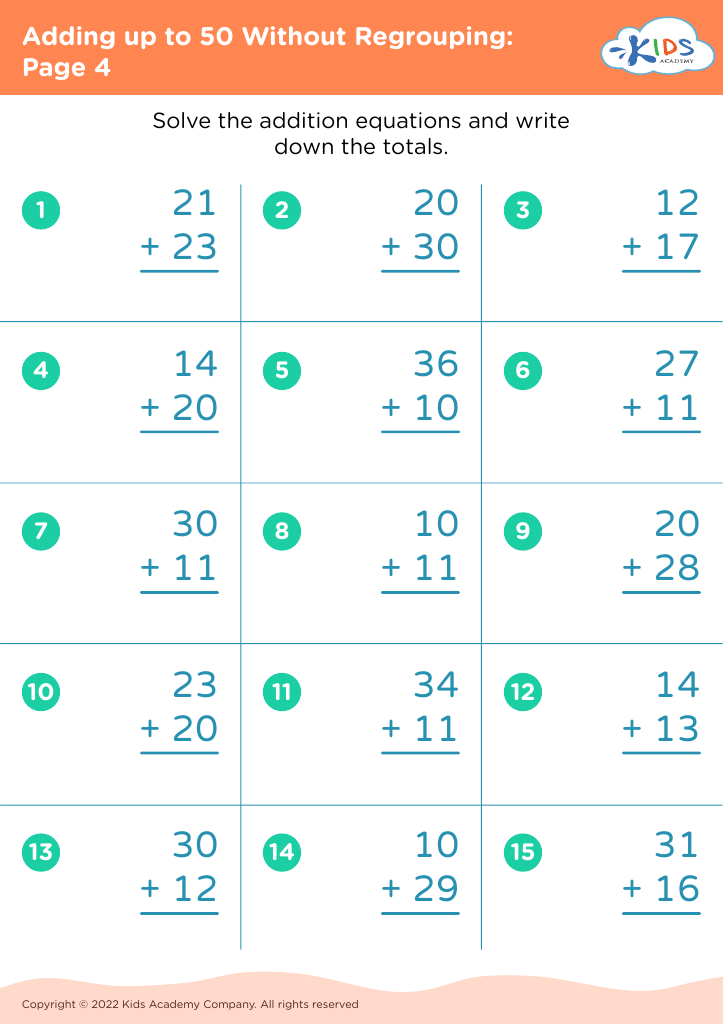
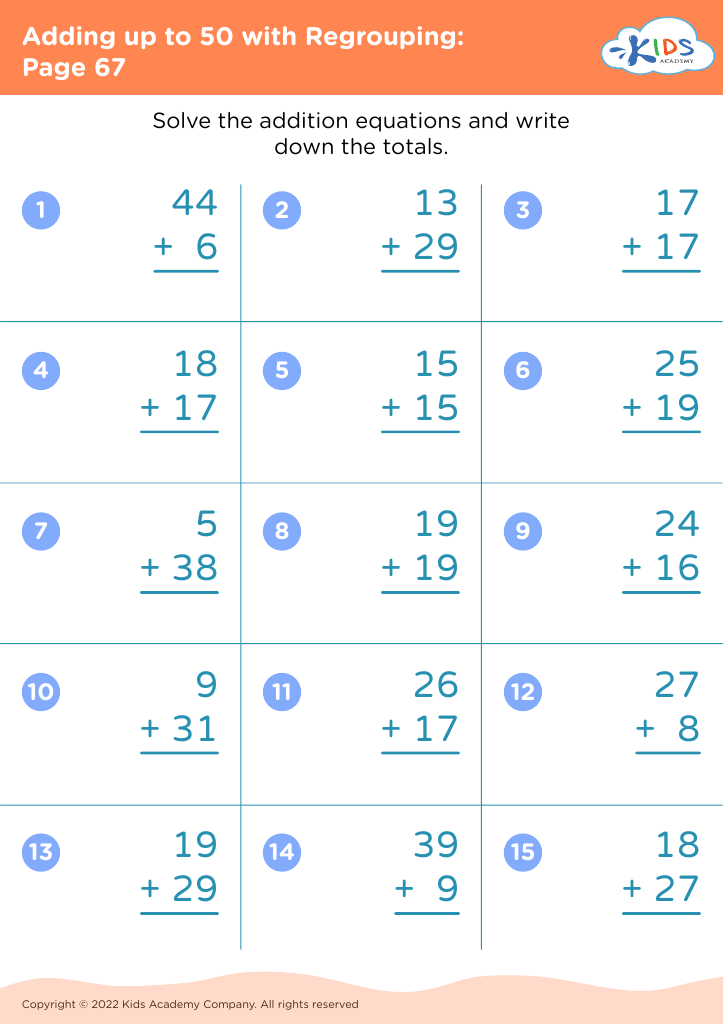
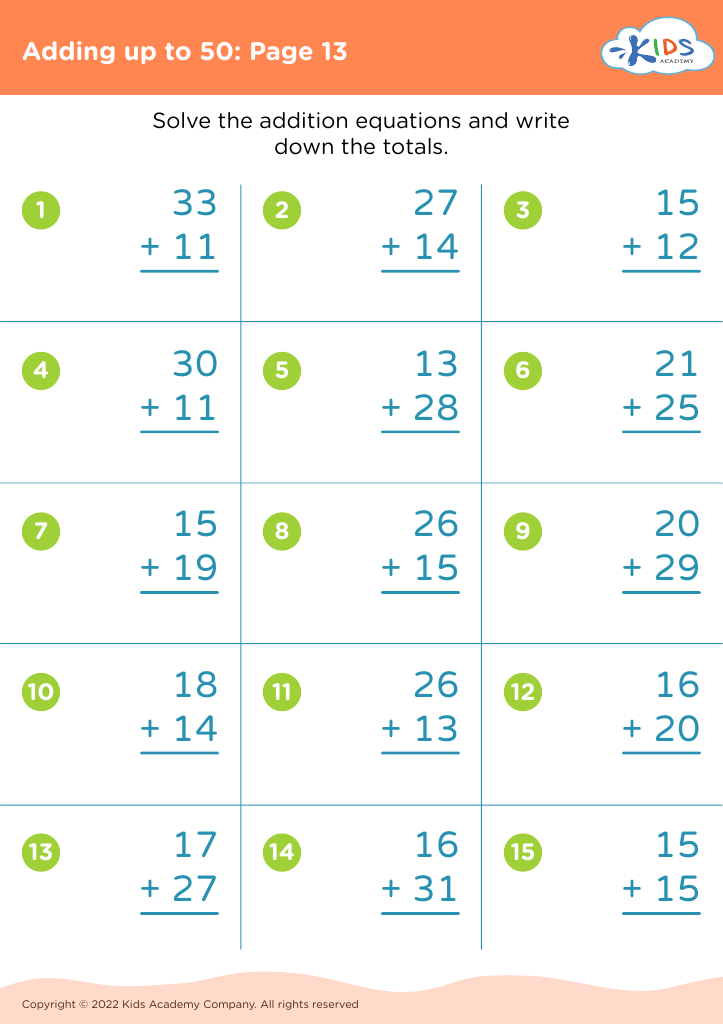
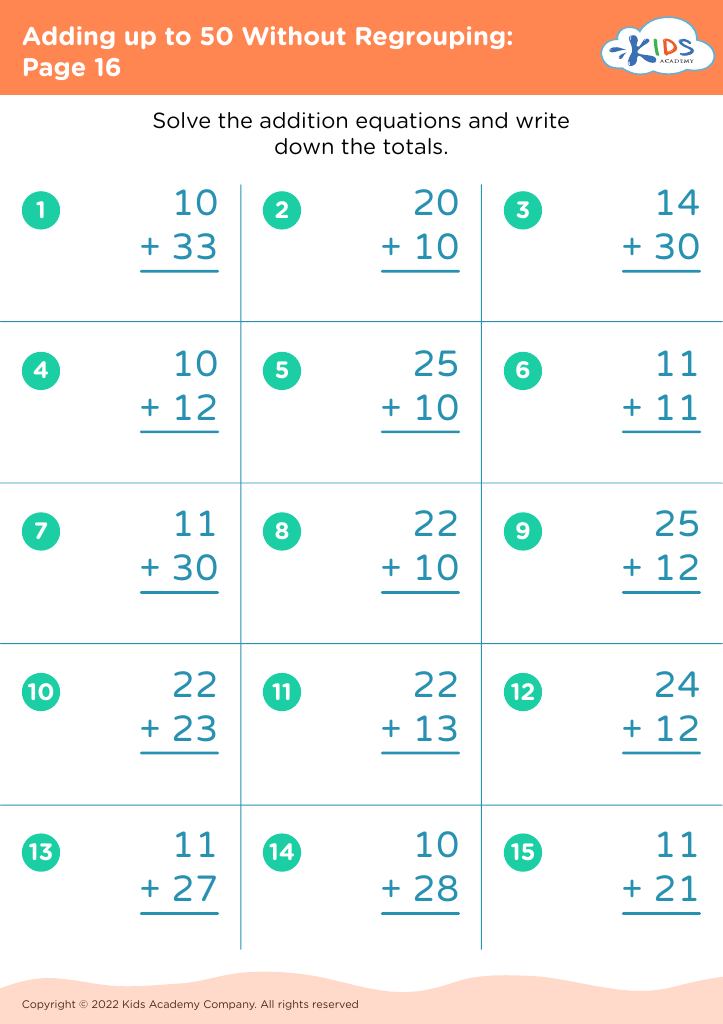
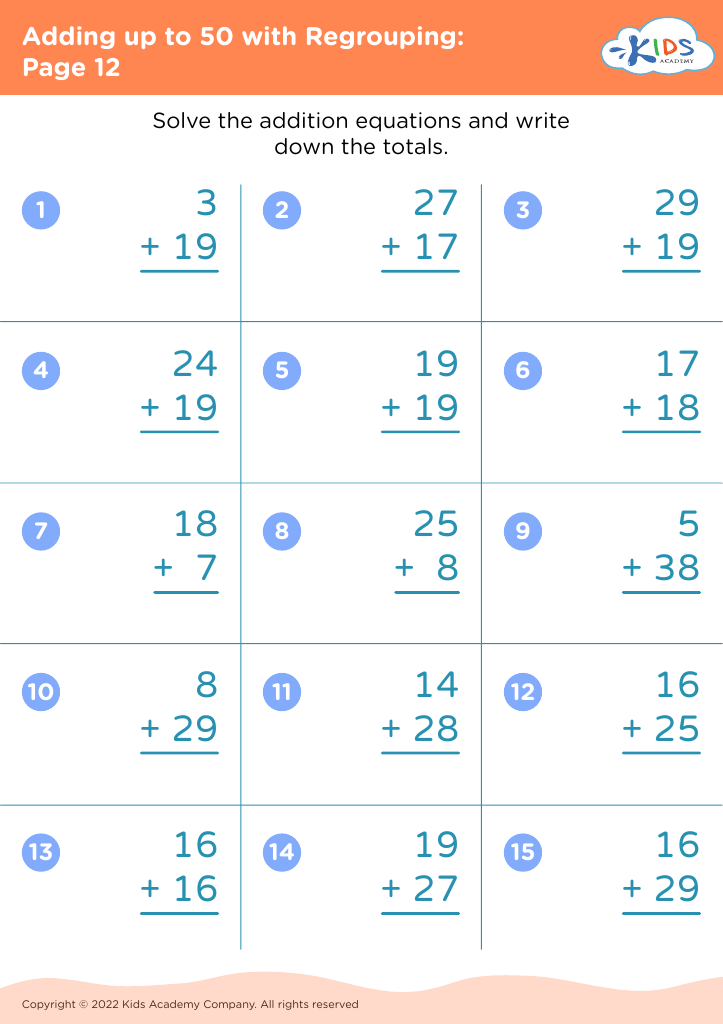
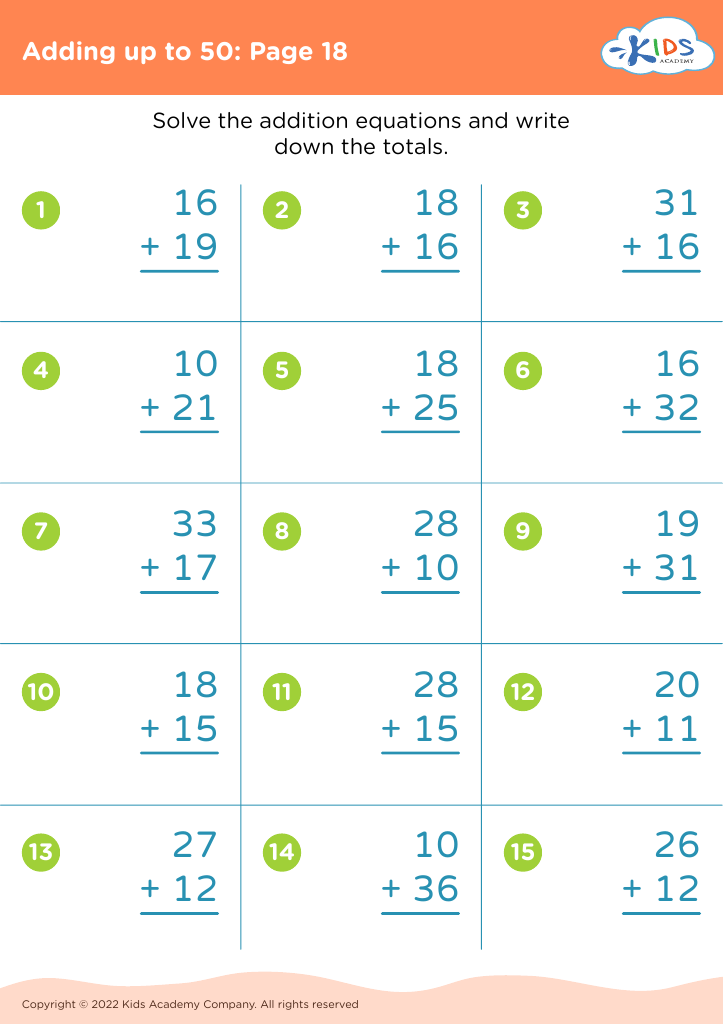
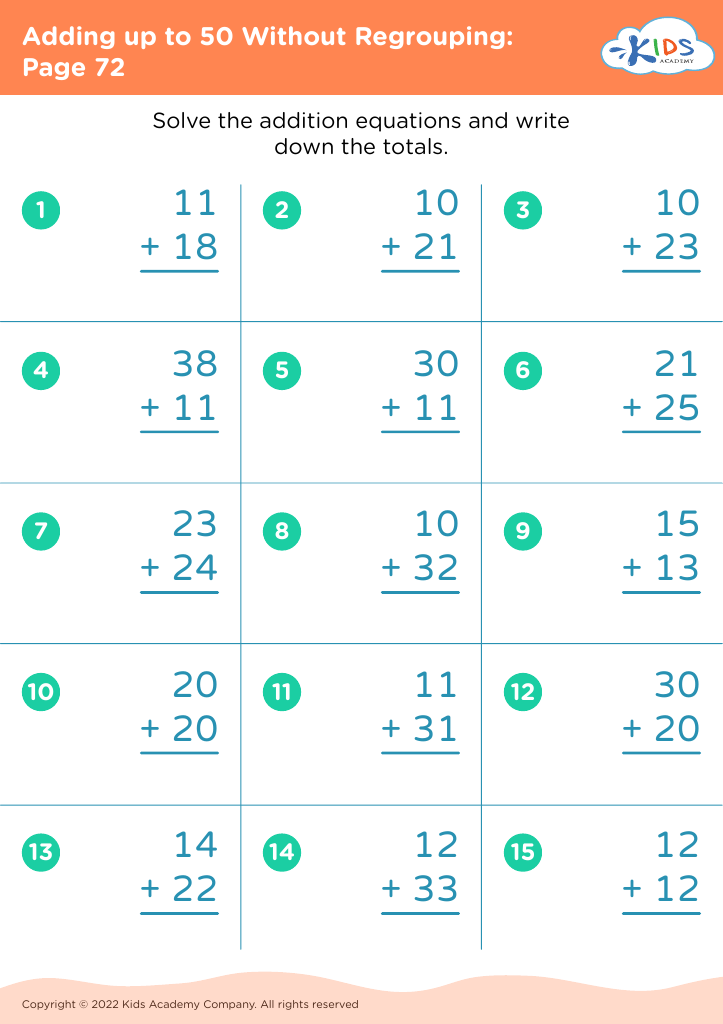
Our "Basic Math Skills: Adding up to 50 Worksheets for Ages 3-8" are designed to build foundational math abilities in young learners. Perfectly tailored for young minds, these engaging and educational worksheets help children practice and master essential addition skills in a fun and interactive way. Ideal for ages 3-8, the exercises focus on gradually increasing in difficulty to boost confidence and proficiency in adding numbers up to 50. With vibrant visuals and clear instructions, these worksheets are a superb resource for both parents and teachers striving to enhance early math education. Download now to support your child’s math journey!
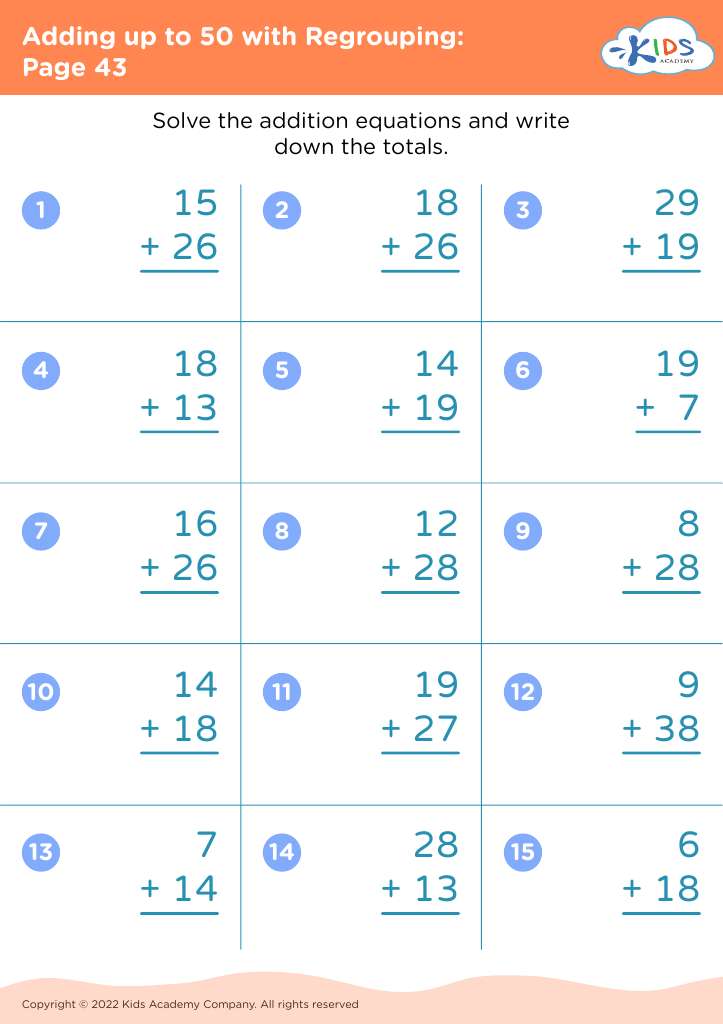
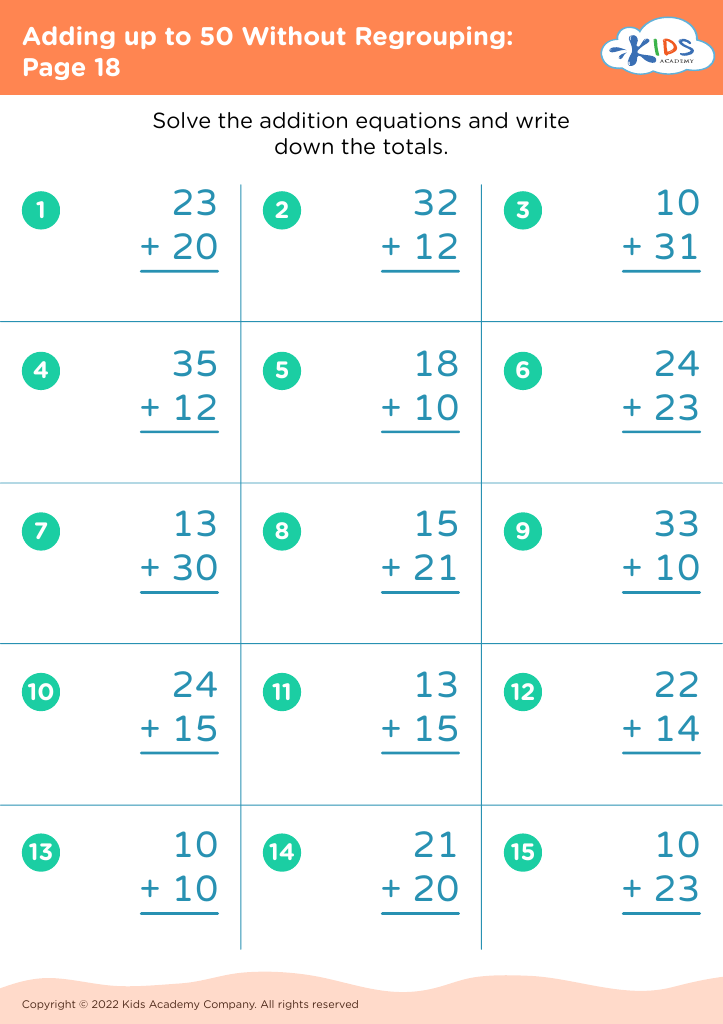
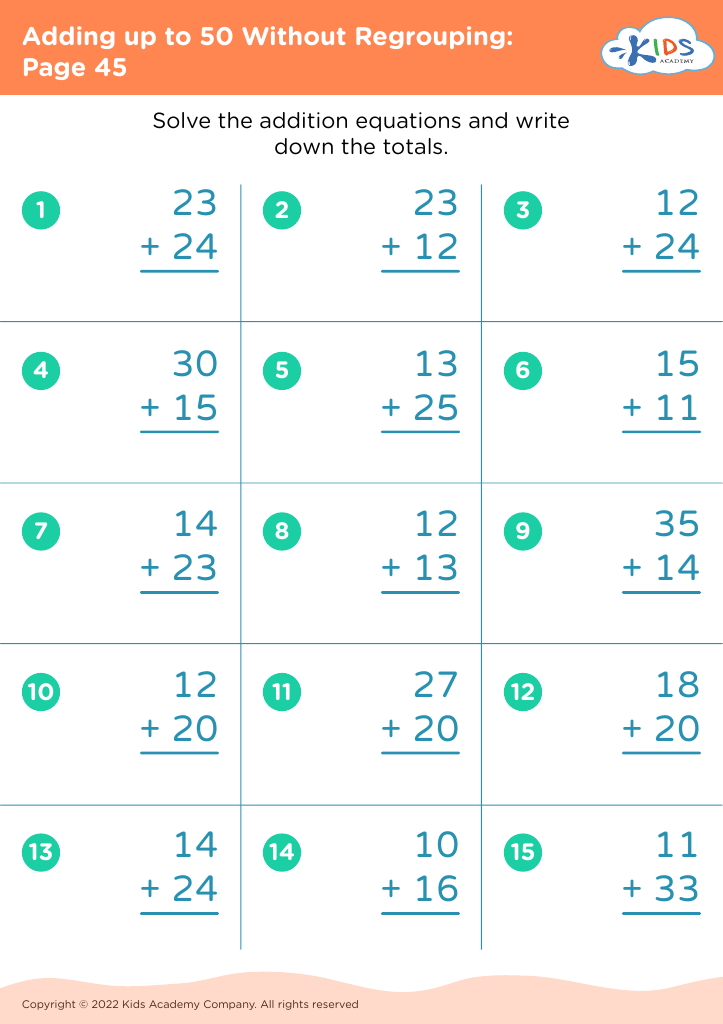
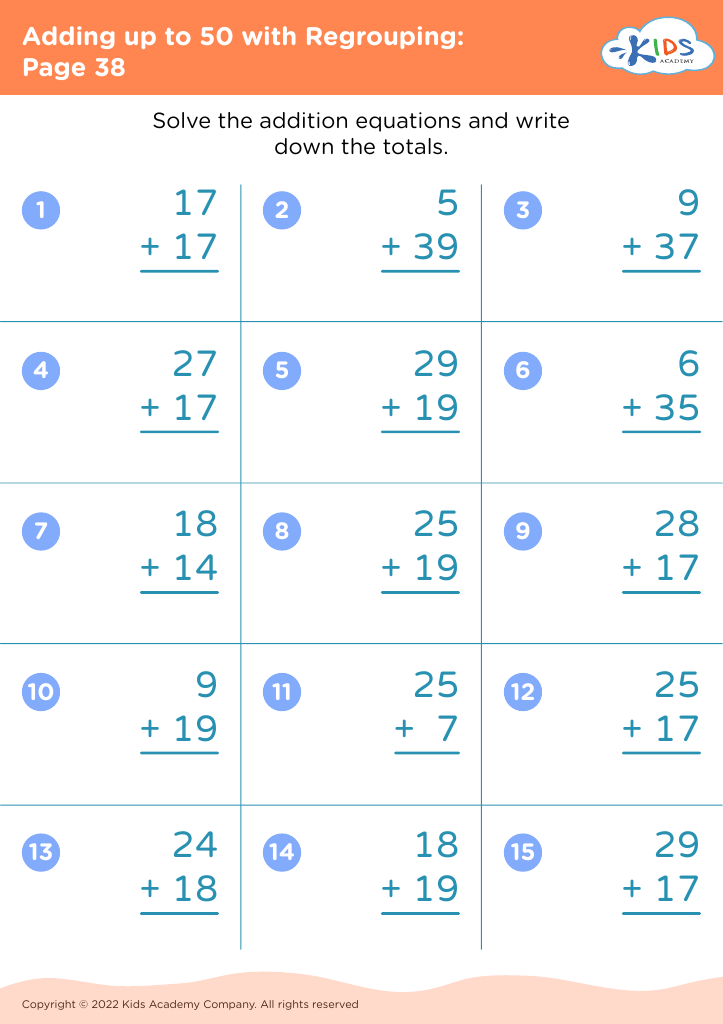
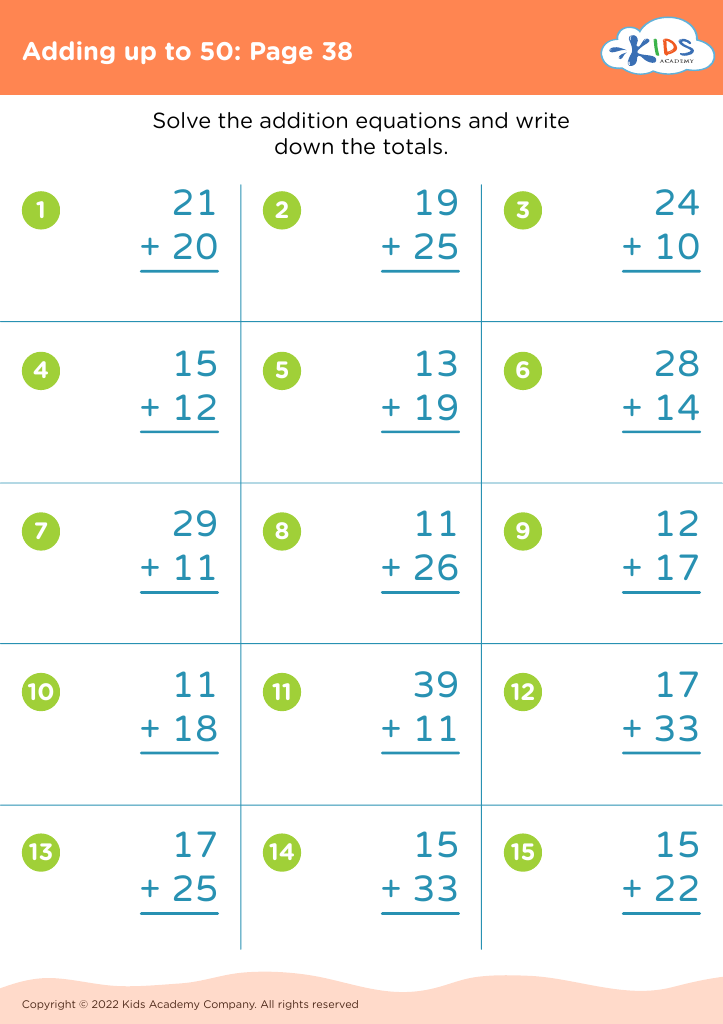
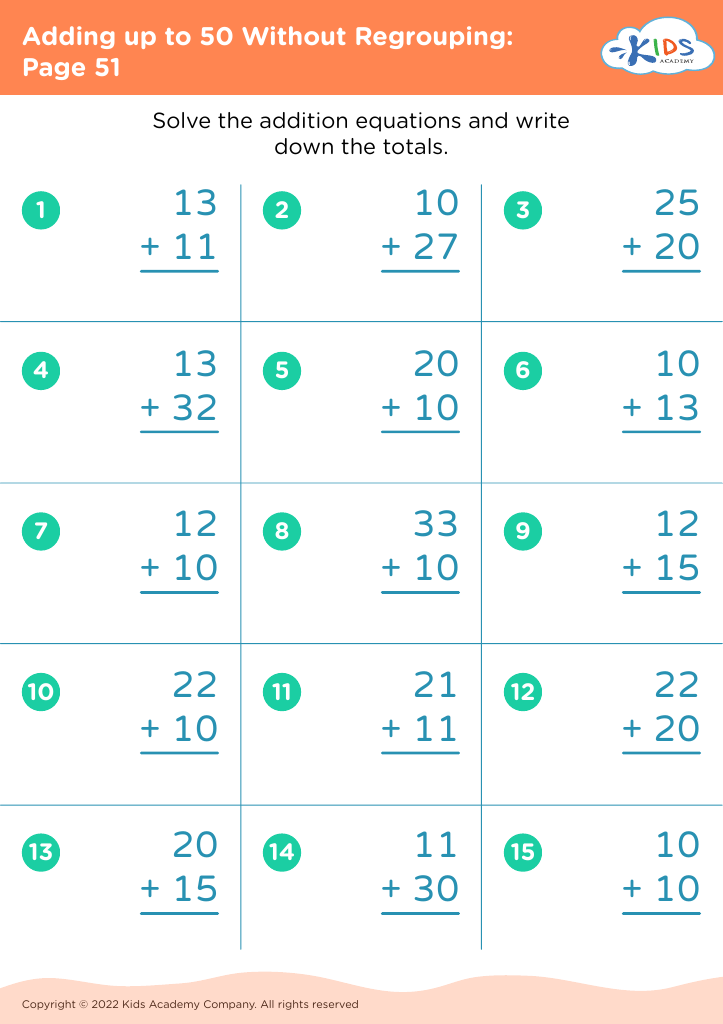
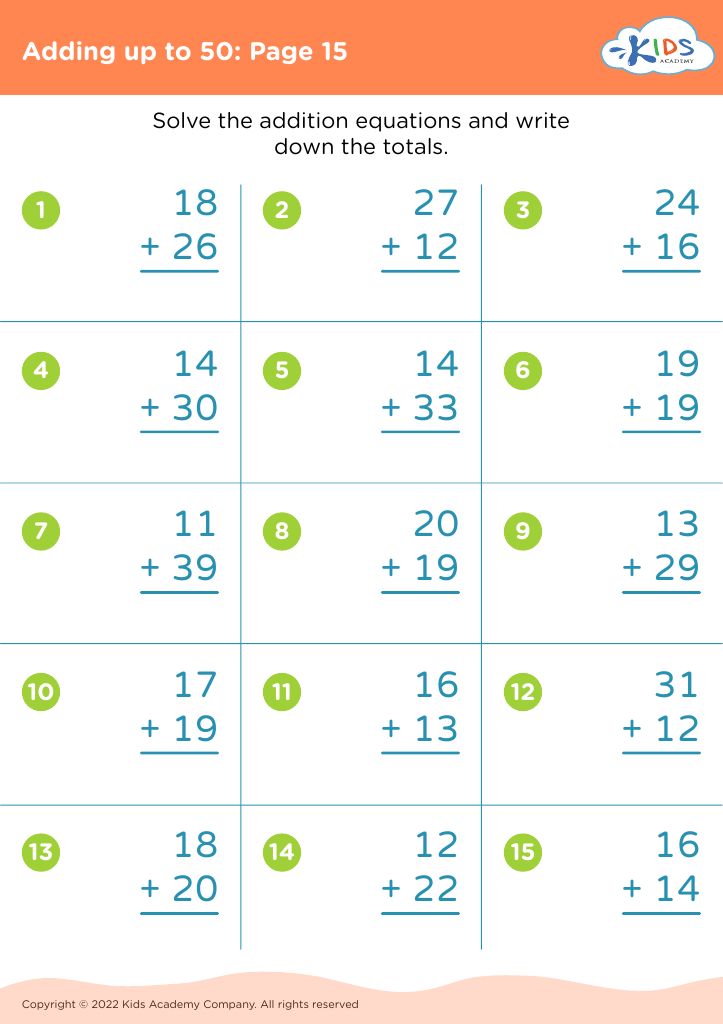
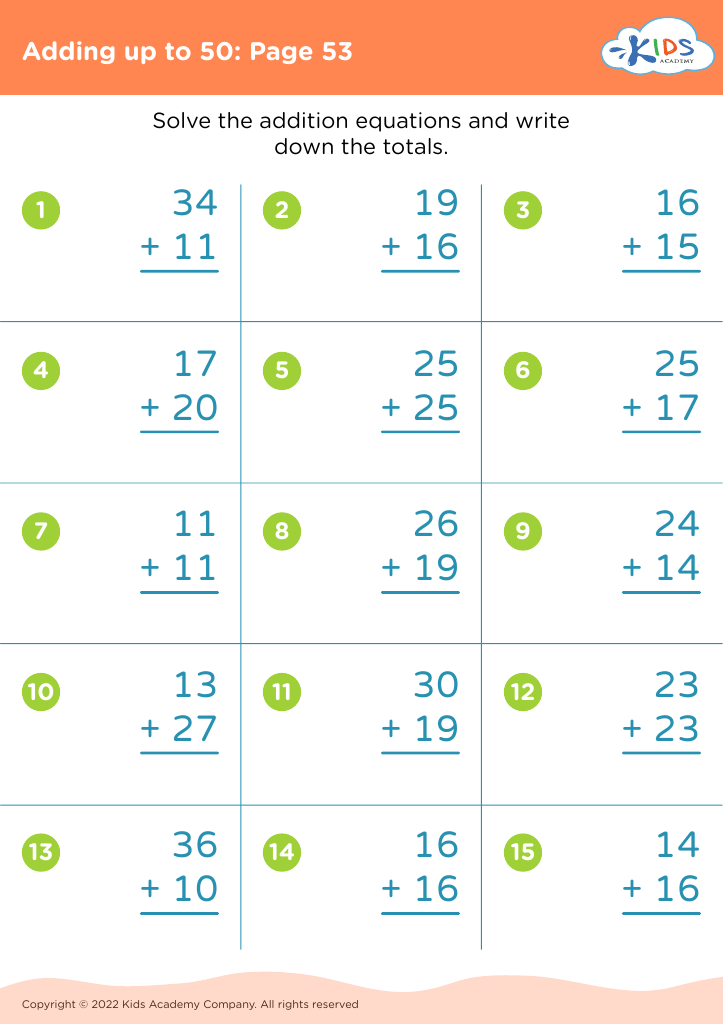




Developing basic math skills, such as adding up to 50, during early childhood is essential for several reasons. Firstly, it lays the foundation for more complex mathematical concepts that children will encounter later in their academic journey. Understanding addition builds the groundwork for subtraction, multiplication, division, and beyond, fostering a strong number sense and confidence in math.
Secondly, proficiency in basic math skills enhances cognitive development. Early math activities hone problem-solving abilities and critical thinking. These skills extend beyond mathematics, aiding children in everyday decision-making and logical reasoning.
Thirdly, early math competency is linked to academic success in various subjects. Mathematics promotes precise thinking and attention to detail, qualities that benefit reading comprehension and scientific inquiry.
Additionally, math is integral to daily life. From counting toys to measuring ingredients or time, young children frequently engage with math, making these skills practical and valuable.
Finally, cultivating a positive attitude towards math at an early age can mitigate math anxiety, a common barrier to future academic achievement. By mastering basic skills like adding up to 50, children gain confidence and see math as an exciting challenge rather than a daunting task.
In summary, fostering basic math skills from ages 3-8 sets the stage for lifelong learning, academic success, and essential life skills.








