Cognitive Development Adding up to 50 Worksheets for Ages 3-8
4 filtered results
-
From - To
Enhance your child's cognitive development with our "Cognitive Development Adding up to 50 Worksheets for Ages 3-8". These engaging, age-appropriate activities help young learners master essential math skills while fostering critical thinking and problem-solving abilities. Our worksheets, designed by educational experts, offer a variety of fun exercises to build confidence and proficiency in addition. Perfect for early learners and aligned with educational standards, these resources support continuous growth and foundational learning in math. Empower your child today with targeted practice that makes learning to add up to 50 enjoyable and rewarding. Jump-start their journey to math success!
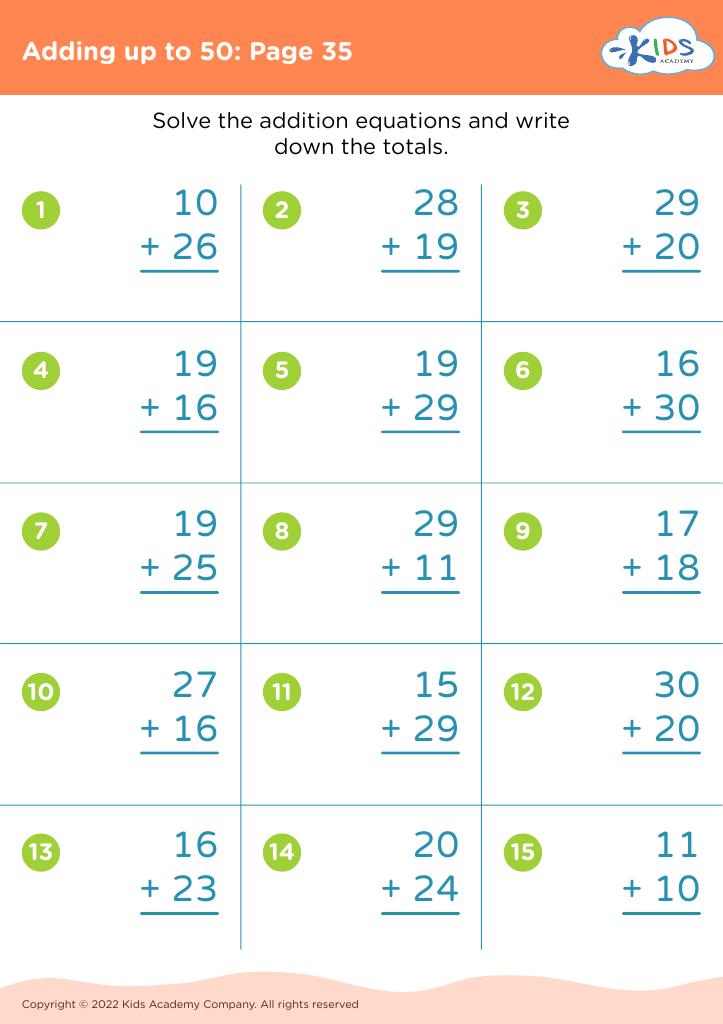
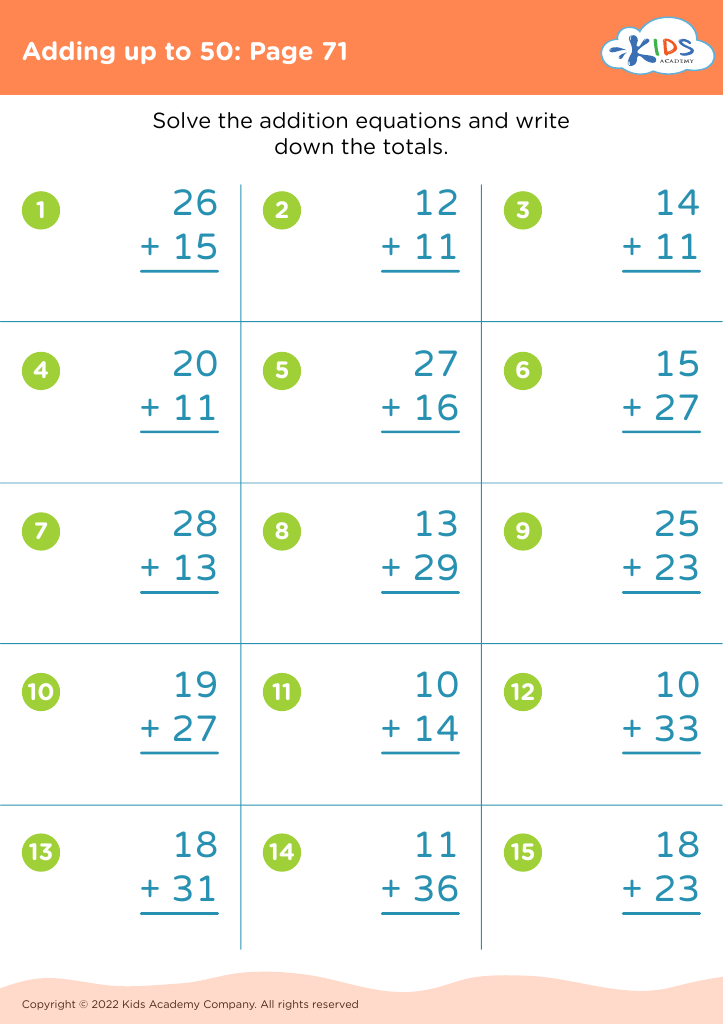
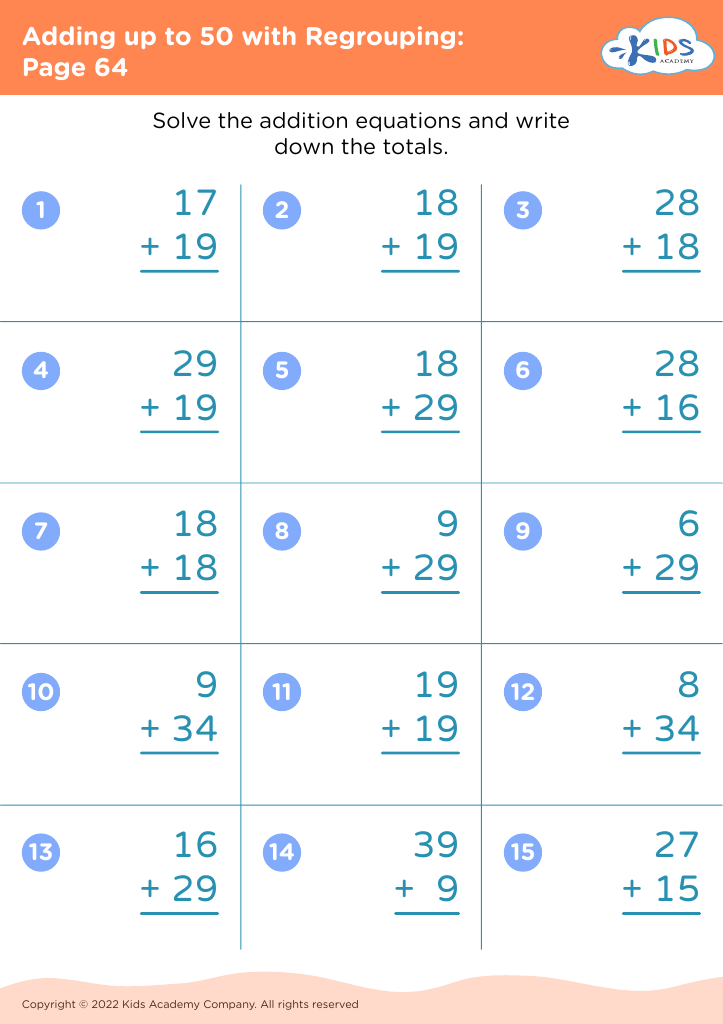
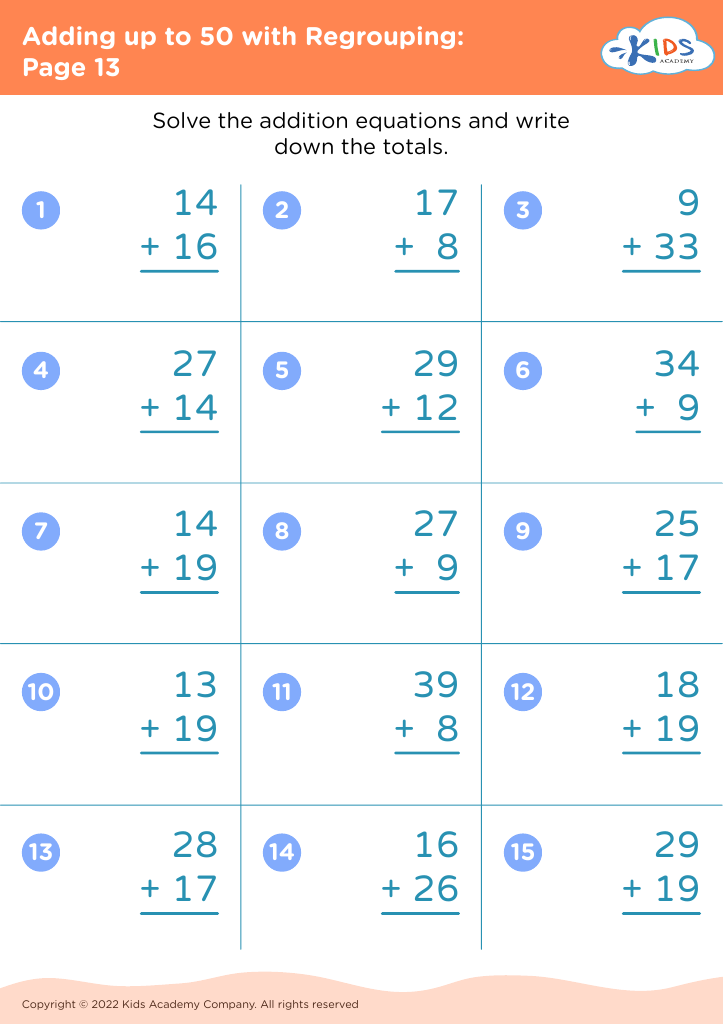




Cognitive development, particularly in activities such as adding up to 50, is crucial for children aged 3-8 as it lays the foundation for more advanced mathematical and critical thinking skills used throughout their academic life and beyond. During these formative years, children’s brains are exceptionally receptive and capable of absorbing new information rapidly, and engaging them with fun and interactive math exercises aids in building a strong numerical core. Mastering the ability to add numbers up to 50 not only boosts their arithmetic skills but also enhances memory, attention, and problem-solving capabilities.
Parents and teachers should prioritize this developmental stage because it helps instill a positive attitude towards learning and mathematics early on. This encouragement can lead to greater self-confidence in a child’s ability to handle more complex tasks, thereby fostering intellectual curiosity. Moreover, early mastery of basic math skills correlates with better performance in academics across various subjects, as cognitive skills are transferable. Engaging in activities that promote cognitive development, such as counting games or storytelling with numbers, supports natural developmental milestones and creates an environment where learning becomes a joyful and rewarding experience. Ensuring solid cognitive growth during these years ultimately helps in nurturing well-rounded, capable individuals ready to navigate future academic challenges.








