Compare fractions Adding up to 50 Worksheets for Ages 3-8
3 filtered results
-
From - To
Welcome to our "Compare Fractions Adding Up to 50" worksheets, specially designed for young learners aged 3-8! This resource provides engaging activities that help children understand and compare fractions by focusing on the concept of addition within the number 50. With vibrant illustrations and easy-to-follow explanations, these worksheets foster essential math skills in a fun and interactive way. Children will practice identifying, comparing, and manipulating fractions, boosting their confidence in early mathematics. Perfect for at-home learning or classroom activities, these worksheets are an excellent tool to lay a strong foundation for future math success. Get started today!
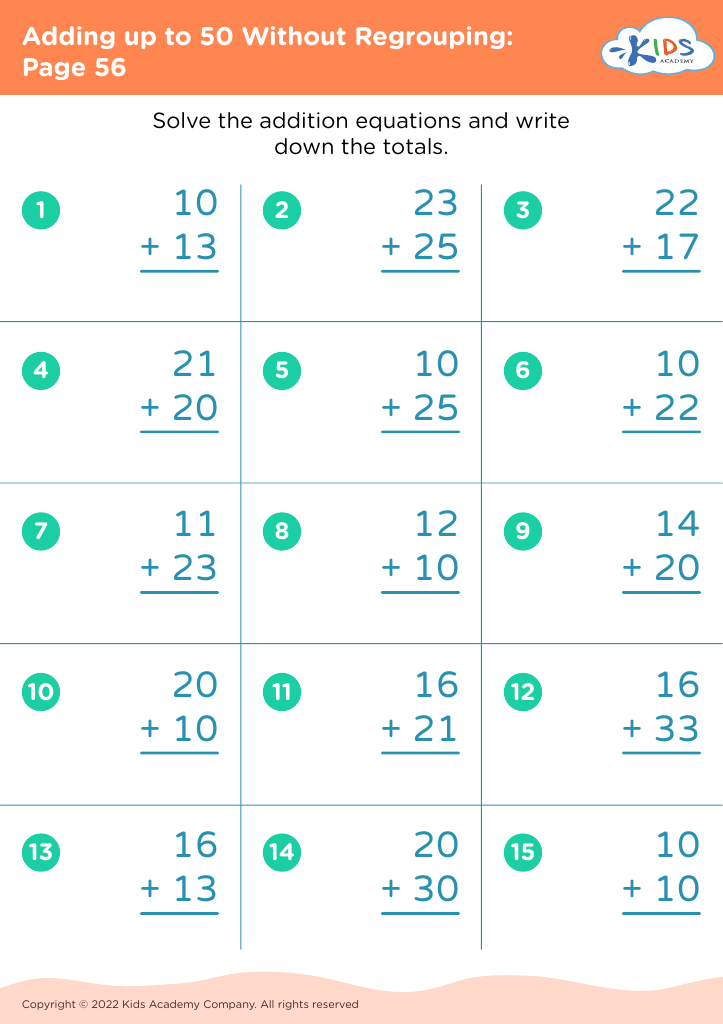
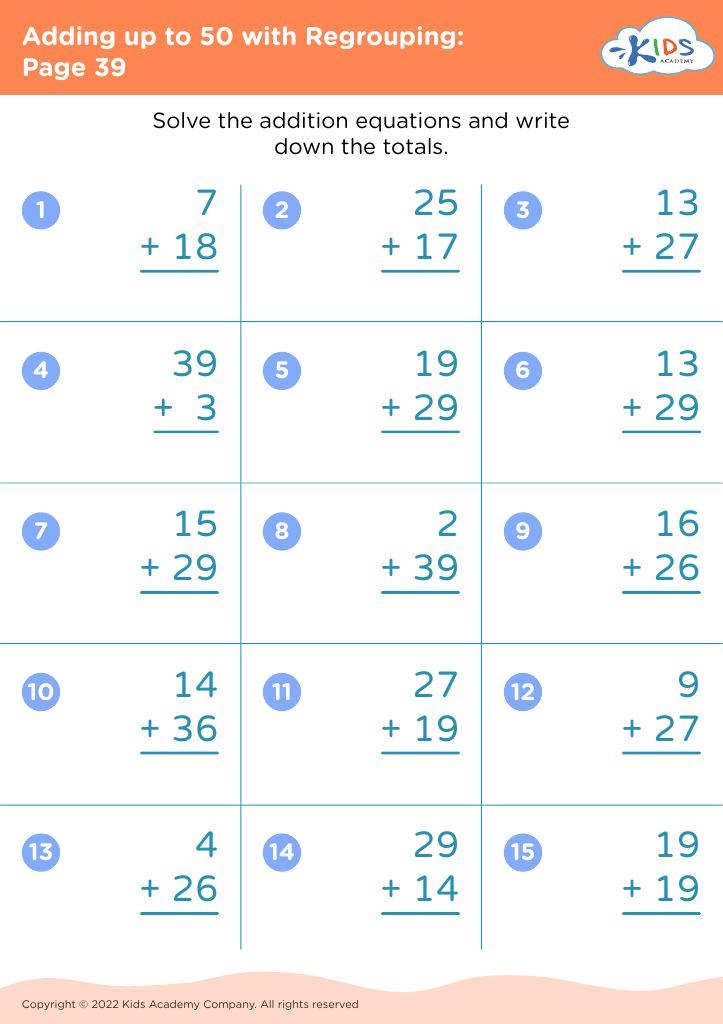
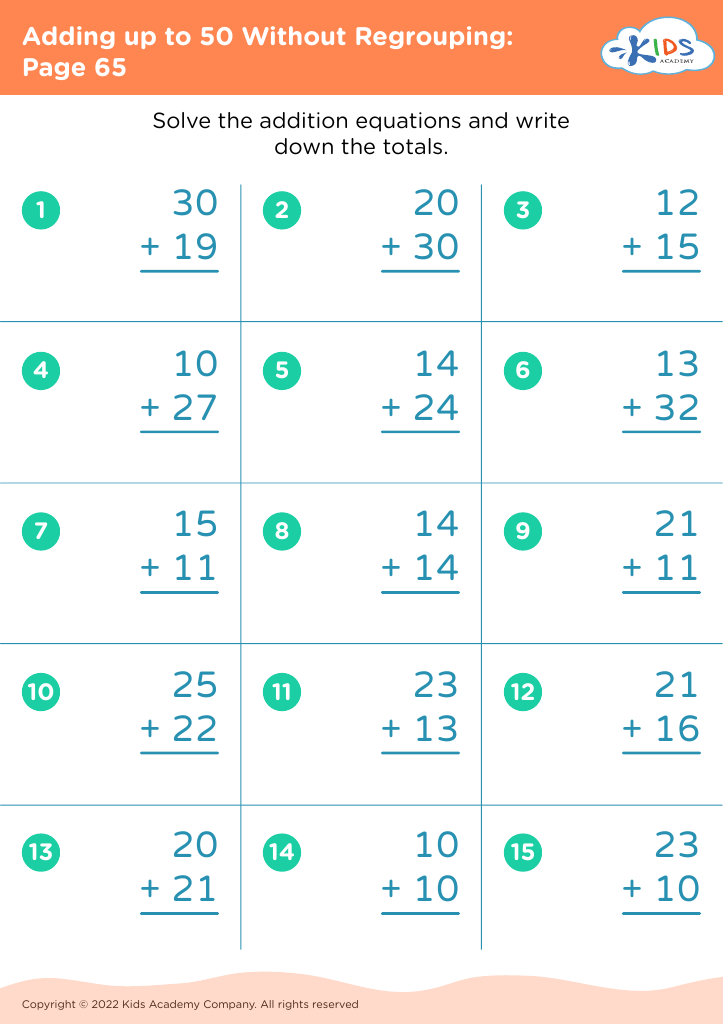




Understanding and comparing fractions is an essential foundational skill for children, especially between the ages of 3 to 8. Teaching young learners to compare fractions adds a significant layer to their mathematical comprehension. Engaging with fractions equips children with the ability to recognize parts of a whole, which is crucial not only in math but also in everyday life situations, such as sharing food or measuring ingredients.
When we focus on comparing fractions that add up to 50, we also introduce them to the notion of equivalency and proportionality in a simple, digestible way. This practice can enhance their analytical thinking skills and foster a more profound understanding of numerical relationships. It encourages problem-solving and improves numerical fluency, ultimately laying the groundwork for more complex mathematical concepts they will encounter later in their education.
Moreover, early engagement with fractions boosts confidence, allowing children to appreciate their math skills from an early age. For parents and teachers, supporting this learning at home or in the classroom demonstrates the encouragement of critical thinking. This foundational success can stimulate further academic curiosity and a positive association with learning, promoting lifelong educational engagement. Thus, understanding fraction comparison is an invaluable precursor to future success in math and beyond.








