Comparing Fractions Adding up to 50 Worksheets for Ages 3-8 - Page 2
30 filtered results
-
From - To
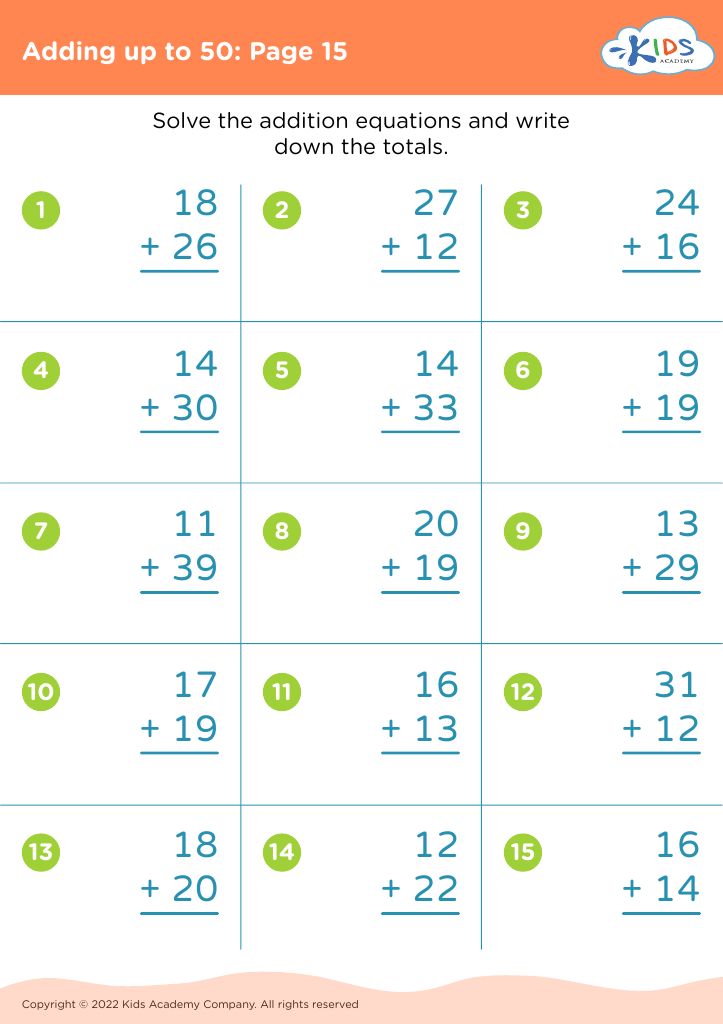
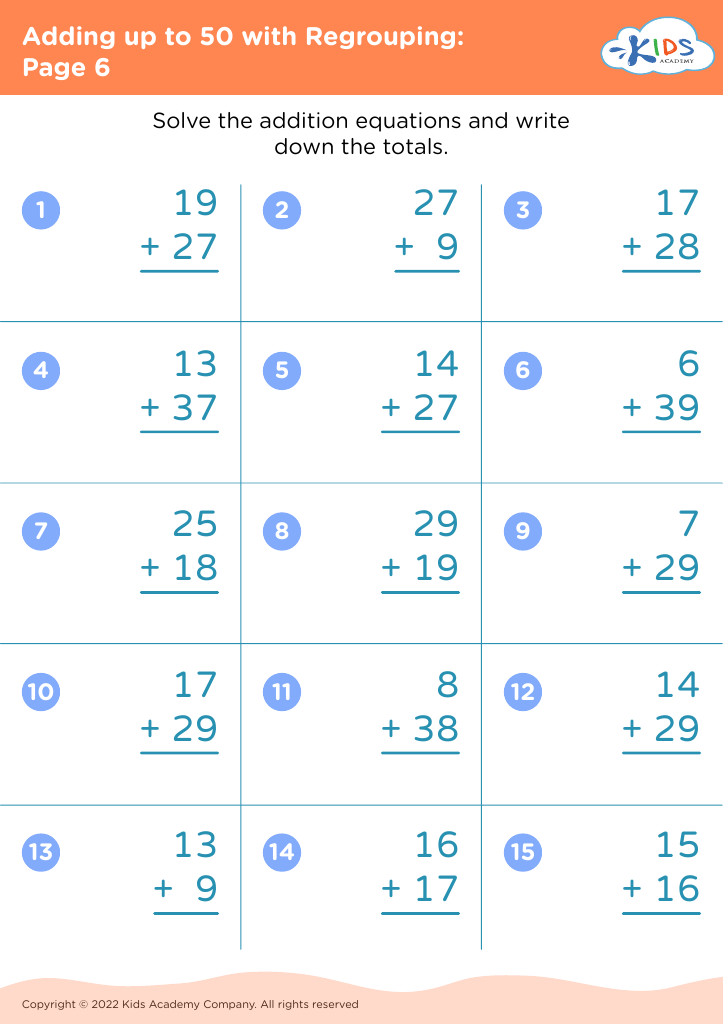
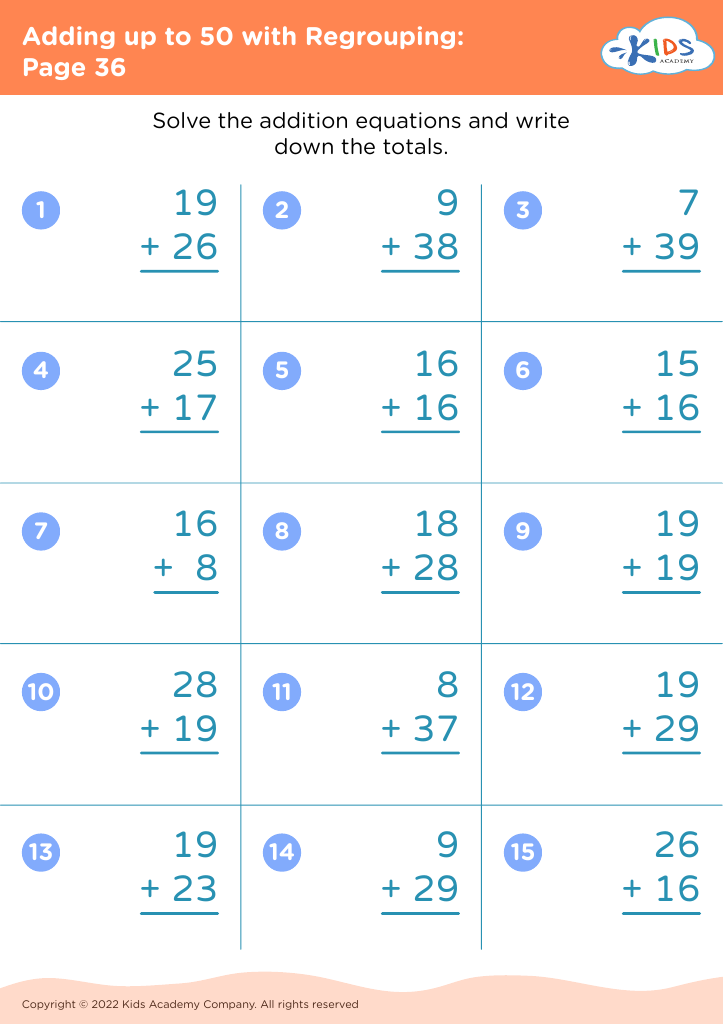
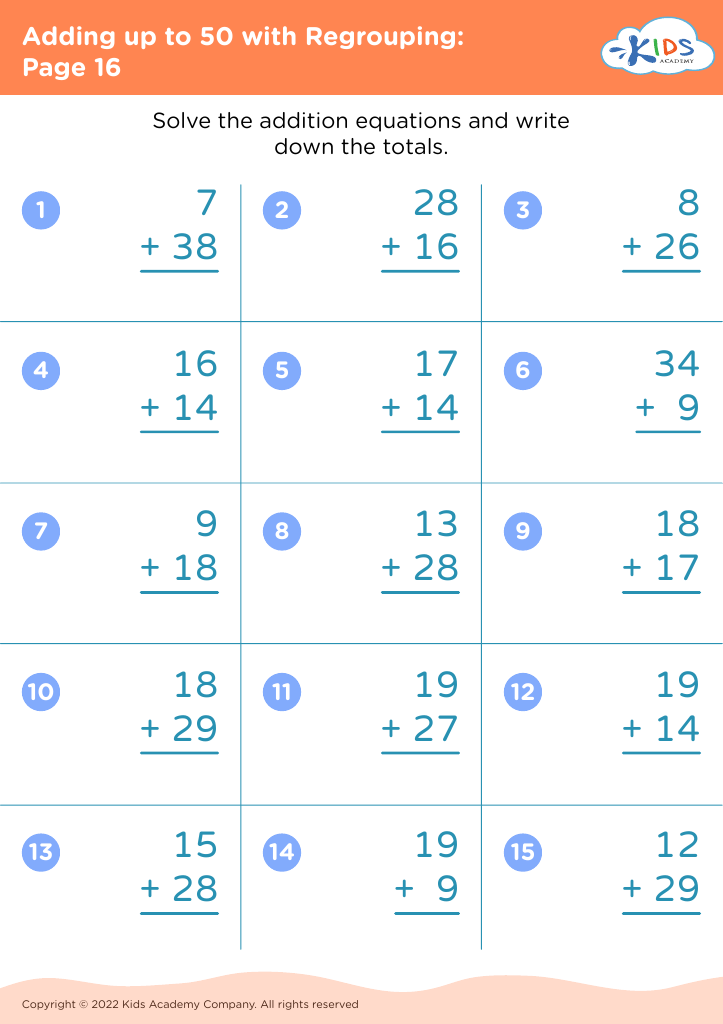
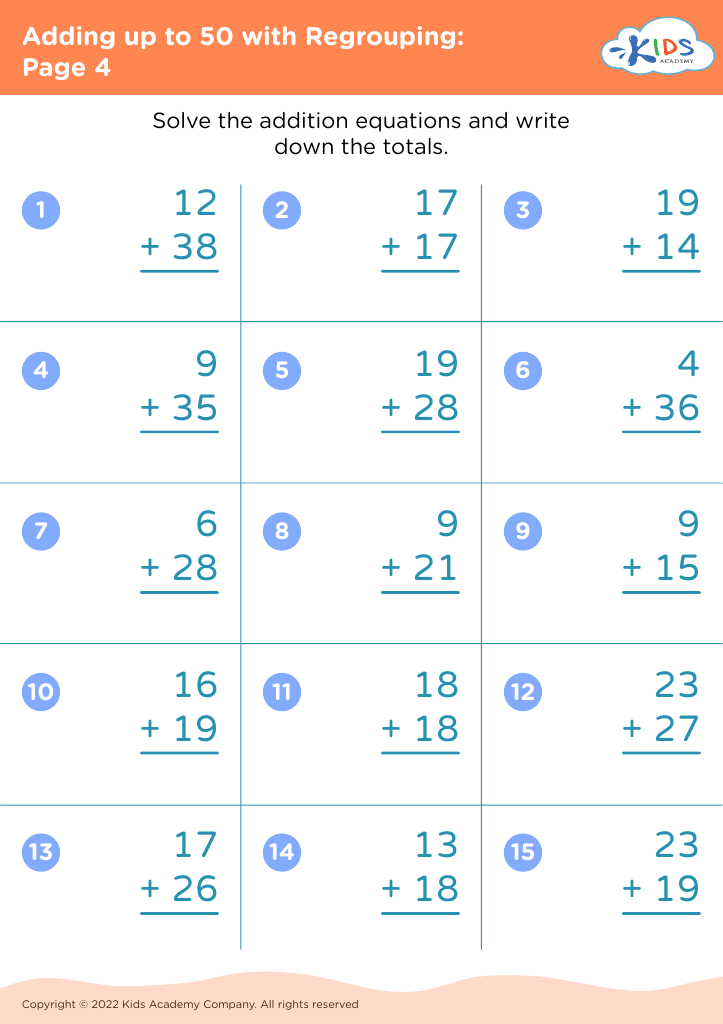
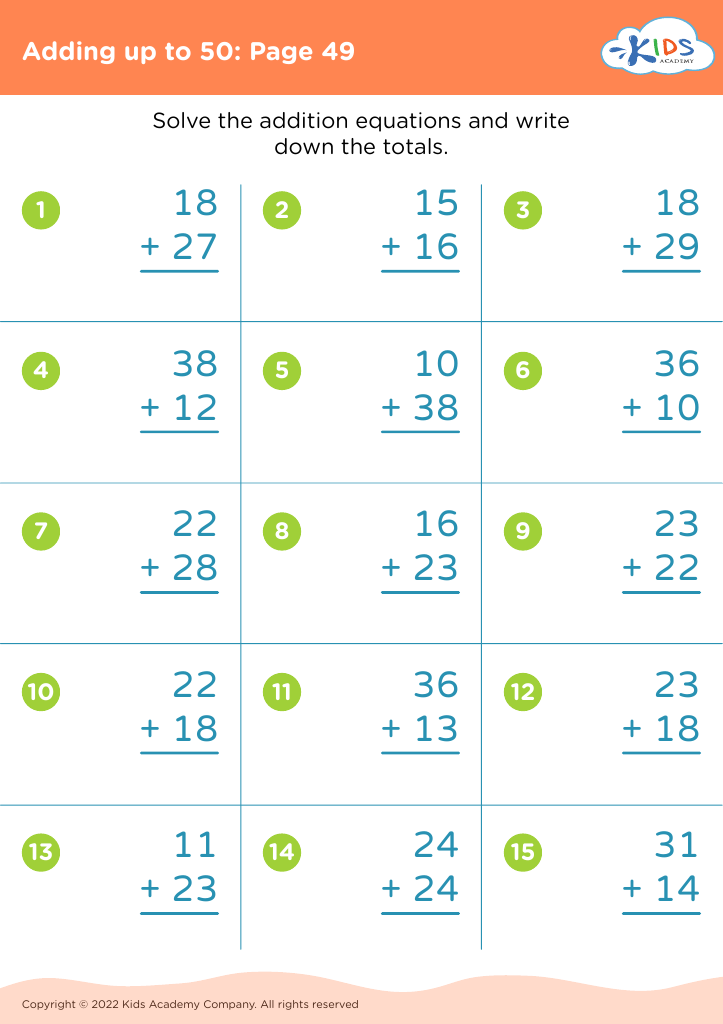




When we talk about comparing fractions and understanding numbers that add up to 50 for young children ages 3-8, we’re setting the groundwork for essential mathematical skills that will benefit them throughout their education. Comparing fractions at an early age helps kids develop a strong sense of numbers, parts of a whole, and how quantities relate to each other. This foundational knowledge is crucial not just for future math success but for everyday problem-solving skills.
Understanding sums that add up to 50 or fractions of it aids in improving a child's ability to reason and make sense of larger numbers and their relationships. It promotes logical thinking and helps children grasp the idea that numbers can be broken down and reconstructed, fostering mental math skills.
Moreover, these fundamental math skills enhance a child’s confidence. When kids master comparing fractions and adding numbers up to 50, they often feel more equipped to tackle more complex math later on, preventing math anxiety. Early exposure to such concepts also aligns with educational standards, ensuring children are on the expected developmental track.
Both parents and teachers have significant roles in making these early learning experiences engaging and enjoyable, paving the way for a lifelong appreciation and comprehension of mathematics. Involving these numerical exercises in playful activities makes learning natural and fun, boosting children's curiosity and enthusiasm for math.








