Counting objects Adding up to 50 Worksheets for Ages 3-8
4 filtered results
-
From - To
Explore our engaging "Counting Objects Adding Up to 50 Worksheets" designed specifically for children ages 3-8! These interactive worksheets make learning math fun and effective, as kids develop essential counting skills while adding objects up to 50. Our carefully crafted activities encourage children to identify and count various items, fostering their numerical understanding and enhancing fine motor skills. Perfect for parents and teachers alike, these resources support early math education in a playful and supportive way. Download our printables today and watch young learners build confidence in their counting abilities while enjoying hours of educational fun!
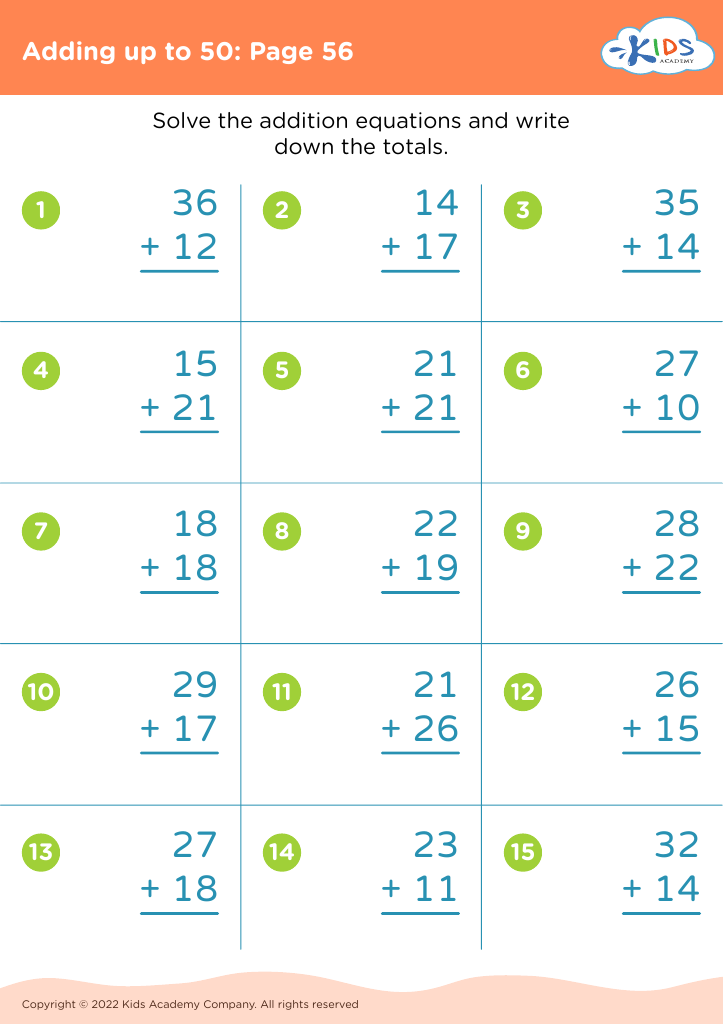
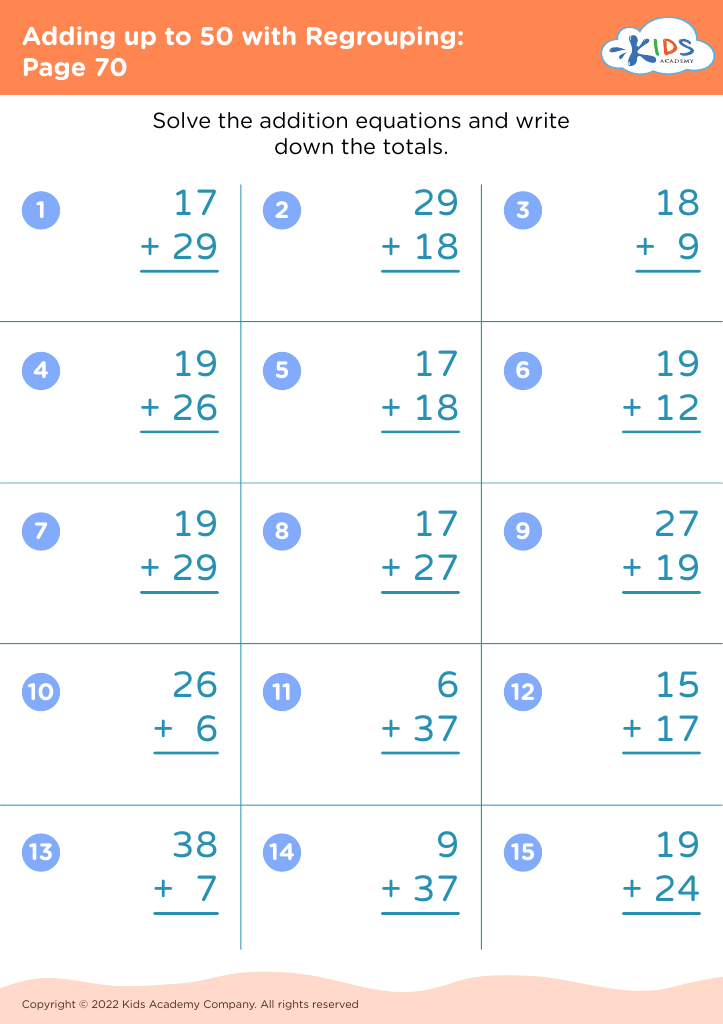
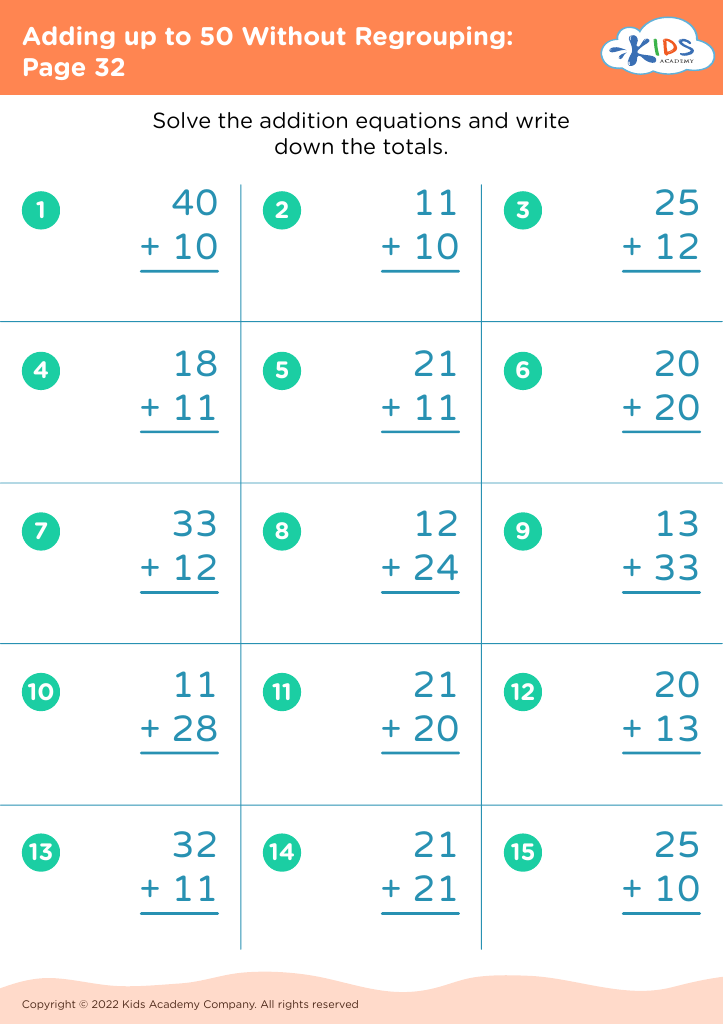
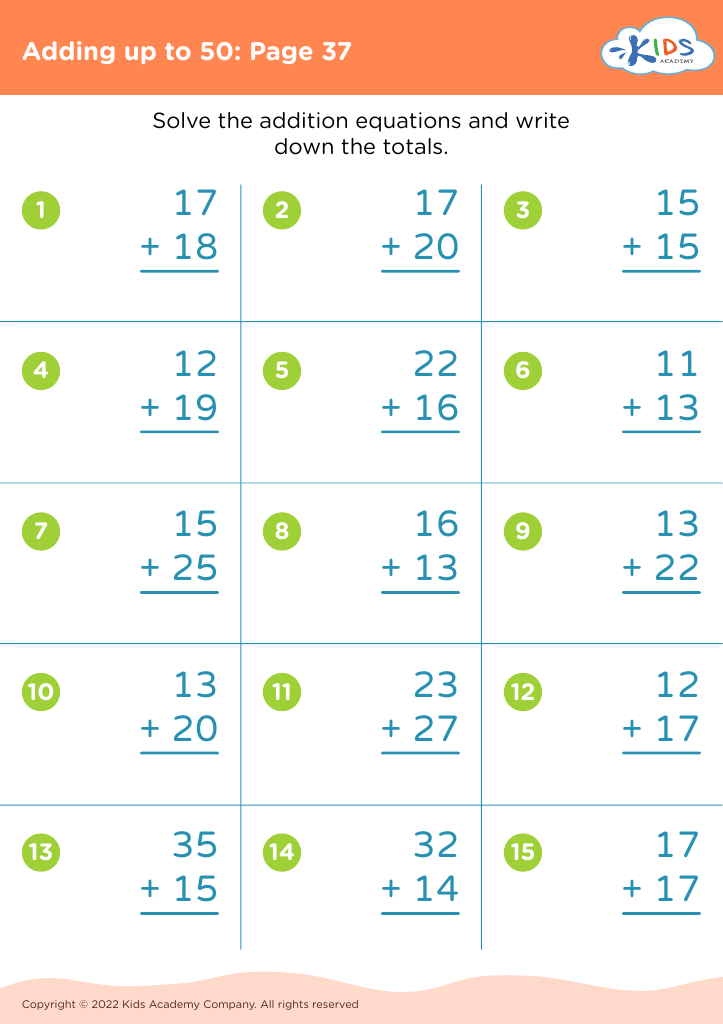




Counting objects and adding up to 50 is a crucial developmental milestone for children aged 3-8. During this stage, children expand their cognitive abilities, and numeracy skills lay a strong foundation for their future academic success. Engaging in counting activities promotes number recognition, enhances problem-solving abilities, and encourages logical thinking.
For parents and teachers, fostering these counting skills means ensuring children develop a deeper understanding of mathematics, which is integral to their daily lives. Learning to count and add sets of objects helps kids grasp more complex mathematical concepts in the future, such as subtraction, multiplication, and division.
Moreover, early math skills are linked to improved performance in subjects beyond mathematics, fostering confidence and encouraging a positive attitude toward learning as a whole. Activities such as counting toys, using blocks, or adding together fruits not only make learning tangible and fun but also enhance fine motor skills and language development.
Through consistent practice, children build a strong mathematical foundation, which helps bridge the gap to more advanced concepts later on. Ultimately, investing time and resources into counting and addition at this age supports crucial cognitive, social, and emotional growth, making it essential for parents and teachers to prioritize these skills.








