Develop fine motor skills Adding up to 50 Worksheets for Ages 3-8
4 filtered results
-
From - To
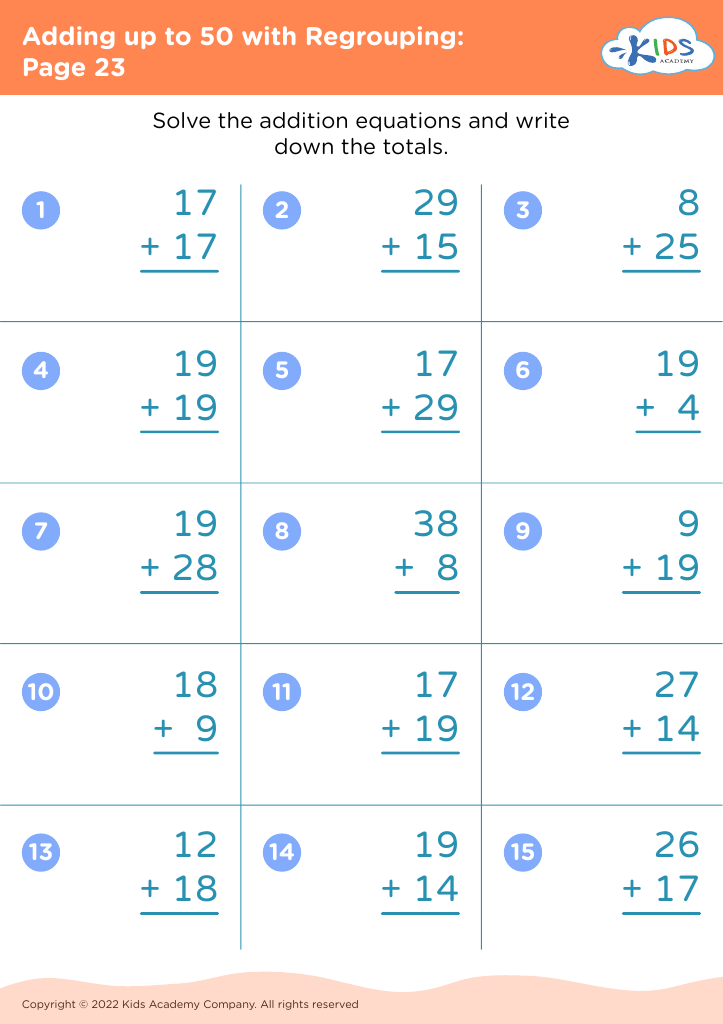
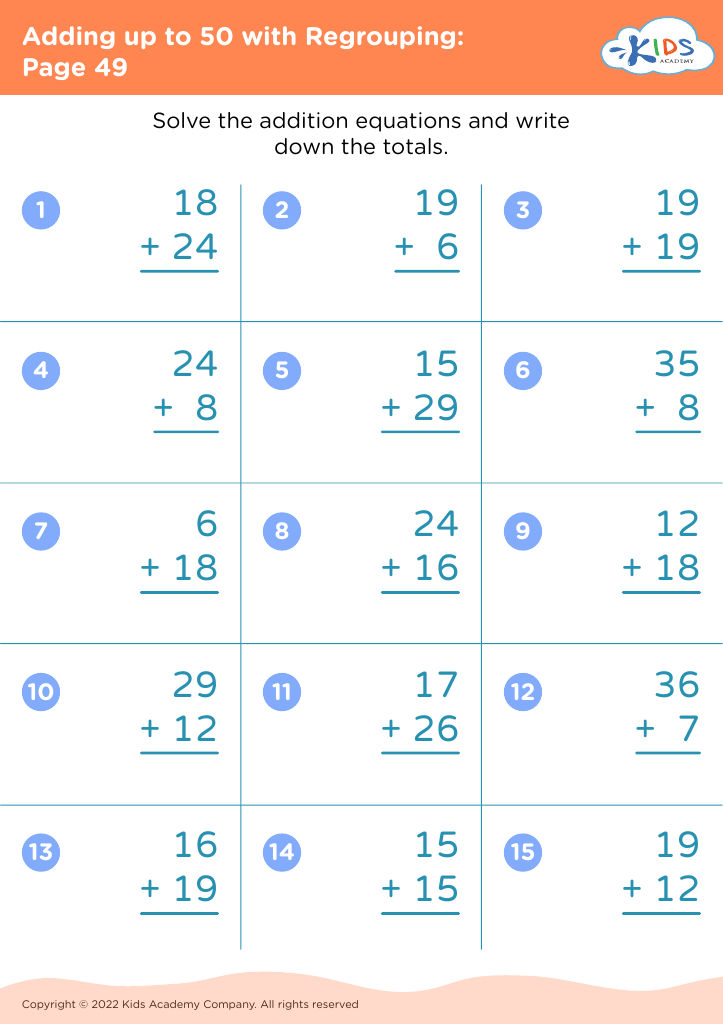
Boost your child's fine motor skills with our engaging "Adding up to 50 Worksheets for Ages 3-8". These printable worksheets will not only enhance their arithmetic abilities but also develop their hand-eye coordination and dexterity. Each page features fun, colorful activities designed to make learning enjoyable and effective. Perfect for preschool to early elementary school students, these worksheets align with core math objectives, ensuring your child builds a strong mathematical foundation. Help your child succeed in math while improving their fine motor skills with these thoughtfully designed educational tools. Start today and watch them thrive!






Parents and teachers play a crucial role in early childhood development, and one key area deserving attention is the development of fine motor skills. These skills involve the small muscles of the hands, fingers, and wrists, which are essential for performing everyday tasks such as writing, buttoning a shirt, and manipulating small objects. For children ages 3-8, cultivating fine motor skills is foundational for academic and personal success.
First, fine motor skills directly impact a child's ability to write. Efficient handwriting requires a level of dexterity that comes from well-developed fine motor abilities. As children progress in school, good handwriting is crucial for taking notes, completing assignments, and achieving literacy milestones.
Second, engaging in activities that develop fine motor skills boosts cognitive development. Tasks like counting objects up to 50 not only improve mathematics proficiency but also reinforce concentration, number recognition, and problem-solving abilities.
Furthermore, children gain a sense of independence and confidence through fine motor tasks. Successfully completing activities like drawing shapes, zipping a coat, or using scissors enables them to feel competent and self-sufficient.
Lastly, a focus on fine motor skills lays the groundwork for future complex skills, supporting a child's holistic development. Therefore, it is imperative for parents and teachers to incorporate activities that enhance fine motor skills in a child's daily routine.








