Enhance counting skills Adding up to 50 Worksheets for Ages 3-8
5 filtered results
-
From - To
Boost your child's counting abilities with our engaging "Enhance Counting Skills Adding up to 50" worksheets, tailored for ages 3-8. Our specially designed activities make learning both fun and effective, helping young minds practice addition up to 50. Each worksheet incorporates colorful illustrations to maintain interest while reinforcing key math concepts. Ideal for parents and teachers, these resources support classroom instruction or home enrichment. With these worksheets, kids will gain confidence in their counting skills, laying a strong foundation for future mathematical success. Discover the joy of learning with our expertly crafted counting worksheets today!
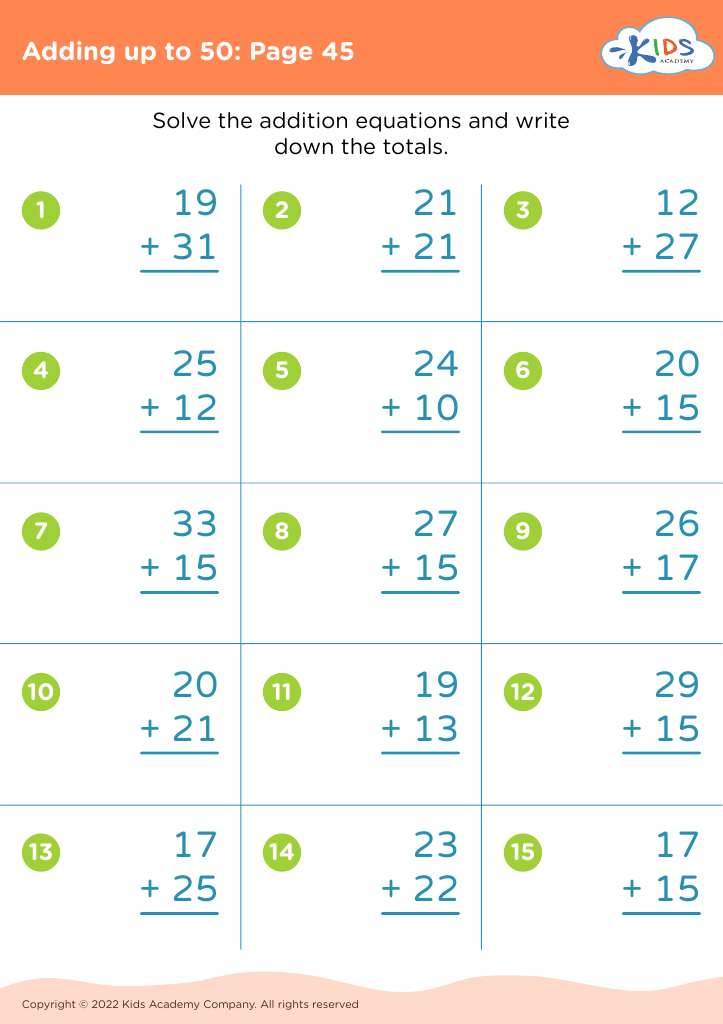
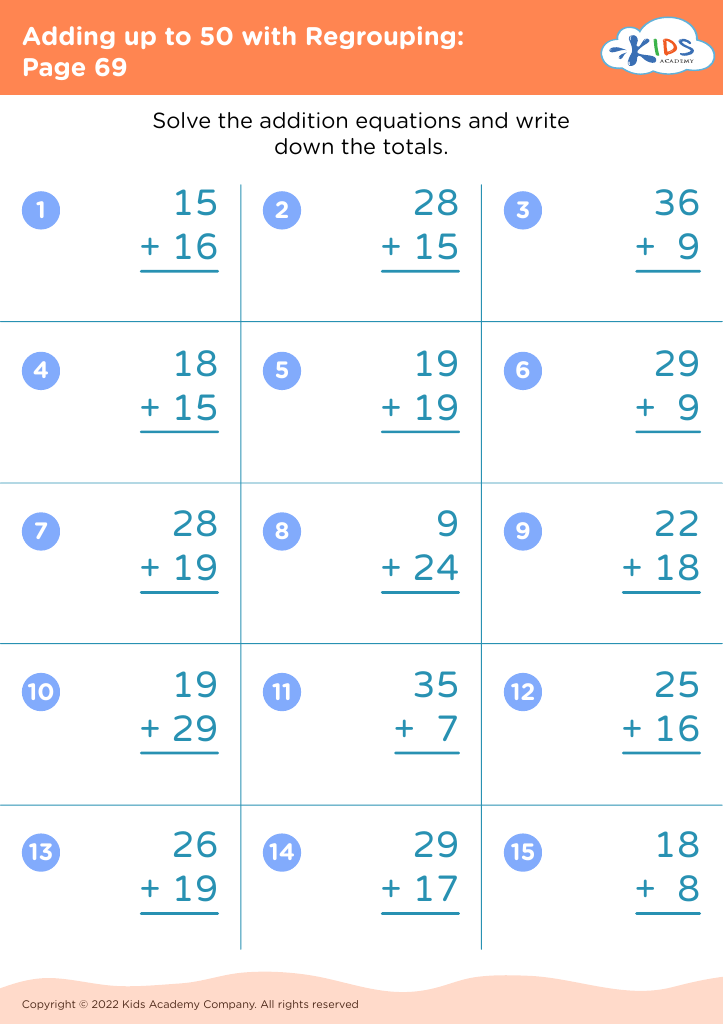
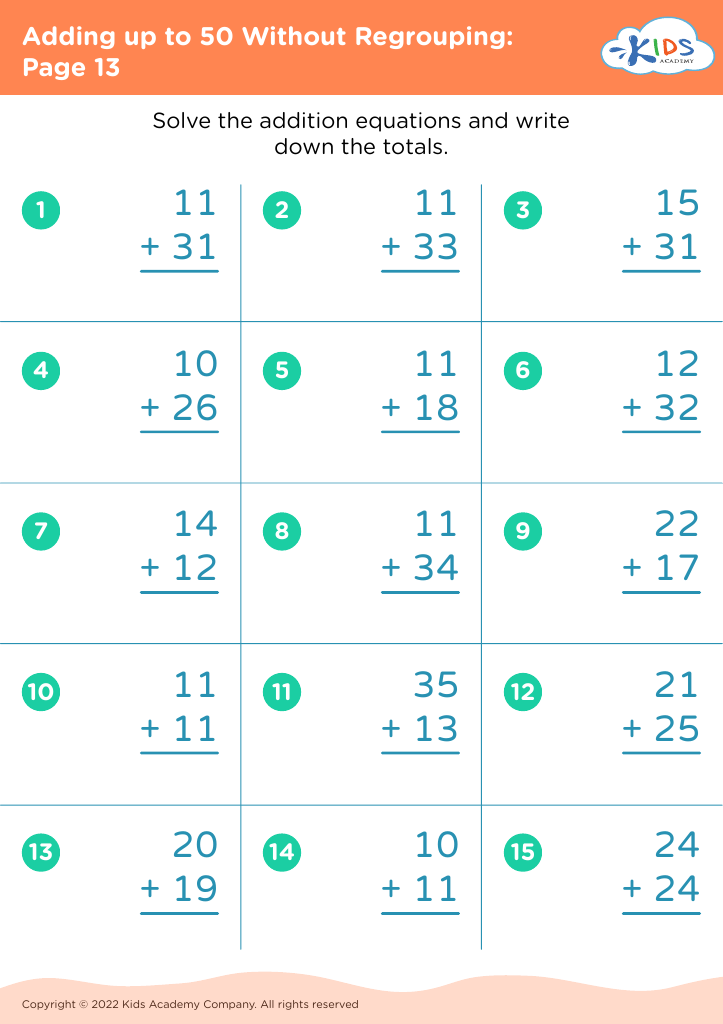
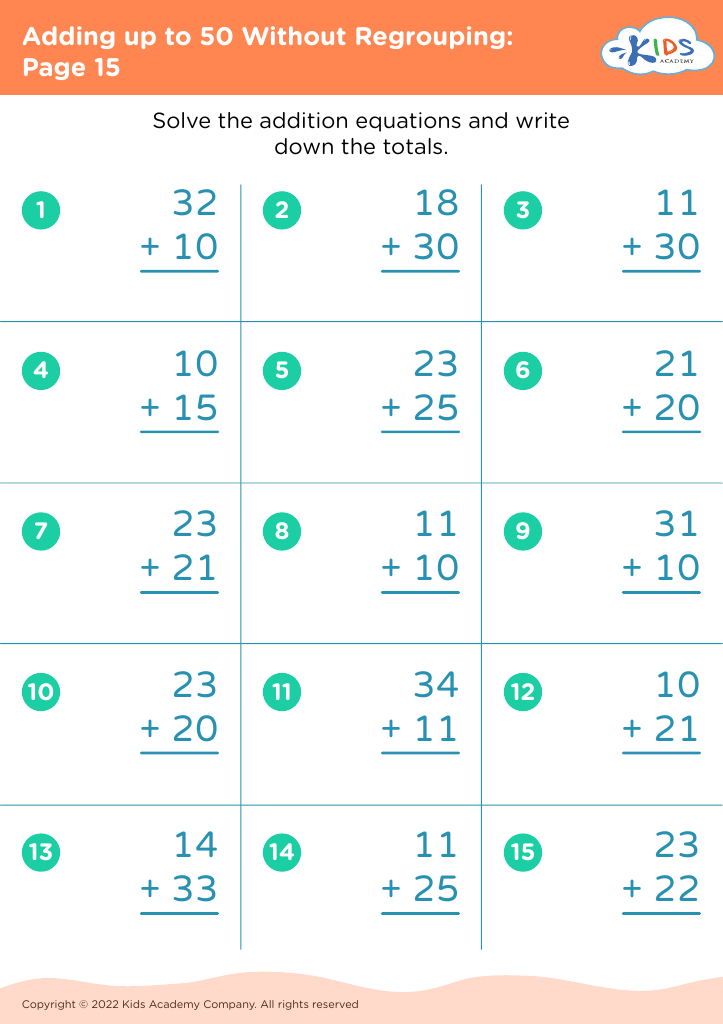
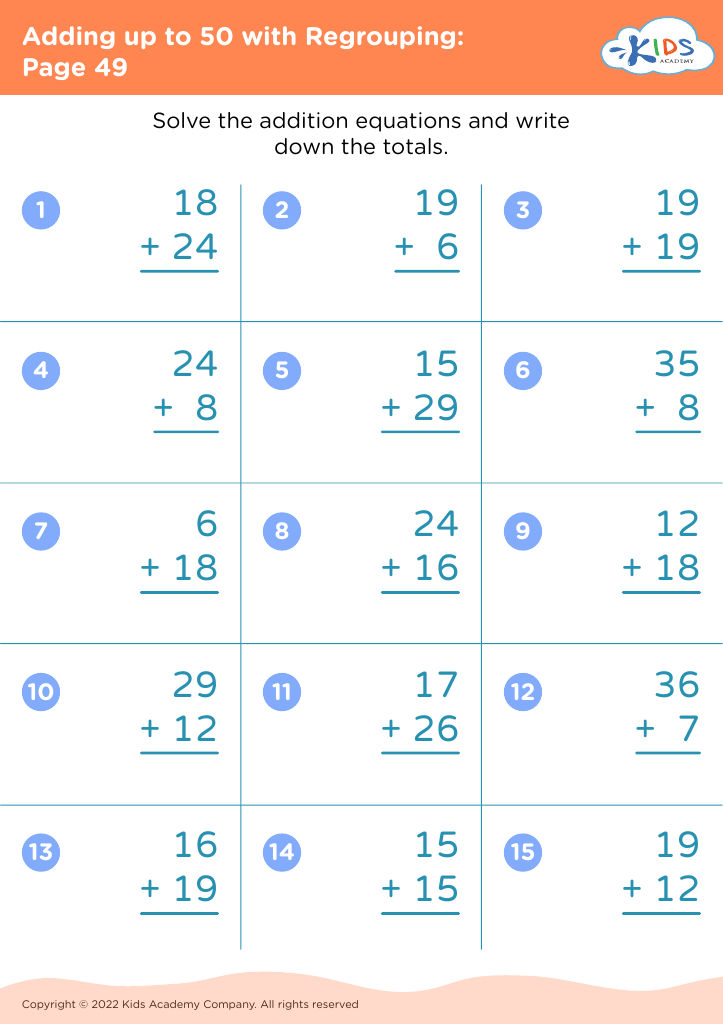




Developing strong counting skills up to 50 for children ages 3-8 is crucial for several reasons. First, counting is a foundational mathematical skill that underpins more complex topics such as addition, subtraction, and problem-solving. When children master counting, they build their confidence and competence in other areas of math, which is vital for their academic success.
Additionally, counting up to 50 helps children improve their number sense, an essential cognitive ability that allows them to understand quantities, recognize number patterns, and make estimations. This early familiarity with numbers facilitates a smoother transition to higher mathematics and shapes children's analytical and critical thinking abilities.
Beyond academics, counting skills nurture life skills like organization, pattern recognition, and spatial awareness. Kids use these abilities in everyday activities, such as setting the table, distributing snacks, or playing games, which involve counting objects and dividing them into groups.
Furthermore, competency in counting can foster a positive attitude toward math, reducing math anxiety and encouraging a persistent mindset when faced with challenges. Early exposure and practice thus provide a strong experiential learning base, setting the stage for future academic achievements and everyday problem-solving.
Therefore, parents and teachers should prioritize adding up to 50 to create a supportive and engaging learning environment that helps children thrive both in and out of the classroom.








