Enhancing problem-solving abilities Adding up to 50 Worksheets for Ages 3-8
3 filtered results
-
From - To
Unlock your child's potential with our "Enhancing Problem-Solving Abilities: Adding Up to 50 Worksheets for Ages 3-8." Our engaging worksheets are designed to boost early math skills through fun and interactive exercises. Each worksheet helps young learners practice addition problems that sum up to 50, enhancing both their arithmetic and problem-solving abilities. Perfect for kids aged 3-8, these worksheets foster a deeper understanding of numbers and improve cognitive skills. Ideal for classroom use or at-home learning, our worksheets build a strong foundation in math while keeping learning enjoyable. Visit Kids Academy to download and start your child's math journey today!
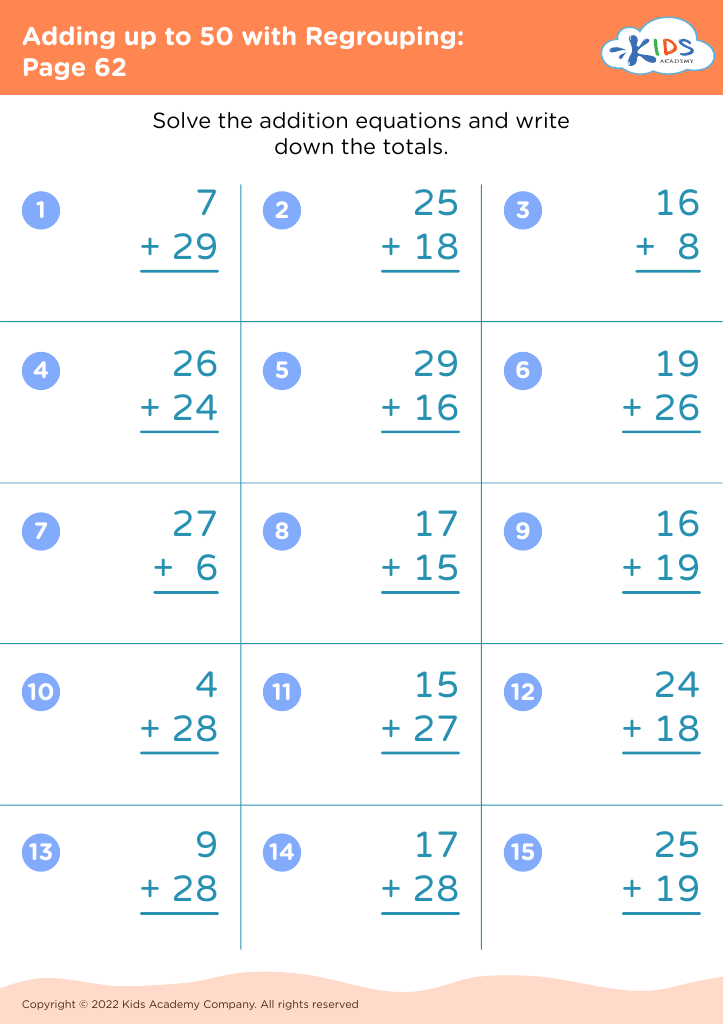
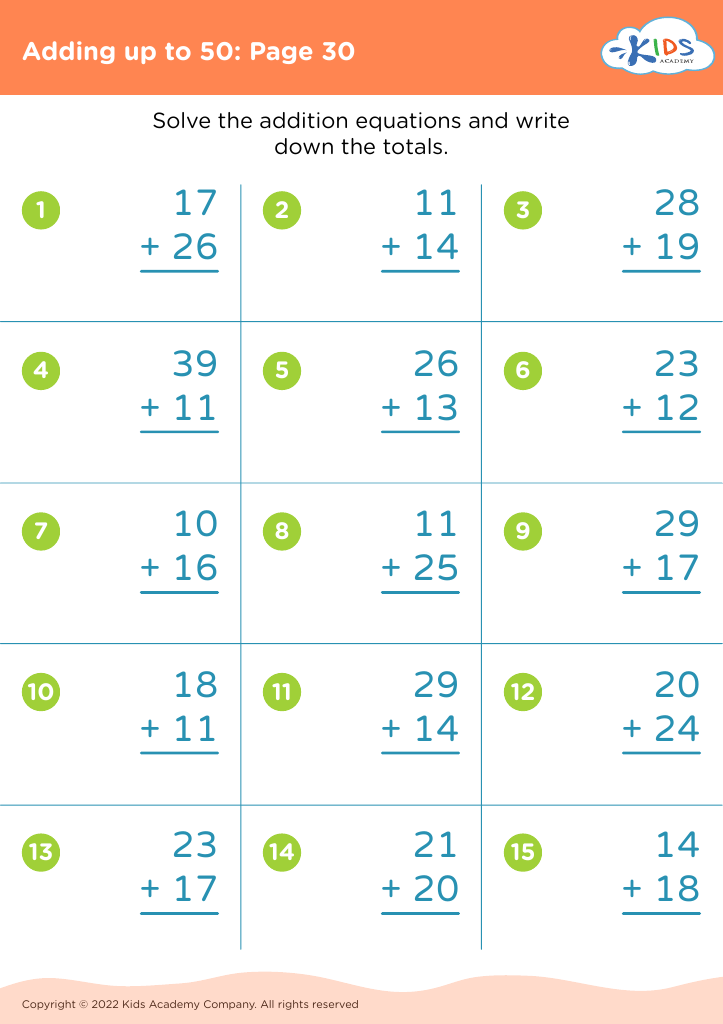
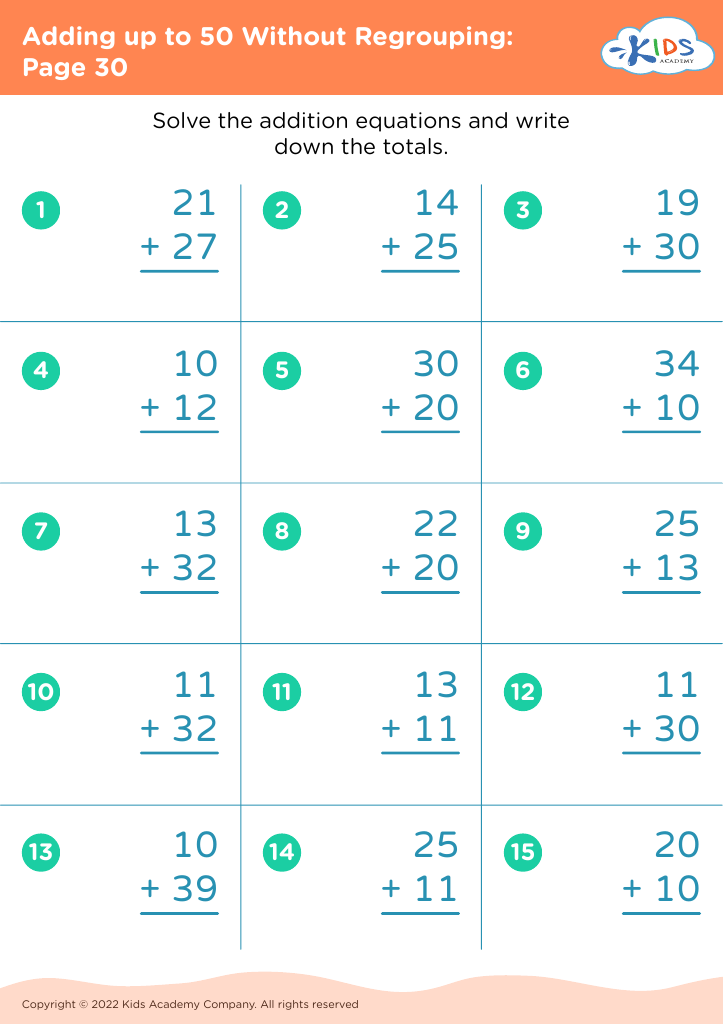




Enhancing problem-solving abilities and teaching how to add up to 50 for children ages 3-8 are essential steps toward their cognitive and academic development. Problem-solving skills are critical as they empower children to approach and resolve various situations with confidence, fostering independence and creativity. Through problem-solving, children learn the importance of patience, persistence, and critical thinking, which are lifelong skills.
Addition, specifically up to 50, lays a foundational mathematical competence that is crucial for future learning. It nurtures numerical literacy and comprehension, helping children become comfortable with numbers and improving their ability to perform everyday tasks that involve arithmetic. Furthermore, it improves their logical reasoning, enabling them to make sense of increasingly complex mathematical concepts.
Parents and teachers play a pivotal role in creating a stimulating environment for children to develop these abilities. By dedicating time and resources to enhance problem-solving and math skills, they can ensure that learning is interactive, enjoyable, and deeply impactful. This early investment sets children on a successful educational path, inspiring confidence and a positive attitude towards learning, which is crucial for their future academic achievement and life skills.








