Fraction Addition Adding up to 50 Worksheets for Ages 3-8
5 filtered results
-
From - To
Explore our engaging Fraction Addition worksheets tailored for children aged 3-8! These interactive resources help young learners master the concept of adding fractions with sums up to 50. Each worksheet is designed to make math fun and accessible, using colorful visuals and age-appropriate exercises that foster understanding and confidence. Kids will enjoy challenging themselves while developing essential math skills and critical thinking. Ideal for classroom activities or home practice, these worksheets support early math education by encouraging kids to explore fractions in creative and playful ways. Download our Fraction Addition worksheets today and watch your child's math skills flourish!
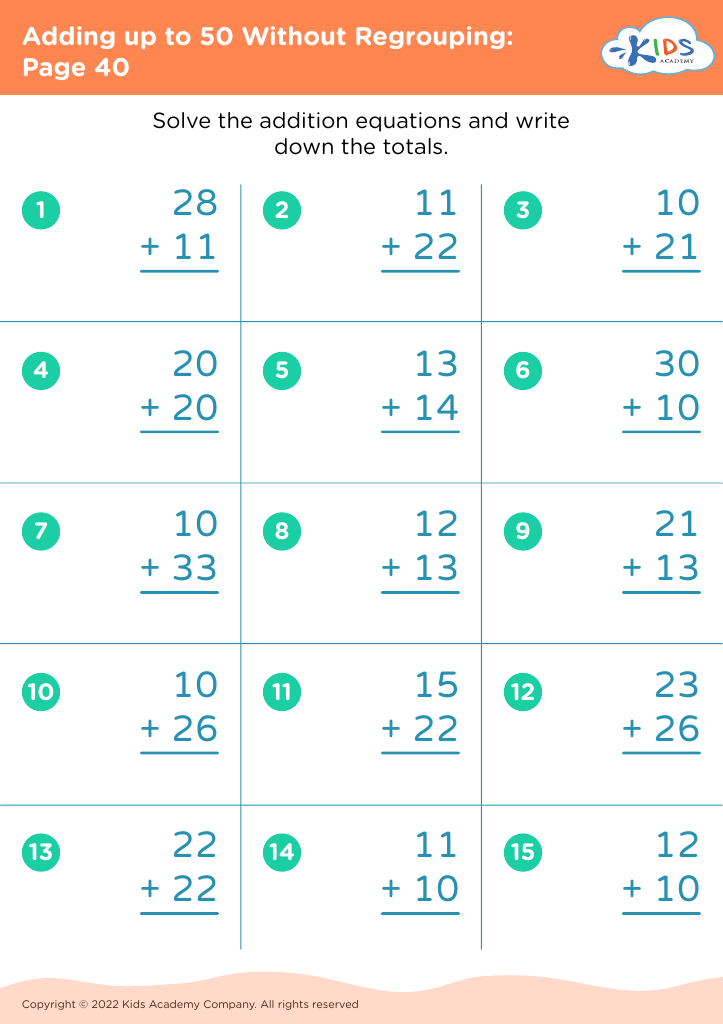
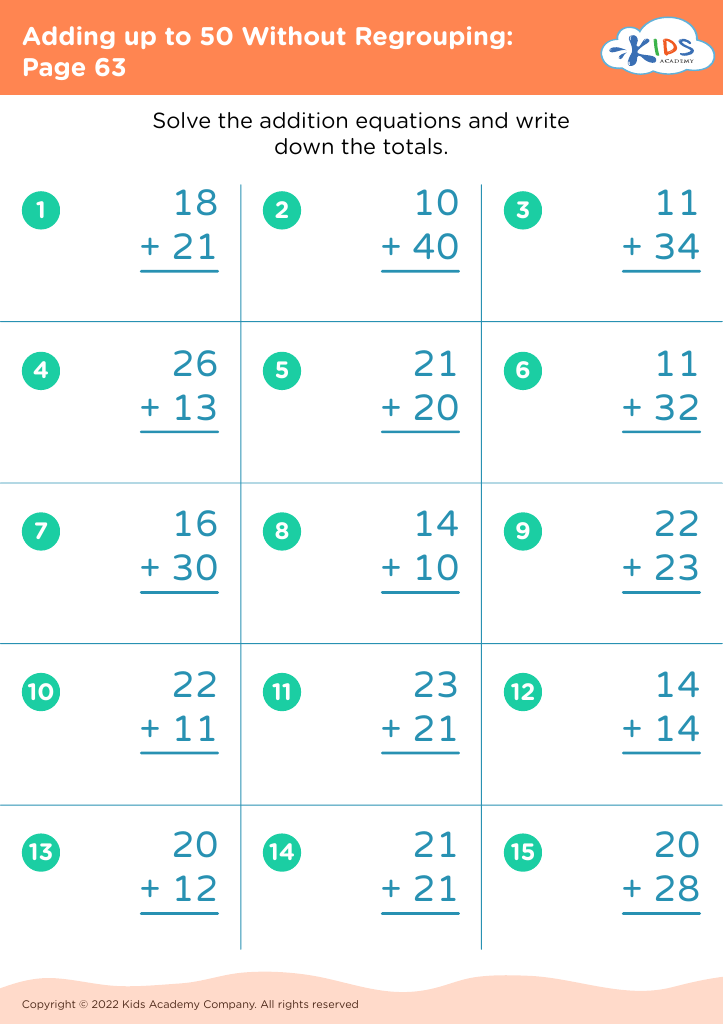
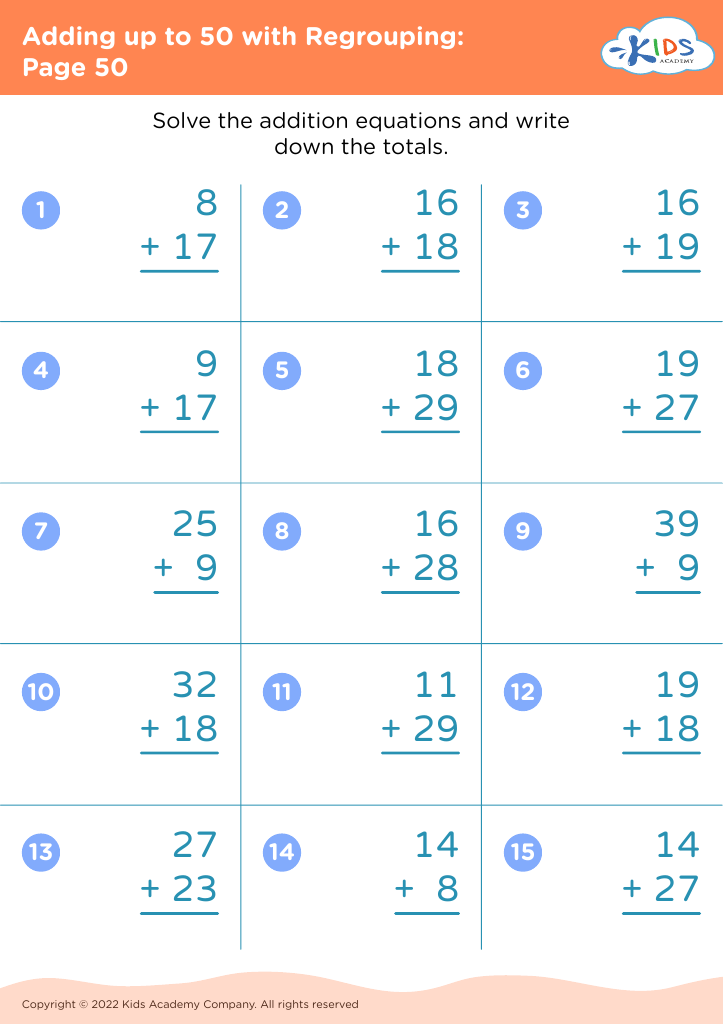
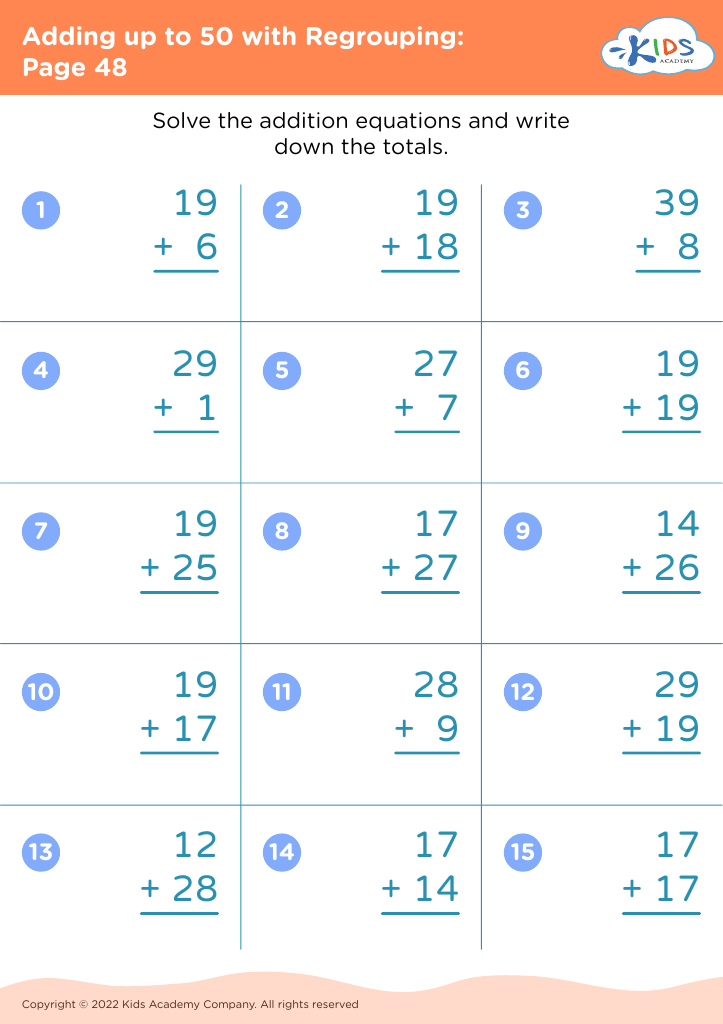
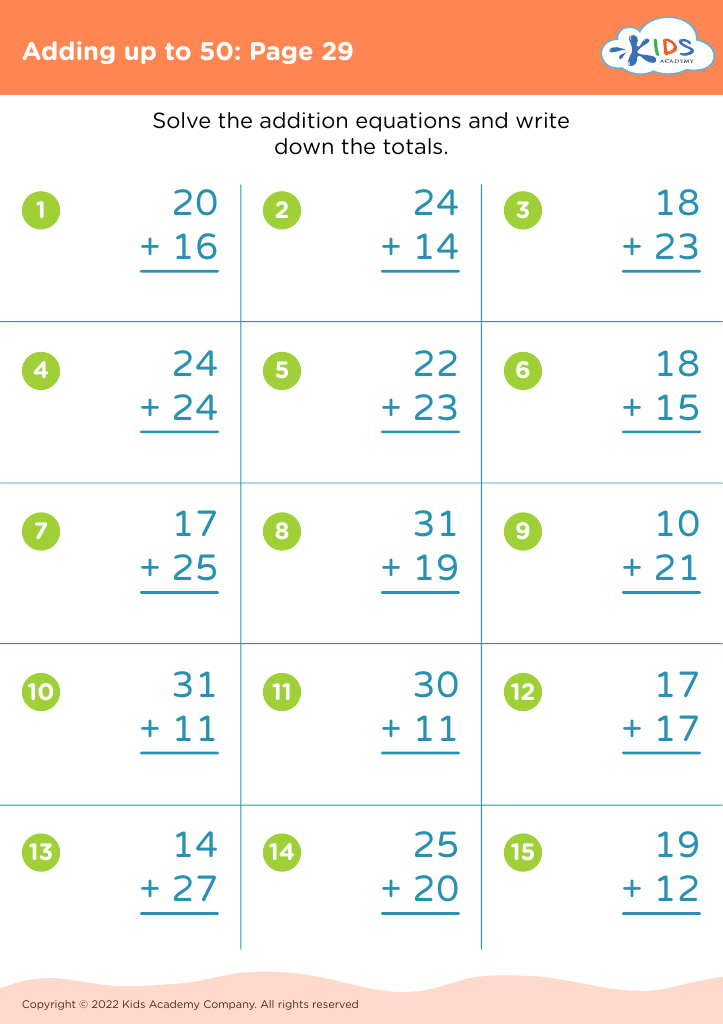




Understanding fraction addition, particularly concepts like adding up to 50, is crucial for young learners aged 3 to 8. At this formative stage, children are developing their mathematical foundations, and introducing fractions early fosters a strong grasp of numbers, enhancements of critical thinking, and problem-solving skills. Engaging with such concepts helps children visualize parts of a whole, which can simplify understanding larger ideas in mathematics later on, such as operations with whole numbers and decimals.
Parents and teachers should care about this because it provides opportunities for interactive learning through practical activities. Integrating fraction addition into everyday situations, like sharing snacks or toys, makes the concept relatable and enjoyable. This not only promotes a positive attitude towards math but also builds reasoning abilities as children learn to explore and understand relationships between numbers.
Additionally, a strong base in fractions aids in their comprehension of more advanced topics in subsequent grades, as concepts like ratios, proportions, and percentages rely on fractional understanding. By nurturing skills in this area, parents and teachers lay the necessary groundwork for their children’s success, equipping them with essential tools that promote confidence and enthusiasm around mathematics.








