Fraction comparison Adding up to 50 Worksheets for Ages 3-8
7 filtered results
-
From - To
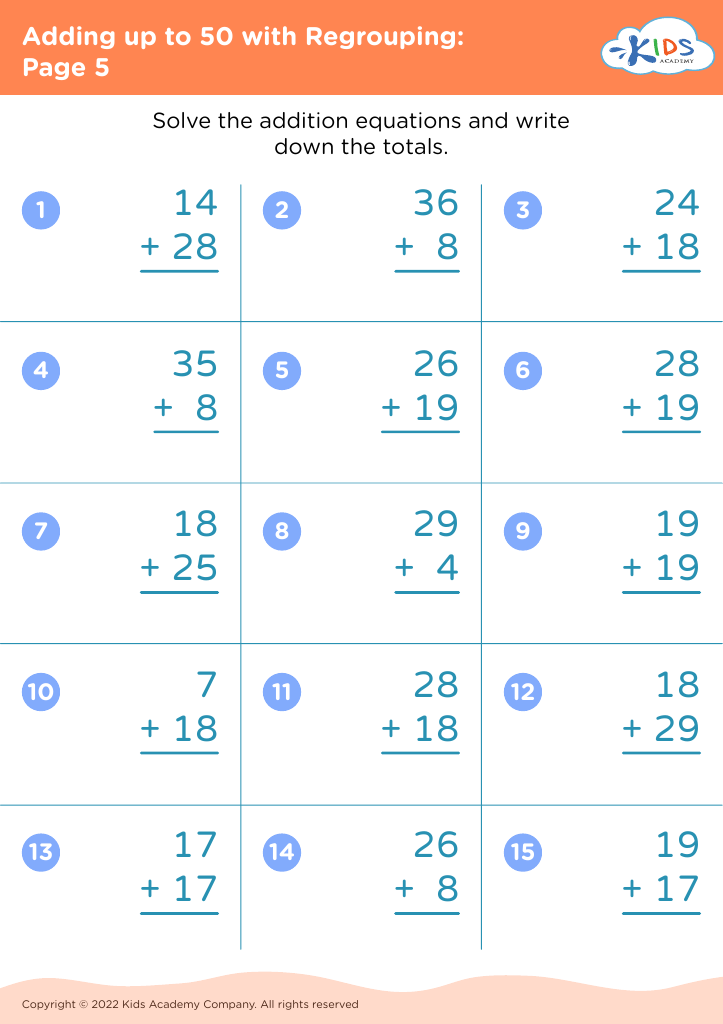
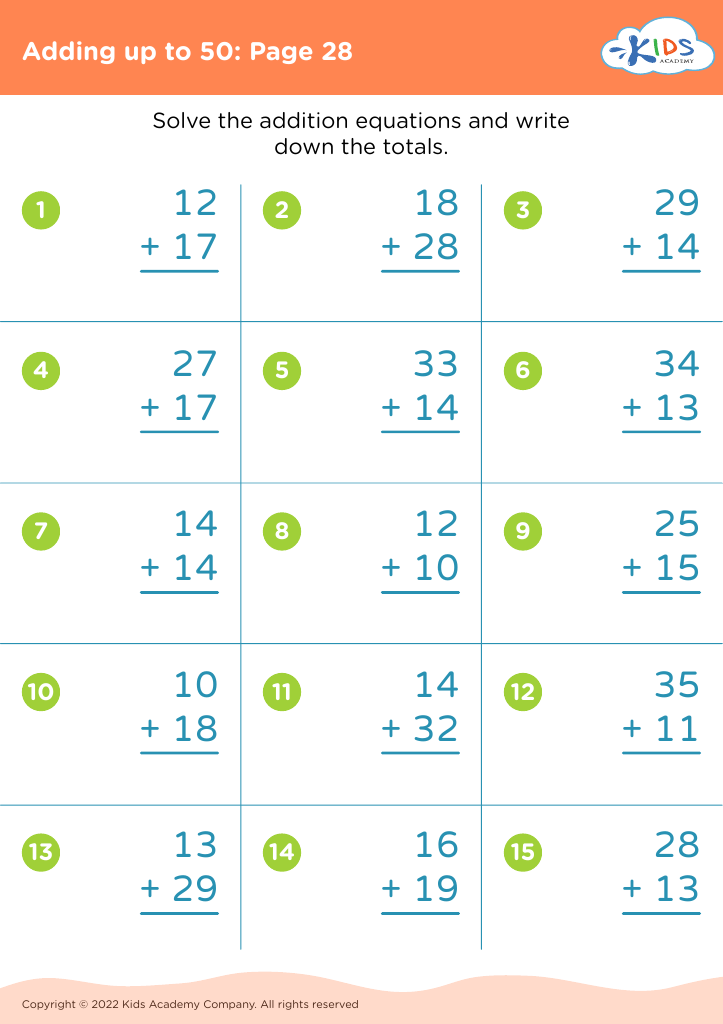
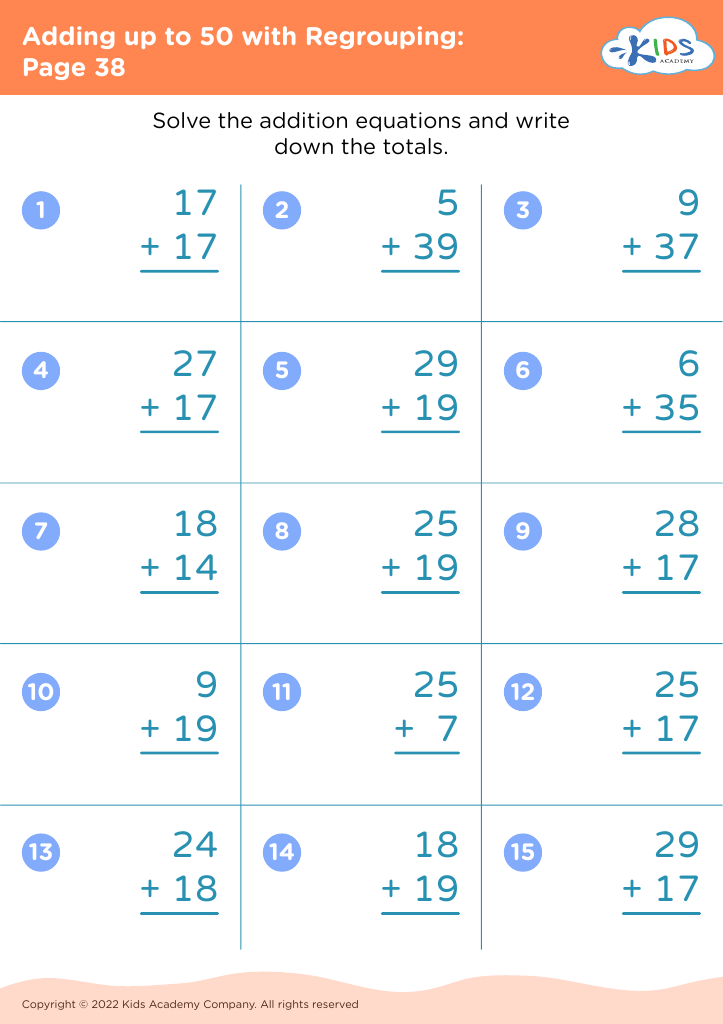
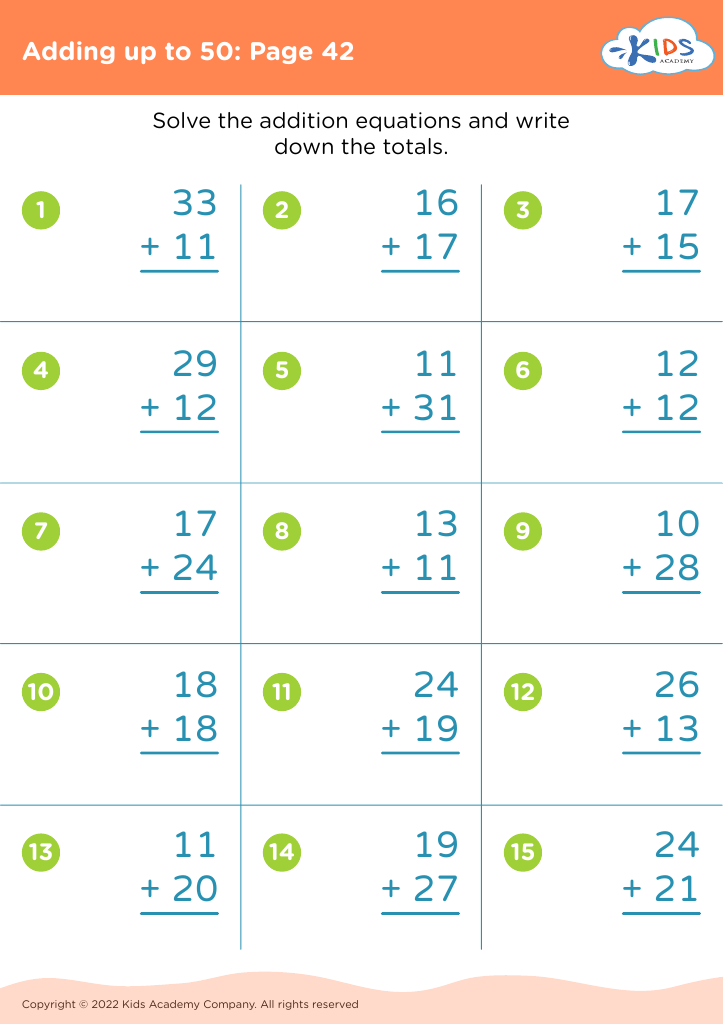
Discover our engaging "Fraction Comparison Adding Up to 50 Worksheets," designed specifically for children ages 3-8. These interactive worksheets make learning fractions fun and accessible, allowing young learners to explore fundamental math concepts while practicing addition up to 50. With colorful visuals and easy-to-follow instructions, children will develop essential skills in comparing fractions, enhancing their mathematical reasoning. Perfect for both classroom and homeschooling settings, these worksheets encourage hands-on learning and promote problem-solving abilities. Help your child build a strong foundation in math with our thoughtfully crafted fraction comparison activities that inspire curiosity and confidence in their abilities!
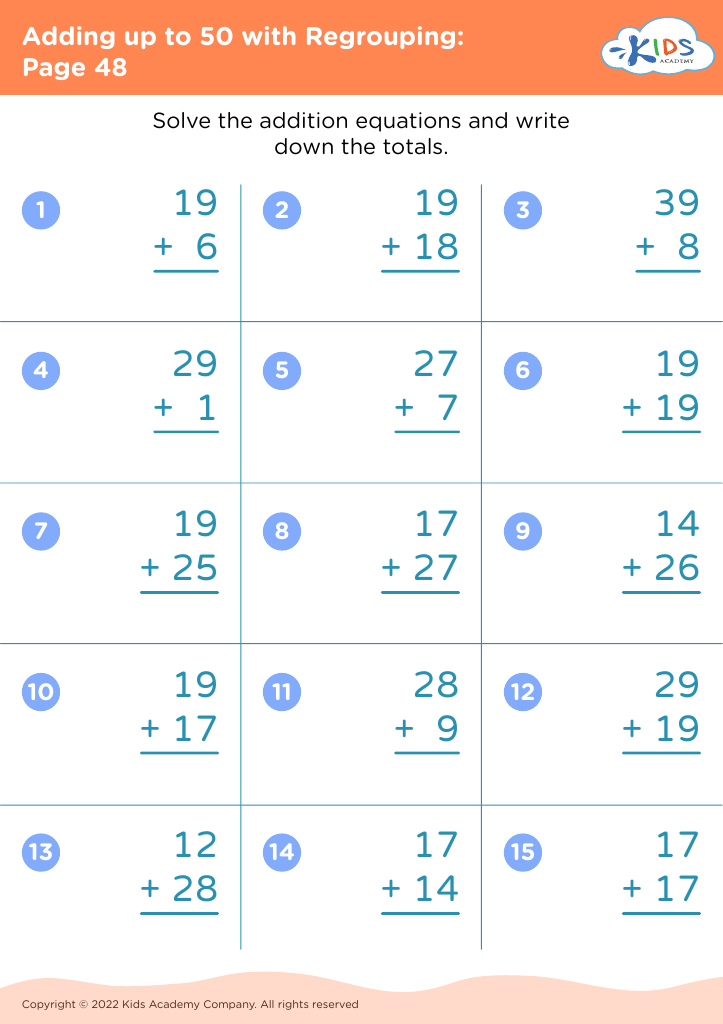
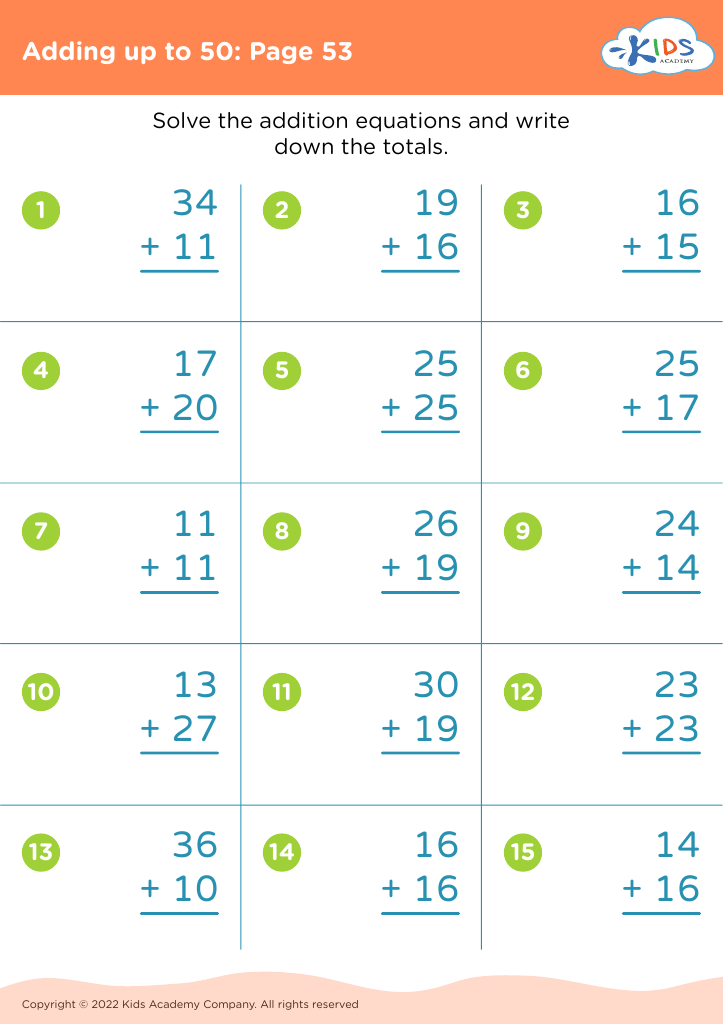
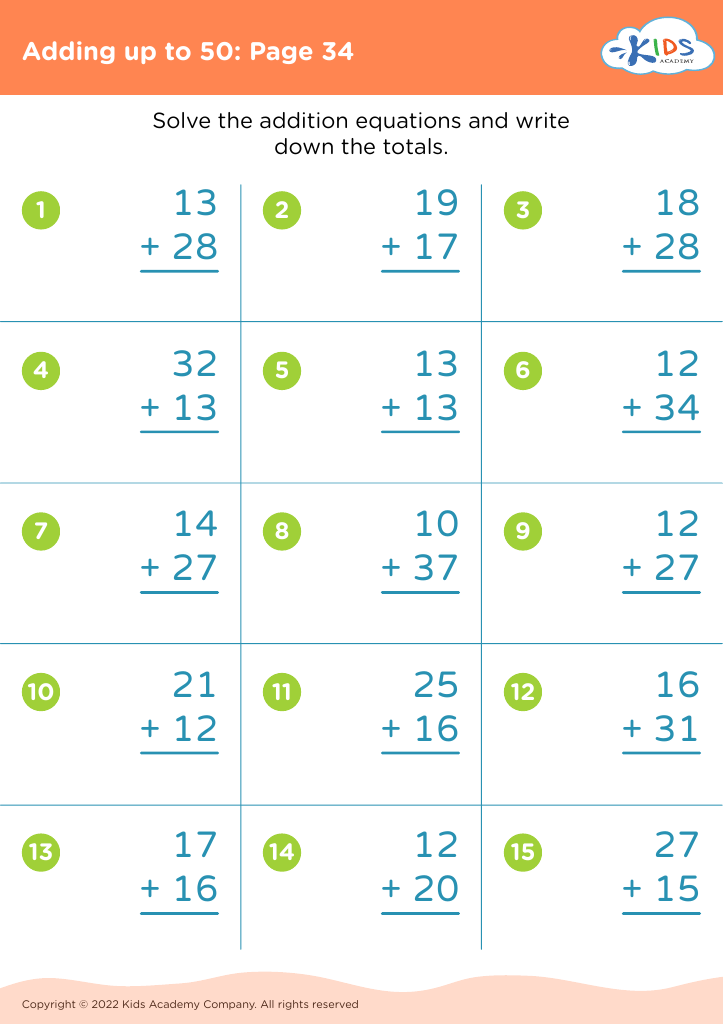




Understanding fraction comparison is crucial for children aged 3-8, as it lays the groundwork for their mathematical reasoning and problem-solving skills. Fractions aren't just numbers; they represent parts of a whole, and grasping this concept helps young learners develop critical thinking abilities. Learning to compare fractions fosters an intuitive sense of quantity and proportion, as children begin to comprehend how different parts fit together in various contexts, such as cooking, sharing food, or measuring.
Moreover, engaging in activities related to fraction comparison enhances cognitive development. As parents and teachers introduce these concepts through games, visual aids, and hands-on activities, they create an interactive environment where children can explore and make connections. This not only maintains their interest but also reinforces their understanding.
Adding up to 50, specifically in the context of fractions, helps children coalesce various mathematical skills, including addition, subtraction, and understanding numerical relationships. This holistic development prepares them for more advanced math concepts later on. Therefore, parents and teachers should care about these foundational topics, ensuring that children develop confidence and competence in math during these formative years, ultimately setting them up for future academic success.








