Fraction simplification Adding up to 50 Worksheets for Ages 3-8
20 filtered results
-
From - To
Discover engaging "Fraction Simplification Adding Up to 50" worksheets designed for children ages 3-8. Our carefully crafted resources help young learners grasp fundamental math concepts by simplifying fractions and exploring addition strategies that total 50. These worksheets promote essential skills in a fun, interactive manner, helping to strengthen your child's understanding of fractions through visual aids and hands-on activities. Perfect for both classroom and home learning, these materials cater to various learning styles and paces. With a focus on foundational math while keeping kids excited about learning, these worksheets are a fantastic resource for early grade teachers and parents alike!
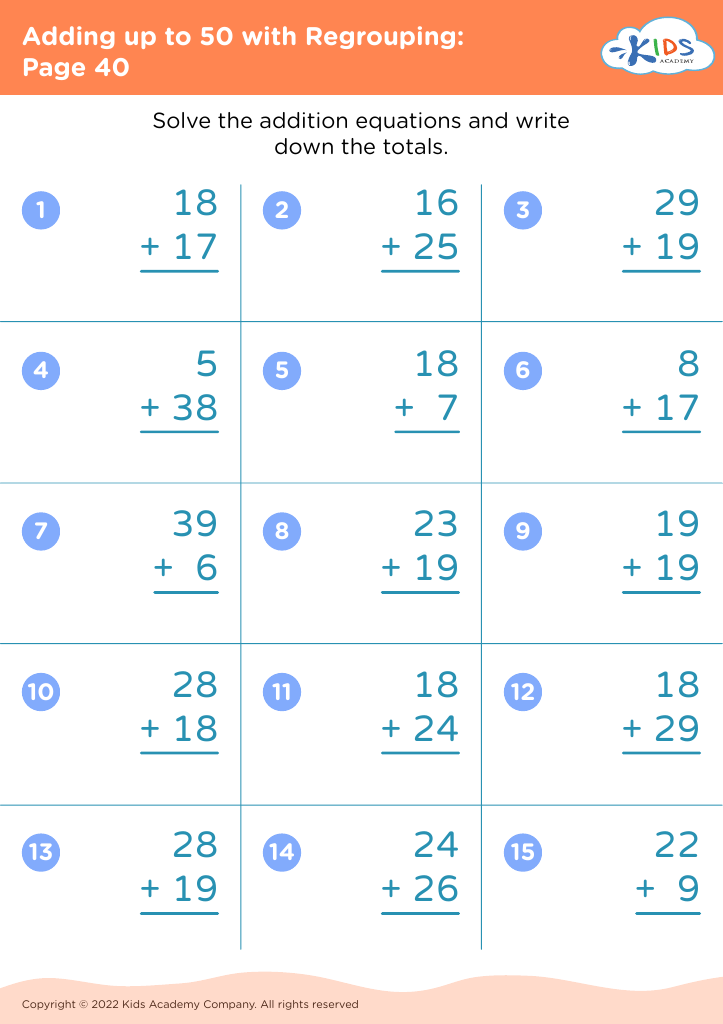
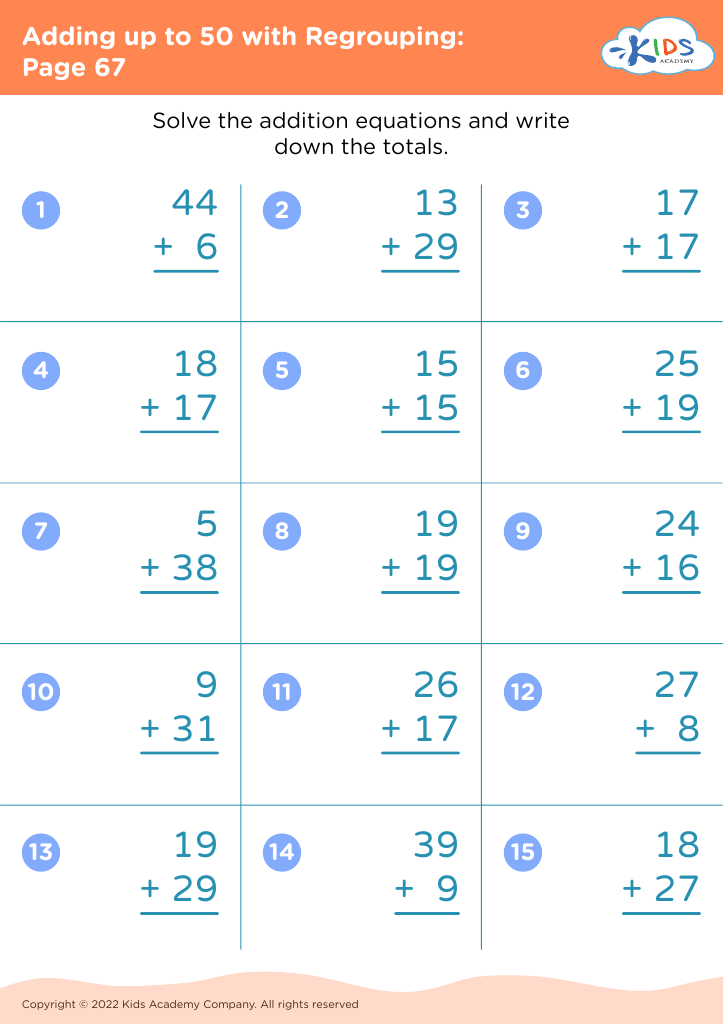
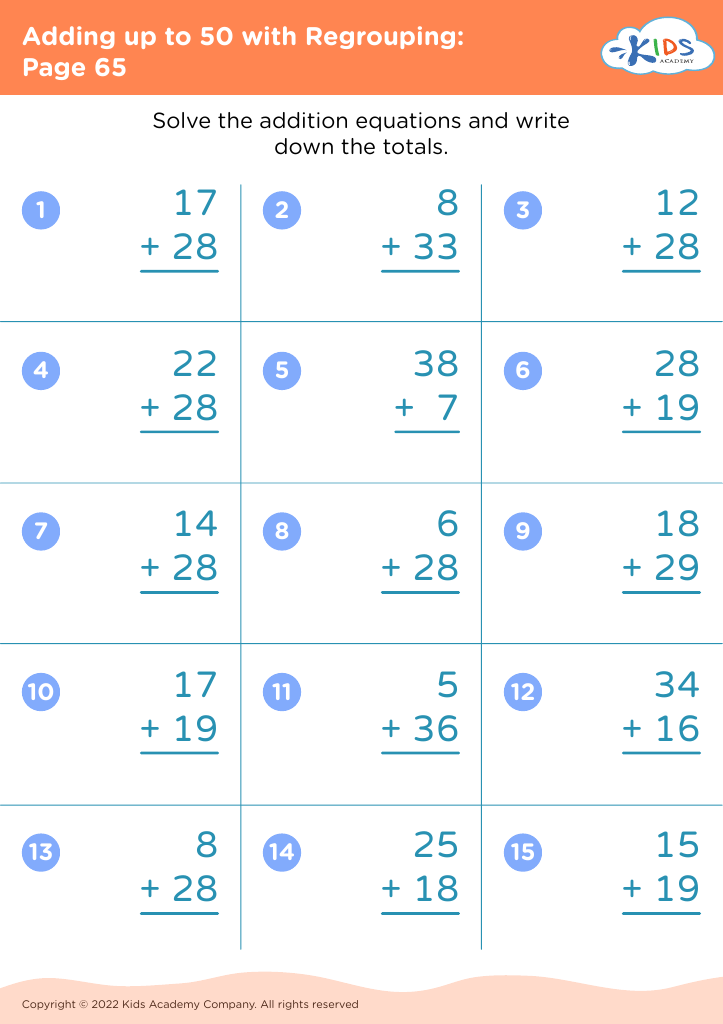
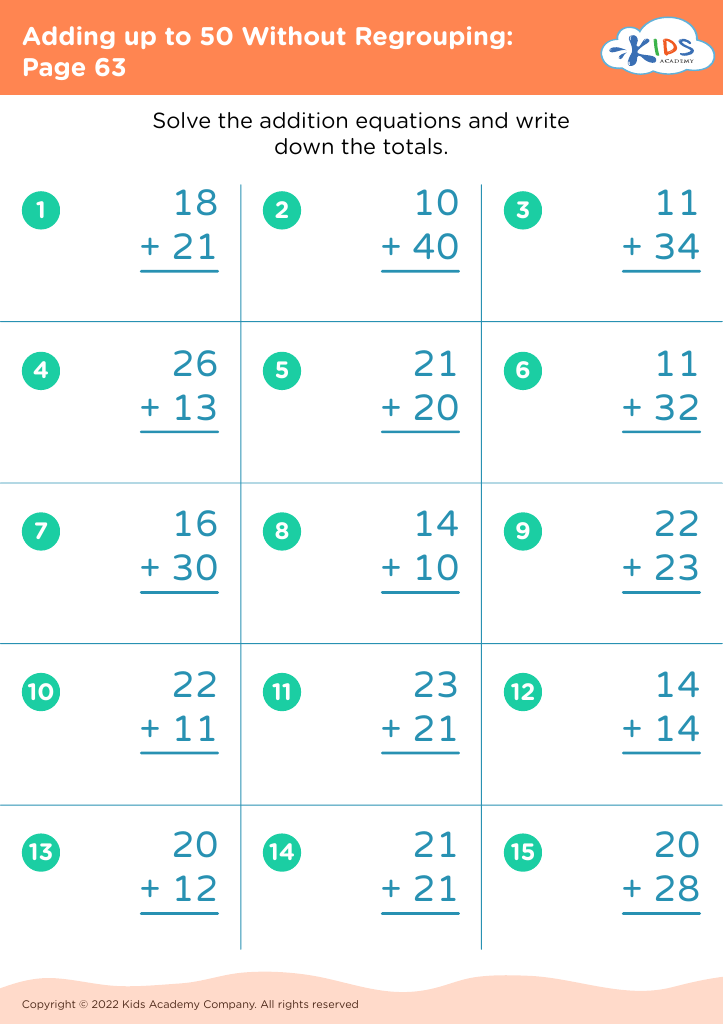
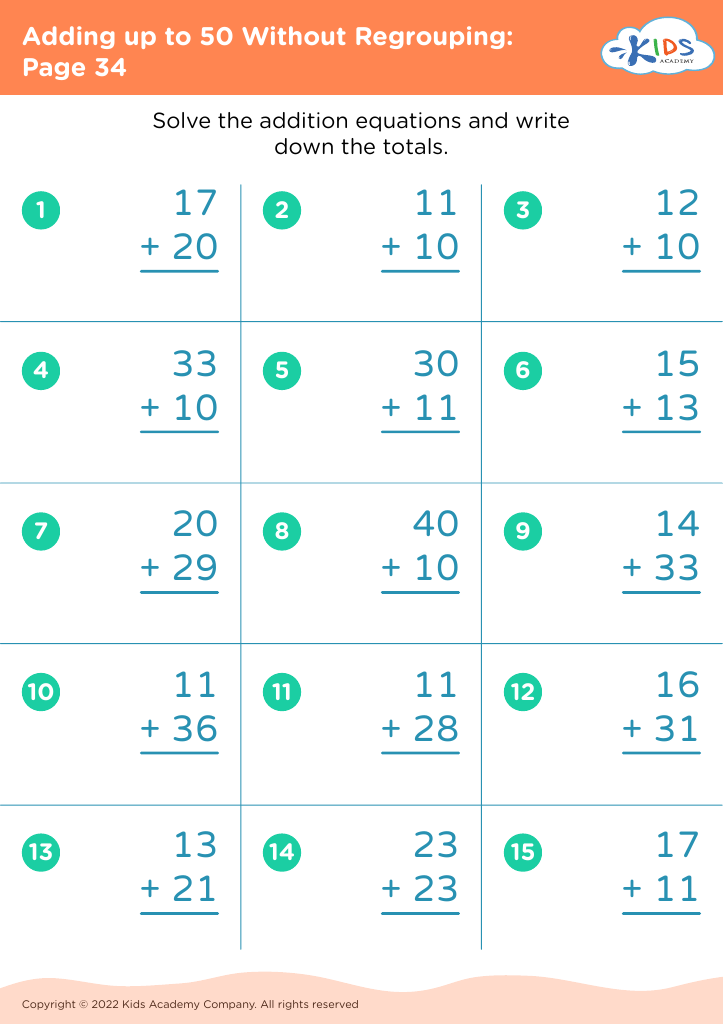
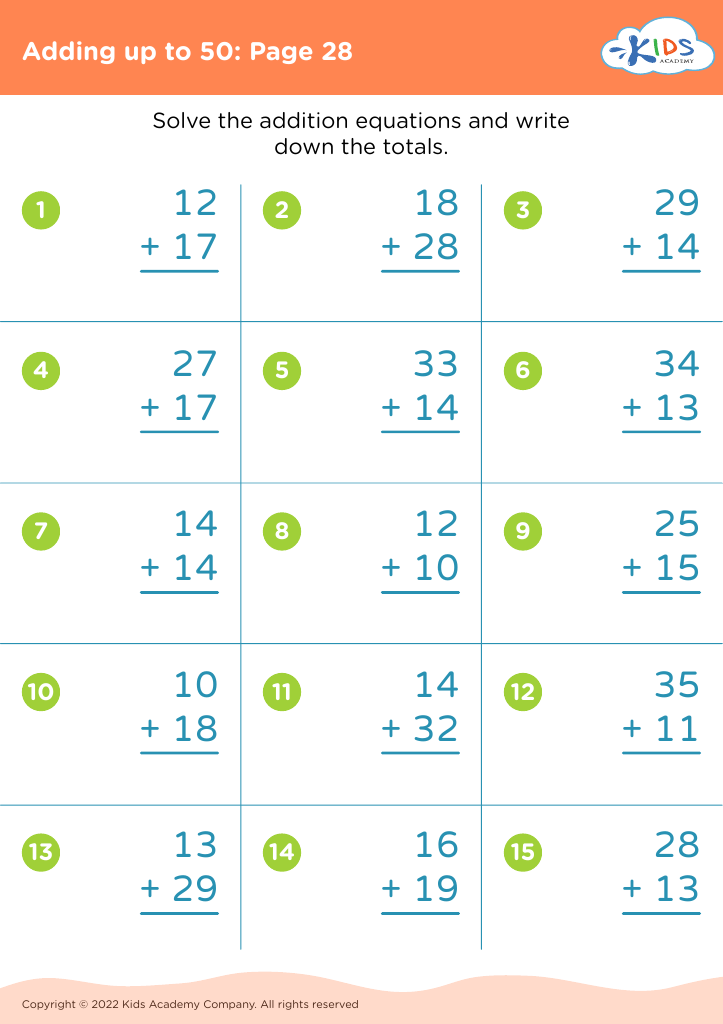
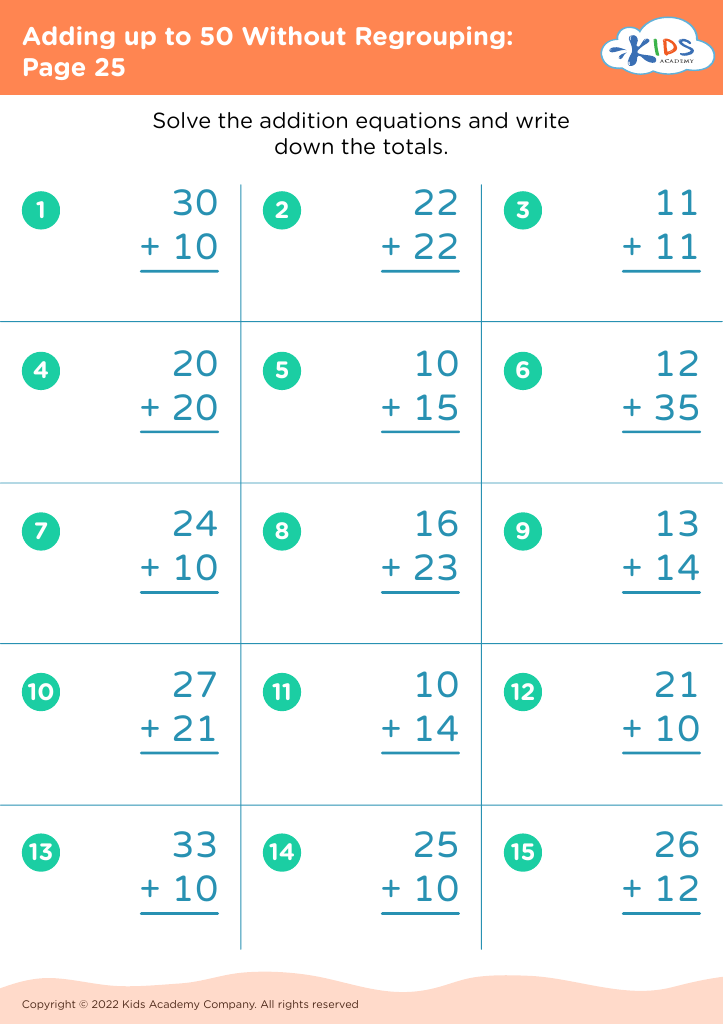
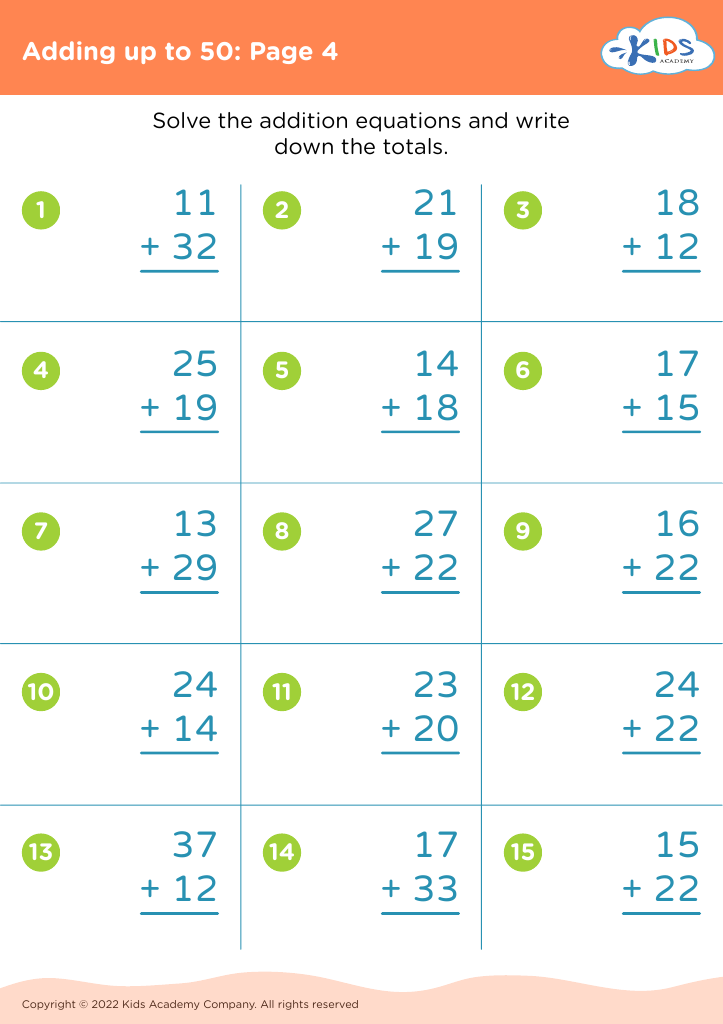
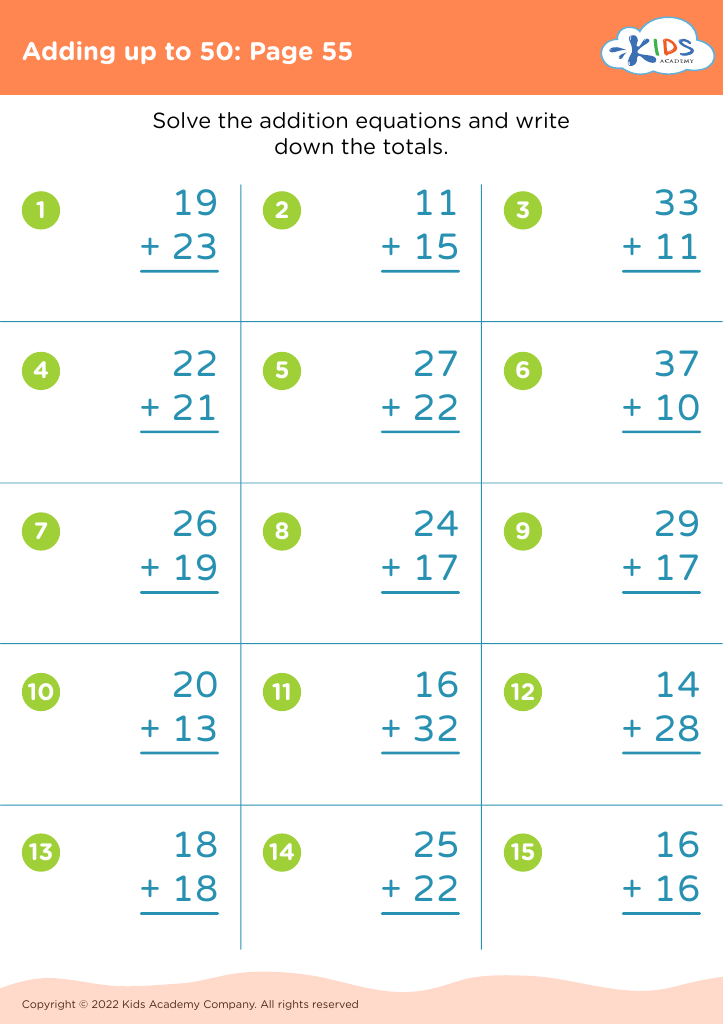
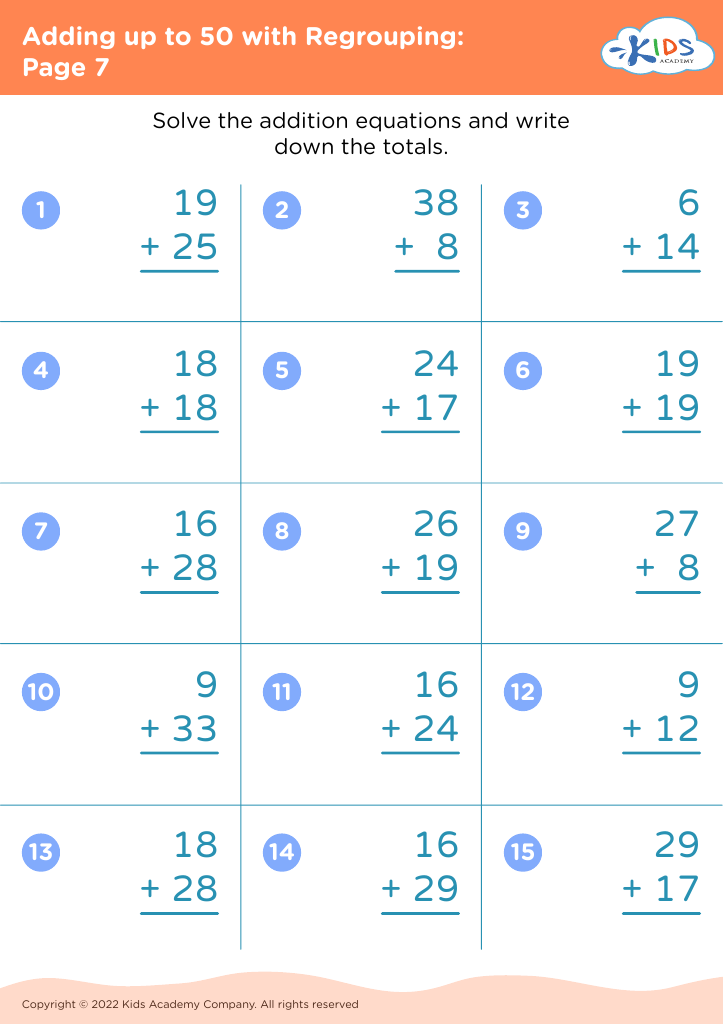
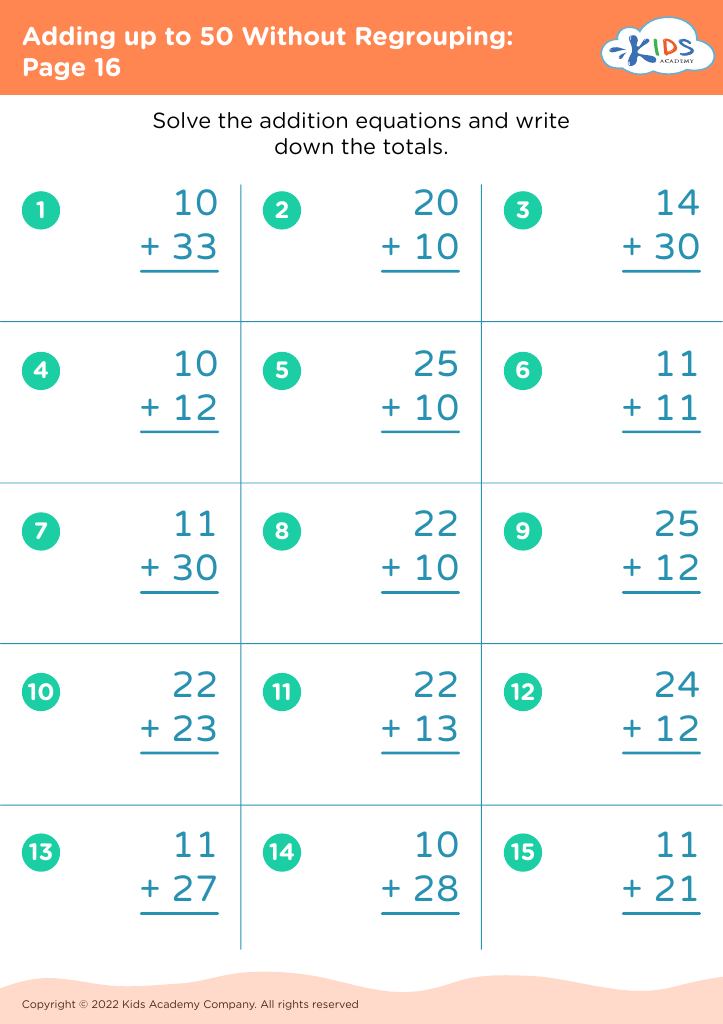
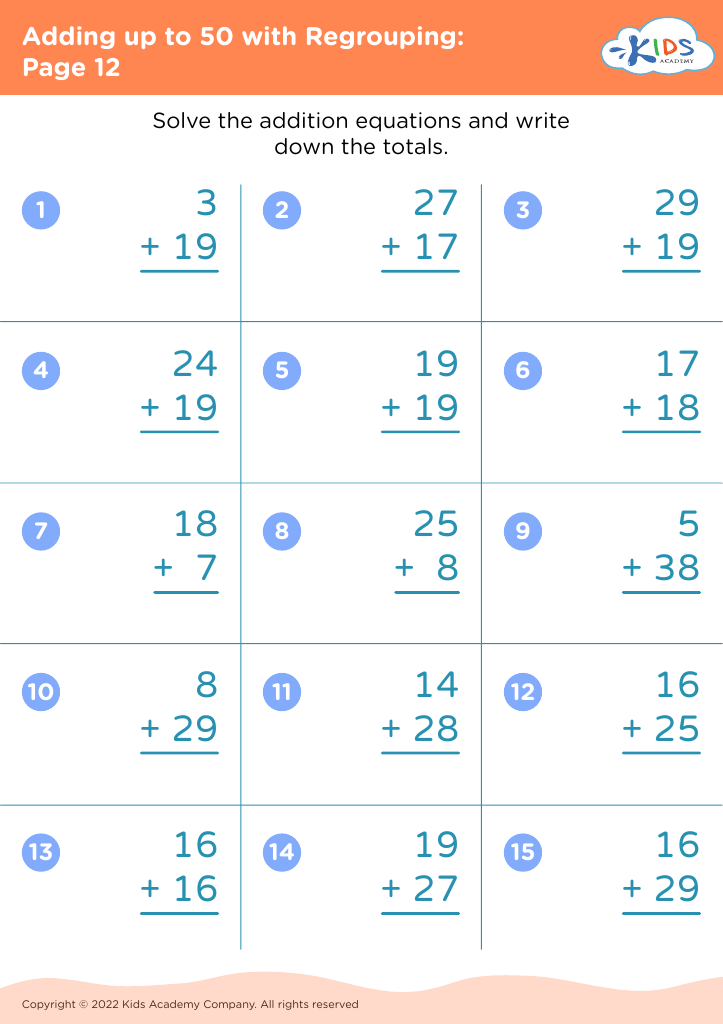
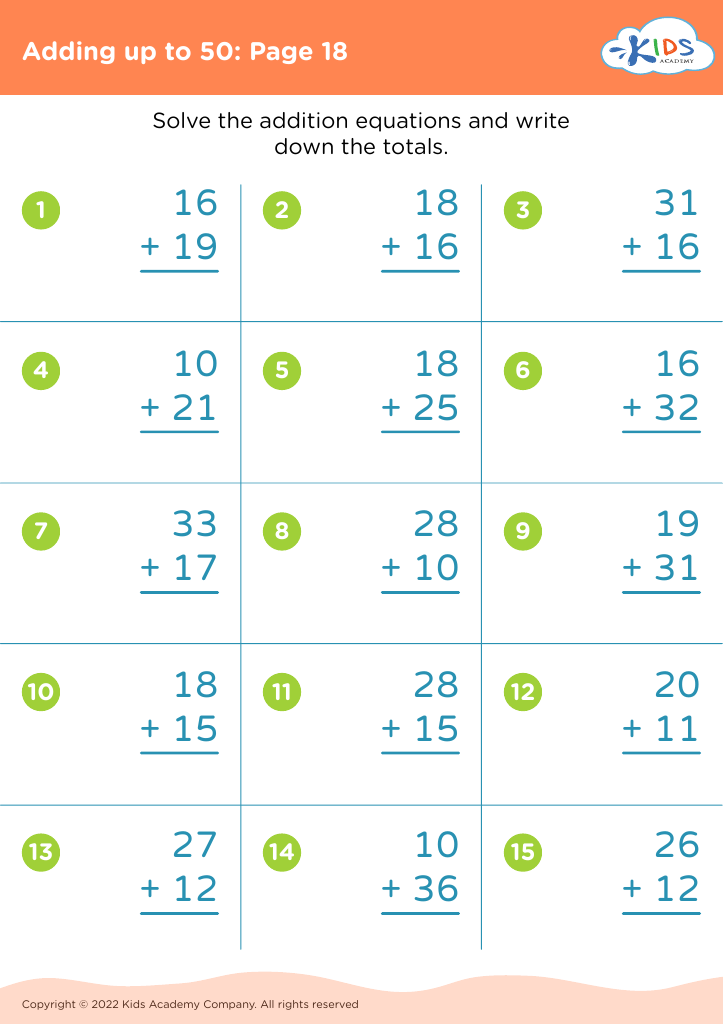
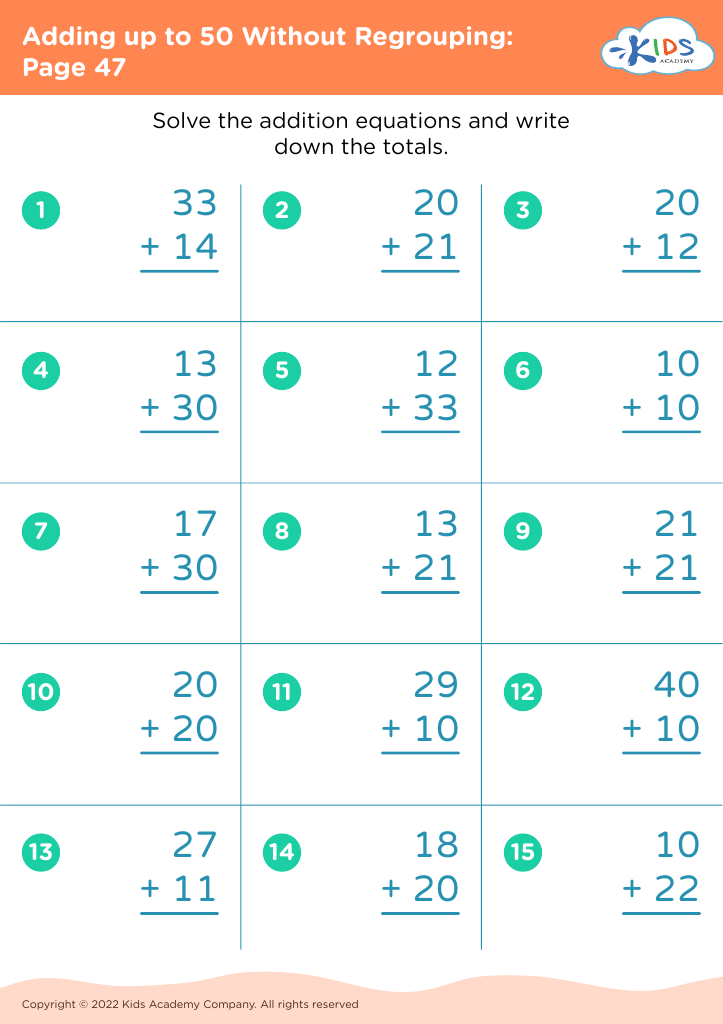
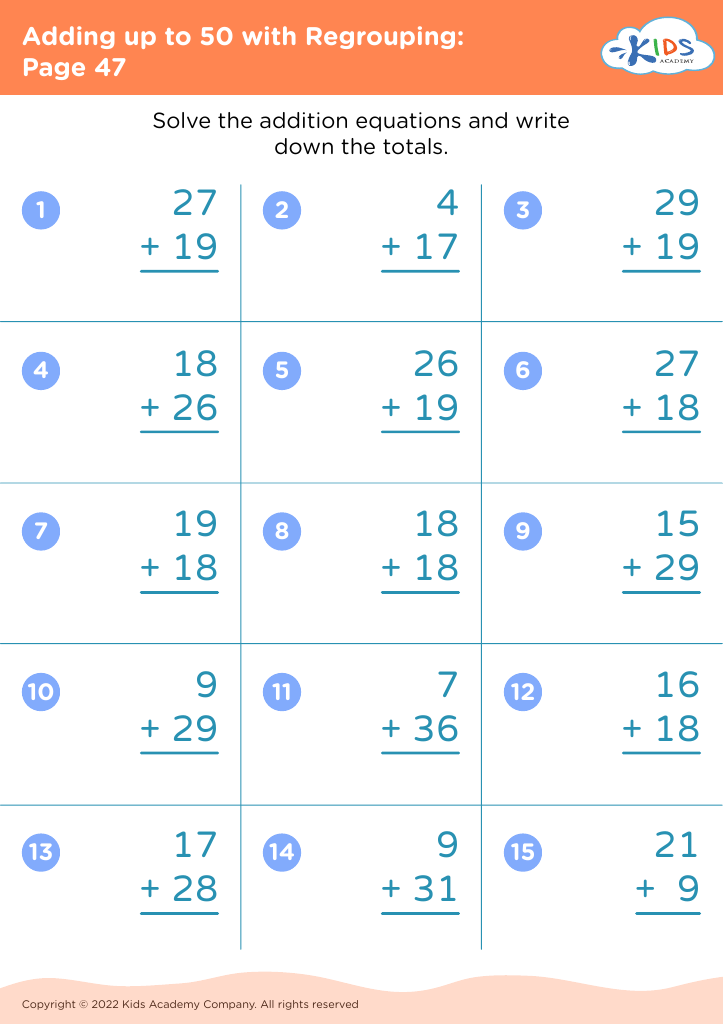
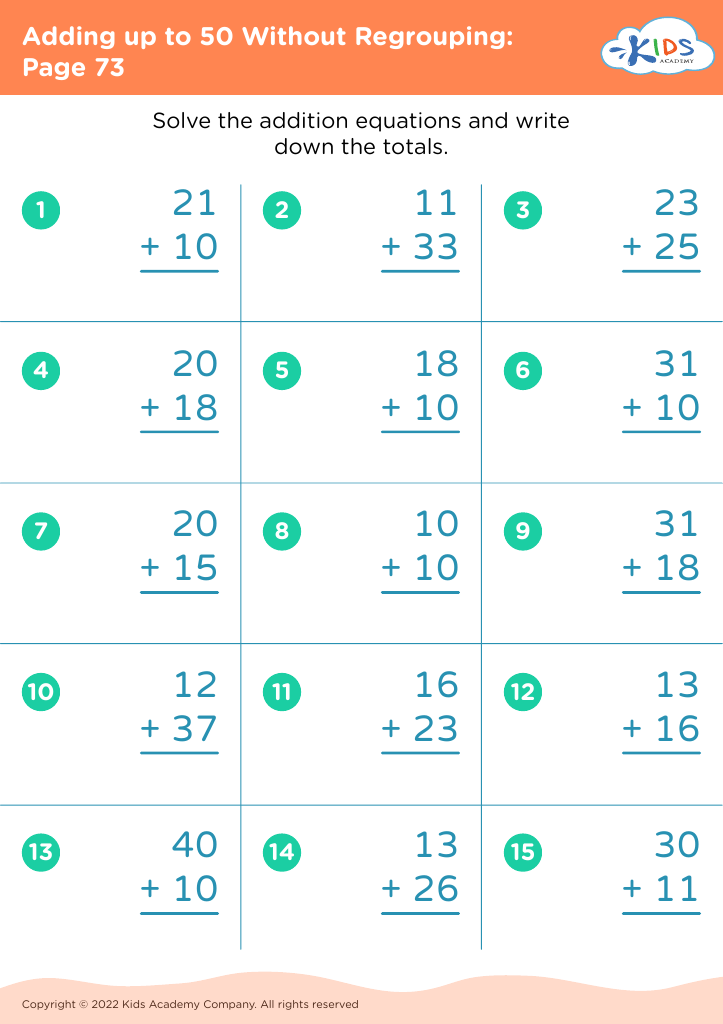
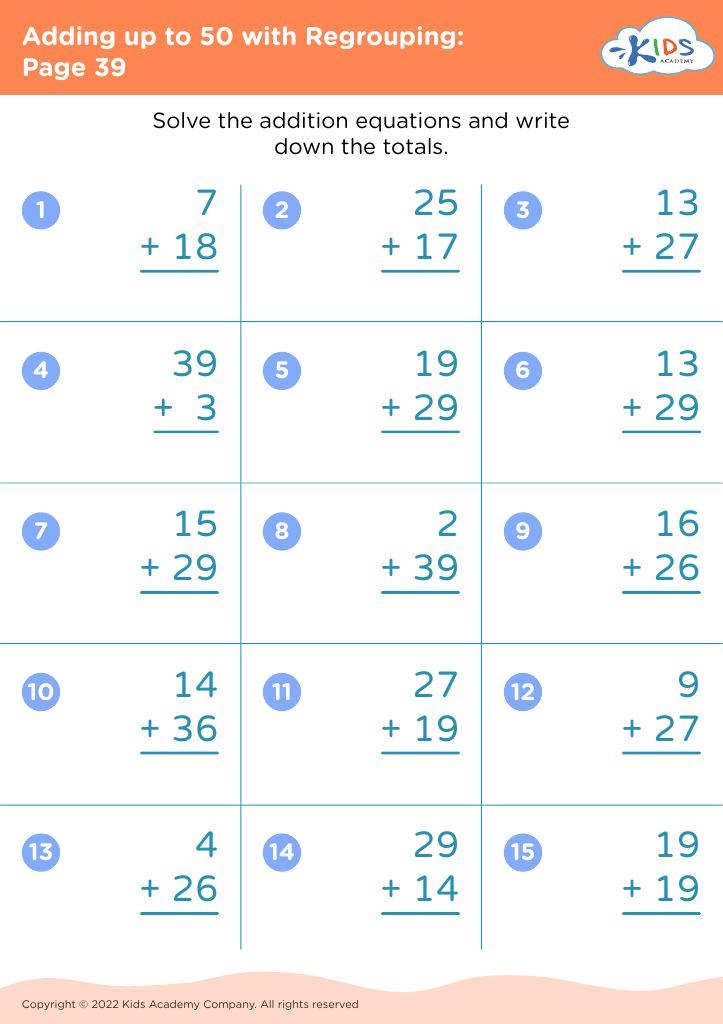
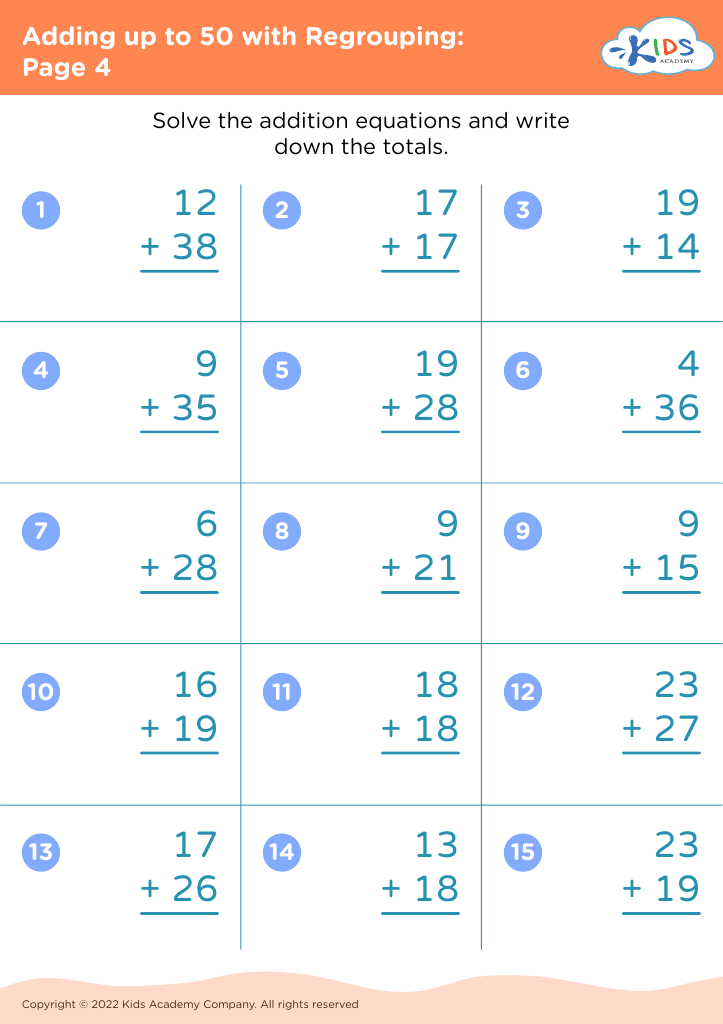
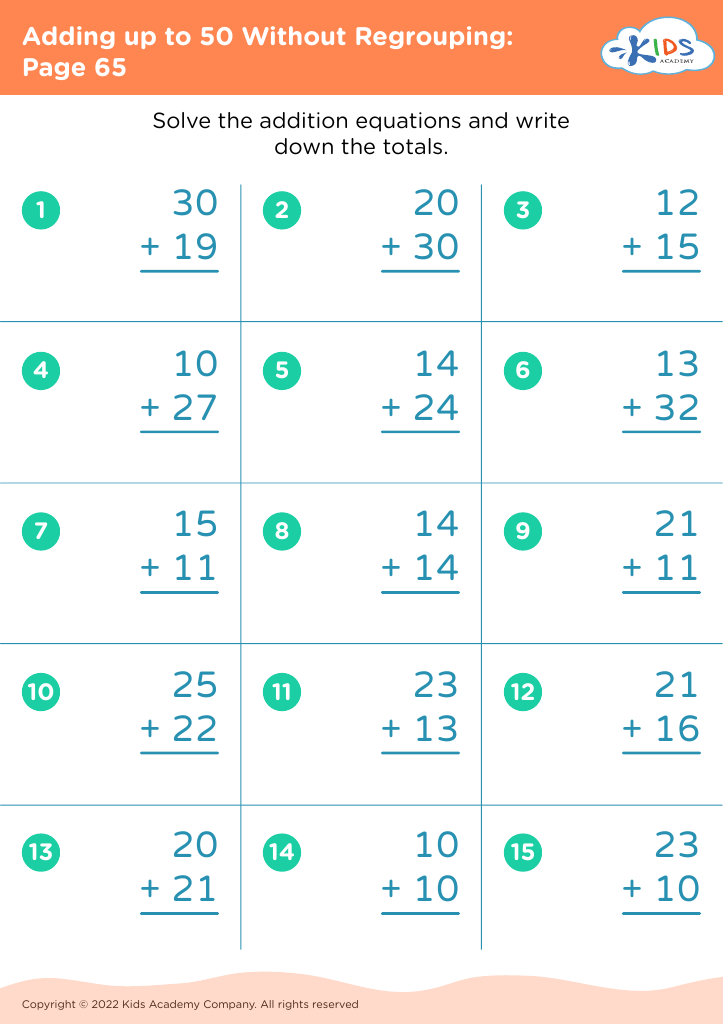
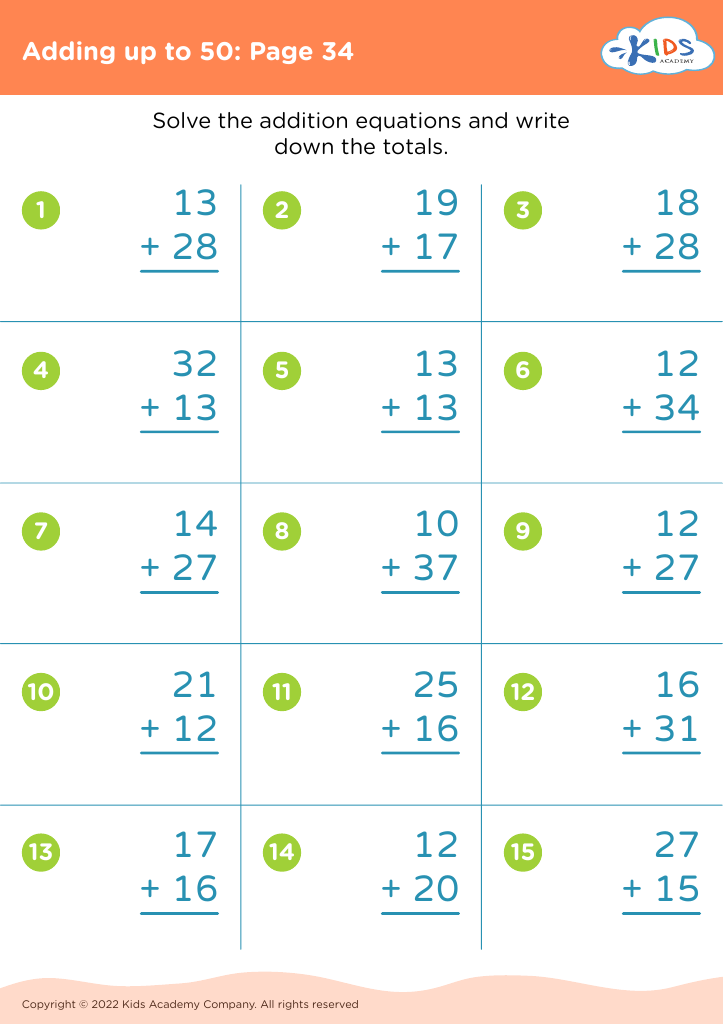




Fraction simplification is an essential mathematical skill that helps young learners, ages 3-8, build a strong foundation for future learning. For parents and teachers, understanding and supporting this concept is crucial for several reasons.
Firstly, simplified fractions are easier to understand and work with. At this stage, children are just beginning to grasp mathematical concepts. Simplification helps them see relationships between numbers, enhancing their number sense and easing their progress in math.
Secondly, teaching fraction simplification fosters critical thinking and problem-solving skills. By encouraging children to break down complex problems into simpler parts, they learn to analyze and assess situations, which are skills valuable beyond math.
Moreover, understanding fractions lays the groundwork for more advanced mathematical concepts, such as ratios, proportions, and percentages, which they will encounter later in school. By introducing parents and teachers to concepts like "Adding up to 50," they equip children with the ability to combine and manipulate fractions in a context they can relate to, making learning more engaging.
In conclusion, supporting children's understanding of fraction simplification instills confidence, enhances their problem-solving abilities, and prepares them for future mathematical success. It’s an investment in their overall academic development.








