Improve number recognition Adding up to 50 Worksheets for Ages 3-8
5 filtered results
-
From - To
Enhance your child's number recognition skills with our engaging "Improve Number Recognition Adding Up to 50 Worksheets" designed for ages 3-8. These fun and interactive worksheets guide young learners through fundamental math concepts while promoting confidence in numbers. Each activity encourages children to identify, associate, and work with numbers up to 50, making math enjoyable and less intimidating. Ideal for teachers and parents alike, our resources support early math learning and are aligned with educational standards. Watch your little ones thrive as they explore the world of numbers with creativity and excitement! Start their journey to numerical fluency today!
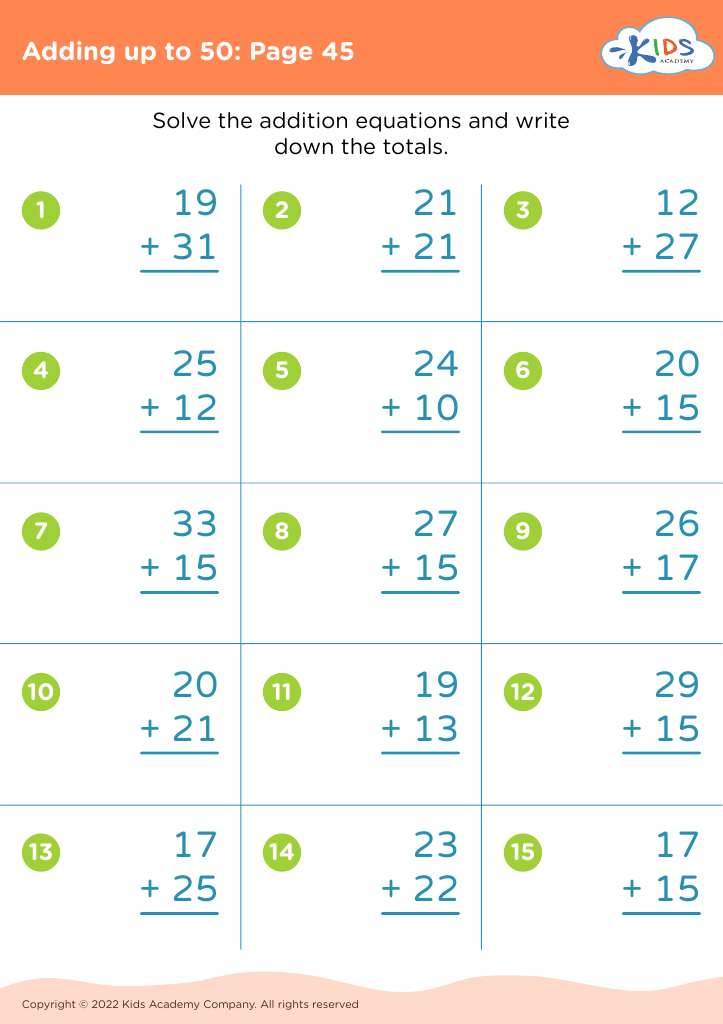
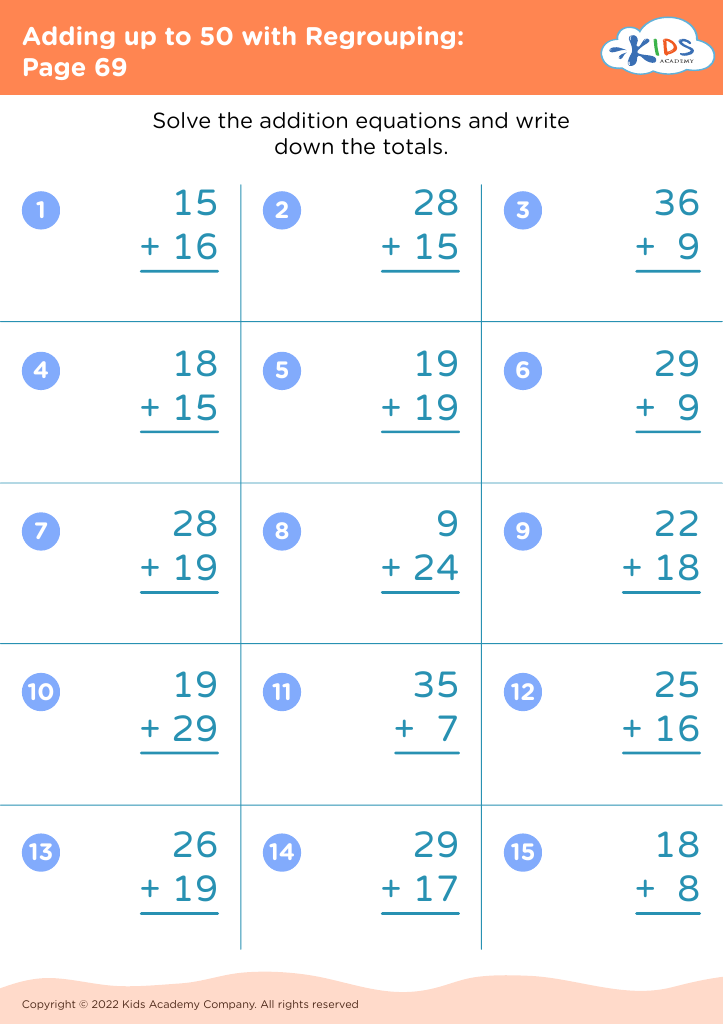
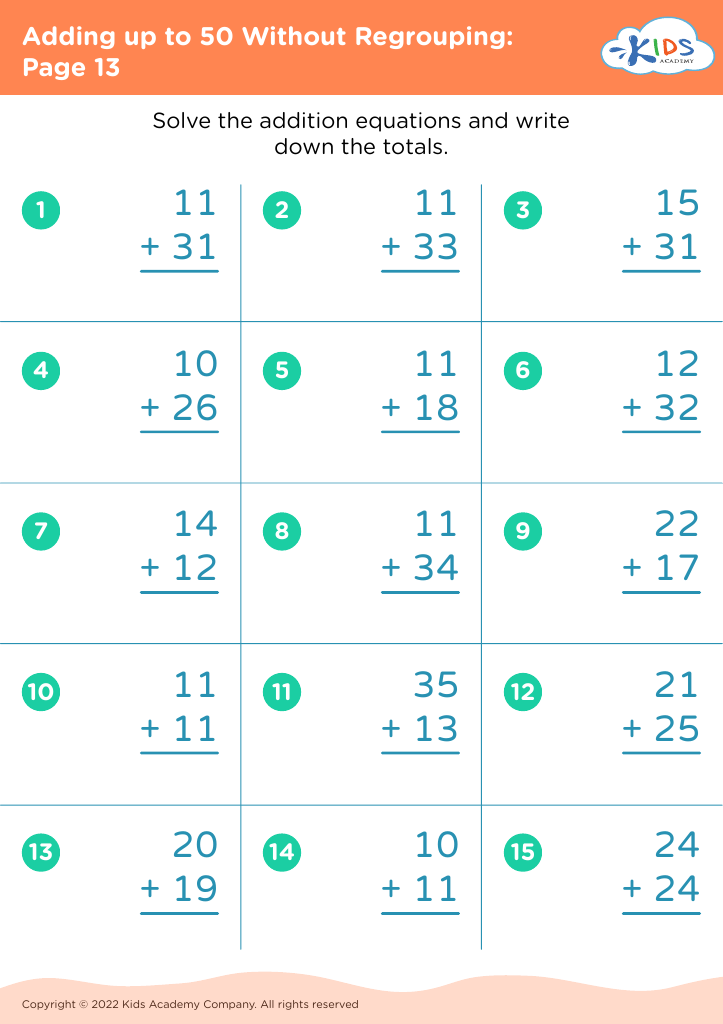
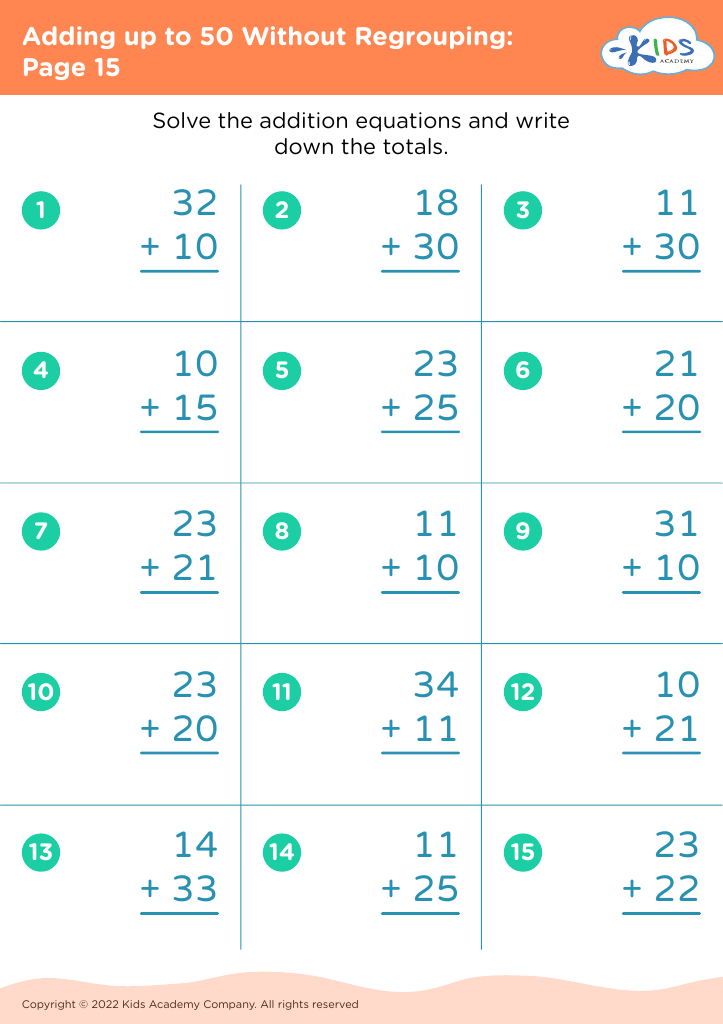
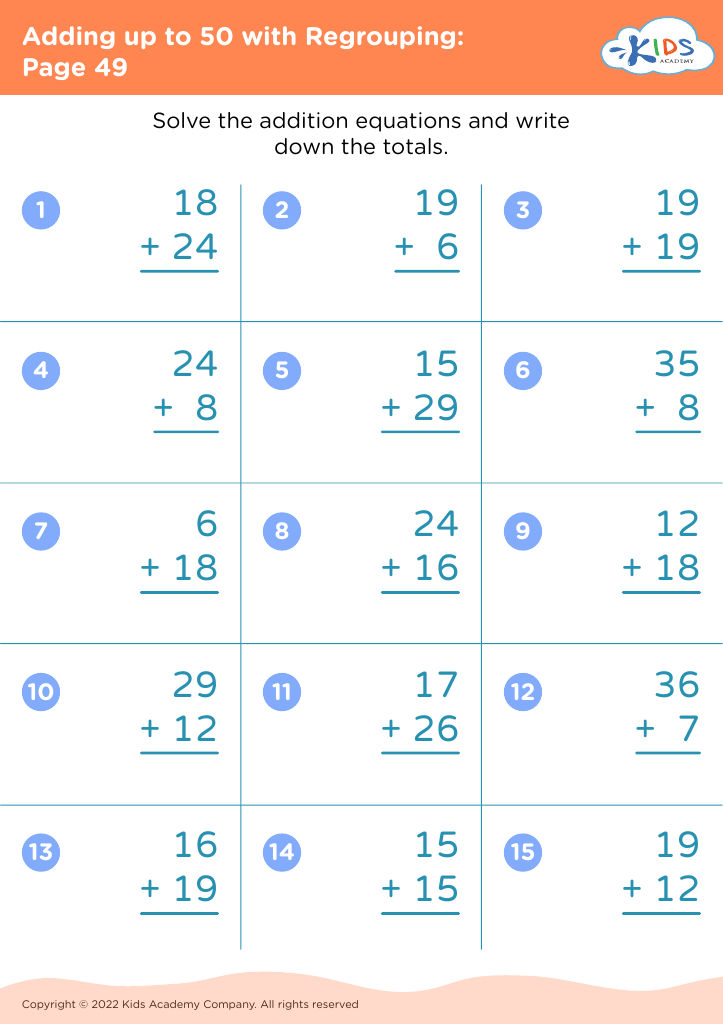




Improving number recognition and basic addition skills up to 50 in children aged 3-8 is crucial for several reasons. Firstly, these foundational skills are essential for subsequent mathematical understanding. Early number recognition helps children identify quantities, understand comparisons, and develop an intuitive sense of number sense which is necessary for everyday life.
Moreover, children at this age are in a critical developmental stage where they are flexible in learning. Engaging them in activities that involve recognizing numbers and simple addition fosters cognitive development. It enhances their problem-solving skills, boosts memory, and encourages logical reasoning.
Additionally, early proficiency in math can positively influence a child's self-esteem and confidence. When children are comfortable with numbers, they are more willing to participate in math-related activities and conversations. This can lead to a positive attitude towards learning, crucial for their academic journey.
For parents and teachers, focusing on these skills creates a foundation for lifelong learning. Active involvement in a child's learning fosters a supportive environment that promotes curiosity and a love for mathematics, which is instrumental in helping children excel in school and beyond. Ultimately, investing in these skills up to age 8 equips children for future academic success and empowers them in their daily lives.








