Logical thinking Adding up to 50 Worksheets for Ages 3-8
3 filtered results
-
From - To
Enhance your child's logical thinking skills with our "Adding Up to 50 Worksheets," designed specifically for ages 3-8. These engaging worksheets offer a vibrant and interactive approach to learning addition, helping young minds grasp the concept of numbers while promoting critical thinking. Each worksheet provides a variety of fun exercises that challenge children to solve problems, recognize patterns, and build mathematical confidence. With easy-to-follow instructions and colorful illustrations, your child will stay motivated while developing essential skills needed for future math success. Perfect for at-home learning or classroom activities, our worksheets are an ideal resource for early education. Start exploring today!
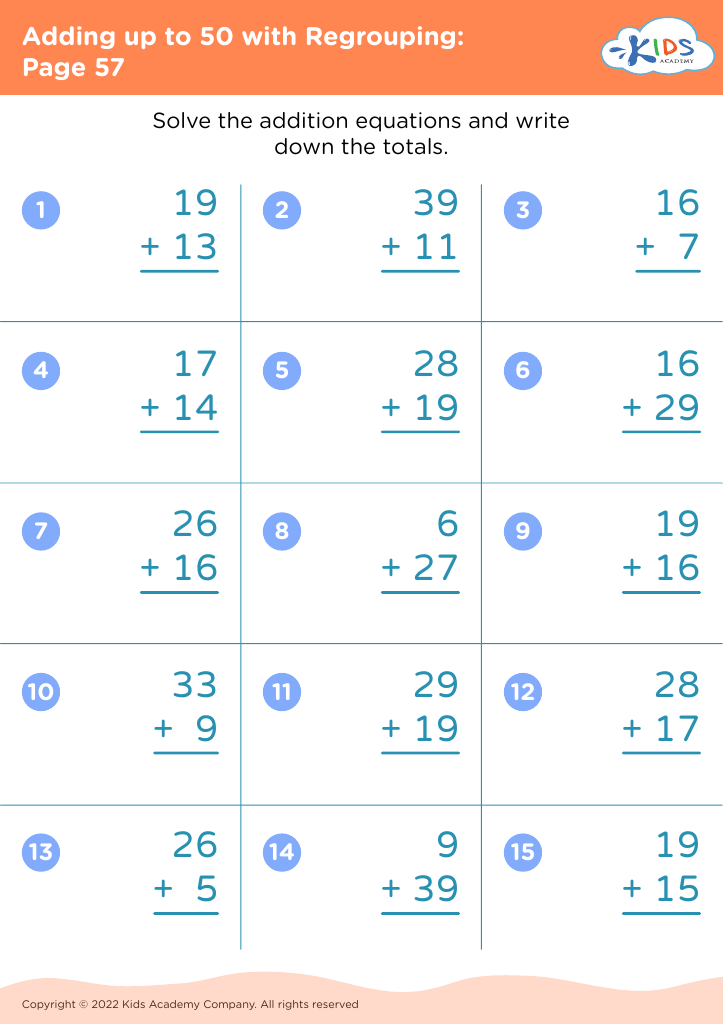
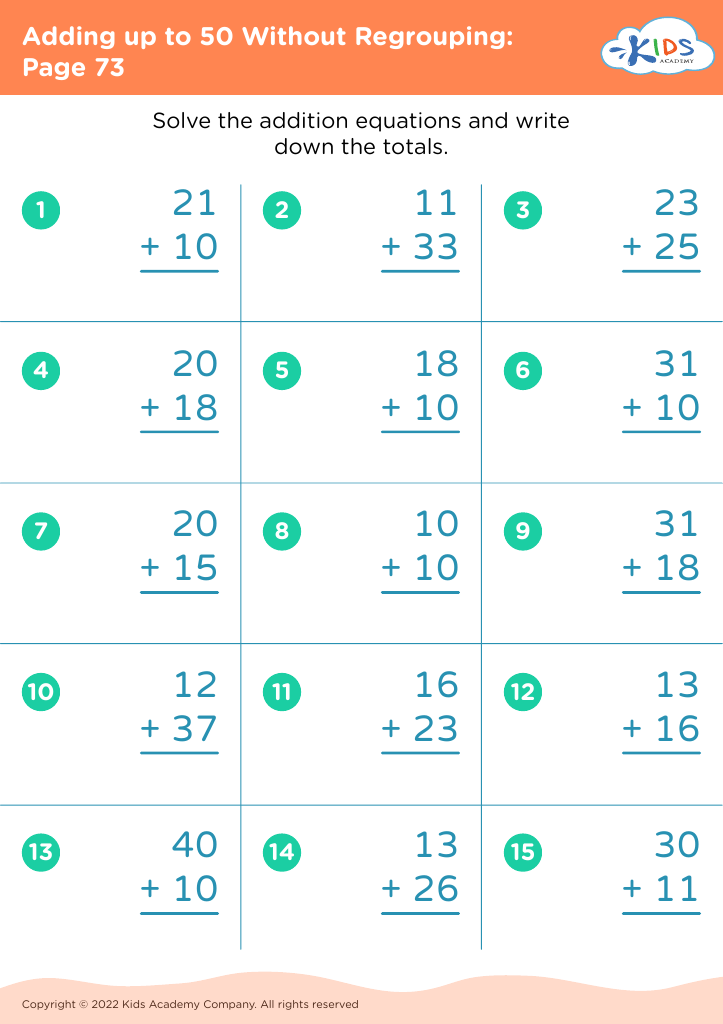
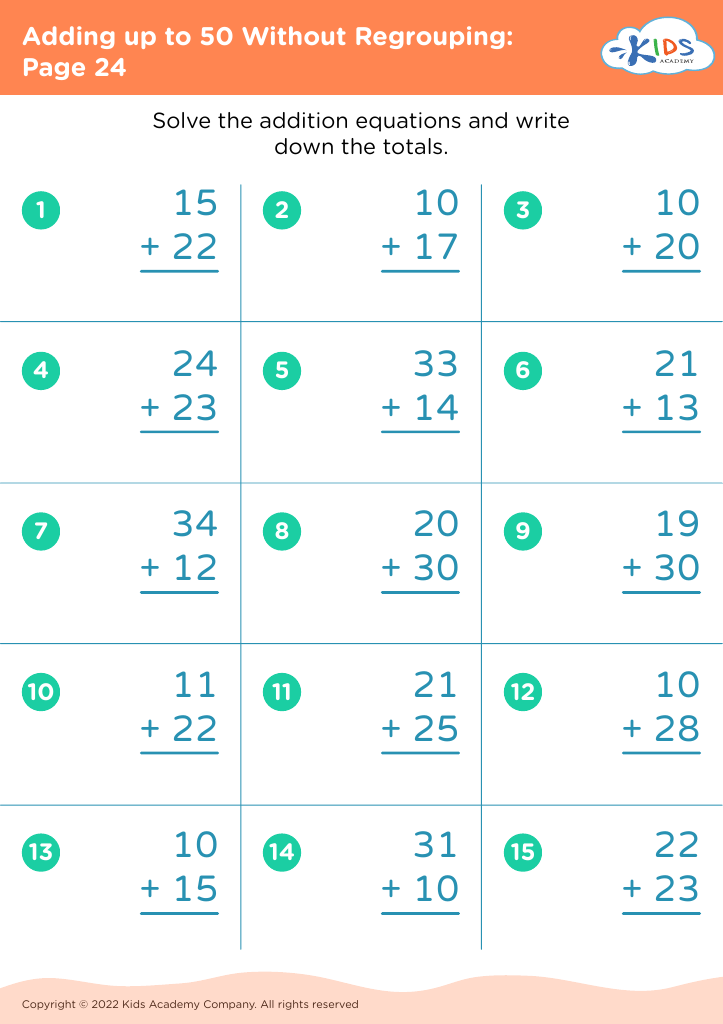




Logical thinking is foundational for children’s cognitive development and problem-solving skills, particularly in early learning stages for ages 3-8. Engaging in activities like "Adding up to 50" encourages children to recognize patterns, understand numbers, and develop sequential thinking, which are crucial components of mathematical understanding.
Parents and teachers should care about nurturing logical thinking because it helps children grasp more complex concepts later on. When children engage in adding exercises, they learn not just how to sum numbers, but also how to approach problems methodically and think critically about solutions.
Moreover, effective logical thinking strengthens a child’s confidence. As they successfully solve problems and make connections, they build a positive self-image and a love for learning. This is particularly important in the ages of 3-8, when children are naturally curious and ready to explore.
Lastly, logical thinking lays the groundwork for lifelong skills such as decision-making, creativity, and analytical thinking. By fostering these abilities early, parents and teachers can significantly impact a child's future learning and personal growth. Investing in logical thinking now can help create resilient, capable individuals who are well-equipped to face life's challenges.








