Mathematical reasoning Adding up to 50 Worksheets for Ages 3-8
4 filtered results
-
From - To
Discover our engaging "Mathematical Reasoning: Adding Up to 50 Worksheets" designed specifically for children aged 3 to 8. These thoughtfully crafted worksheets help young learners develop crucial mathematical skills through fun and interactive activities. Each worksheet focuses on addition concepts, enhancing number sense and problem-solving abilities. Your child will enjoy vibrant illustrations and captivating challenges as they practice adding numbers up to 50. Ideal for home or classroom use, these resources support early math education while fostering a strong foundation for future learning. Empower your child with essential mathematical reasoning skills today by exploring our downloadable worksheets!
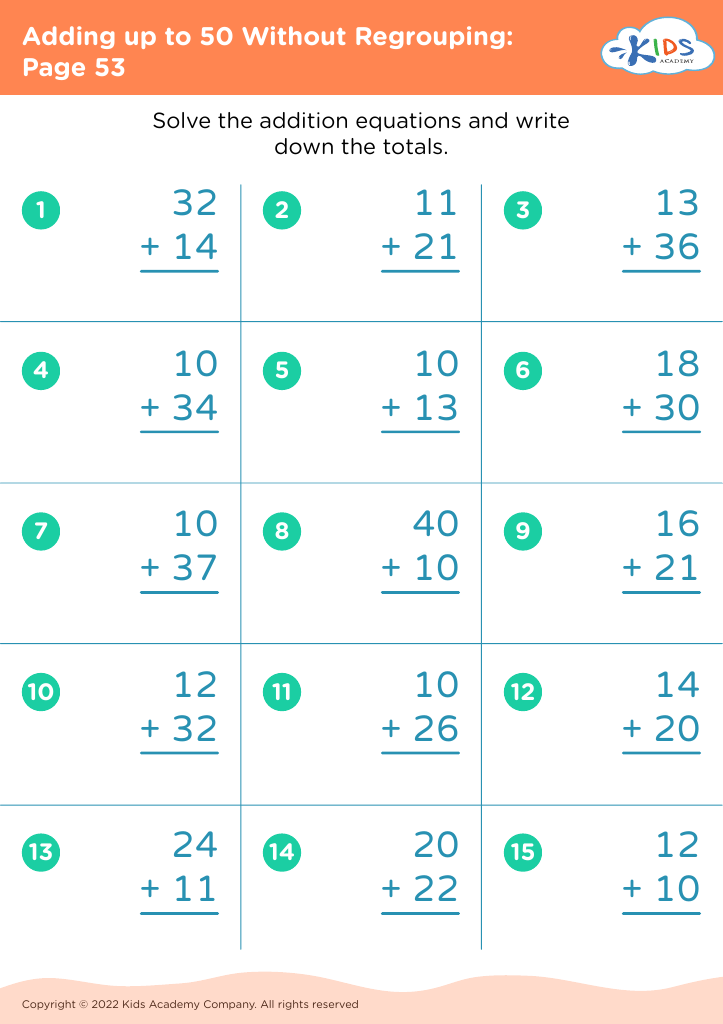
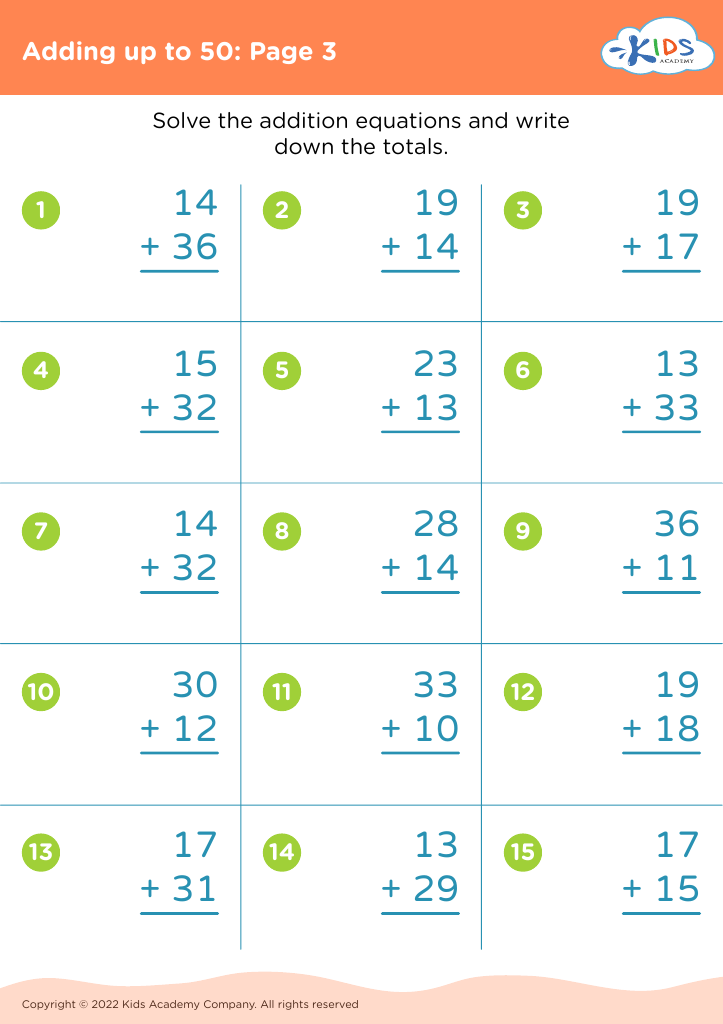
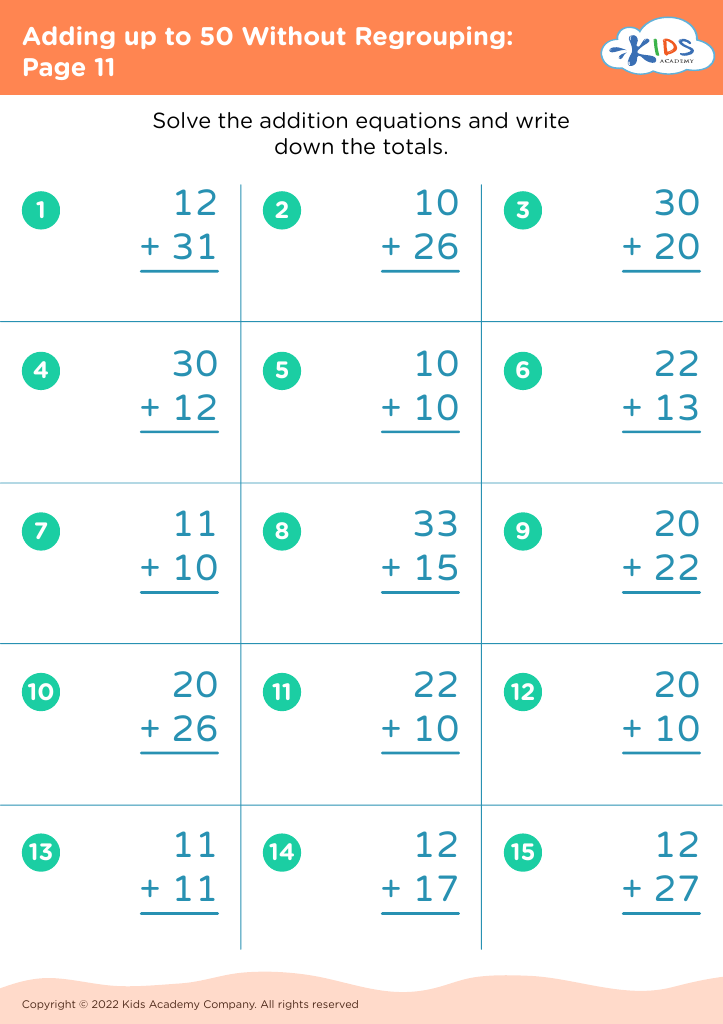
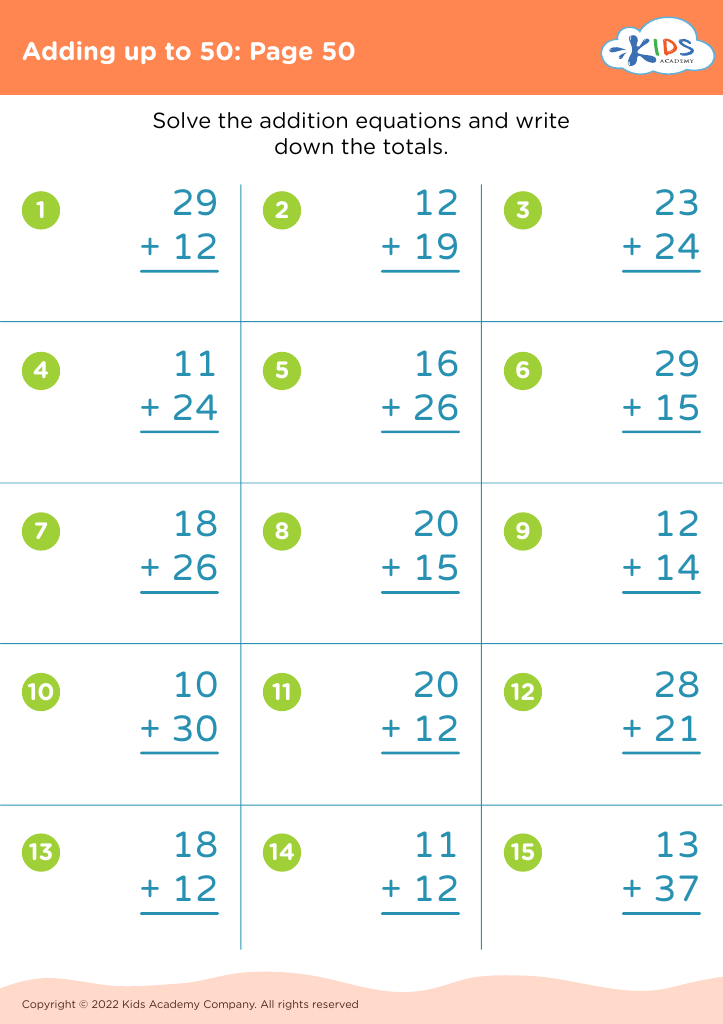




Mathematical reasoning, particularly the ability to construct and understand the concept of adding up to 50, is crucial for children aged 3-8 for several reasons. First, it fosters critical thinking skills. Through exploring addition, children learn to approach problems systematically and develop logical reasoning – essential skills that extend beyond math into everyday life and decision-making.
Secondly, mastering addition develops a foundational understanding of more complex mathematical concepts, such as subtraction, multiplication, and even division. This foundation is necessary as they progress in their education; children who excel at early math are more likely to succeed in higher-level mathematics.
Moreover, engaging in mathematical reasoning enhances children's ability to communicate their thought processes. Expressing why a particular solution makes sense boosts verbal skills and confidence. Collaborative group activities promote social interactions while solving math problems, building teamwork and communication skills.
Finally, a strong grasp of addition fosters a positive attitude towards mathematics, reducing math anxiety as they progress through school. This can lead to greater enthusiasm for learning and confidence in tackling challenging subjects. Hence, parents and teachers should prioritize building mathematical reasoning within this age group, ensuring a robust foundation for future confidence and success in academic and real-world scenarios.








