Number Writing Practice Adding up to 50 Worksheets for Ages 3-8
4 filtered results
-
From - To
Boost your child's math skills with our "Number Writing Practice Adding up to 50 Worksheets." Designed for ages 3-8, these printable worksheets provide engaging and fun practice in number writing and basic addition. Each worksheet helps children refine fine motor skills, recognize numbers up to 50, and develop confident counting abilities. Ideal for early learners, these activities blend play with education, making math enjoyable and accessible. Download our worksheets to strengthen your little one's numerical foundation, paving the way for future math successes. Unlock the joy of learning with our thoughtfully crafted resources today!
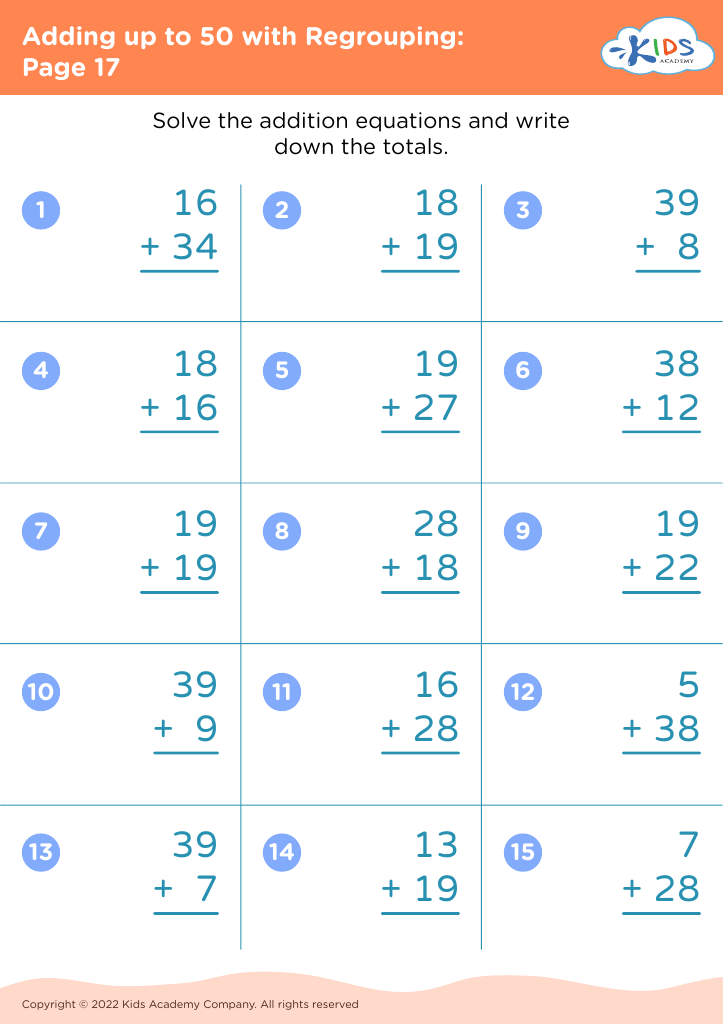
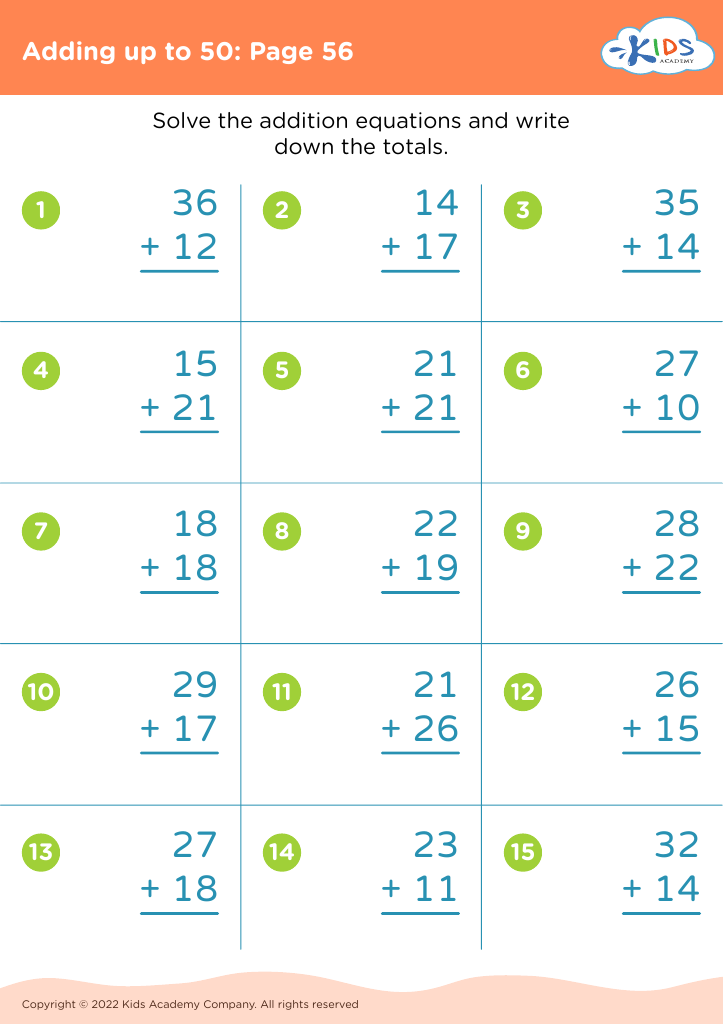
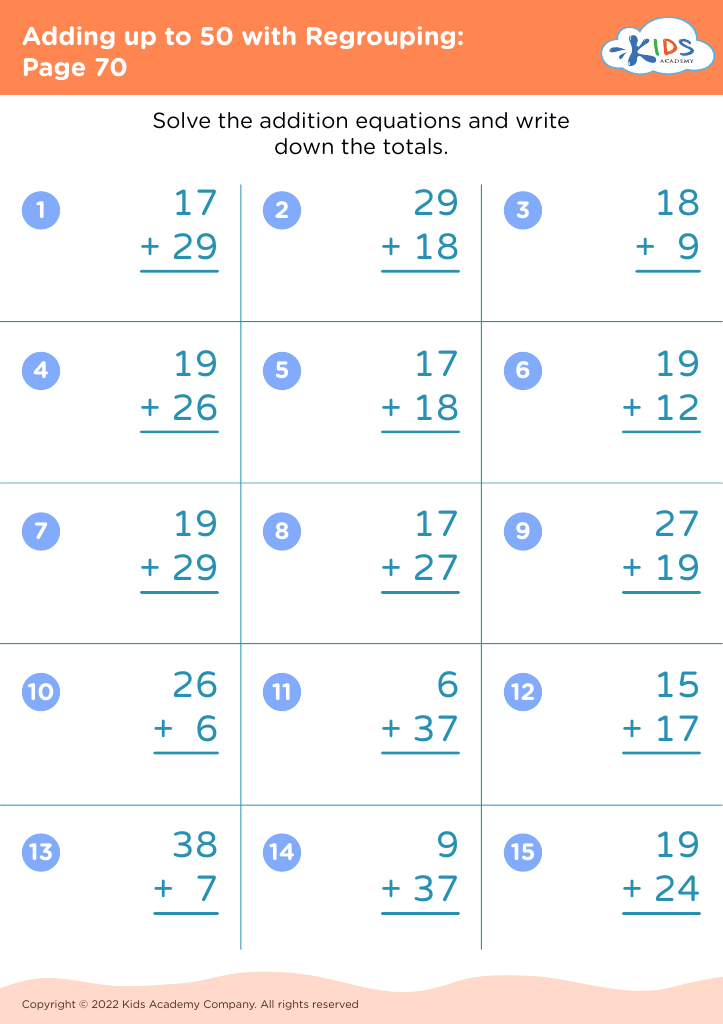
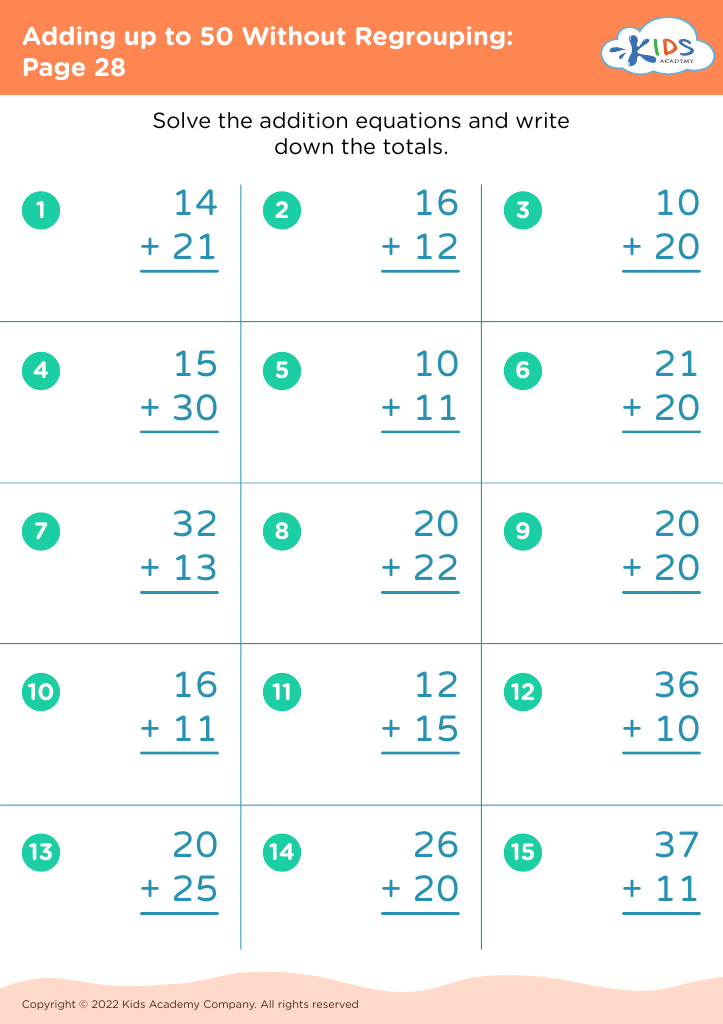




Parents and teachers should prioritize Number Writing Practice Adding up to 50 for children ages 3-8 because it lays the foundation for essential mathematical skills and cognitive development. At this age, children are in a critical period of learning where they rapidly acquire new concepts and abilities. Practicing number writing reinforces number recognition, helps children understand sequencing, and allows them to become familiar with numerical order to 50, which is an achievable yet challenging milestone for early learners.
Additionally, writing numbers enhances fine motor skills and hand-eye coordination, which are crucial for various academic and daily tasks. By integrating number writing practice into their routines, children also improve their concentration, attention to detail, and ability to follow instructions. This not only aids in their immediate academic success but sets a solid groundwork for more complex math concepts they will encounter in the future.
Moreover, fostering an early enthusiasm for math through engaging and age-appropriate activities helps to build a positive attitude toward learning and problem-solving. When children experience success and recognition for their efforts in number writing, it boosts their confidence and encourages a growth mindset. Ultimately, prioritizing this practice supports overall cognitive, academic, and emotional development, making it a vital component of early childhood education.








