Problem-solving abilities Adding up to 50 Worksheets for Ages 3-8
4 filtered results
-
From - To
Boost your child's problem-solving abilities with our engaging "Adding up to 50 Worksheets" designed for ages 3-8. These expertly crafted worksheets help young learners master addition within 50 through fun and interactive exercises. Packed with visual aids and simple problem-solving strategies, each worksheet builds foundational math skills while enhancing critical thinking. Whether used in the classroom or at home, these activities prioritize making learning enjoyable and rewarding. Perfect for beginners and advanced learners alike, our resources support a strong numerical understanding and boost confidence in problem-solving. Help your child succeed with our premium printable worksheets today!
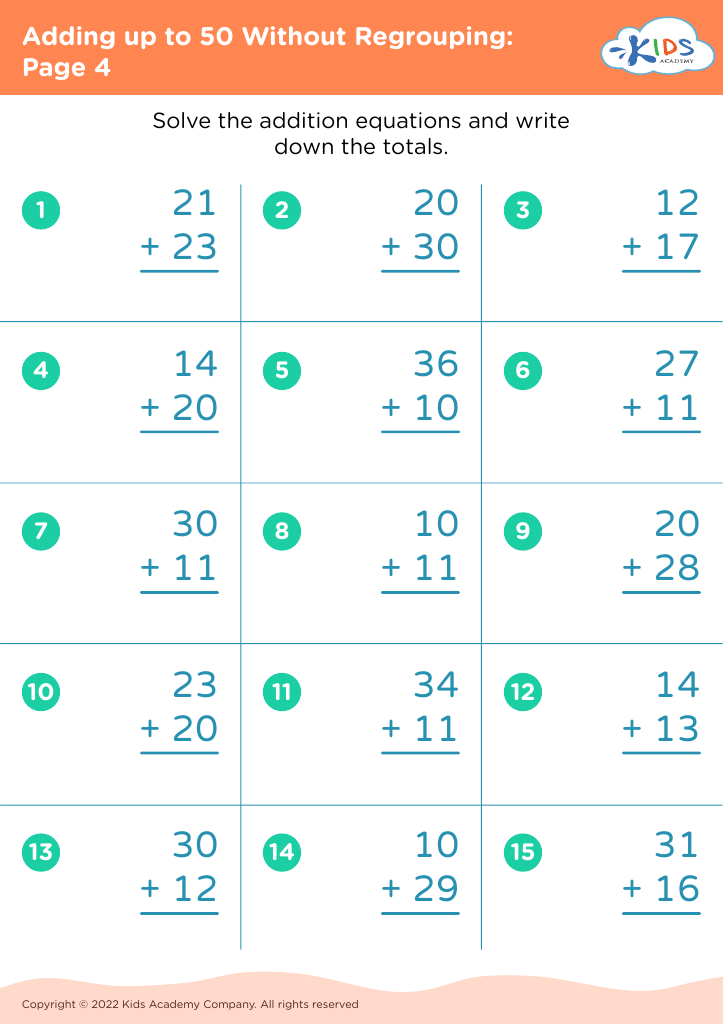
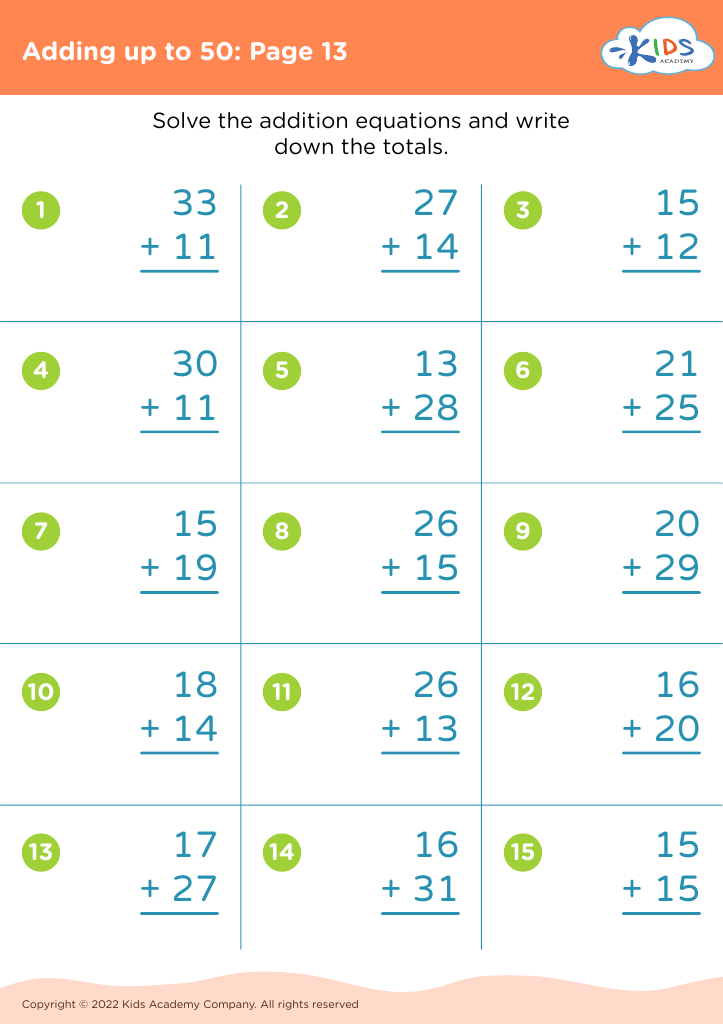
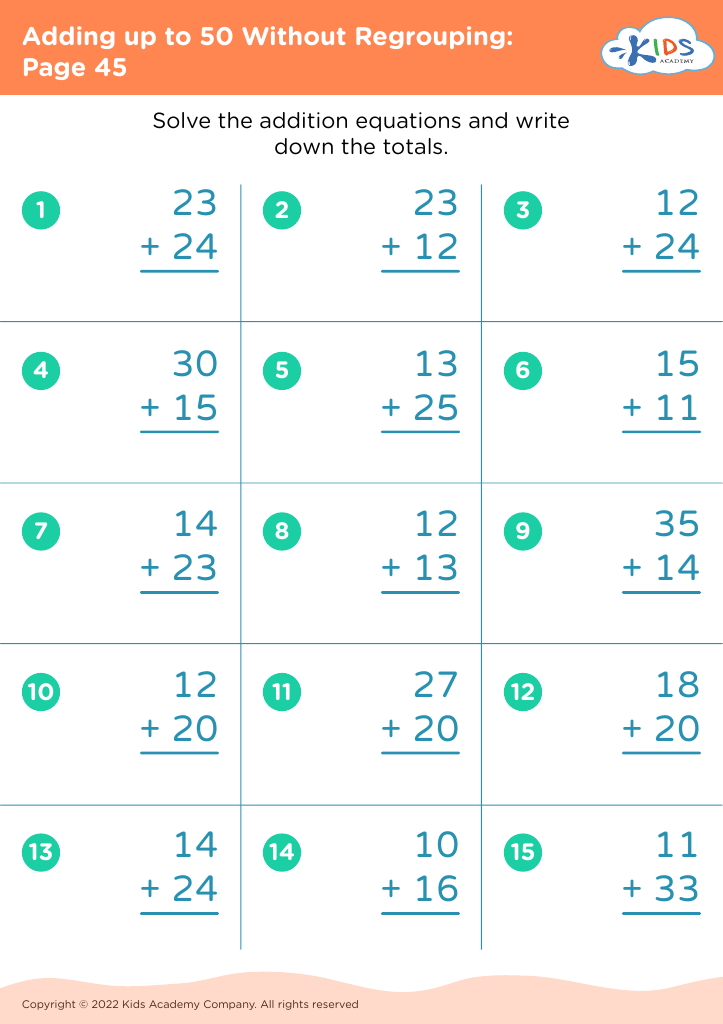
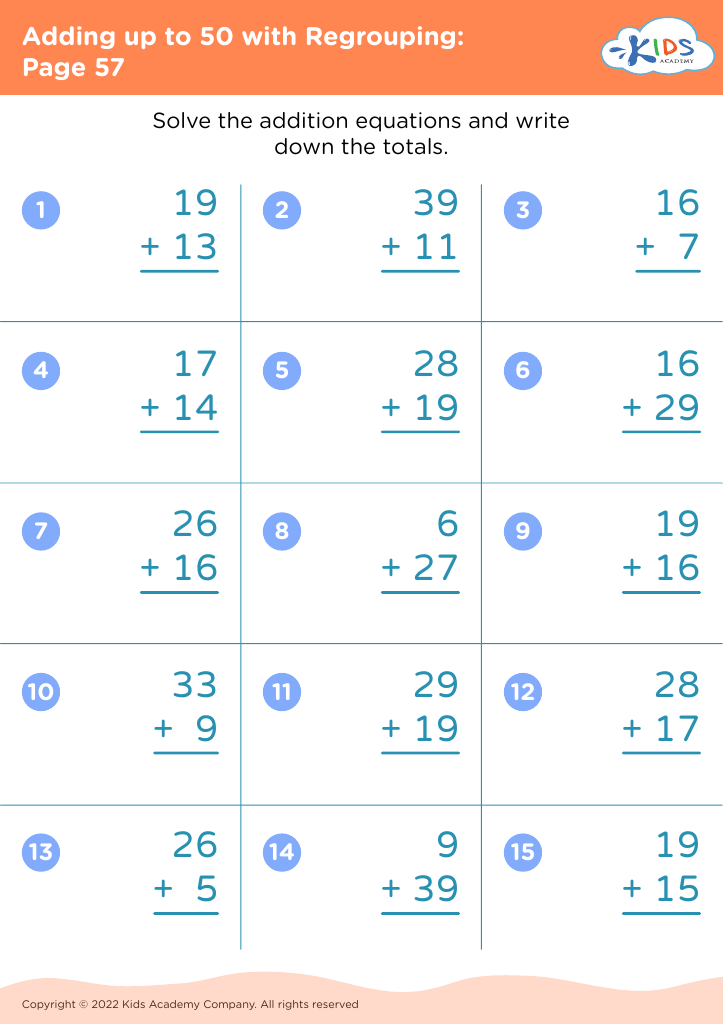




Problem-solving abilities are fundamental skills that set the stage for a child's academic and social success, particularly for ages 3-8. Learning to solve problems, such as adding up to 50, equips young children with critical thinking and analytical skills. These early math skills serve as building blocks for more complex mathematical concepts and real-world applications they will encounter later in life.
Parents and teachers should care about developing these abilities because they enhance cognitive development. Problem-solving honed through tasks like simple addition improves mental flexibility and fosters a growth mindset. It encourages children to think logically, make connections, and approach challenges with confidence.
Moreover, early proficiency in problem-solving is correlated with academic achievement. Studies show that foundational math skills cause a cascading effect on subsequent learning, positively impacting subjects ranging from science to technology.
Engaging in problem-solving activities also promotes resilience. Children learn that persistence and effort can lead to solutions, which is crucial for personal and emotional growth. Additionally, solving math problems in a collaborative setting enhances communication and teamwork skills.
In essence, mastering problem-solving and basic arithmetic by adding up to 50 at a young age not only boosts academic readiness but also instills a lifelong eagerness to learn and overcome challenges. Investing in these skills ensures a well-rounded development that benefits all areas of a child's life.








