Problem-Solving Skills Adding up to 50 Worksheets for Ages 3-8 - Page 2
26 filtered results
-
From - To
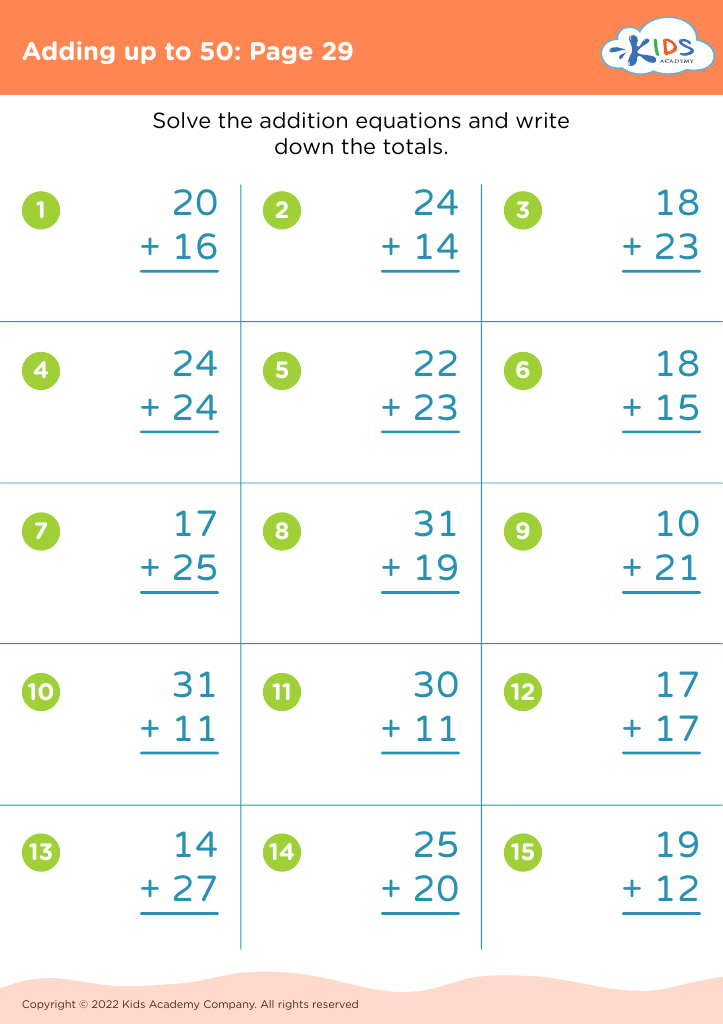
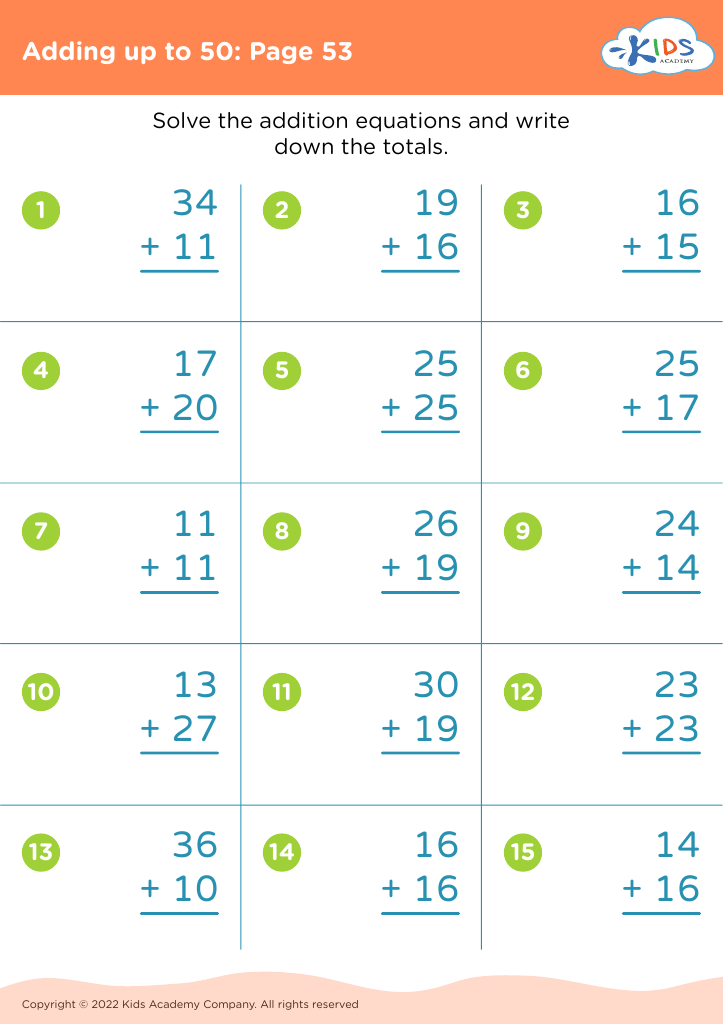




Problem-solving skills are essential for children aged 3-8 as they form the foundation of critical thinking and logical reasoning. When parents and teachers focus on nurturing problem-solving skills, specifically adding up to 50, they help children develop a strong mathematical foundation which is crucial for their future academic success.
Mathematics is a universal language that translates to numerous aspects of daily life. By mastering basic addition up to 50, children not only improve their arithmetic skills but also enhance their ability to understand more complex math concepts in the future. This leads to better performance in school and boosts their confidence and curiosity in the subject.
Moreover, problem-solving teaches children resilience and perseverance. They learn that encountering a problem is not an end but a step in discovering a solution. It instills patience and improves cognitive flexibility—children learn to approach problems from different angles and develop innovative strategies.
Furthermore, early proficiency in problem-solving skills is linked to better decision-making abilities. It helps children face everyday challenges effectively, encouraging independence. When parents and teachers nurture these skills early on, they set children on a path toward becoming competent and confident individuals, equipped for the myriad challenges they will encounter throughout their lives.








