Recognizing equivalent fractions Adding up to 50 Worksheets for Ages 3-8
3 filtered results
-
From - To
Explore our engaging "Recognizing Equivalent Fractions Adding Up to 50 Worksheets" tailored for children aged 3-8. These worksheets are designed to help young learners grasp the concept of equivalent fractions in a fun and interactive way. Through colorful visuals and relatable exercises, kids will practice identifying and creating equivalent fractions that sum up to 50. Perfect for home or classroom use, these resources support early math skills while boosting confidence in fraction comprehension. Discover the joy of learning fractions with activities that captivate and challenge young minds, making math an enjoyable part of their educational journey!
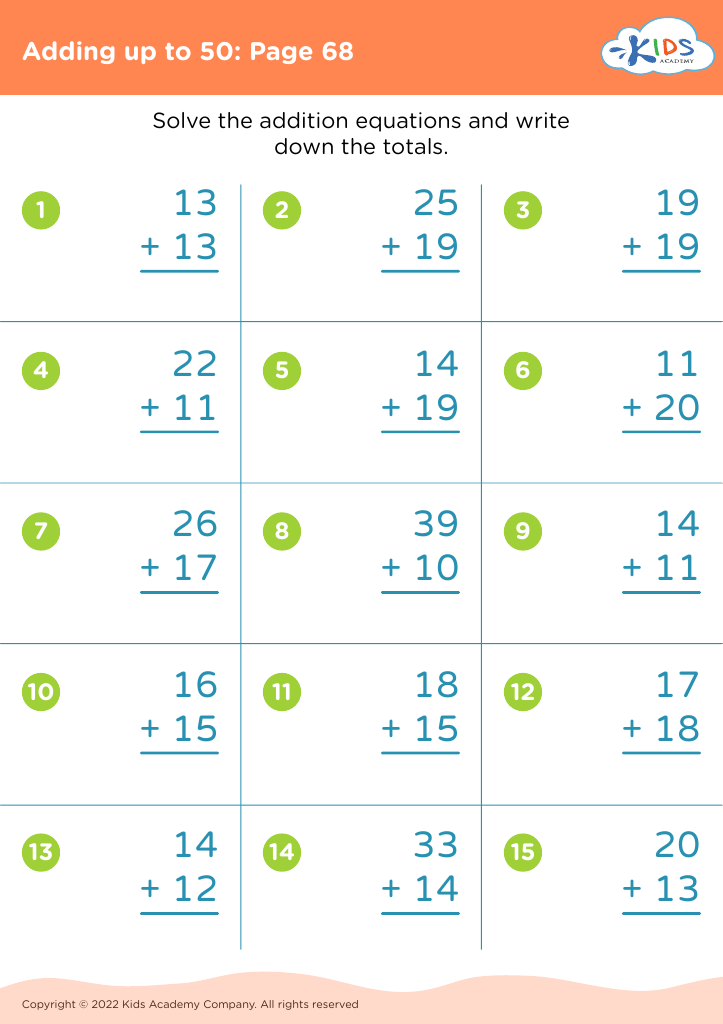
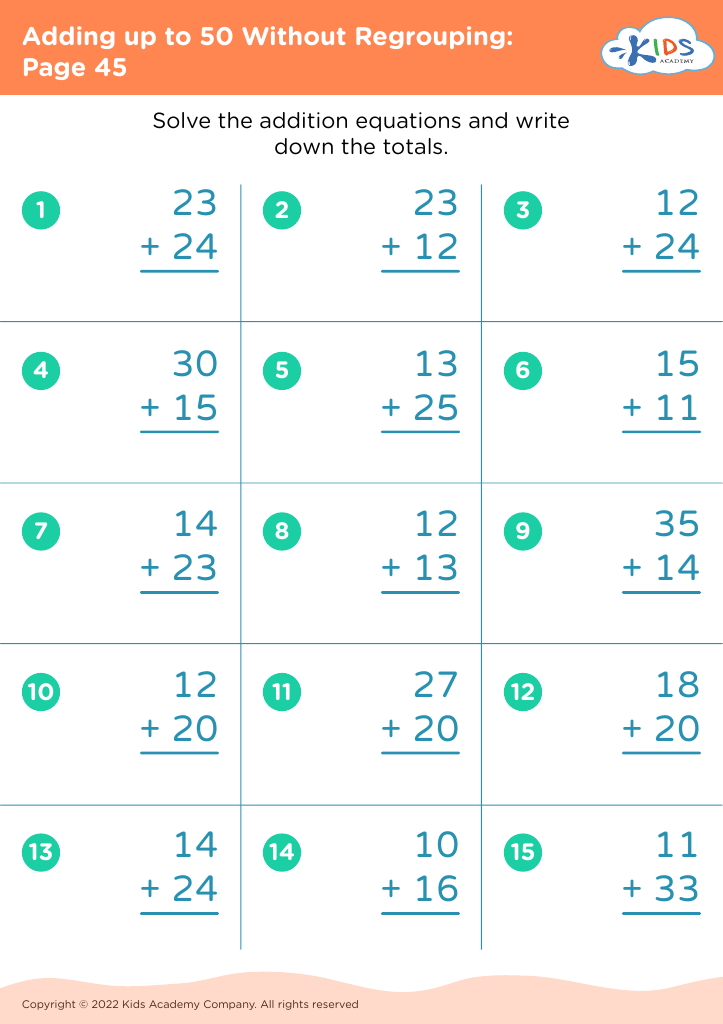
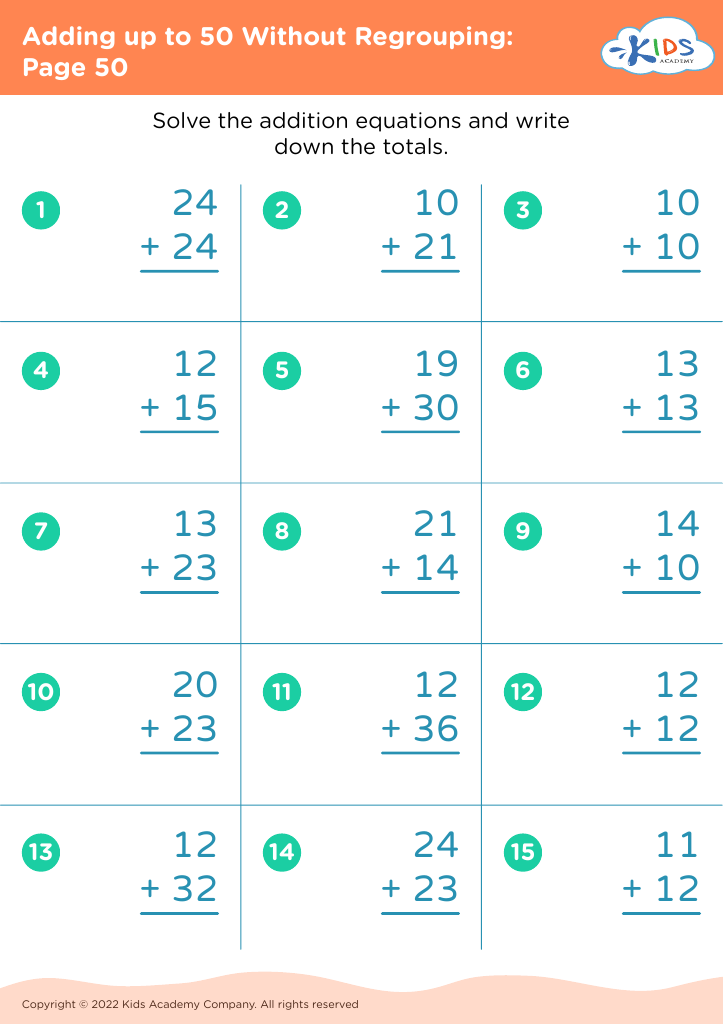




Recognizing equivalent fractions is fundamental for young learners, as it lays the groundwork for understanding not just mathematics, but also critical thinking and problem-solving skills. For children ages 3-8, grasping the concept of fractions helps them make sense of everyday situations involving division, sharing, and measuring. By understanding that different fractions can represent the same value, children develop a more flexible and comprehensive understanding of numbers.
Additionally, incorporating fractions into activities that involve adding up to 50 can enhance engagement and motivation. Young learners are naturally curious and benefit from hands-on activities that connect math to real-life scenarios—like sharing pizza or distributing candy—making the learning experience enjoyable and memorable. This relevance fosters a positive attitude towards math, setting the stage for future learning.
Parents and teachers should care about these concepts because they encourage foundational skills needed in advanced mathematics, such as addition, subtraction, and even algebraic concepts in later years. Collaborative learning experiences also promote communication and teamwork skills. Overall, focusing on recognizing equivalent fractions and interactive activities enriches children’s understanding of math while supporting their cognitive and social development, crucial for their lifelong learning journey.








