Shape identification Adding up to 50 Worksheets for Ages 3-8
3 filtered results
-
From - To
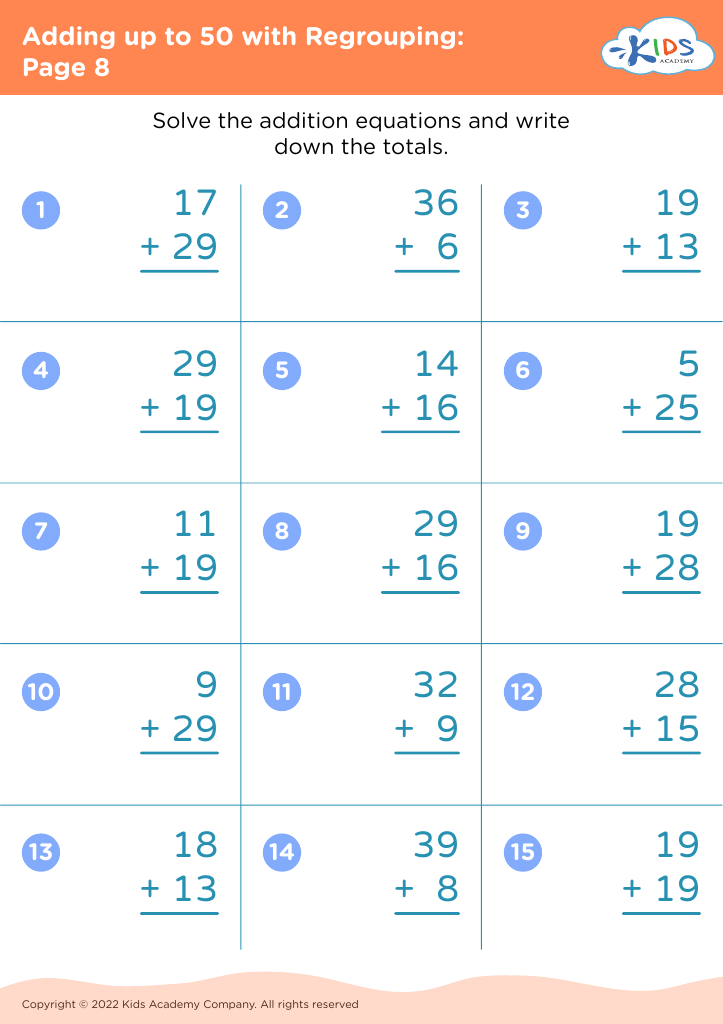
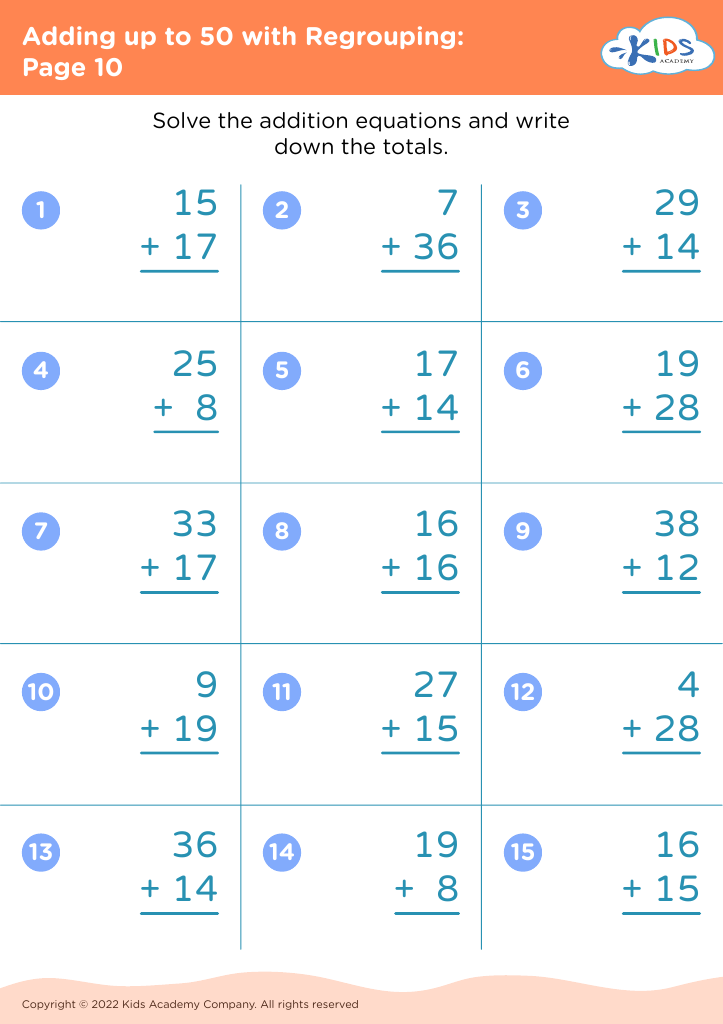
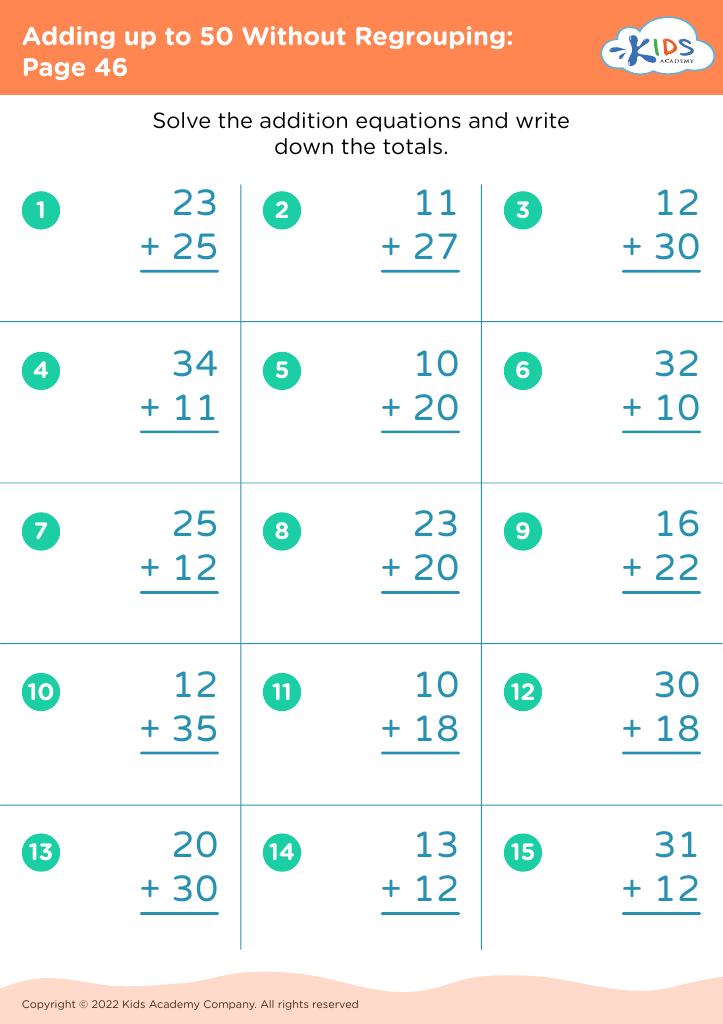
Unlock your child’s potential with our "Shape Identification Adding up to 50 Worksheets for Ages 3-8." Combining early math skills with fun shape recognition activities, these worksheets are designed to make learning engaging and effective. Ideal for preschool and early elementary children, the exercises help kids practice addition up to 50 while identifying various shapes. Each worksheet is crafted to boost critical thinking, concentration, and fine motor skills. Whether at home or in the classroom, these printable resources are perfect for giving your child a head start in math and geometric concepts. Download now and let the learning adventures begin!




Understanding shape identification and basic arithmetic, such as adding up to 50, is crucial for children aged 3-8. These foundational skills form the bedrock of cognitive development in young learners and directly influence their ability to excel in more complex mathematical and logical reasoning later in life.
Through shape identification, children learn to observe, categorize, and differentiate objects in their environment. This enhances their spatial awareness and visual processing abilities, which are crucial not only for mathematics but also for everyday tasks. Recognizing shapes is fundamental to understanding more complex geometrical concepts in future academic pursuits.
Adding up to 50, meanwhile, provides an early introduction to the world of numbers and basic arithmetic operations. This skill encourages numerical literacy, helping children understand the concepts of quantity, comparison, and basic calculation. Early proficiency in addition builds confidence and sets the stage for more complicated mathematical concepts as they progress in school.
When parents and teachers invest time in fostering these skills, they are supporting the child's overall intellectual growth. Interactive activities like games, hands-on learning, and real-world applications make learning engaging, ensuring that children develop a solid grasp of these essential early skills that will facilitate lifelong learning.








