Understanding patterns Adding up to 50 Worksheets for Ages 3-8
8 filtered results
-
From - To
Explore our "Understanding Patterns: Adding Up to 50 Worksheets" designed for children aged 3-8. These engaging worksheets help young learners recognize patterns while mastering addition skills. Through fun, interactive exercises, kids will develop a strong foundation in numerical reasoning and boost their confidence in math. Ideal for homeschooling or classroom use, these resources encourage critical thinking as students identify and create patterns that culminate in sums of up to 50. With vibrant visuals and age-appropriate challenges, our worksheets promote cognitive development while making math a joyful experience. Inspire your child's mathematical journey today with our carefully curated content!
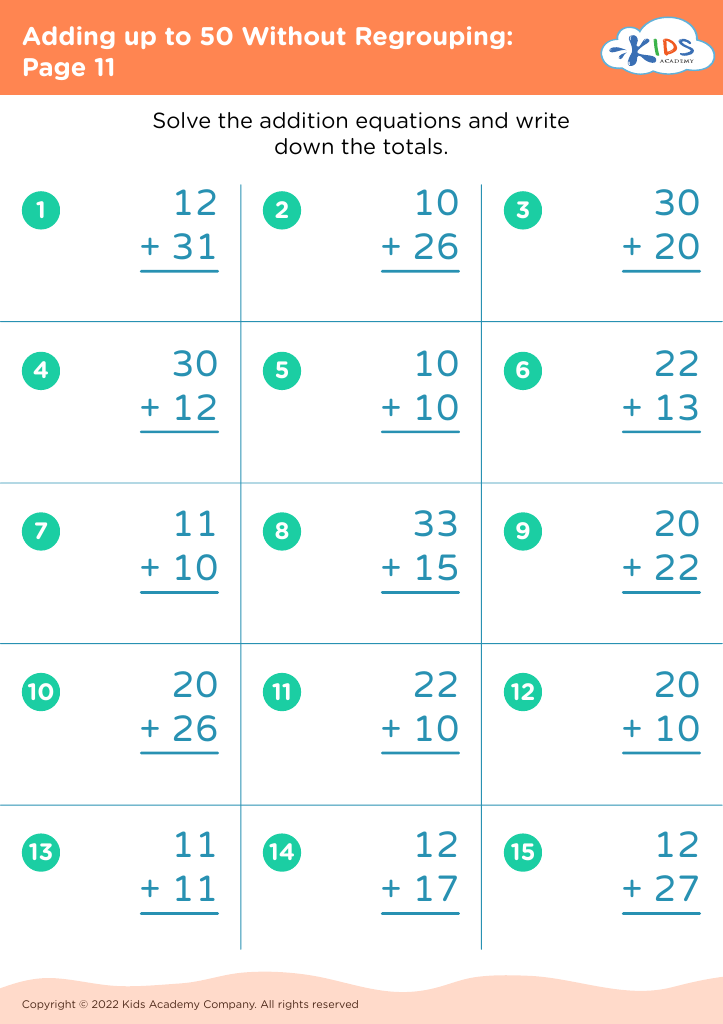
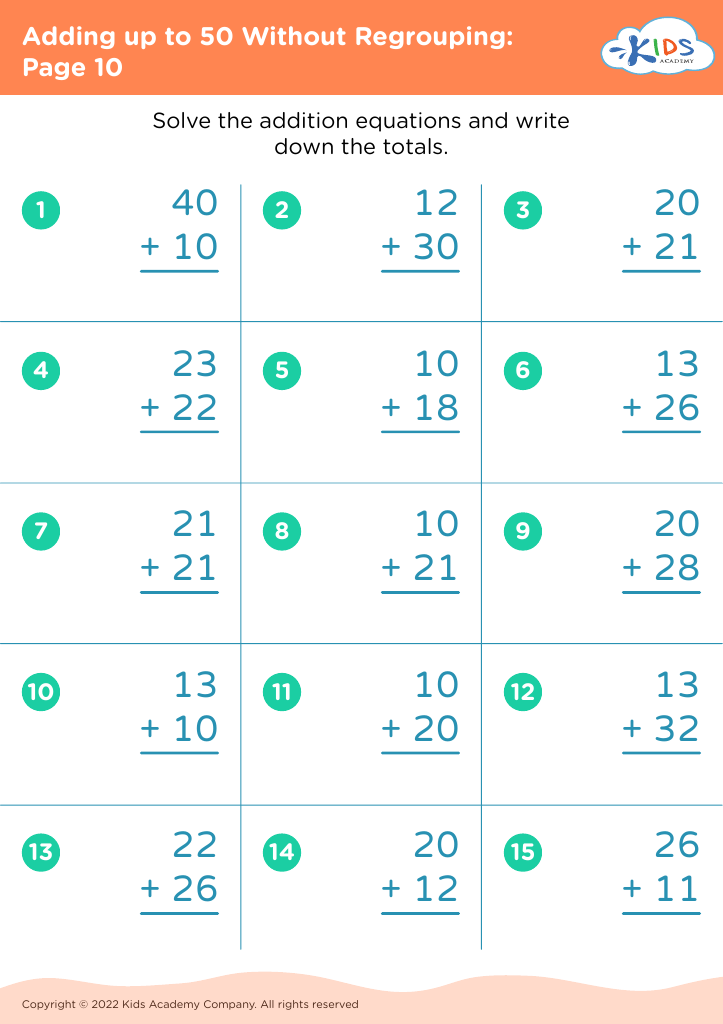
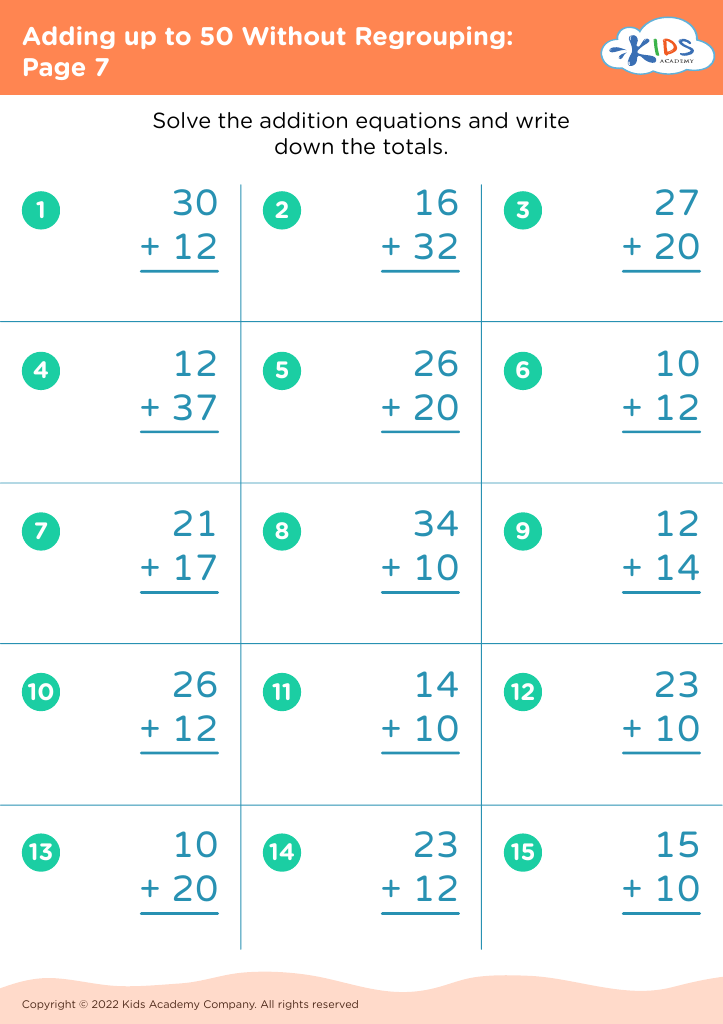
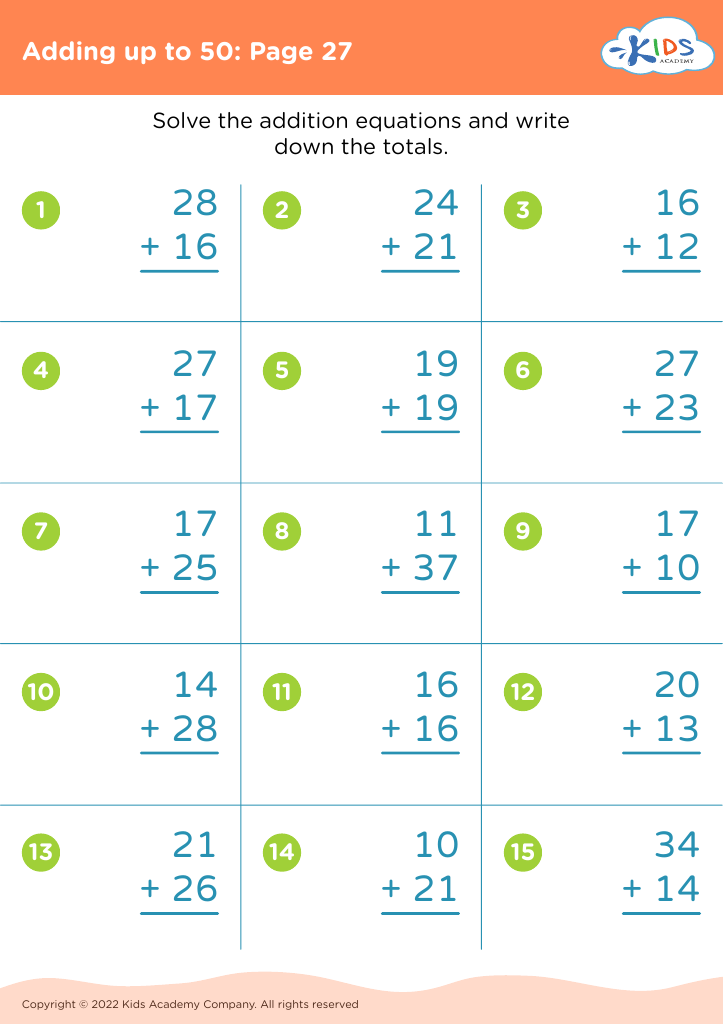
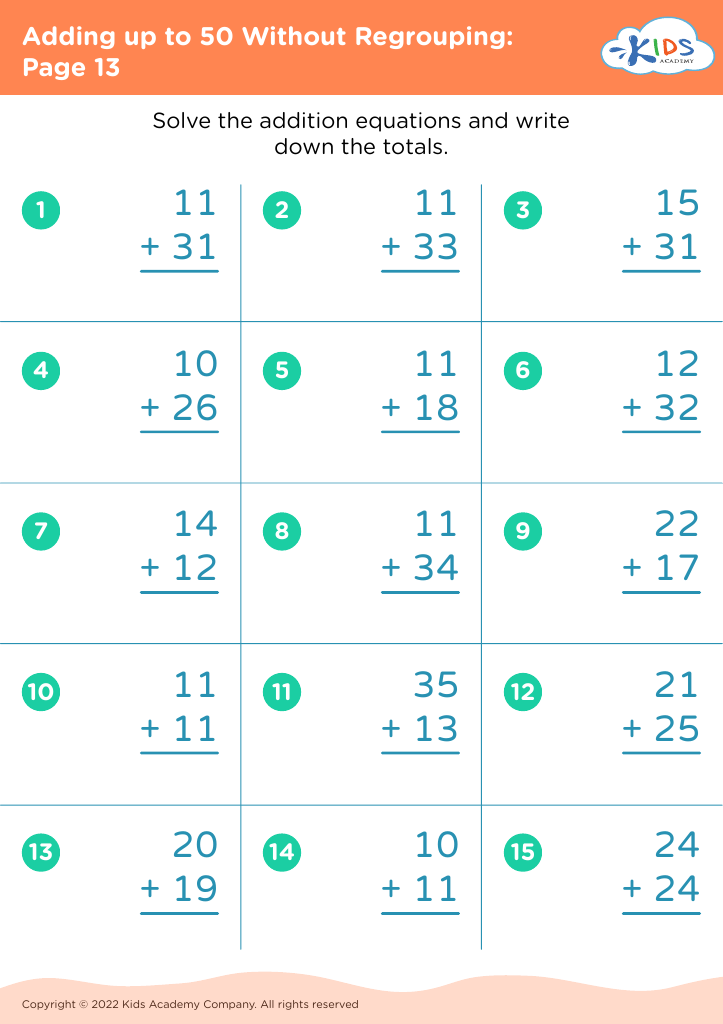
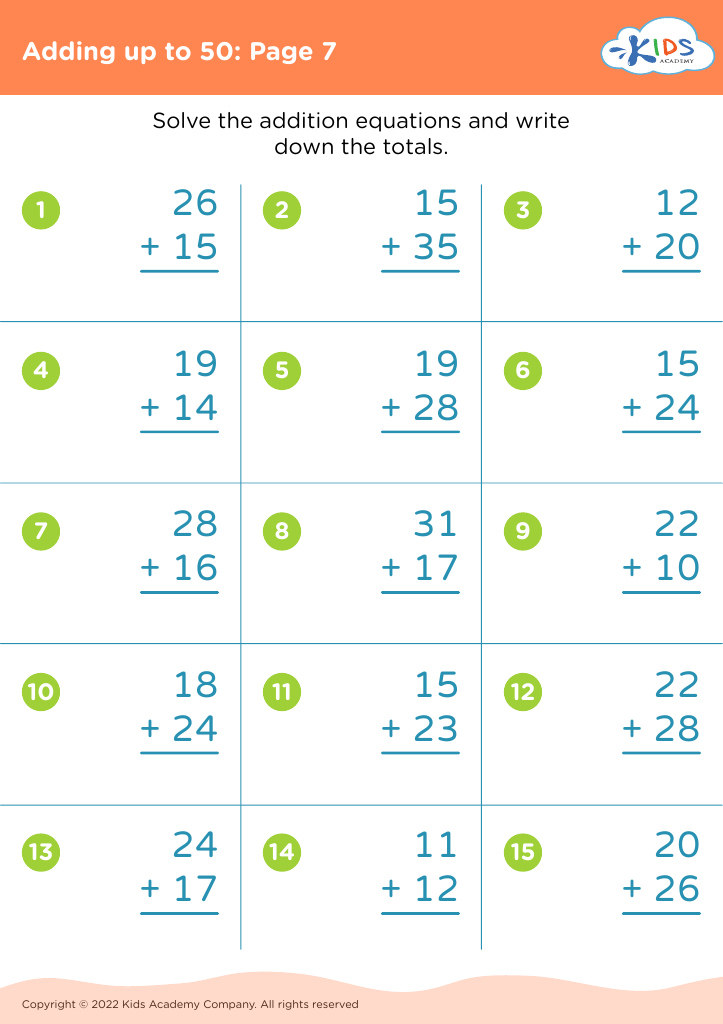
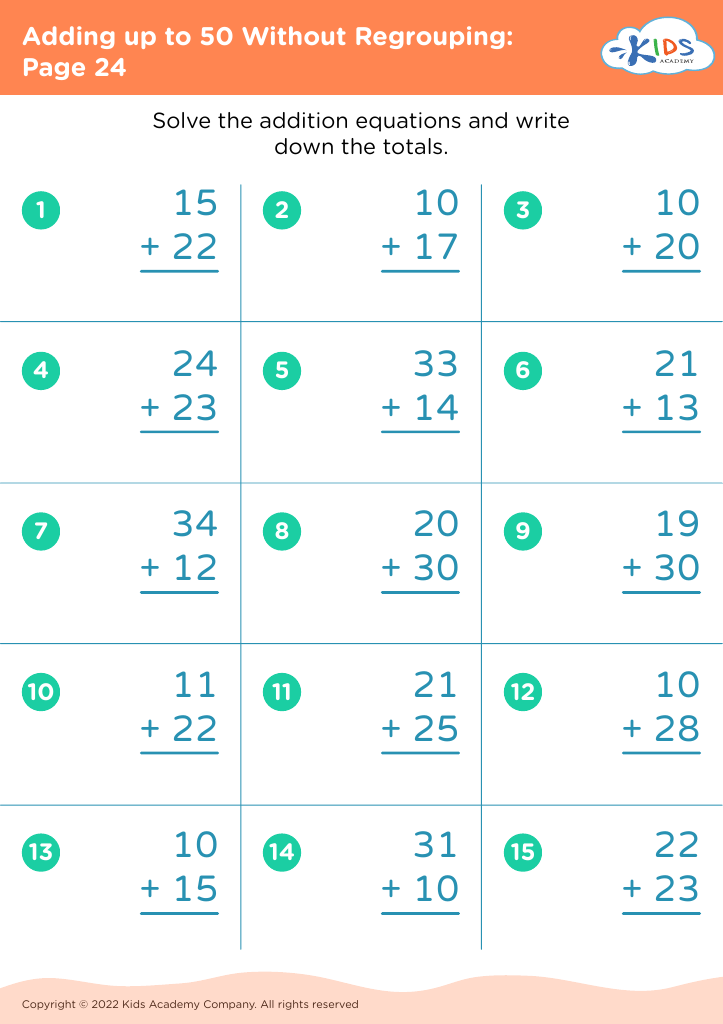
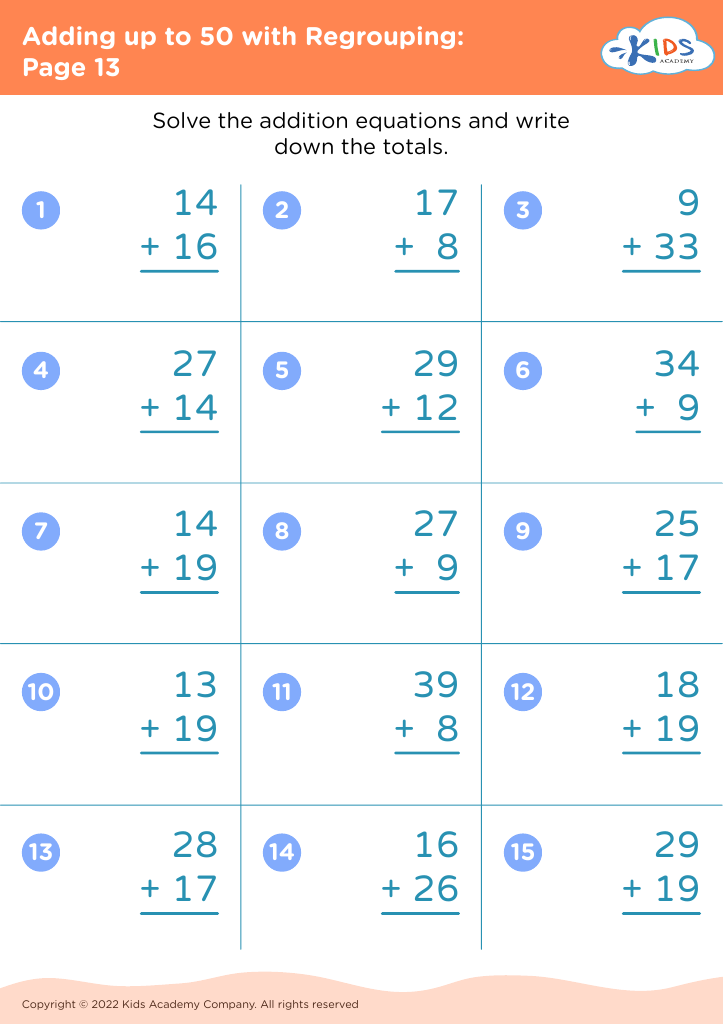




Understanding patterns and addition up to 50 is crucial for children's cognitive, mathematical, and problem-solving development. For parents and teachers, fostering these skills in children aged 3-8 lays the groundwork for future learning. Recognizing patterns helps children make connections between numbers and enhances their ability to predict outcomes, which is foundational in mathematics and logical reasoning. When children identify patterns, they learn to categorize and organize information, indicating a developing mathematical mindset.
Adding up to 50 introduces children to the concept of numerical relationships and simple arithmetic, which are essential for more complex mathematical operations as they progress in school. This foundational skill is not only important for their academic success but also for real-world applications, such as understanding money, time, and measurement.
Moreover, teaching these concepts early helps boost confidence in their numerical abilities and encourages a love for learning. Engaging activities centered around patterns and addition can make math enjoyable, paving the way for positive attitudes toward the subject. Ultimately, by prioritizing these skills, parents and teachers play a vital role in ensuring students are well-prepared for future academic challenges and practical life experiences.








