Vocabulary expansion Adding up to 50 Worksheets for Ages 3-8
3 filtered results
-
From - To
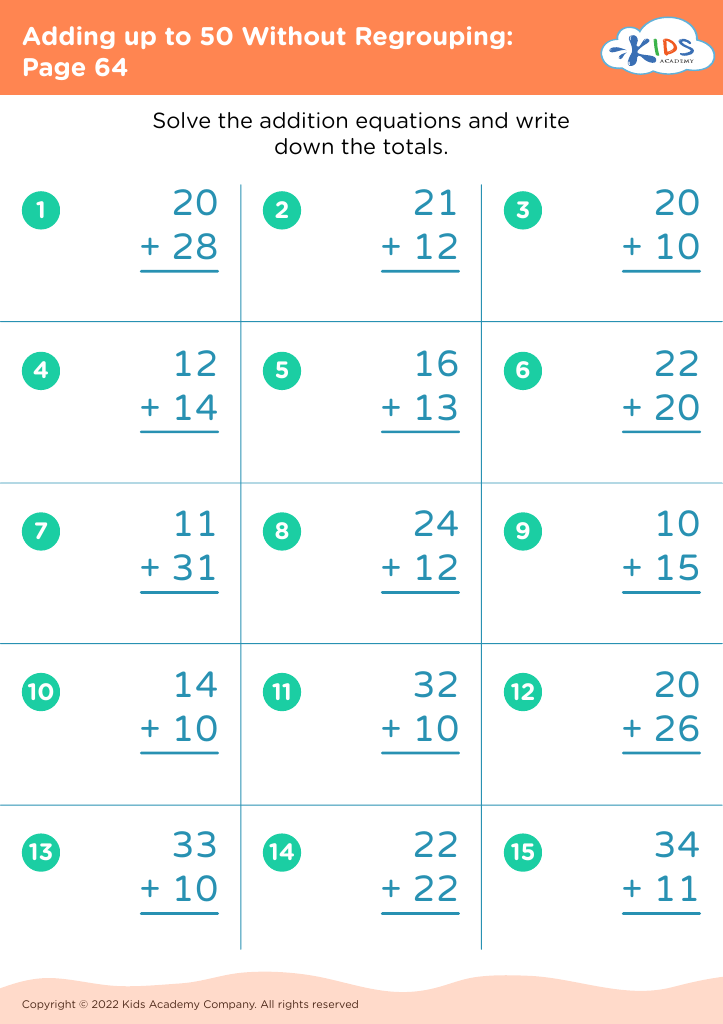
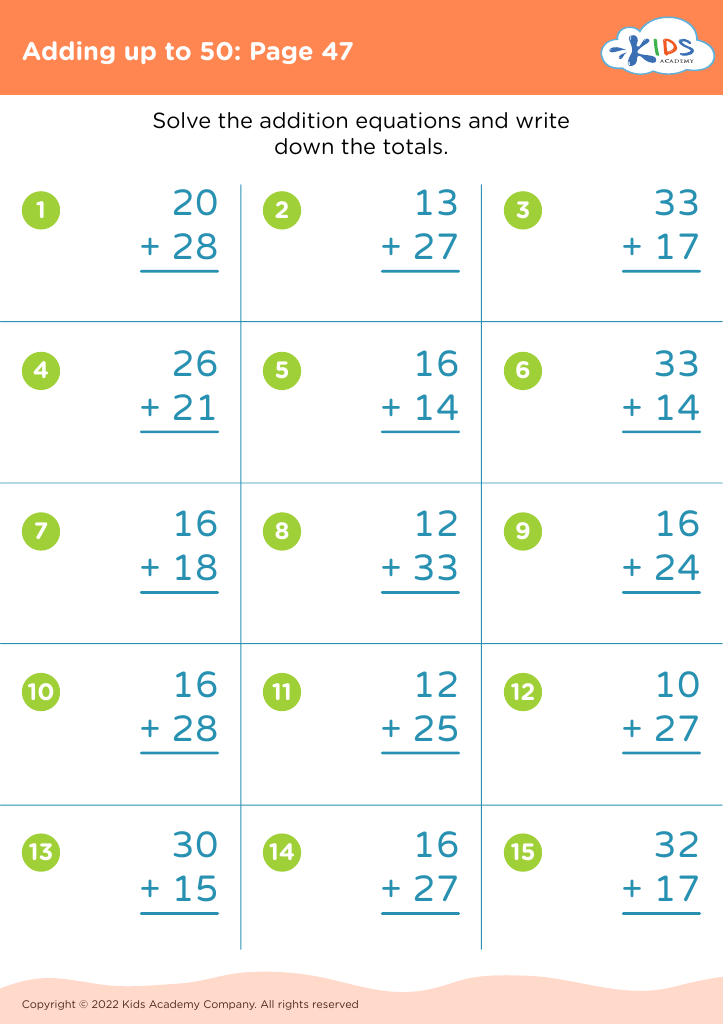
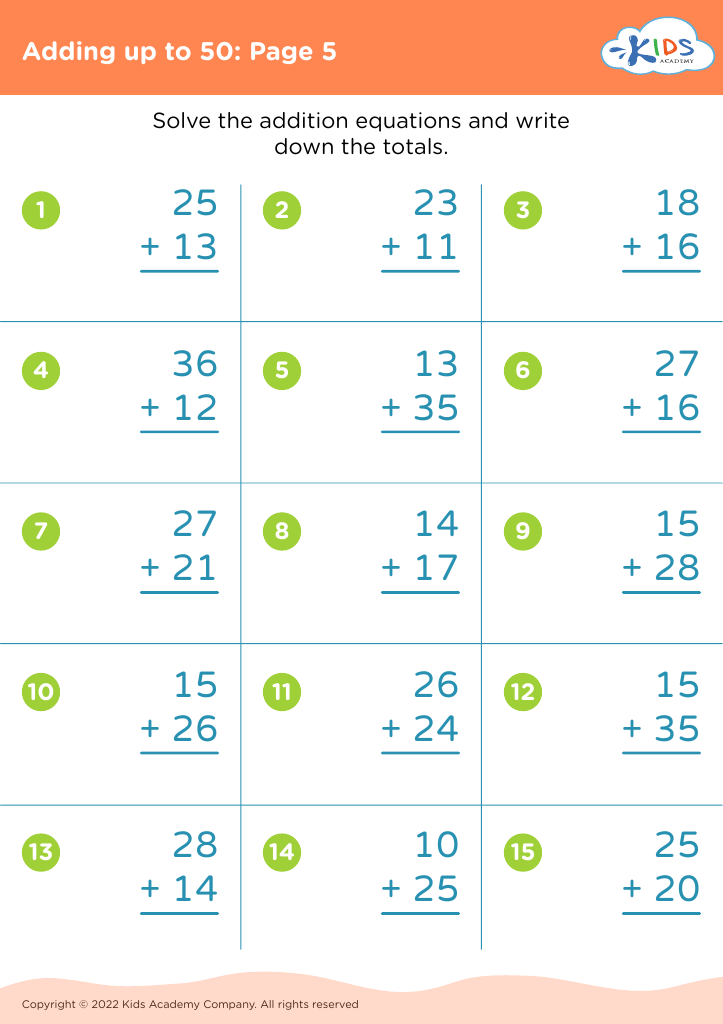
Boost your child's vocabulary with our "Vocabulary Expansion: Adding Up to 50" worksheets, designed for ages 3-8! These engaging and interactive activities will not only strengthen math skills but also enhance language development. With a diverse range of themes and words, children will learn to associate numbers with everyday items, fostering comprehension and communication. Each worksheet encourages creativity and critical thinking, making learning fun! Perfect for parents and educators alike, our resources support your child's educational journey. Explore imaginative exercises that promote vocabulary growth while mastering addition up to 50. Start cultivating your child's linguistic and mathematical skills today!




Vocabulary expansion is essential for children aged 3-8 as it profoundly influences their cognitive and social development. A rich vocabulary lays the foundation for effective communication, enabling children to express their thoughts, feelings, and ideas clearly. This ability is crucial for building relationships, understanding social cues, and engaging in meaningful conversations with peers and adults.
Furthermore, vocabulary at this age is closely linked to literacy skills. An expanded vocabulary enhances reading comprehension, as children can better understand stories and texts. This connection between vocabulary and literacy supports academic success and fosters a lifelong love for reading.
Through playful activities, storytelling, and engaging conversations, parents and teachers can introduce up to 50 new words in fun, context-rich ways. This not only aids in language acquisition but also stimulates curiosity and critical thinking. When children encounter new words consistently and meaningfully, they become more confident readers and communicators.
Careful attention to vocabulary expansion also equips children to navigate complex ideas later in life, setting them up for success in various academic and social settings. In short, investing in vocabulary development nurtures holistic childhood growth and independence, making it a crucial focal point for both parents and educators.








