Basic Arithmetic Addition and Subtraction Word Problems Worksheets for Ages 3-8
5 filtered results
-
From - To
Discover our engaging Basic Arithmetic Addition and Subtraction Word Problems Worksheets, designed for children ages 3-8! These worksheets provide young learners with essential math skills through relatable and fun scenarios, making learning interactive and enjoyable. Each problem encourages critical thinking while helping kids understand addition and subtraction concepts in a practical context. Perfect for parents and teachers alike, our resources promote early math fluency in a playful format that captivates young minds. Watch as your child develops a solid foundation in math, boosting confidence and problem-solving abilities. Start your child's arithmetic journey today with our exciting worksheets!
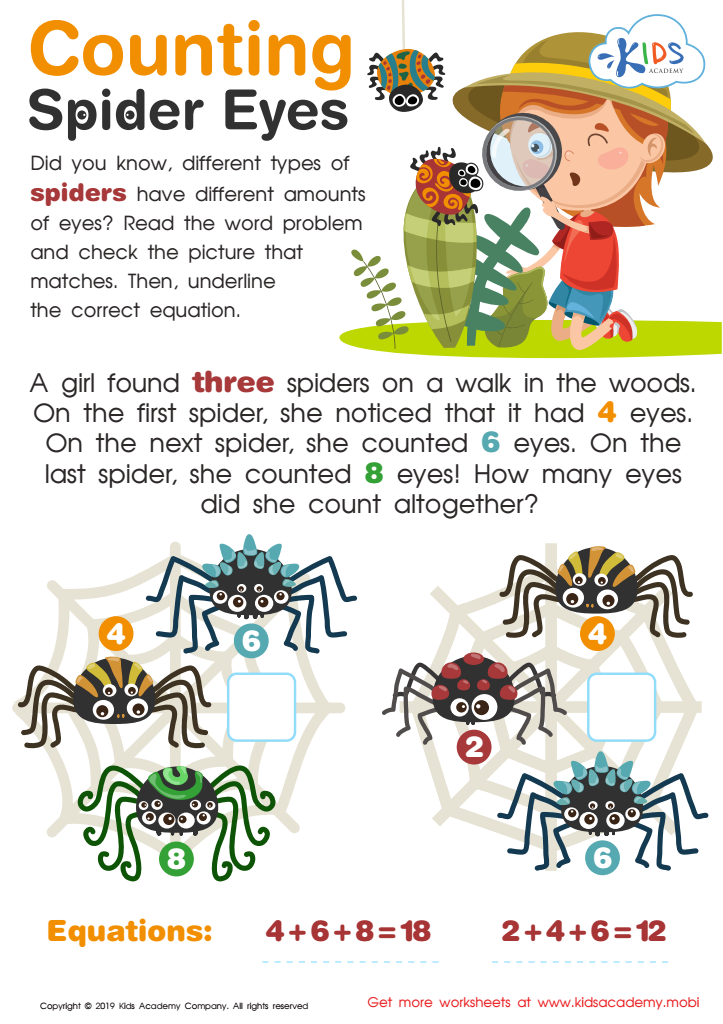
Counting Spider Eyes Worksheet
 Assign to My Students
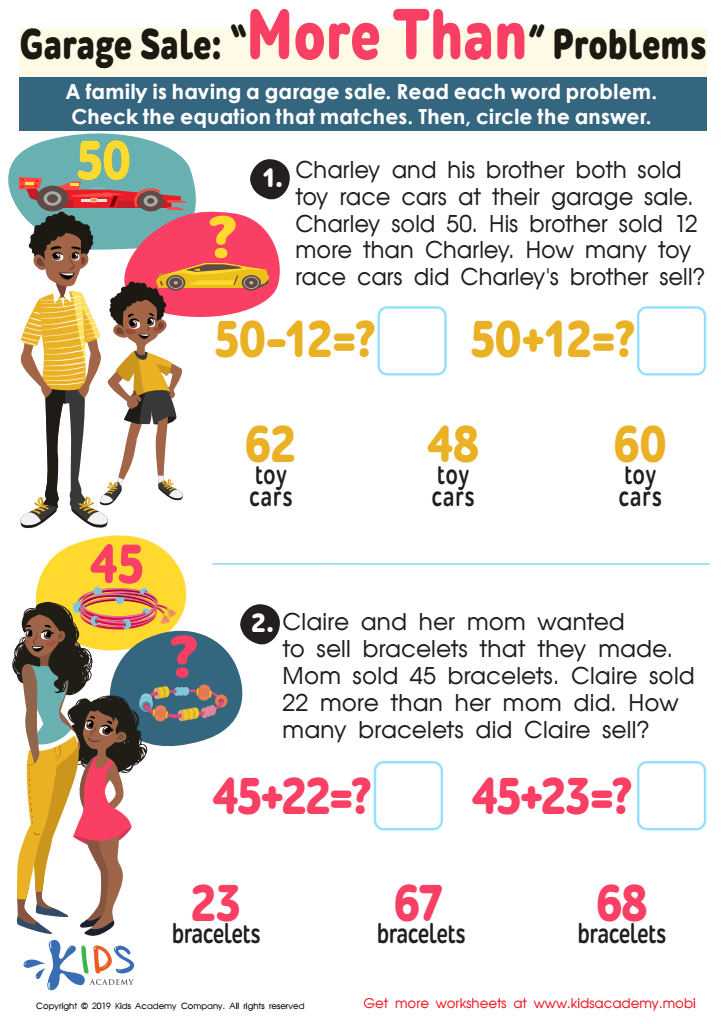
Garage Sale - More yhan Worksheet
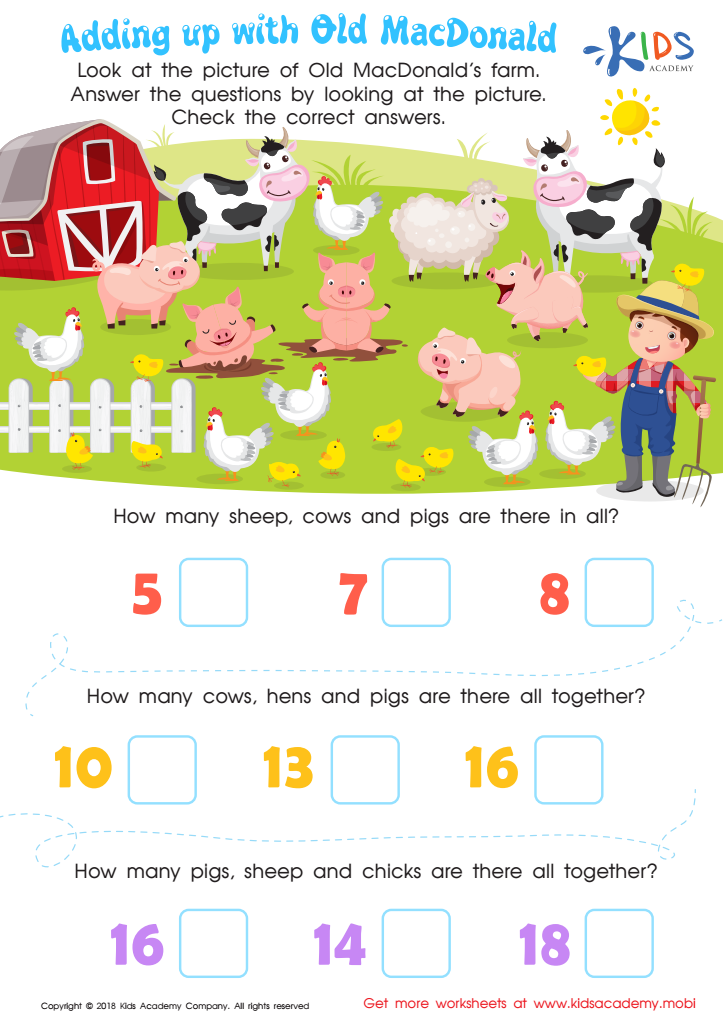
Adding Up with Old MacDonald Worksheet
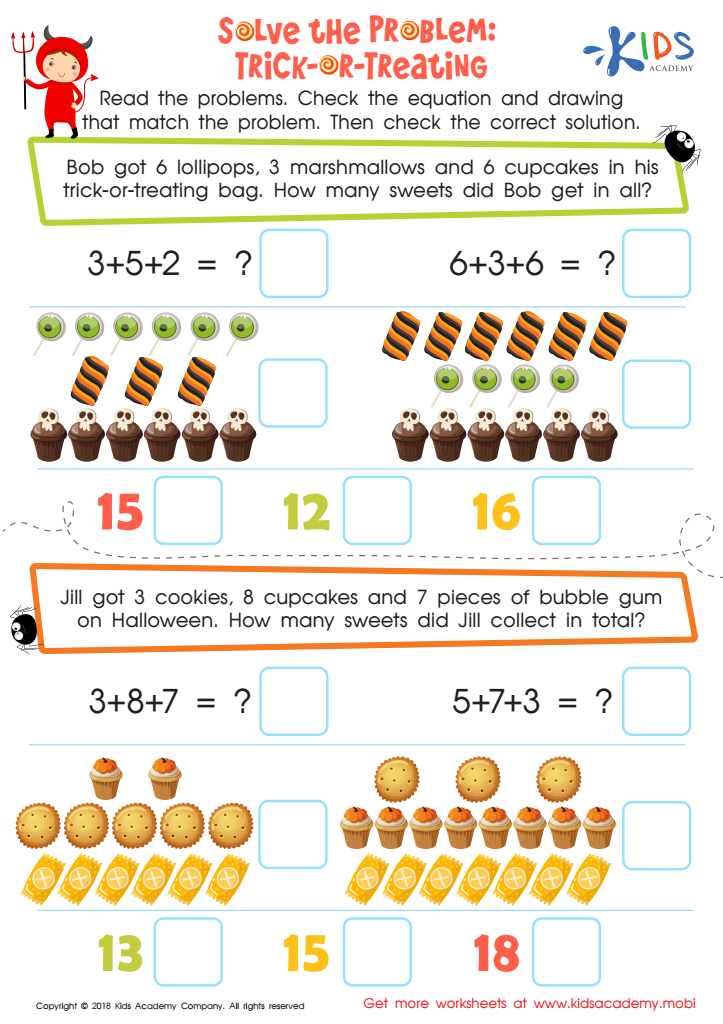
Solve the Problem: Trick–or–treating Worksheet
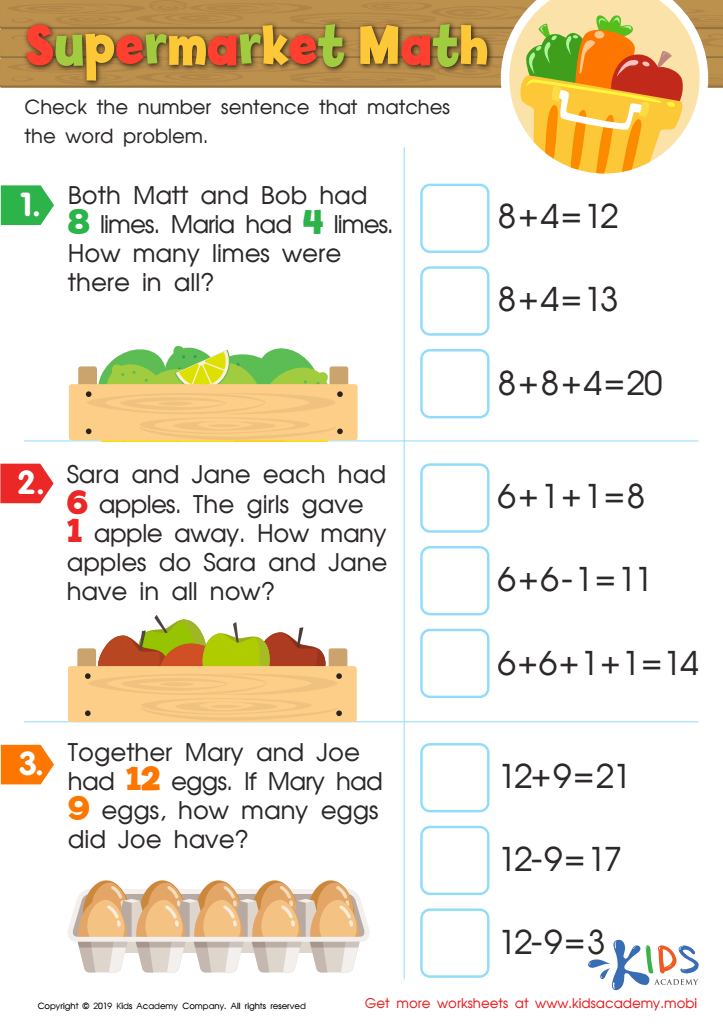
Supermarket Math Worksheet








Parents and teachers should prioritize Basic Arithmetic Addition and Subtraction Word Problems for children aged 3 to 8 because these skills lay a foundational understanding of math that is crucial for future learning. Engaging with word problems encourages young learners to apply mathematical concepts in real-life contexts, reinforcing their problem-solving and critical thinking abilities.
At this developmental stage, children are naturally curious and eager to explore their surroundings. Introducing word problems helps them connect numbers to tangible experiences, such as sharing toys or counting snacks. This real-world application makes math more relatable and enjoyable, fostering a positive attitude toward the subject.
Additionally, these activities enhance language skills, as children learn to interpret the problem's wording and express their reasoning. Moreover, visualizing scenarios aids in comprehension, allowing for a multi-sensory approach to learning. This builds not only mathematical fluency but also confidence in tackling problems independently.
Involving parents in this learning process promotes a collaborative educational environment, strengthening the home-school connection. Ultimately, equipping children with strong addition and subtraction skills at an early age sets the stage for their academic success, helps them excel in more complex math, and nurtures lifelong learners.