Mental math practice Addition and Subtraction Word Problems Worksheets for Ages 3-8
3 filtered results
-
From - To
Introduce your child to the world of numbers with our Mental Math Practice Addition and Subtraction Word Problems Worksheets, specially designed for ages 3-8. These engaging resources from Kids Academy help young learners master essential math skills through fun and interactive word problems. Encourage mental math development as kids solve addition and subtraction challenges, boosting their confidence and problem-solving abilities. With vibrant illustrations and age-appropriate exercises, our worksheets turn learning into an enjoyable adventure. Perfect for both classroom use and home practice, ensure your child’s early math journey starts on the right foot by downloading and printing today!

Adding at the Hospital Worksheet
 Assign to My Students
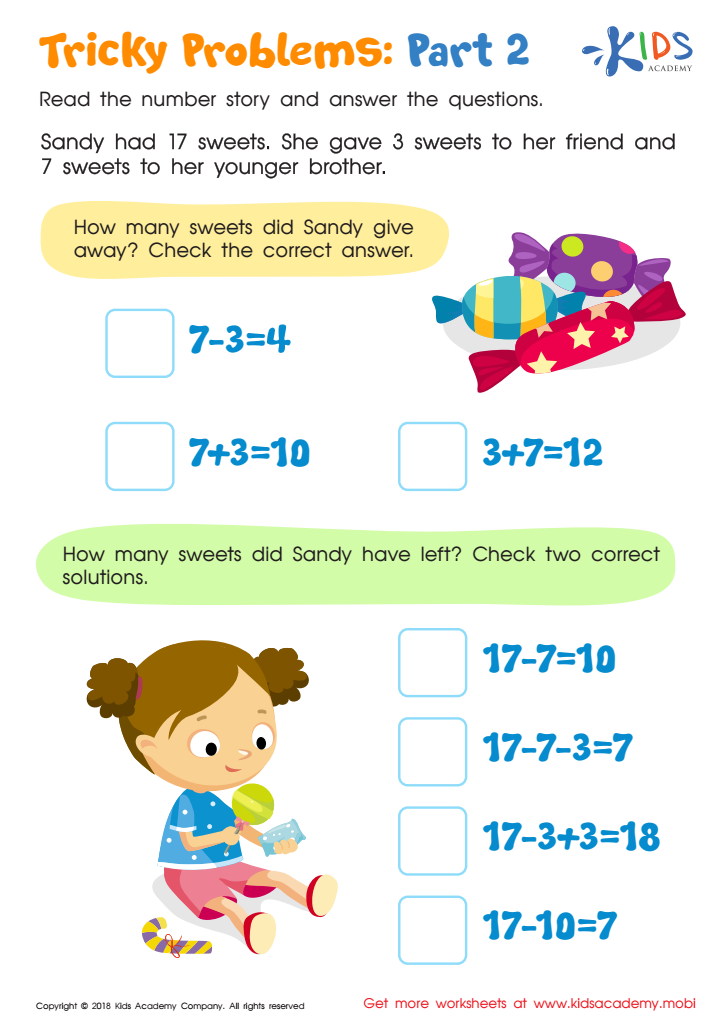
Tricky Problems Worksheet: Part 2
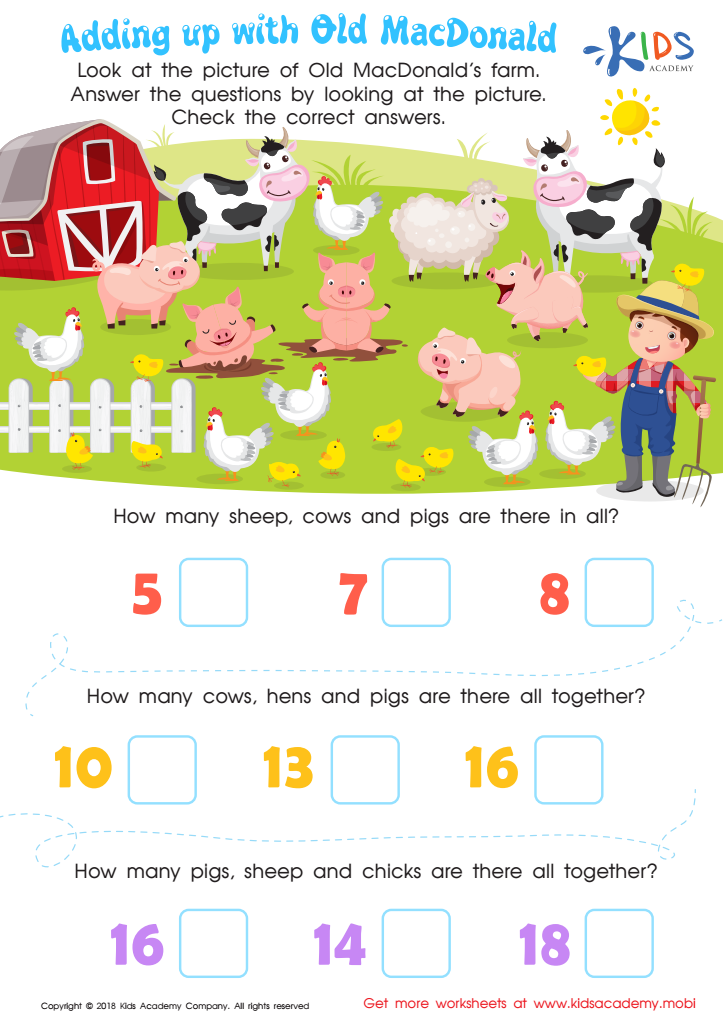
Adding Up with Old MacDonald Worksheet








Parents and teachers should prioritize mental math practice and addition/subtraction word problems for children aged 3-8 because these fundamental skills are crucial for early cognitive development. Early exposure to mental math helps young children build a strong foundation in number sense, enabling them to understand and manipulate numbers more efficiently. This foundation is essential for tackling more complex mathematical concepts as they progress in their education.
Engaging in addition and subtraction word problems equips children with critical thinking and problem-solving skills. By interpreting word problems, children learn to translate real-world situations into mathematical expressions, fostering their ability to connect math with everyday life. This active engagement enhances both comprehension and retention of mathematical principles.
Moreover, practicing these skills at a young age boosts confidence and reduces math anxiety, a common barrier in later academic years. When children feel comfortable and proficient with basic operations, they are more likely to enjoy learning math and view challenges as opportunities rather than obstacles.
Additionally, collaboration in such activities, whether with parents or teachers, promotes valuable social interactions and communication skills. Parents and teachers who invest time in these practices not only support their child's academic success but also contribute to their holistic development, laying the groundwork for a lifelong positive attitude towards learning.