Basic Mathematics Addition & Subtraction Worksheets for Ages 3-8
5 filtered results
-
From - To
Discover our engaging collection of Basic Mathematics Addition & Subtraction Worksheets designed specifically for ages 3-8. Perfect for young learners, these interactive worksheets provide a fun and effective way to build foundational math skills. Using colorful illustrations and simple problems, children can practice essential addition and subtraction concepts at their own pace. These printables are ideal for classroom activities, homework assignments, or extra practice at home. Watch your child’s confidence and proficiency in math grow with our expertly crafted worksheets. Visit Kids Academy for top-quality educational resources that make learning math enjoyable and exciting!
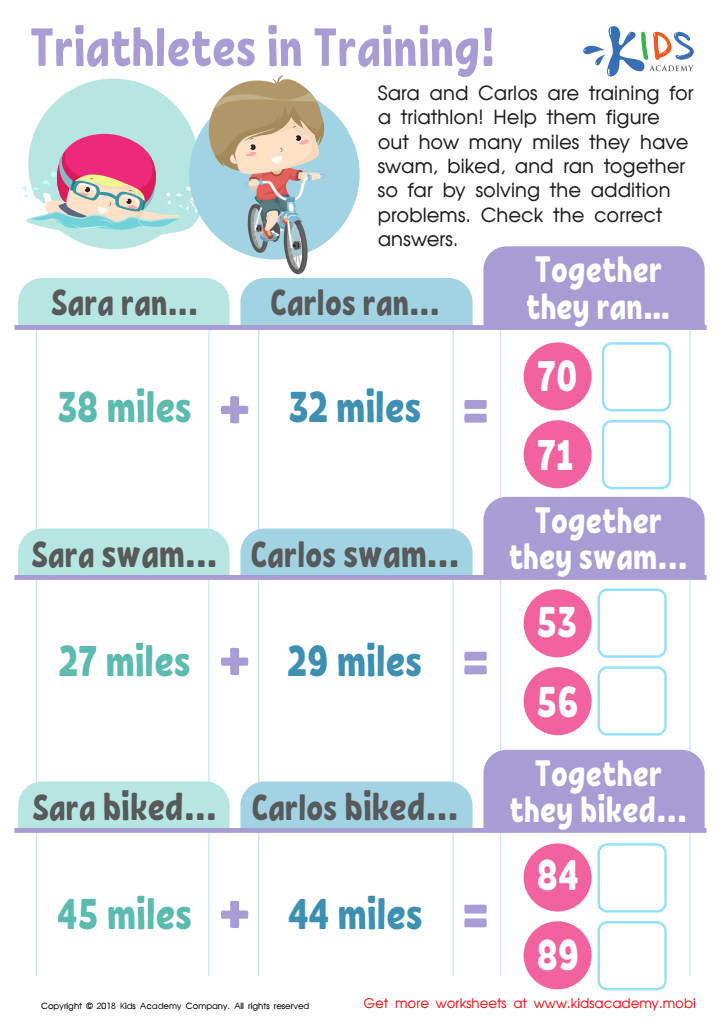
Triathletes in Training Worksheet
 Assign to My Students
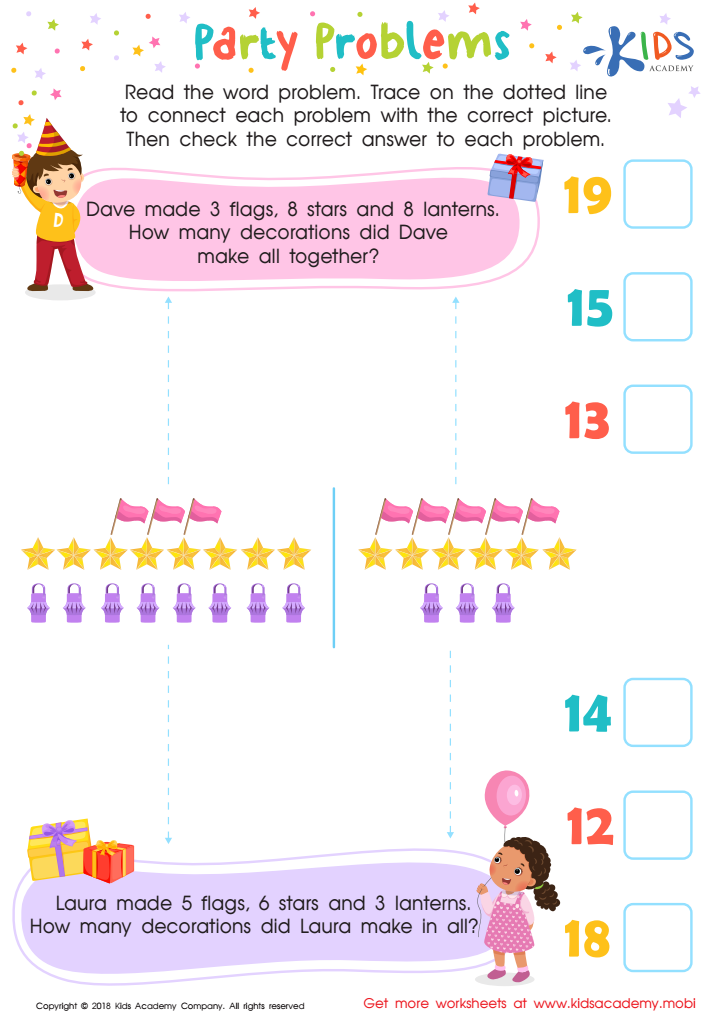
Party Problems Worksheet
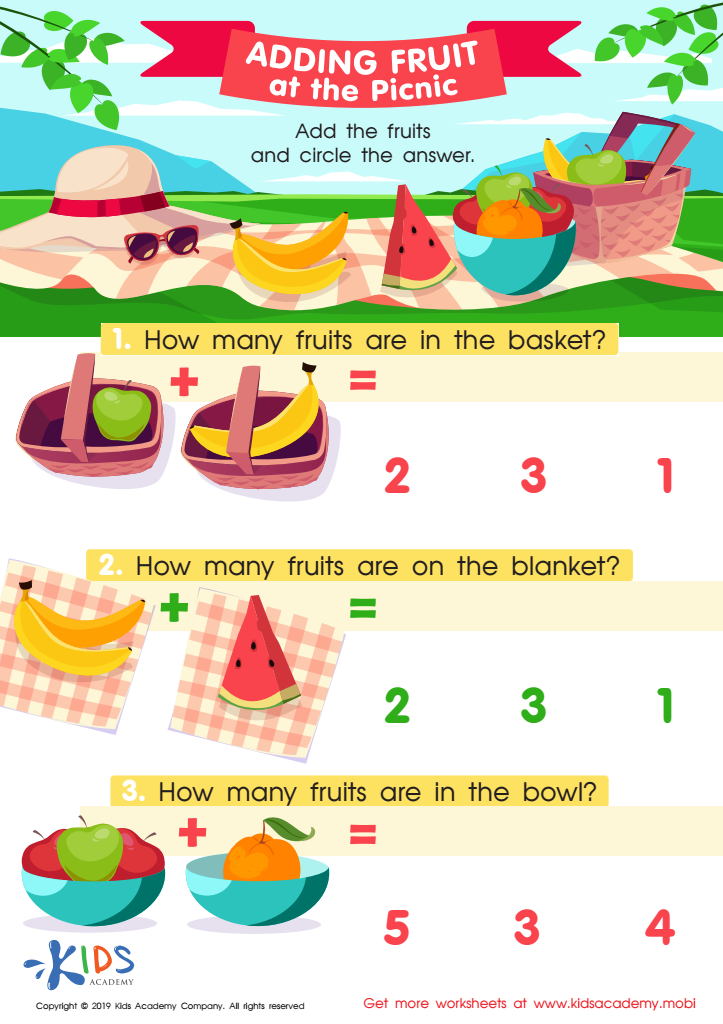
Adding Fruit at the Picnic Worksheet








Basic mathematics skills, particularly addition and subtraction, form the foundation of a child's academic journey and day-to-day problem-solving abilities. For children aged 3-8, understanding these fundamental concepts fosters cognitive development, promotes logical thinking, and builds confidence in handling numbers.
First, mastering addition and subtraction enhances a child's ability to grasp more complex mathematical concepts later on. Without a solid understanding of these basics, children may struggle with advanced topics, leading to a ripple effect in their overall learning progress.
Second, these skills are essential for everyday activities. Whether it’s sharing toys, calculating allowances, or dividing snacks, children frequently encounter scenarios that require basic arithmetic. Proficiency in addition and subtraction helps them navigate these situations independently and effectively.
Moreover, engaging with numbers at an early age promotes pattern recognition skills and critical thinking, contributing to their overall academic performance. It also encourages a positive attitude toward learning. Early successes in math can boost self-esteem, reduce math anxiety, and inspire a lifelong interest in the subject.
Parents and teachers play crucial roles in this developmental phase. By providing supportive learning environments and interactive, fun activities, they can make math accessible and enjoyable. Prioritizing basic mathematics skills prepares children for academic success and equips them with essential life skills.








