
Boost critical thinking Addition & Subtraction Worksheets for Ages 3-8
3 filtered results
Difficulty Level
Grade
Age
-
From - To
Subject
Activity
Standards
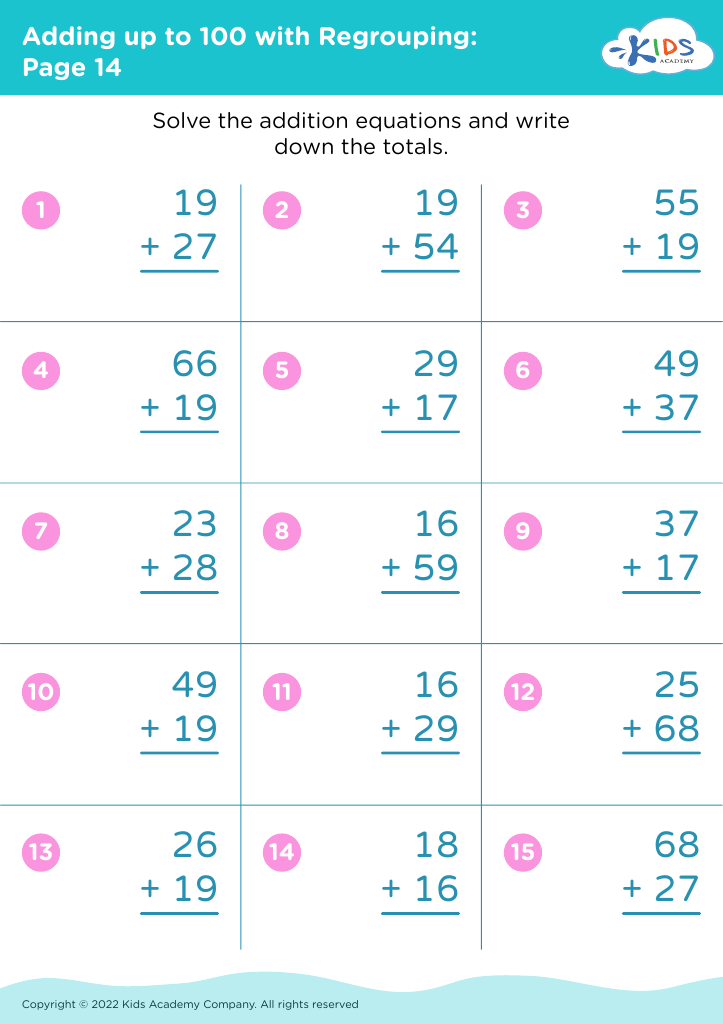
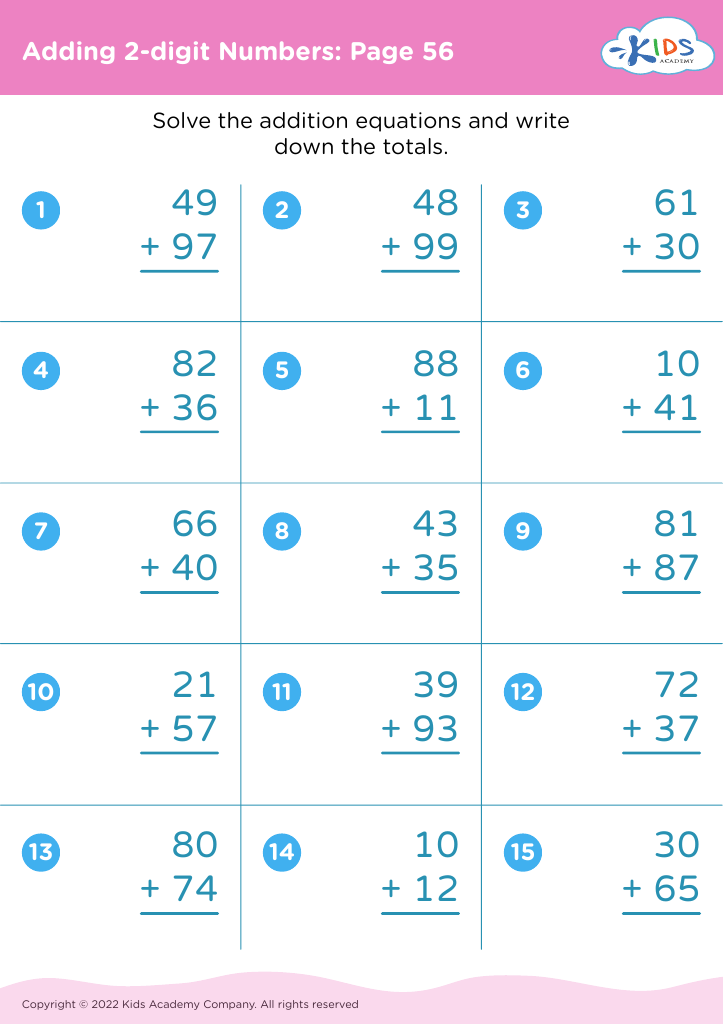
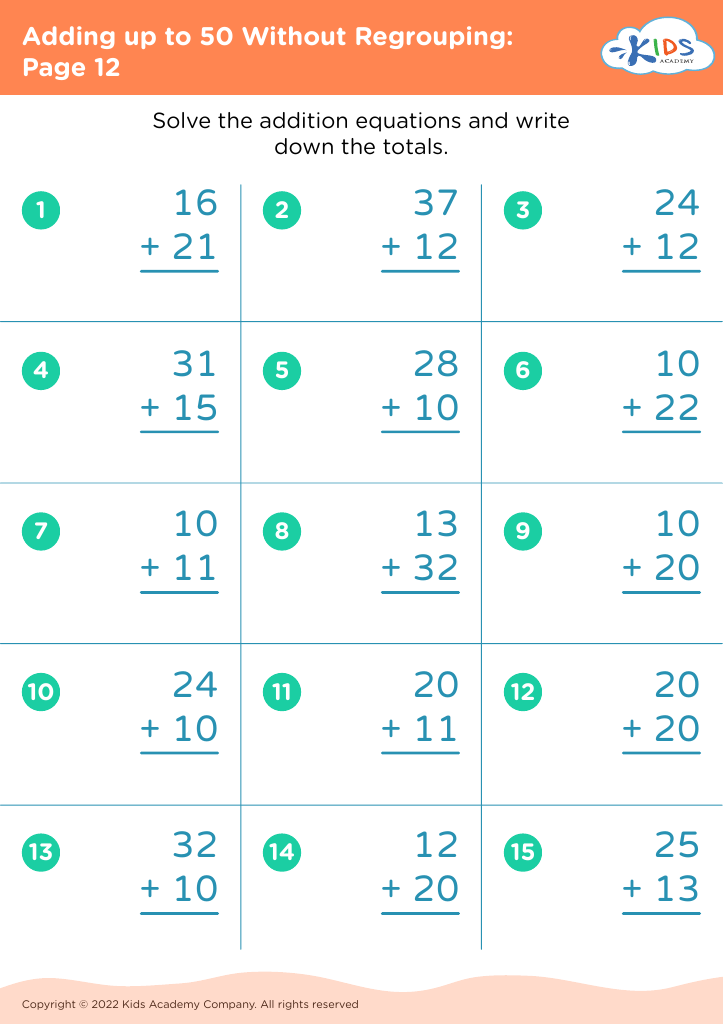
Enhance your child's critical thinking skills with our engaging Addition and Subtraction worksheets, specially designed for ages 3-8. These resources foster creativity and problem-solving through fun activities that challenge young minds. Each worksheet incorporates colorful illustrations and relatable scenarios, encouraging children to apply their math skills in real-life situations. Our carefully crafted exercises promote logical reasoning, enabling kids to explore various strategies for solving problems while boosting their confidence in mathematics. Perfect for teachers and parents alike, these critical thinking-focused worksheets make learning enjoyable and effective. Start building a strong foundation in math today and watch your child's skills soar!
Favorites
With answer key
Interactive
Join Kids Academy for Free
Who is primarily going to use this learning content?








Parents and teachers play a crucial role in fostering critical thinking skills in young learners, particularly in foundational areas like addition and subtraction. Encouraging critical thinking in math helps children develop problem-solving abilities that extend beyond numbers, laying the groundwork for lifelong learning. For ages 3-8, this is vital as cognitive skills are rapidly developing.
Critical thinking in addition and subtraction involves exploring different ways to approach problems, encouraging children to ask questions, and teaching them not just how to find the correct answer, but why that answer makes sense. When parents and teachers prioritize these skills, they help children understand mathematical concepts, foster a love for learning, and build confidence in their abilities.
Moreover, developing critical thinking skills equips children with the ability to tackle more complex problems in the future across various subjects. By learning to reason and analyze situations, children can become more independent thinkers who are prepared for academic challenges. Ultimately, investing in critical thinking in early education enriches a child's overall intellectual growth and prepares them for success in school and beyond. Collaboration between parents and educators in this effort is essential to reclaiming the joy and curiosity in learning mathematics.








