Fraction representation Addition & Subtraction Worksheets for Ages 3-8
3 filtered results
-
From - To
Our "Fraction Representation Addition & Subtraction Worksheets" are specially designed for children ages 3-8. These engaging worksheets make learning fun and effective by helping young learners understand and master fractions through addition and subtraction. With colorful illustrations and easy-to-follow instructions, kids can enhance their math skills while building a strong foundation in early numeracy. Ideal for both classroom and home use, each worksheet aims to develop critical thinking and problem-solving abilities. Foster a love for mathematics in your child with our expertly crafted educational resources from Kids Academy!
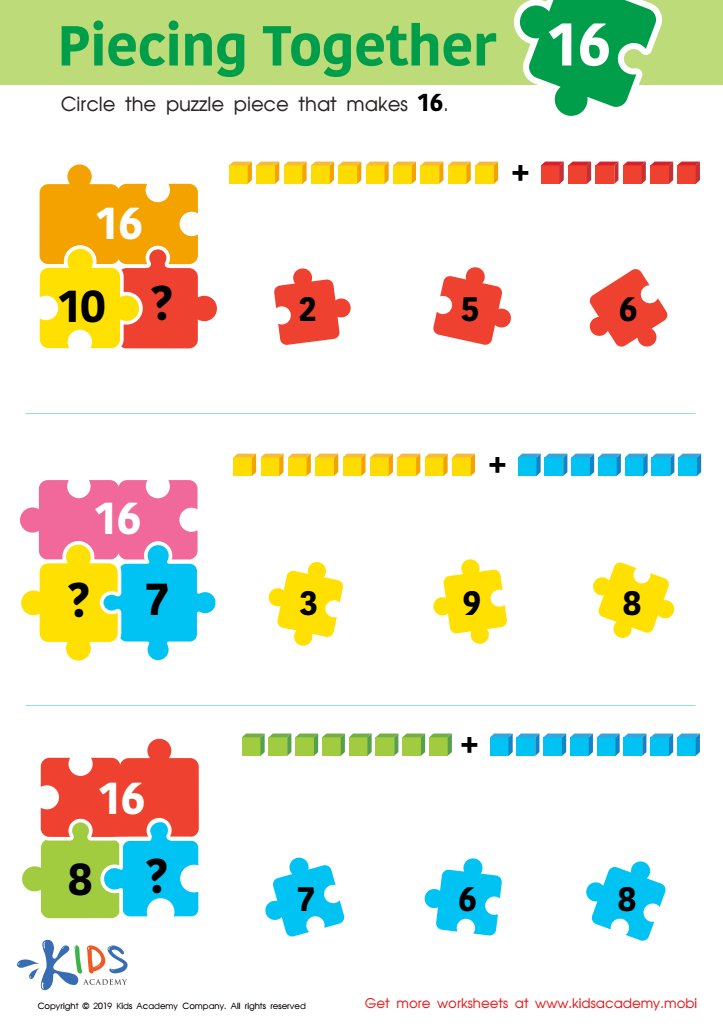
Piecing Together 16 Worksheet
 Assign to My Students
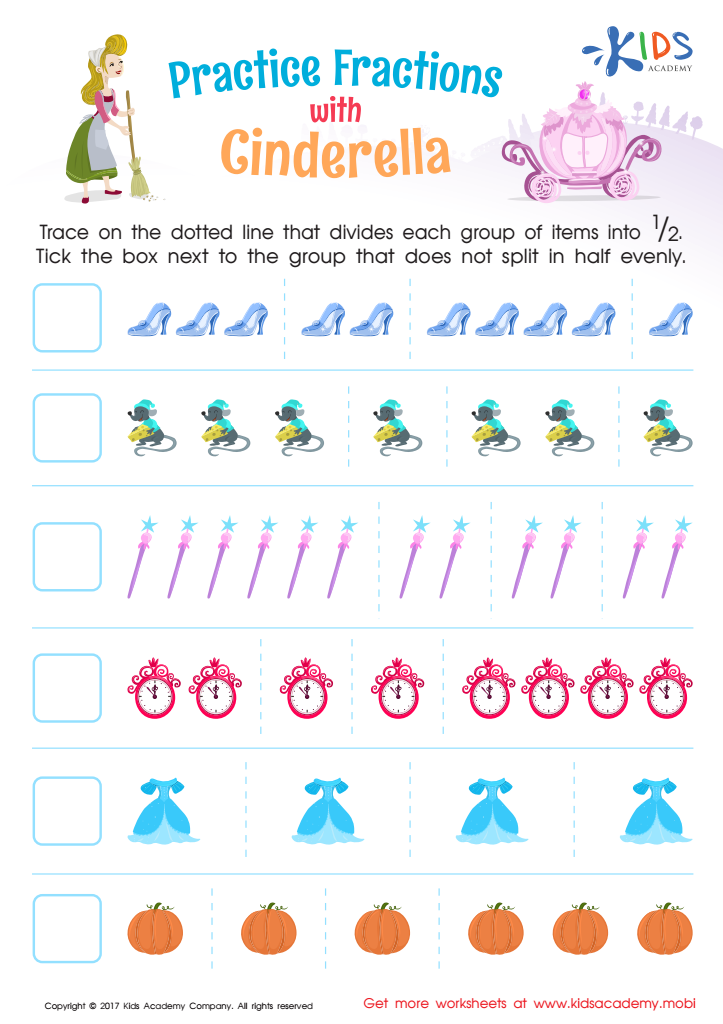
Fractions: Cinderella Printable








Understanding fraction representation and the concepts of addition and subtraction is crucial for children aged 3-8 because it lays the foundation for mathematical literacy and problem-solving skills essential in daily life and advanced studies. Fractions introduce the idea of part-whole relationships that are pivotal in understanding division, dealings with measurements, and comparisons.
At this developmental stage, children grasp basic concepts through visual, tactile, and engaging activities. Using physical objects like pie charts, building blocks, or cut-out shapes, teachers and parents can nurture the child’s ability to divide, share, and combine parts effectively. Encouraging the use of vocabulary such as "whole", "half", "quarters", etc., solidifies these abstract concepts into tangible understanding.
Practicing fraction addition and subtraction enhances skills in mental math, heightens critical thinking, and develops focus on detail. Children also build the competence to approach complex word problems with confidence.
Moreover, a sturdy grasp of fractions during these formative years ensures a smoother transition into more advanced mathematics topics later on. Cumulative understanding ripples into science, technology, engineering, arts, and mathematics (STEAM) fields, making early investment by teachers and parents in these areas integral. This strong educational bedrock ultimately supports children’s academic success and problem-solving in real-world applications.








