Improving mathematical skills Addition & Subtraction Worksheets for Ages 3-8
4 filtered results
-
From - To
Enhance your child's mathematical abilities effortlessly with our engaging Addition & Subtraction Worksheets tailored for ages 3-8. Each worksheet is expertly designed to build foundational math skills, boost confidence, and make learning fun. Through a variety of interactive activities, puzzles, and problems, children explore key concepts in addition and subtraction, ensuring a solid grasp of early math. Perfect for supplementing school curriculum, our resources cater to all learning styles and paces. Start nurturing a lifelong love for mathematics today with appealing and educational worksheets from Kids Academy. Visit us and watch your young learner thrive and excel!
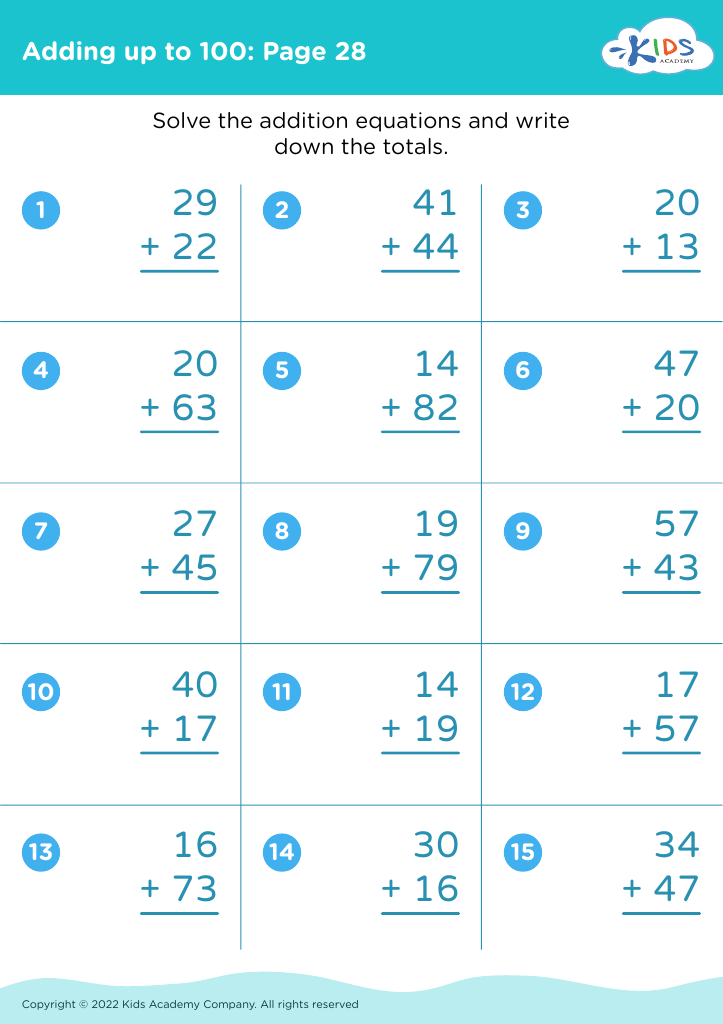
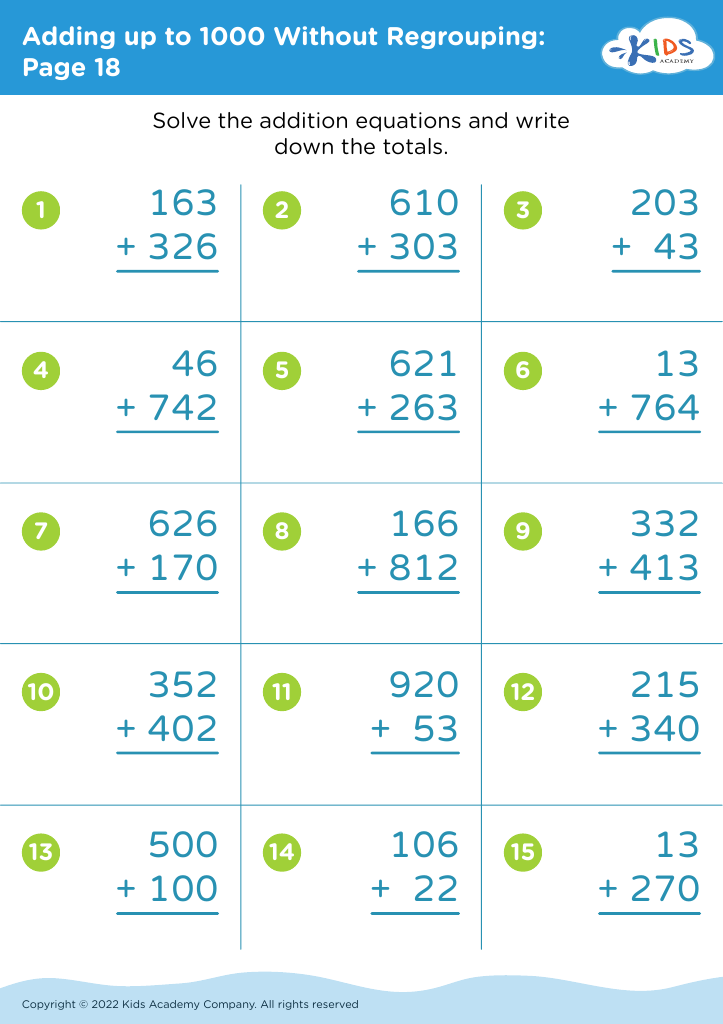
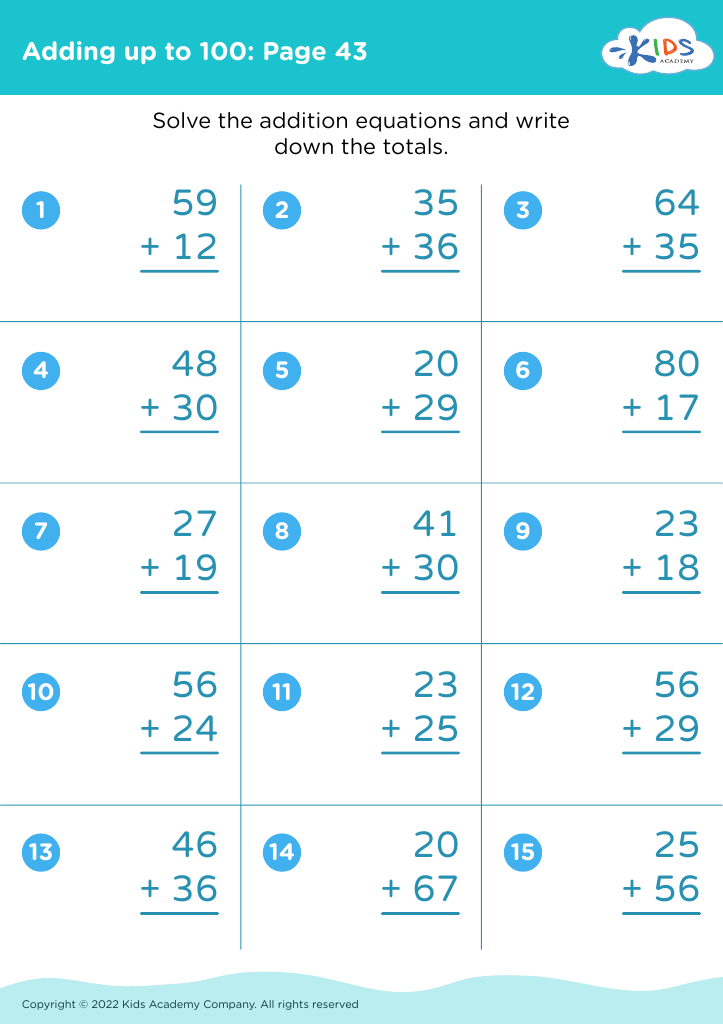
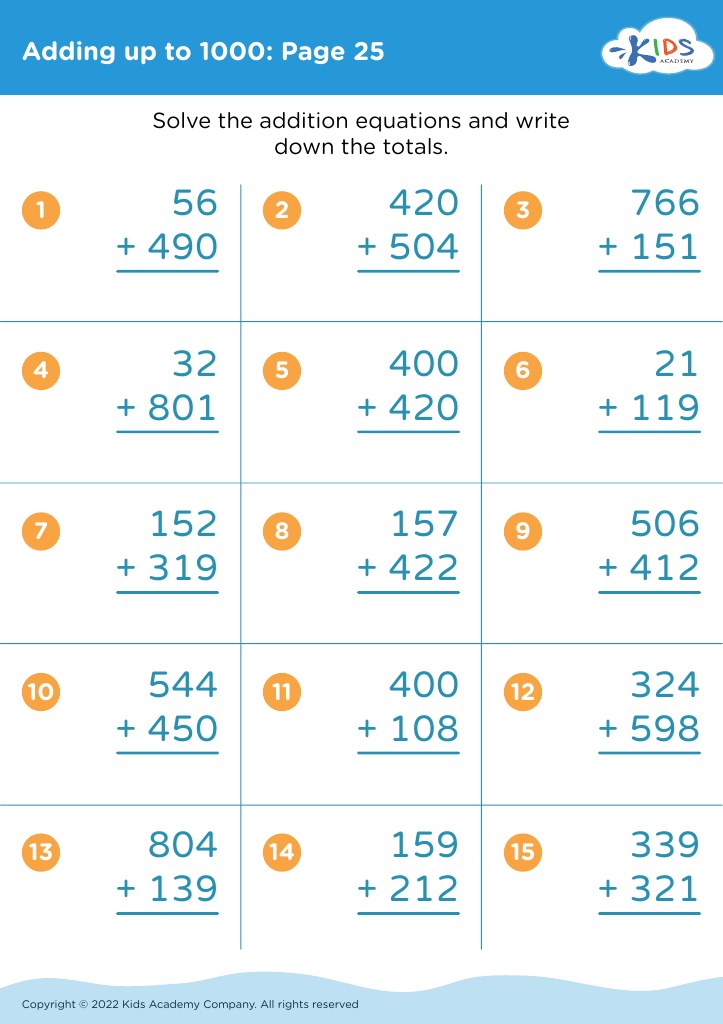








Improving mathematical skills, particularly addition and subtraction, for children aged 3-8 is crucial for several reasons. First, at this developmental stage, young minds are incredibly absorbent, meaning foundational skills acquired now set the stage for future learning. A solid grasp of addition and subtraction equips children with the basic building blocks essential for more complex mathematical concepts they will encounter later in their educational journey.
Moreover, these skills extend beyond the classroom. Young children use math every day, from splitting snacks to sharing toys. Understanding addition and subtraction fosters problem-solving capabilities and logical thinking, which are critical for daily decision-making and cognitive development.
Additionally, early mathematical competence is linked to greater confidence in the subject. Children who master early math skills typically view mathematics more favorably, mitigating future math anxiety or aversion. Engaging in math early on helps kids develop perseverance and the mindset that challenges are manageable.
Finally, these skills help bridge educational disparities. Early proficiency in foundational math can close achievement gaps by ensuring all students are prepared for standardized curricula and assessments, promoting equitable academic progress. Thus, parents and teachers should prioritize enhancing addition and subtraction abilities to foster lifelong learning and achievement.








