Practice writing numbers Addition & Subtraction Worksheets for Ages 3-8
6 filtered results
-
From - To
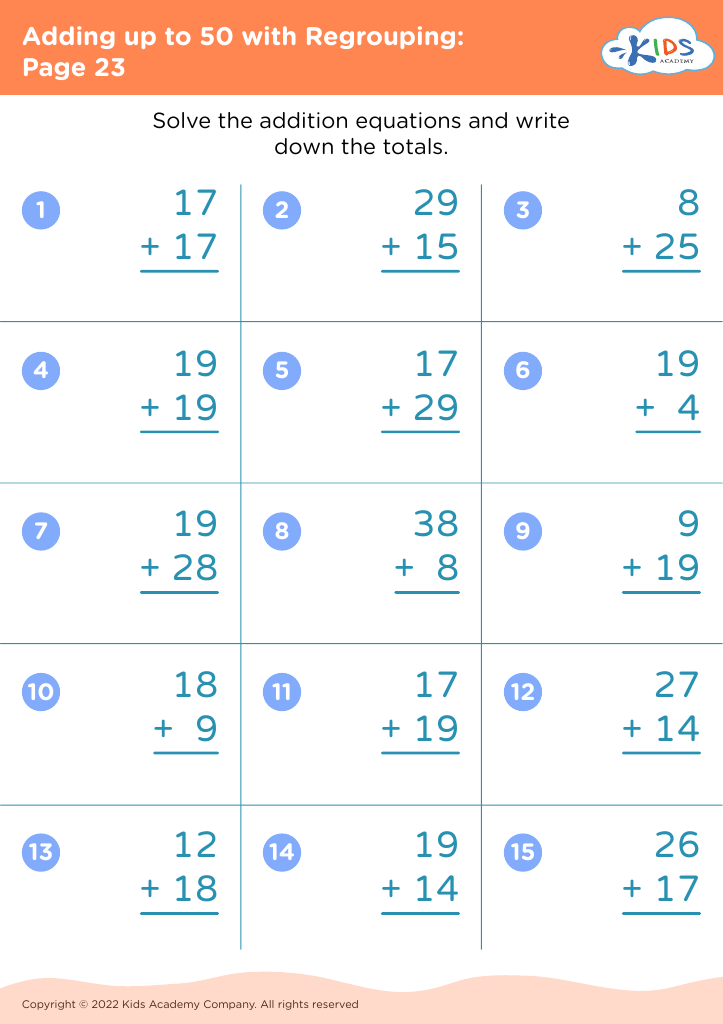
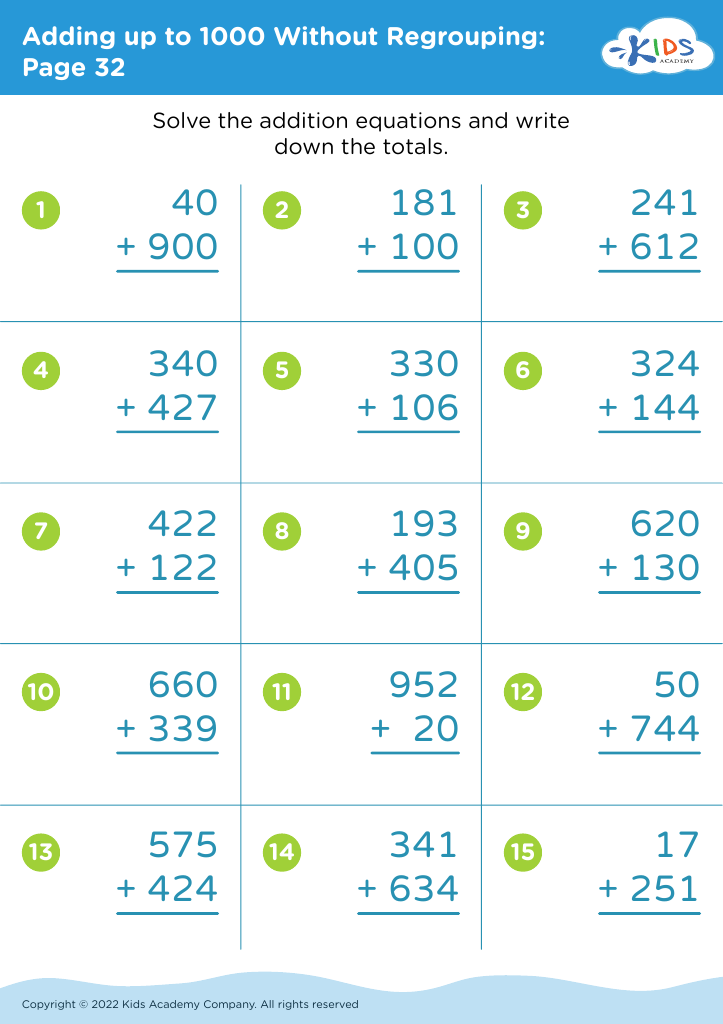
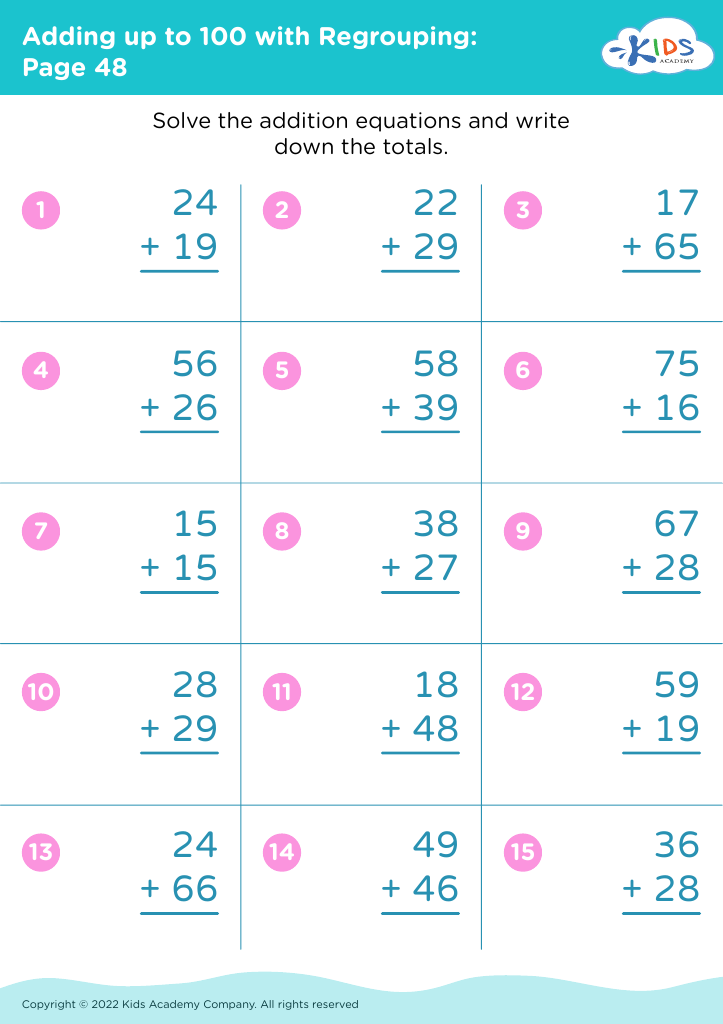
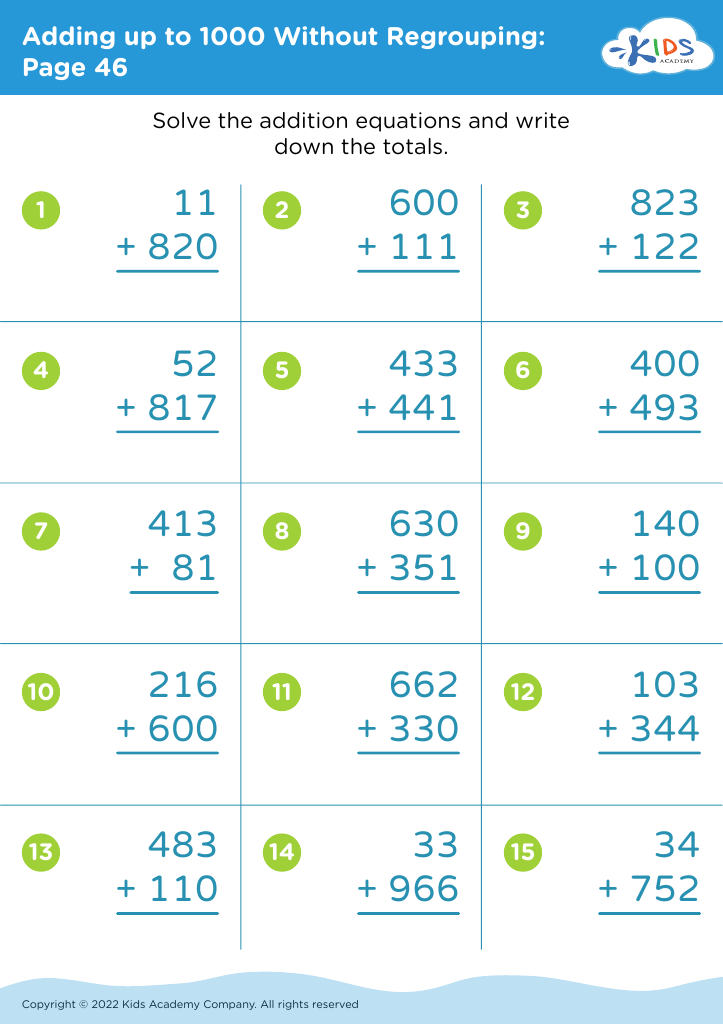
Introducing our Practice Writing Numbers Addition & Subtraction Worksheets for Ages 3-8! Perfect for early learners, these worksheets are designed to strengthen number writing skills while mastering basic addition and subtraction concepts. Engaging and educational, our printables feature fun illustrations, clear instructions, and plenty of practice exercises that will keep kids motivated and eager to learn. Ideal for parents, teachers, and homeschoolers, these resources help children build a strong mathematical foundation, develop fine motor skills, and boost their confidence in math. Bring the joy of learning into your home or classroom with our expertly crafted worksheets!
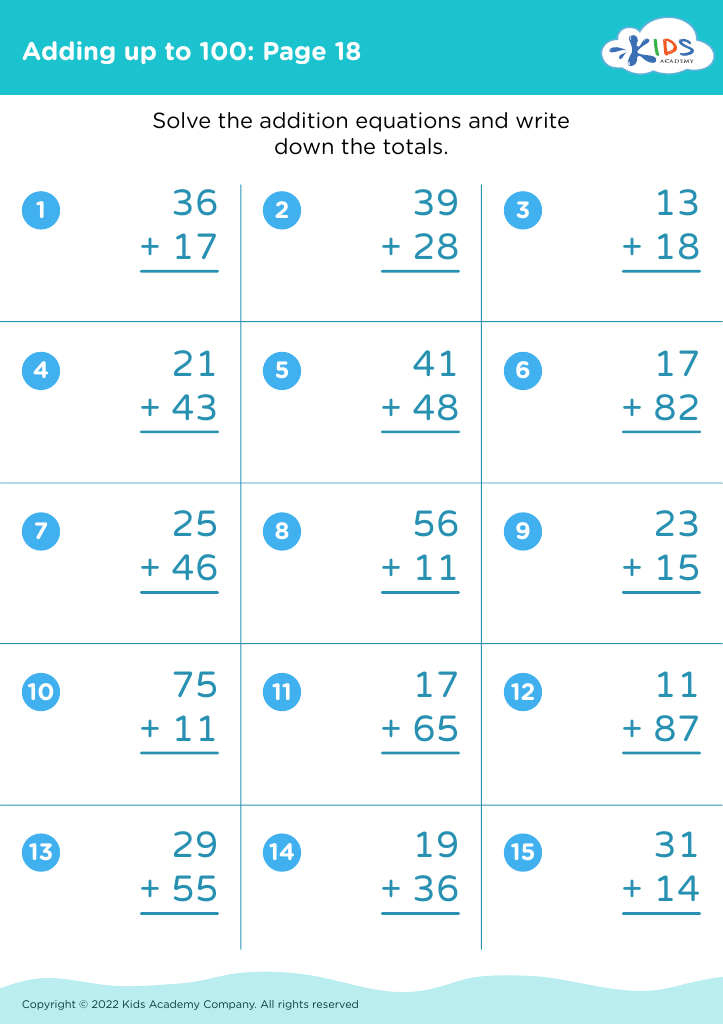
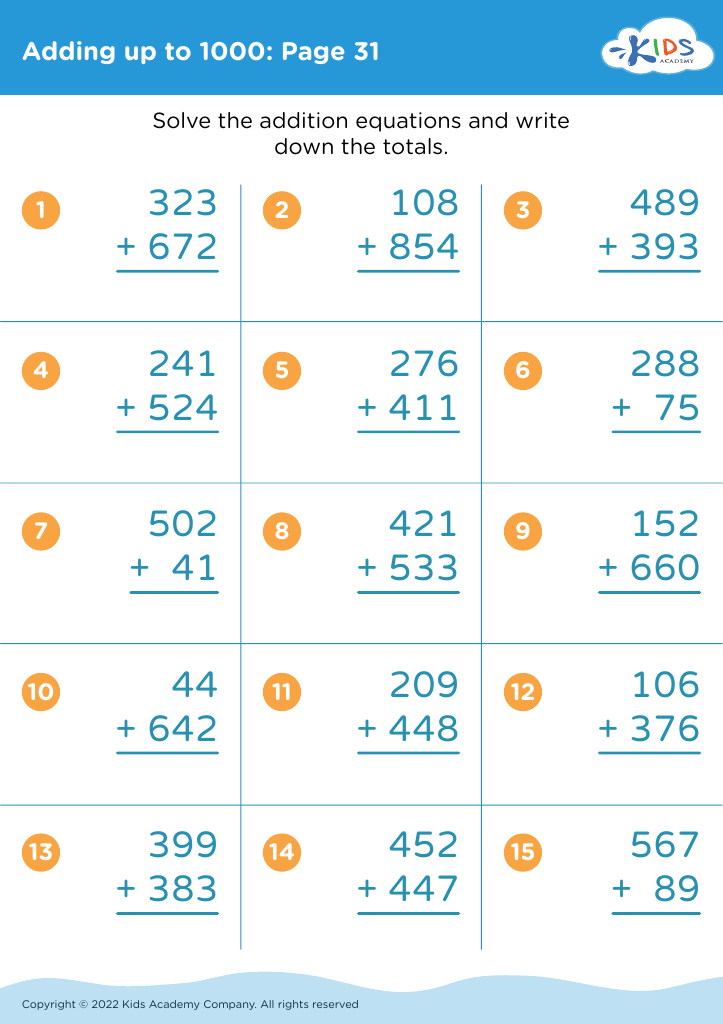








Ensuring that children aged 3-8 practice writing numbers, addition, and subtraction is vital for foundational math skills and overall cognitive development. For parents and teachers, fostering this early math proficiency can set the stage for future academic success and practical life competence.
First, writing numbers helps children understand numeric representation and sequencing, laying the groundwork for more advanced mathematical concepts. Recognizing and being able to write numbers fluently are fundamental skills that underpin all further education in math.
Moreover, practicing addition and subtraction enhances problem-solving abilities and critical thinking. These basic arithmetic skills build a concrete understanding of operations and set the stage for more complex math topics like multiplication, division, and fractions. Early proficiency in addition and subtraction fosters confidence, reducing math-related anxiety that can develop in later years.
In addition, developing these skills at an early age helps improve overall cognitive development. Engaging in math activities promotes logical thinking, pattern recognition, and attention to detail.
For teachers, integrating these exercises into the curriculum can create engaging, interactive, and diverse learning experiences that cater to various learning styles. For parents, ensuring consistent practice at home can reinforce what is being taught in school, establishing a collaborative effort that supports the child’s growth. This collective focus aids in creating well-rounded, capable, and confident learners who are prepared for future academic challenges.








