Recognizing numbers Addition & Subtraction Worksheets for Ages 3-8
5 filtered results
-
From - To
Unlock your child's mathematical potential with our "Recognizing Numbers: Addition & Subtraction Worksheets for Ages 3-8." Perfectly tailored for young learners, these engaging worksheets aim to build a solid foundation in number recognition, addition, and subtraction. Through fun and interactive exercises, children enhance their counting skills and develop essential arithmetic concepts. Designed by experts, our worksheets ensure appropriate difficulty levels, making learning both effective and enjoyable. Ideal for both classroom use and at-home practice, these resources are the perfect supplement to foster math confidence in pre-K to early elementary students. Explore, learn, and excel with us!
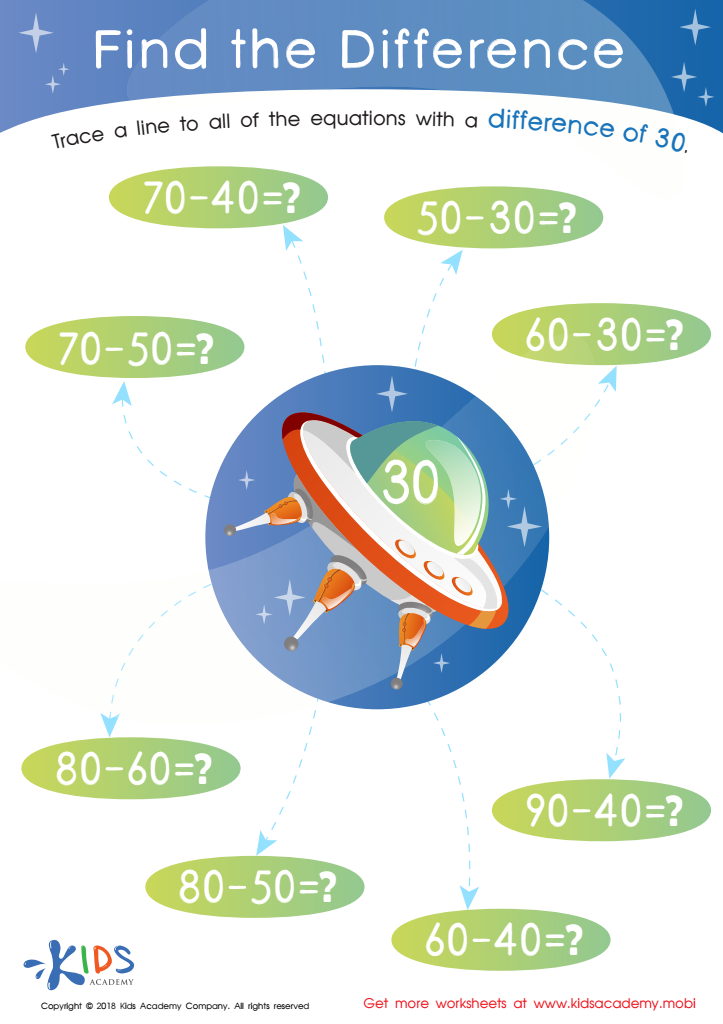
Find The Difference Worksheet
 Assign to My Students
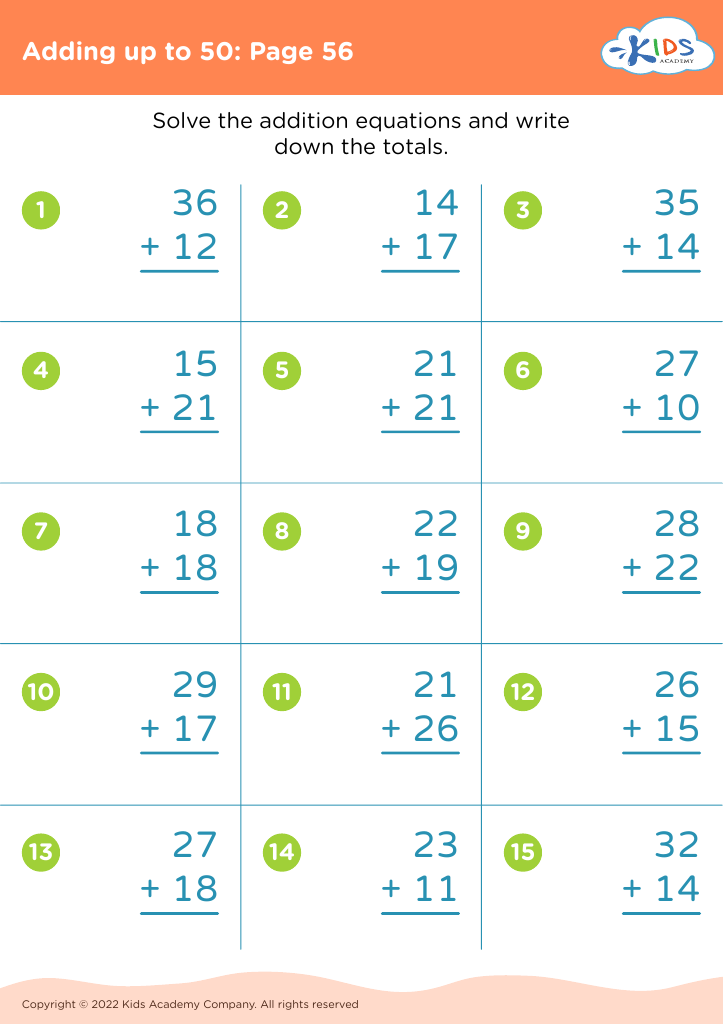
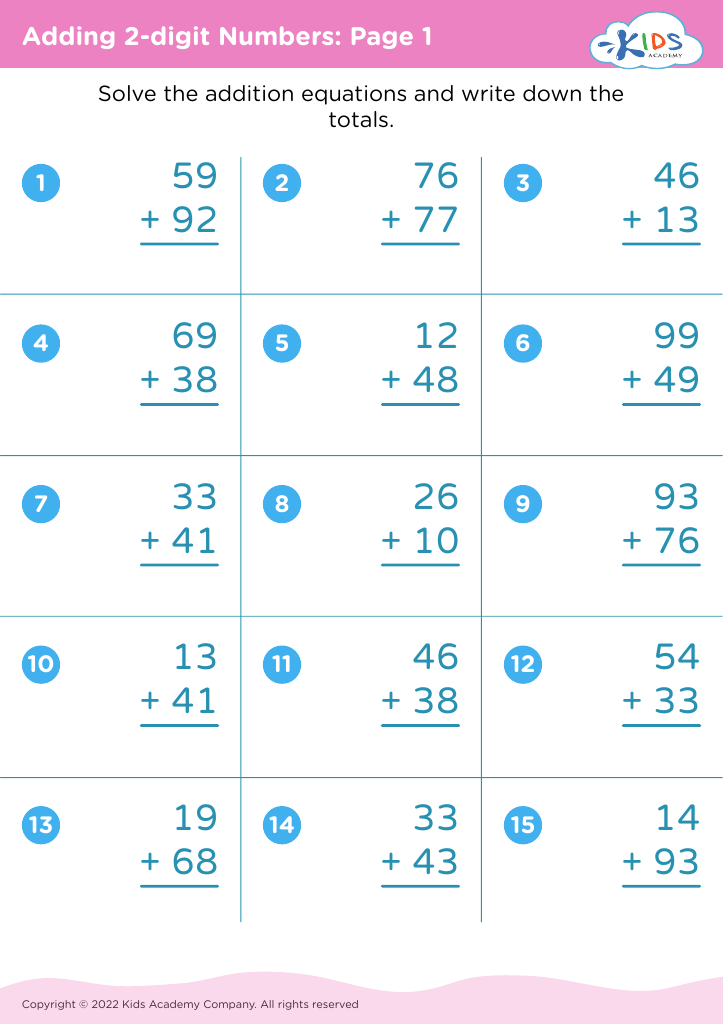
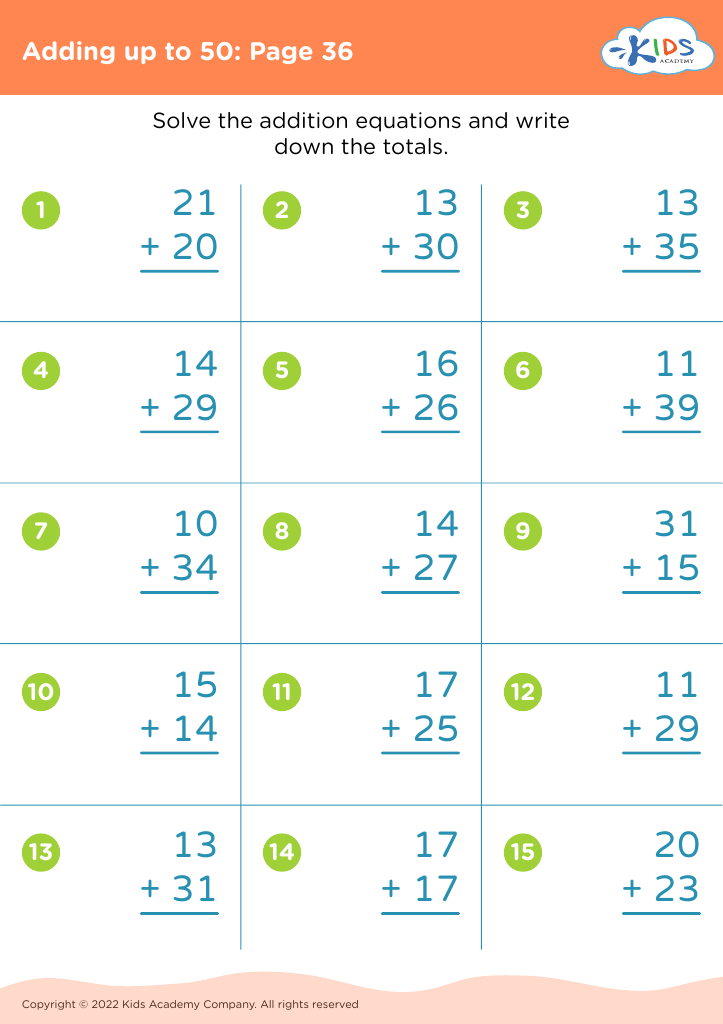
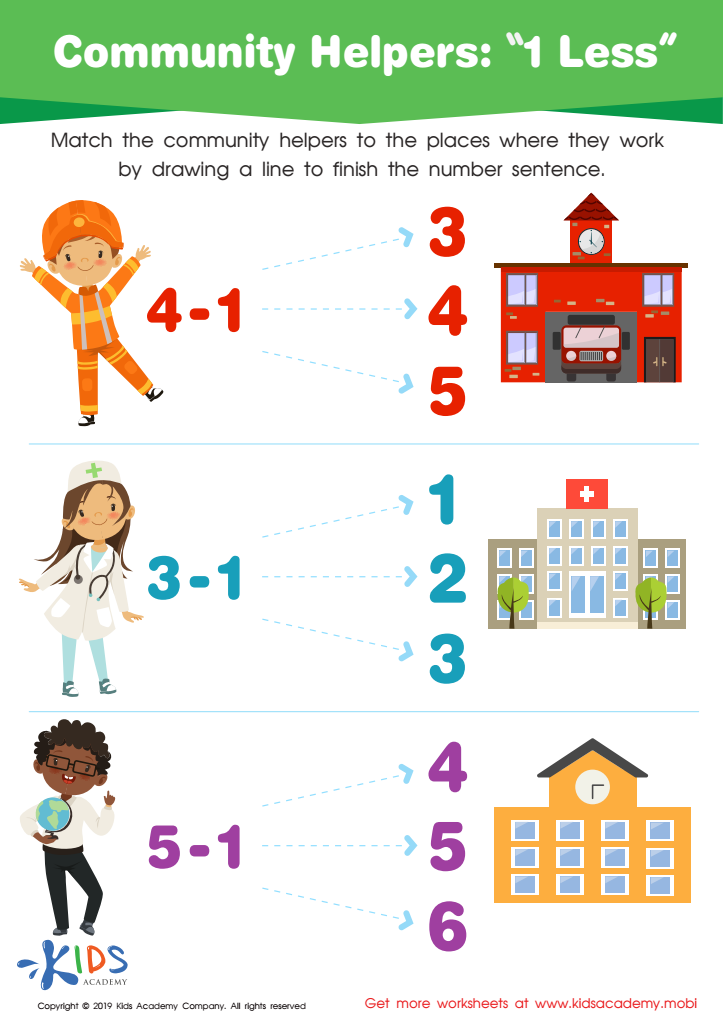
Community Helpers: 1 less Worksheet








Recognizing numbers and understanding basic addition and subtraction are foundational skills critical for ages 3-8. When children grasp these concepts early on, they build essential cognitive skills, forming the basis for future mathematical learning. Recognizing numbers supports their ability to identify, compare, and order numerical information, which is vital for everyday tasks such as counting objects, understanding quantities, and following patterns.
Addition and subtraction reinforce problem-solving capabilities and logical thinking. These operations are more than just arithmetic; they introduce young minds to concepts of more and less, combining elements, and breaking down groups. Such skills are not isolated; they integrate into daily life activities like sharing toys, preparing food, or calculating change. This practical application is crucial for developing life skills and independent thinking.
Moreover, fostering numerical literacy at an early age can boost a child’s confidence and interest in learning. Positive early experiences with math can transform into a lifelong affection for subject matter, making future learning more approachable and less intimidating. For parents and teachers, supporting these early math skills is an investment in a child’s academic success, opening doors to more advanced education and diverse career opportunities in the future. Investing in numeracy is investing in a child’s holistic development, equipping them for a brighter, more capable future.








