Understanding equality Addition & Subtraction Worksheets for Ages 3-8
4 filtered results
-
From - To
Introduce young learners to the foundational concept of equality in addition and subtraction with our engaging worksheets designed for ages 3-8. These activities from Kids Academy ensure that children grasp the balance between numbers in simple equations through fun, interactive exercises. The thoughtfully crafted problems help kids visualize and comprehend that each side of an equation represents the same value, fostering their math skills and logical thinking. Perfect for early learners, these printables are a great addition to both classroom learning and at-home practice, setting the stage for future mathematical success. Download today and watch your child’s confidence grow!
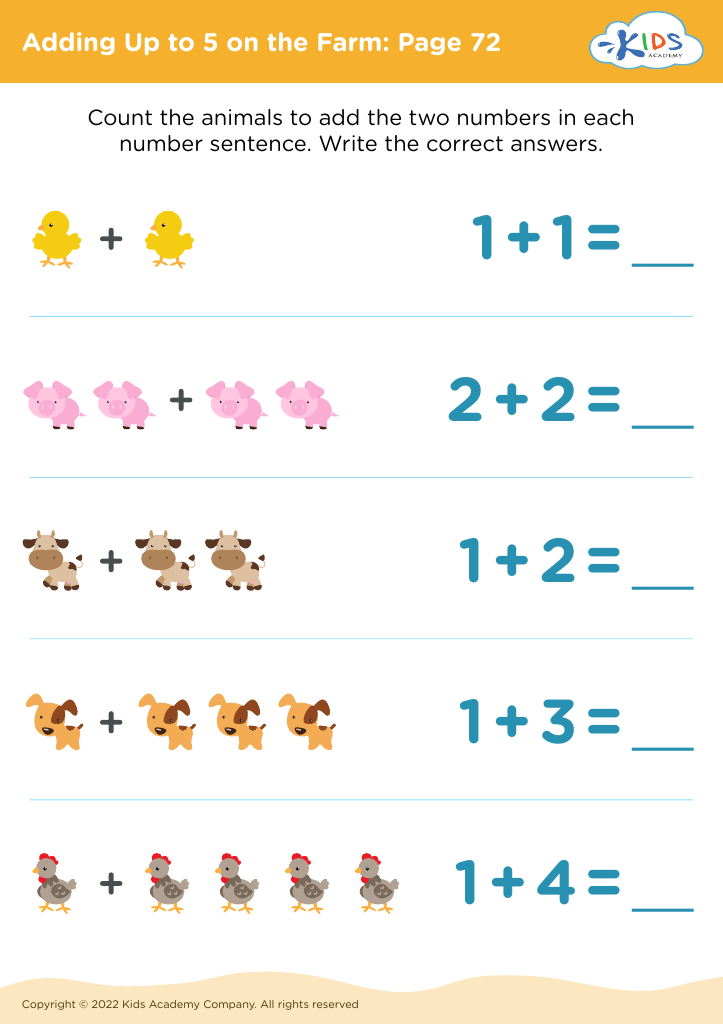
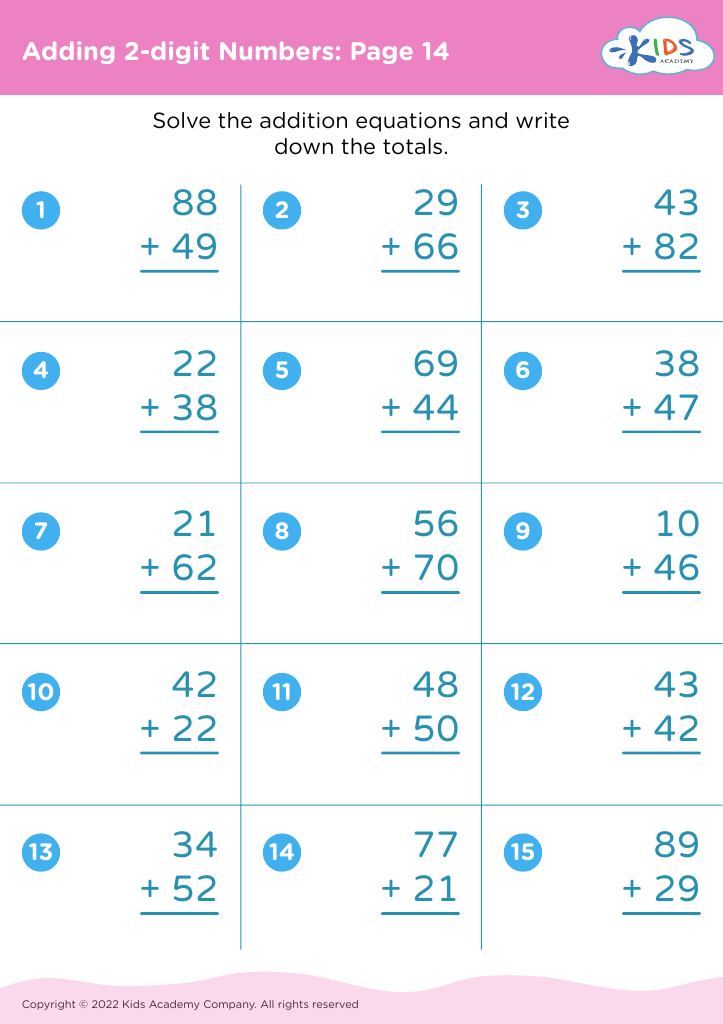
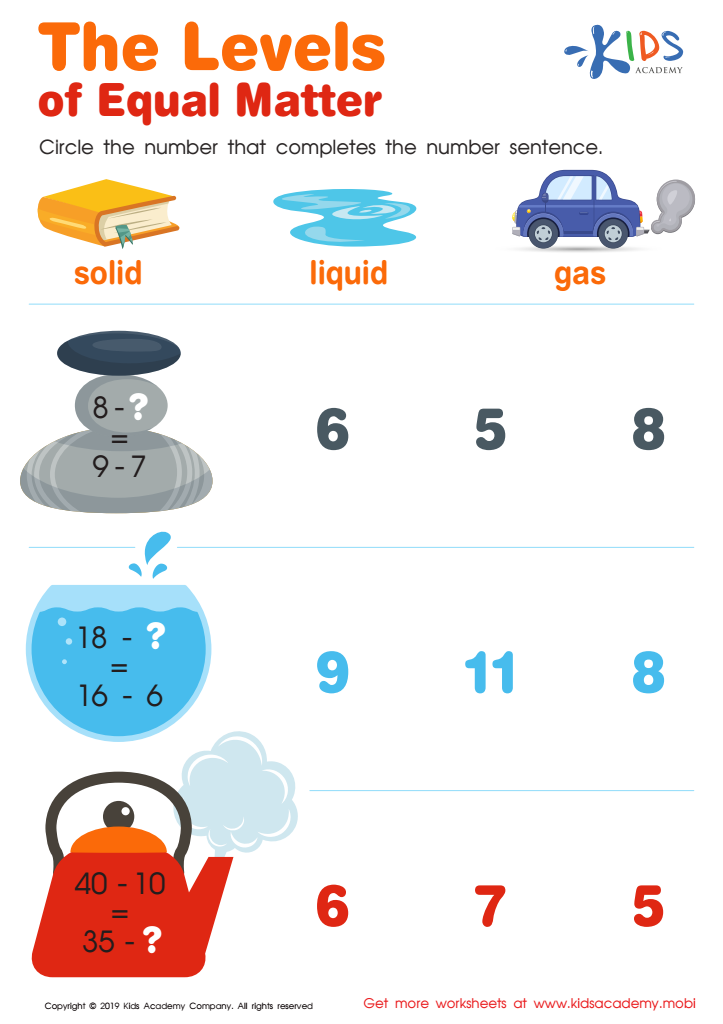
The Levels of Equal Matter Worksheet
 Assign to My Students








Understanding basic mathematical concepts like equality, addition, and subtraction is fundamental for young children aged 3-8 because it lays the groundwork for their cognitive development and future academic success. At this developmental stage, children are highly receptive to learning and their brains are still forming critical thinking pathways. By grasping the concepts of equality, they learn the basis of fairness and balance, which aids in problem-solving and logical reasoning.
Active participation in addition and subtraction enhances children's numerical literacy. These skills are not only vital for more advanced math but also for everyday life activities like counting toys, sharing snacks evenly, or understanding time. Early exposure to these arithmetic operations helps children to build confidence and reduces math anxiety as they progress academically.
Moreover, fostering these skills in early childhood education stimulates brain parts responsible for memory, attention, and processing, contributing to overall cognitive agility. Parents and teachers play a crucial role in making learning engaging through hands-on activities and real-world examples. Understanding these fundamental concepts encourages curiosity and a positive attitude towards learning. By caring about these early math skills, parents and teachers take an active part in shaping a child's ability to adapt, analyze, and thrive in our numerically-driven world.








