Understanding number patterns Addition & Subtraction Worksheets for Ages 3-8
3 filtered results
-
From - To
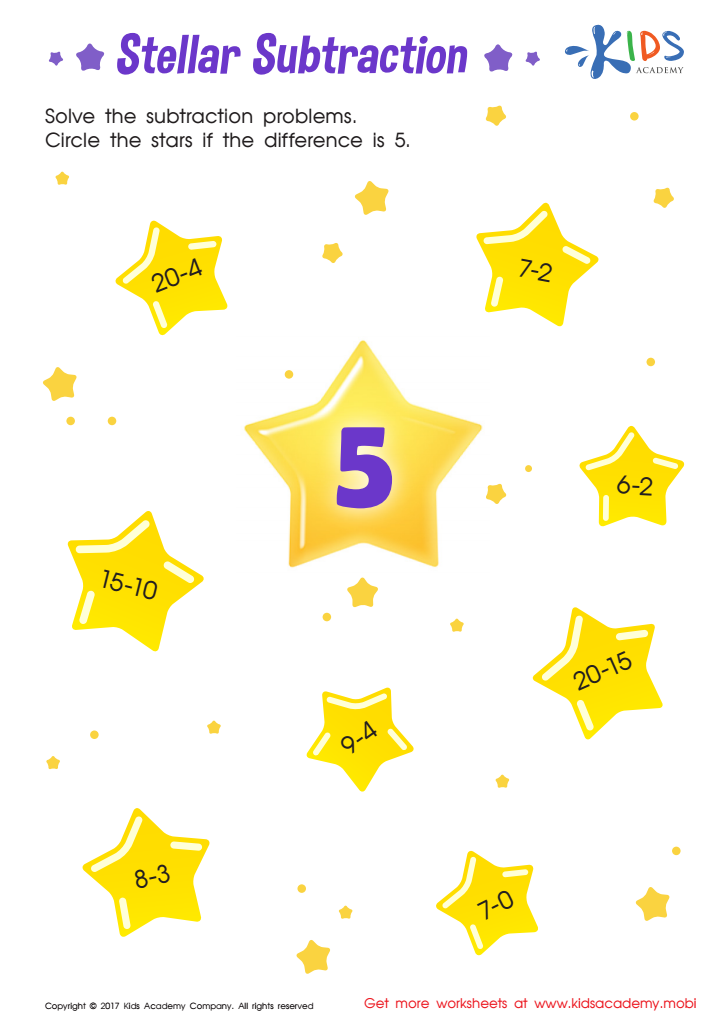
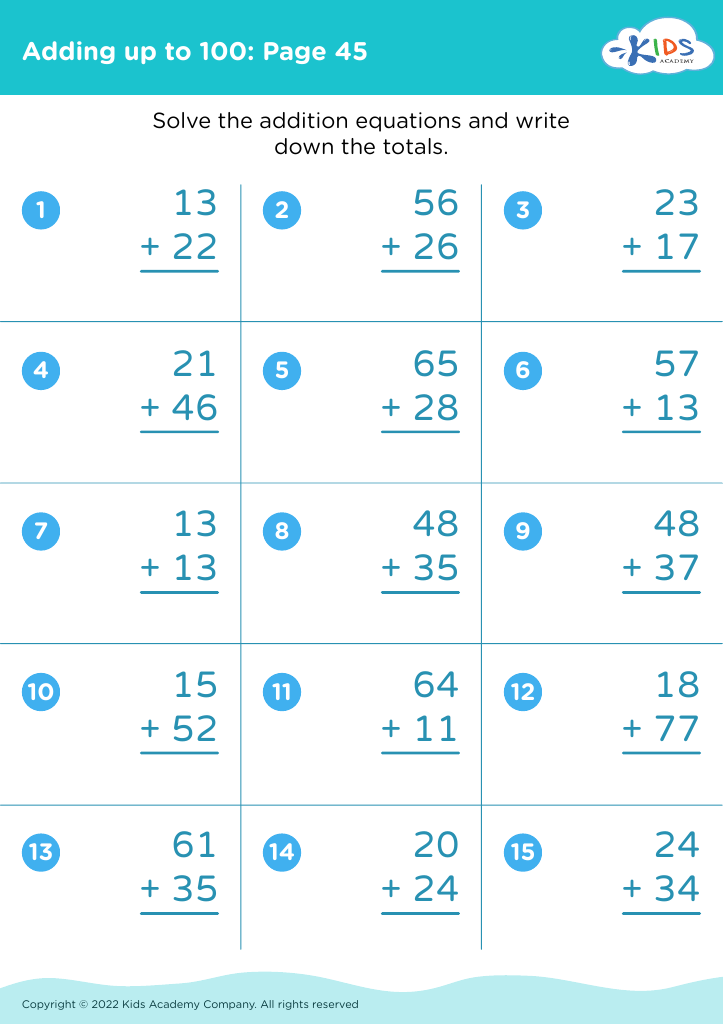
Our "Understanding Number Patterns Addition & Subtraction Worksheets for Ages 3-8" are designed to make learning math fun and accessible. These engaging worksheets help young learners build foundational skills in recognizing and understanding number patterns through both addition and subtraction exercises. Perfect for classroom and home use, each worksheet has age-appropriate content, ensuring that children remain stimulated and challenged as they develop critical thinking and problem-solving skills. Foster a love for math in your child with our expertly crafted resources, paving the way for their future academic success. Download now and start exploring the world of number patterns!
 Assign to My Students
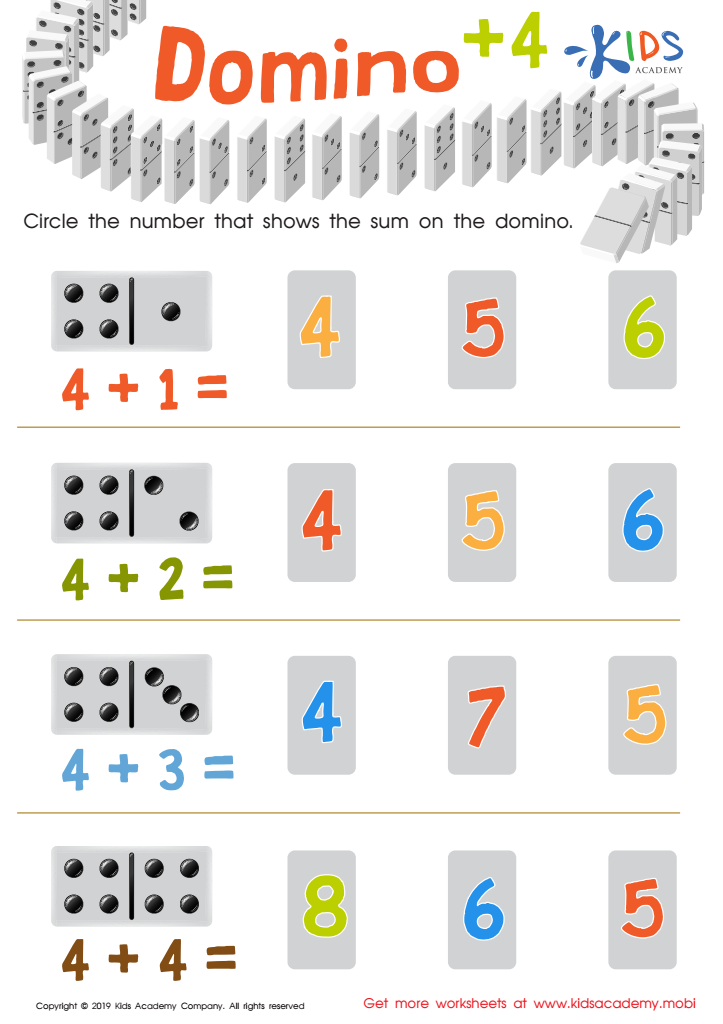
Domino +4 Worksheet








Understanding number patterns and basic arithmetic like addition and subtraction is essential for children ages 3-8, as it lays the foundation for future math skills. During these early years, children's brains are highly receptive to learning new concepts, and grasping number patterns can significantly boost their cognitive development. Recognizing patterns helps children predict outcomes and understand relationships between numbers, which is crucial for all higher-level math.
Introducing addition and subtraction at a young age enhances problem-solving skills and logical thinking. These operations are not just academic exercises but practical life skills used in everyday activities, such as counting money or dividing snacks. As children become confident in adding and subtracting, they build a positive relationship with math, reducing anxiety and increasing their likelihood of enjoying the subject as they grow older.
For parents and teachers, focusing on these foundational skills can ensure that children are well-prepared for more complex math topics in the future. Educational activities that promote number patterns and basic arithmetic can be fun and engaging, providing a stimulating learning environment. Ultimately, these skills form the bedrock of mathematical literacy, empowering children to succeed academically and develop critical thinking skills that will benefit them throughout their lives.








