Understanding sequence Addition & Subtraction Worksheets for Ages 3-8
4 filtered results
-
From - To
"Understanding Sequence Addition & Subtraction Worksheets for Ages 3-8" are specially designed to foster early math skills in young learners. These engaging, printable worksheets from Kids Academy help children grasp the concept of numerical sequence while practicing basic addition and subtraction. Tailored to kids aged 3-8, these activities employ colorful illustrations and fun exercises to make learning enjoyable and effective. Parents and teachers will find these resources invaluable for strengthening foundational math skills, promoting logical thinking, and boosting confidence in young students. Start your child's math journey today with these comprehensive and interactive worksheets!
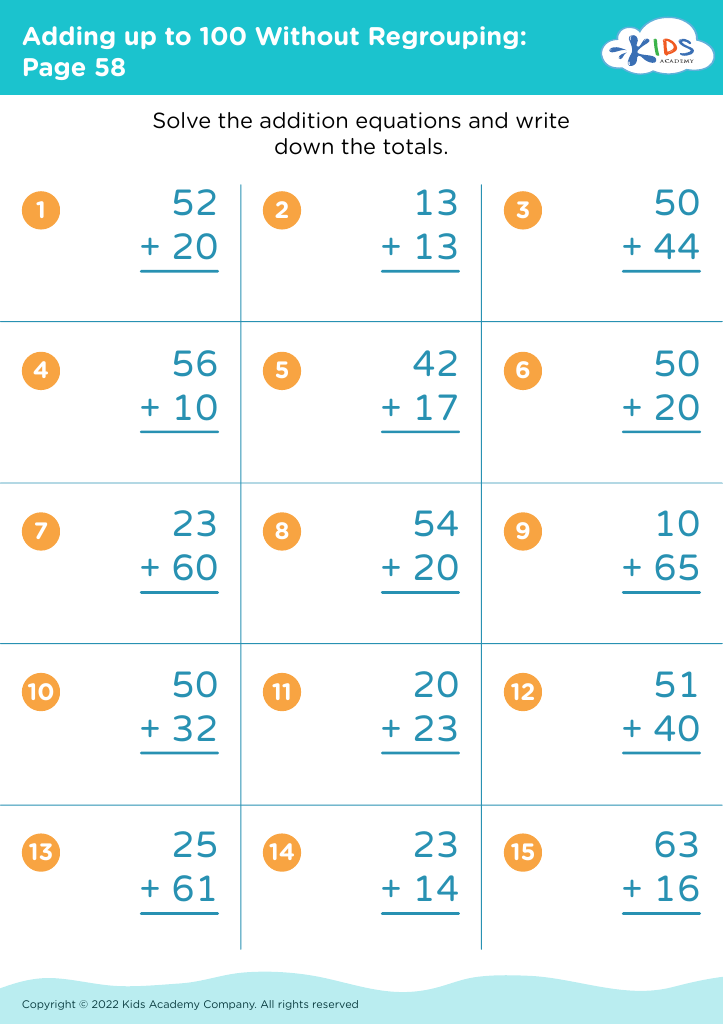
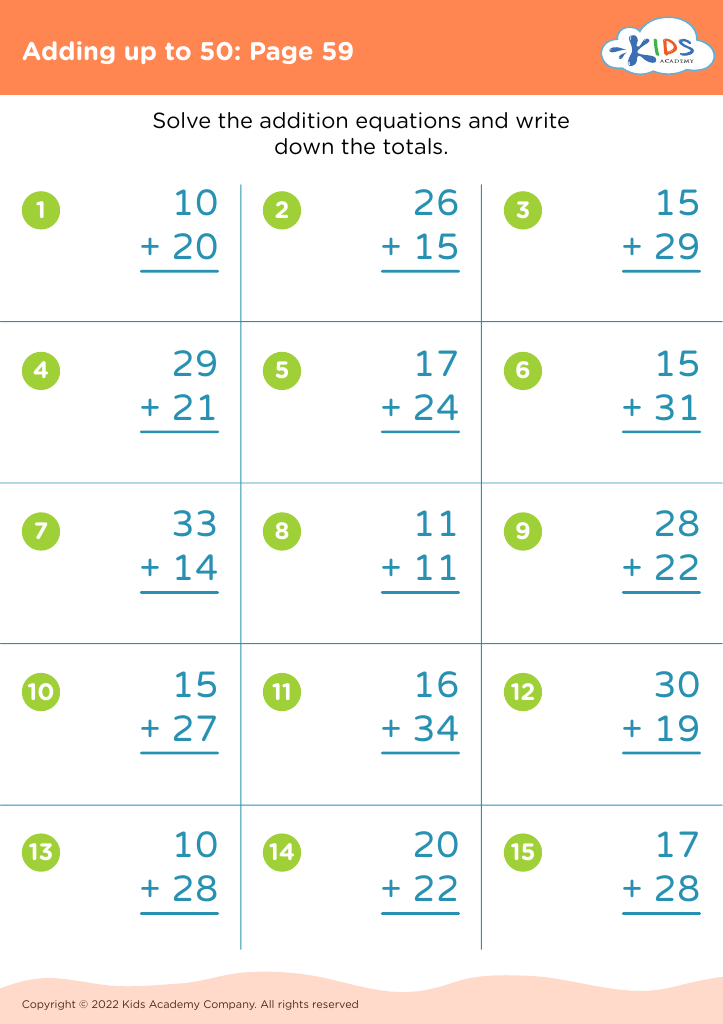
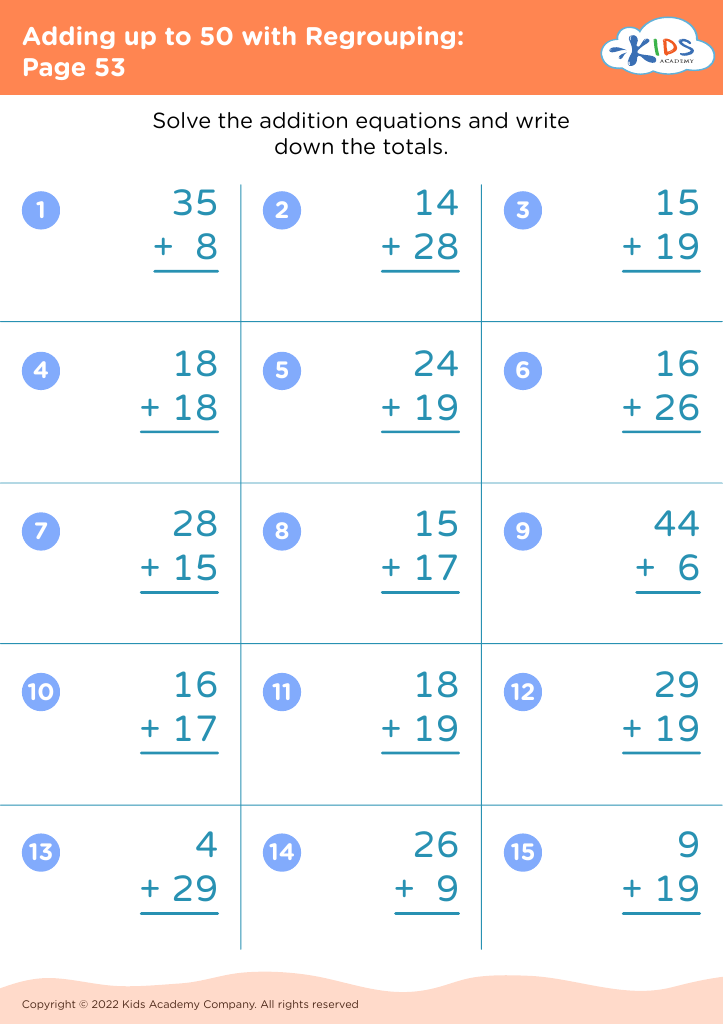
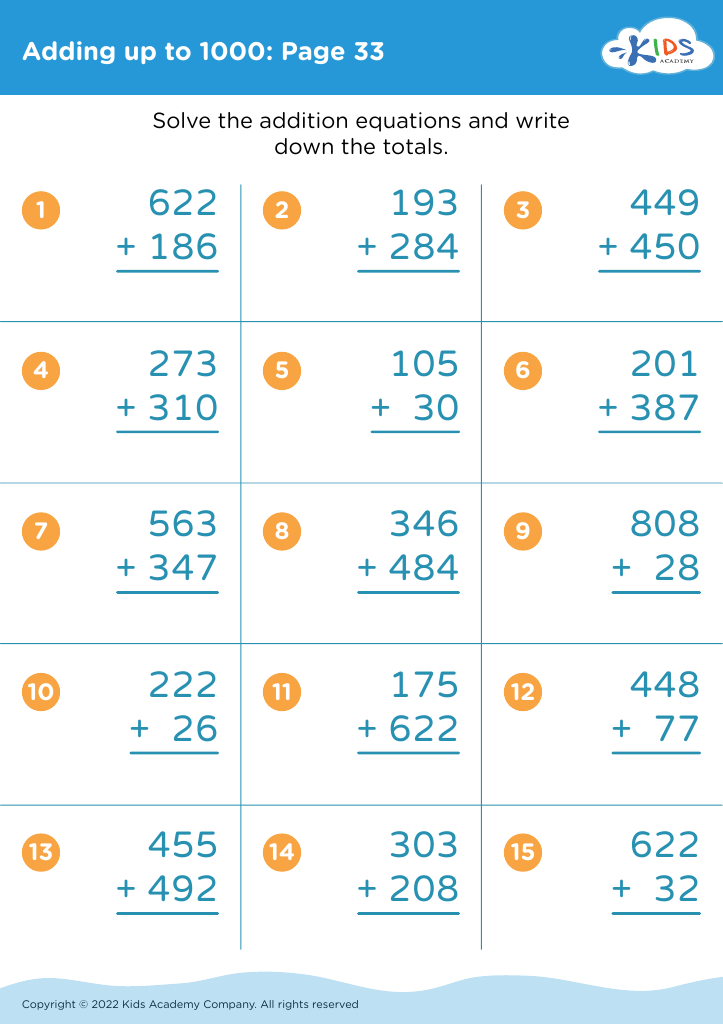








Understanding sequence in addition and subtraction is fundamental for young learners aged 3-8 because it lays the foundation for their future mathematical learning and problem-solving skills. At this developmental stage, children’s brains are highly receptive to new information and the establishment of rudimentary numerical concepts.
When parents and teachers emphasize understanding the sequence in addition and subtraction, they are helping children comprehend the order of operations and the concept of progression and regression. For instance, recognizing that 3+2=5 or that taking 2 away from 5 leaves 3 reinforces a sense of number relationships. This cognitive skill is crucial, as it fosters logical thinking and enhances memory recall.
Moreover, developing accurate arithmetic operations early on can boost a child’s confidence and interest in mathematics as they progress through school. Sequence understanding also aids in visualizing problems, which is essential for more complex tasks they will encounter later in life. For example, they will eventually learn to use these basic skills in algebra and geometry.
Lastly, fundamental arithmetic helps in day-to-day situations, preparing children for the real-world applications of math, such as counting money or planning time. Overall, instilling these core concepts benefits both immediate educational progress and long-term academic and life success.








