Filters

110 filtered results

Clear all filters
Favorites
With answer key
Interactive

110 filtered results

Difficulty Level

Grade


Check out this FREE Trial Lesson on Addition for age 3-8!

P

Favorites
With answer key
Interactive
  • 3-8
  • Addition skills
  • Addition
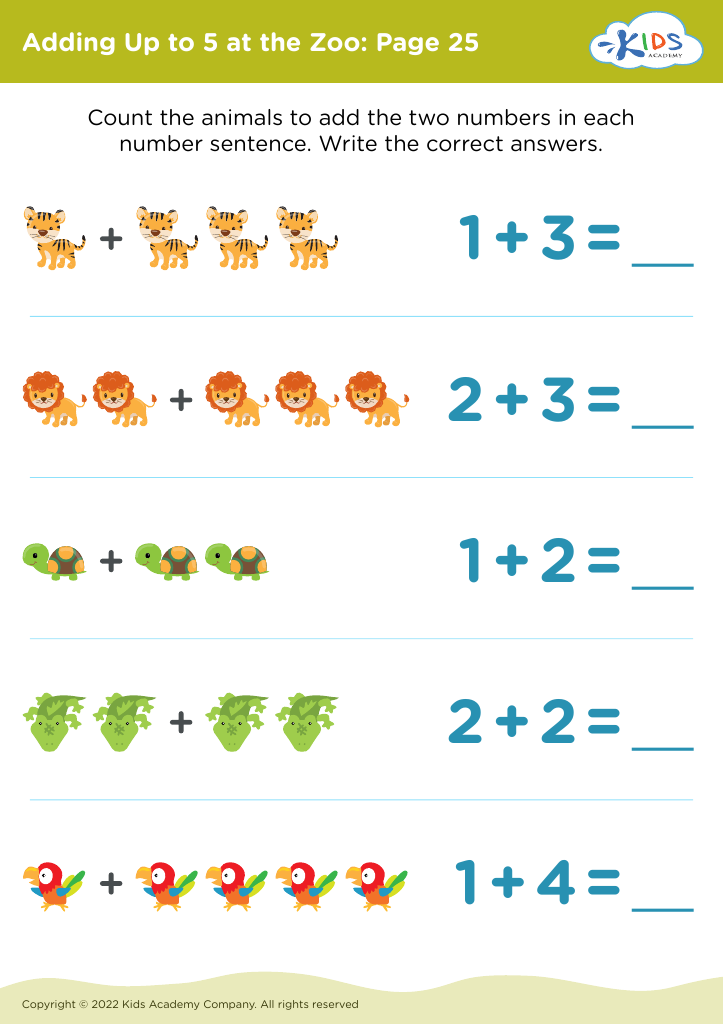
Adding Up to 5 at the Zoo: Page 25
Worksheet
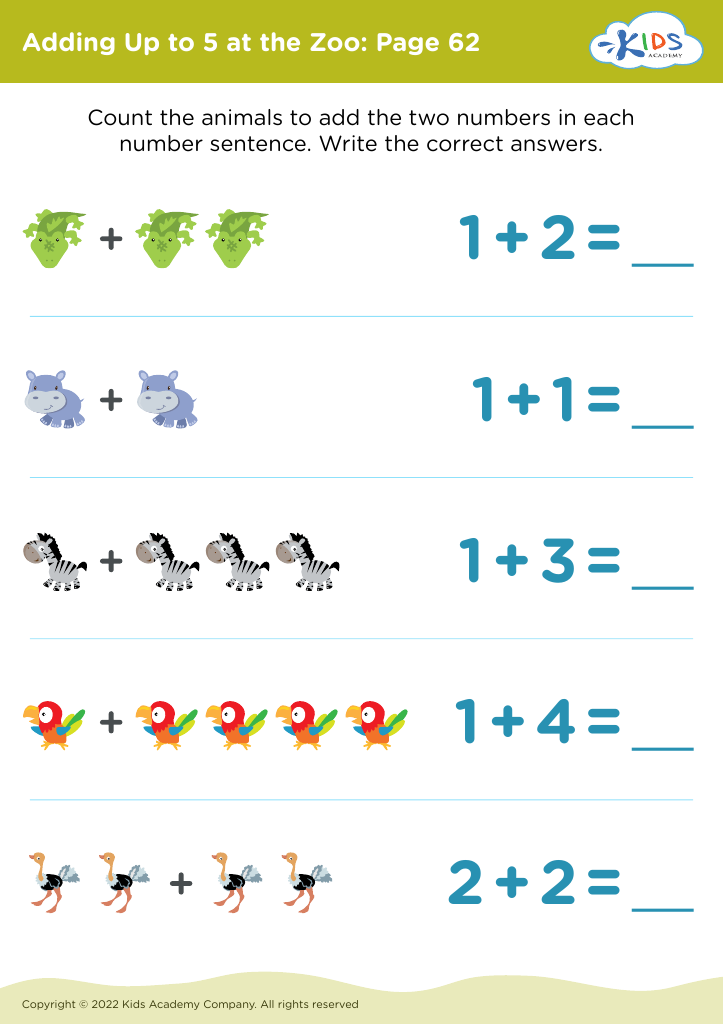
Adding Up to 5 at the Zoo: Page 62
Worksheet
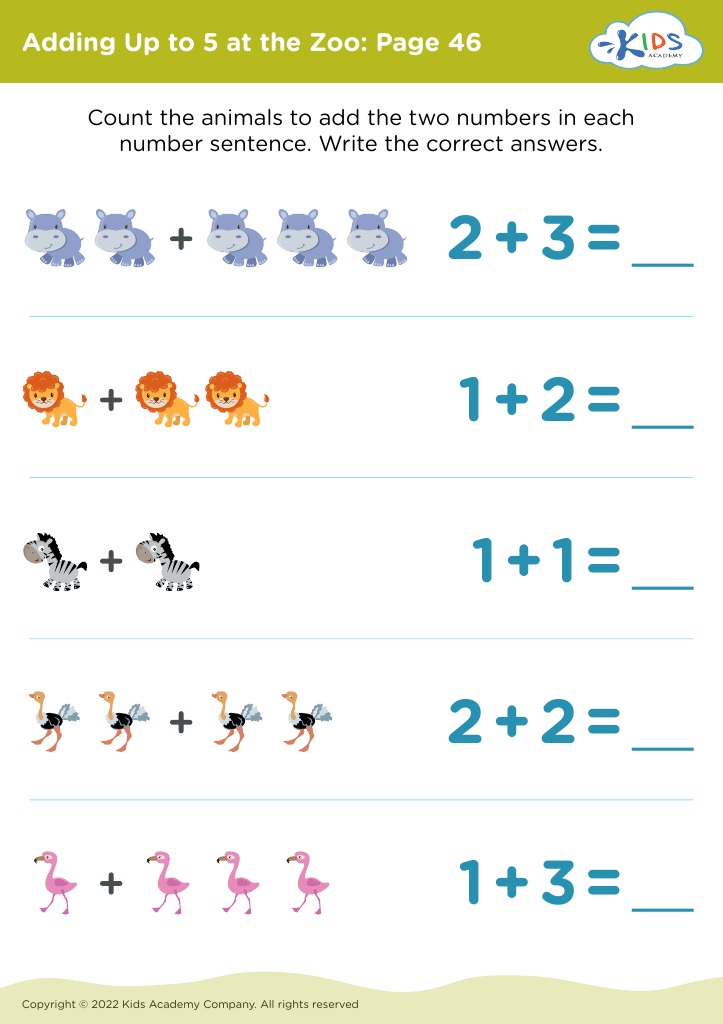
Adding Up to 5 at the Zoo: Page 46
Worksheet
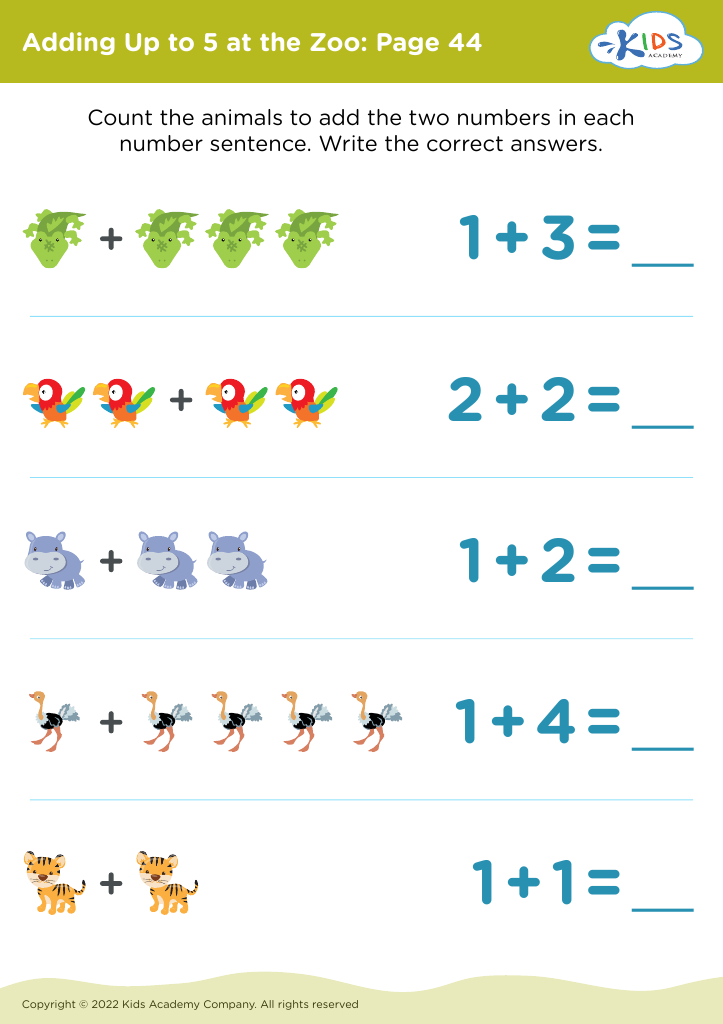
Adding Up to 5 at the Zoo: Page 44
Worksheet
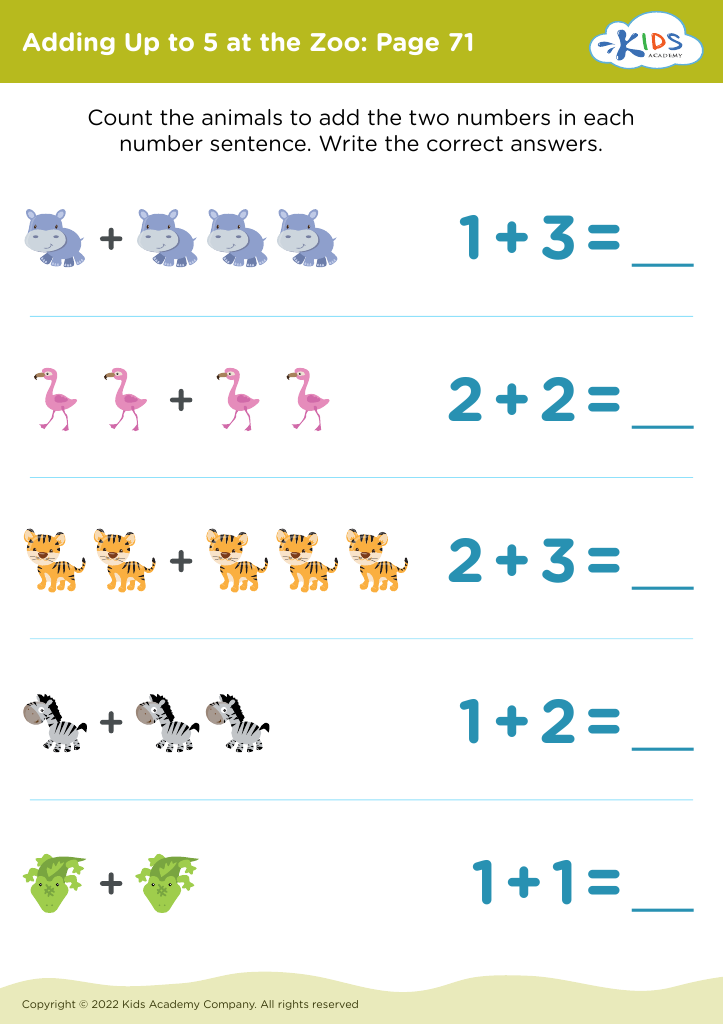
Adding Up to 5 at the Zoo: Page 71
Worksheet
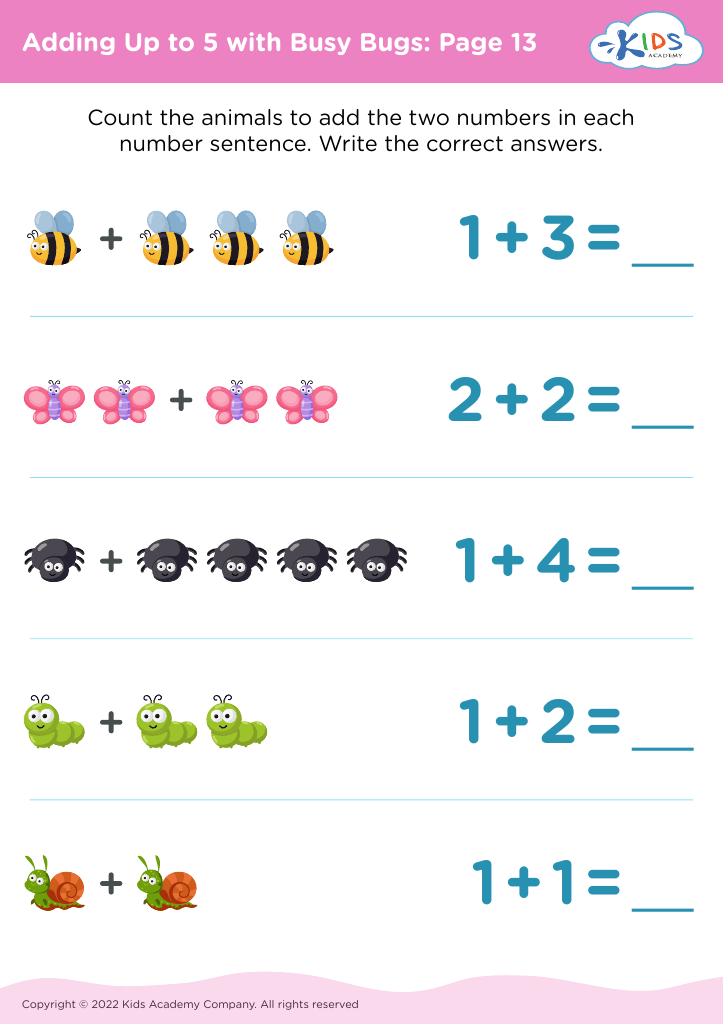
Adding Up to 5 with Busy Bugs: Page 13
Worksheet
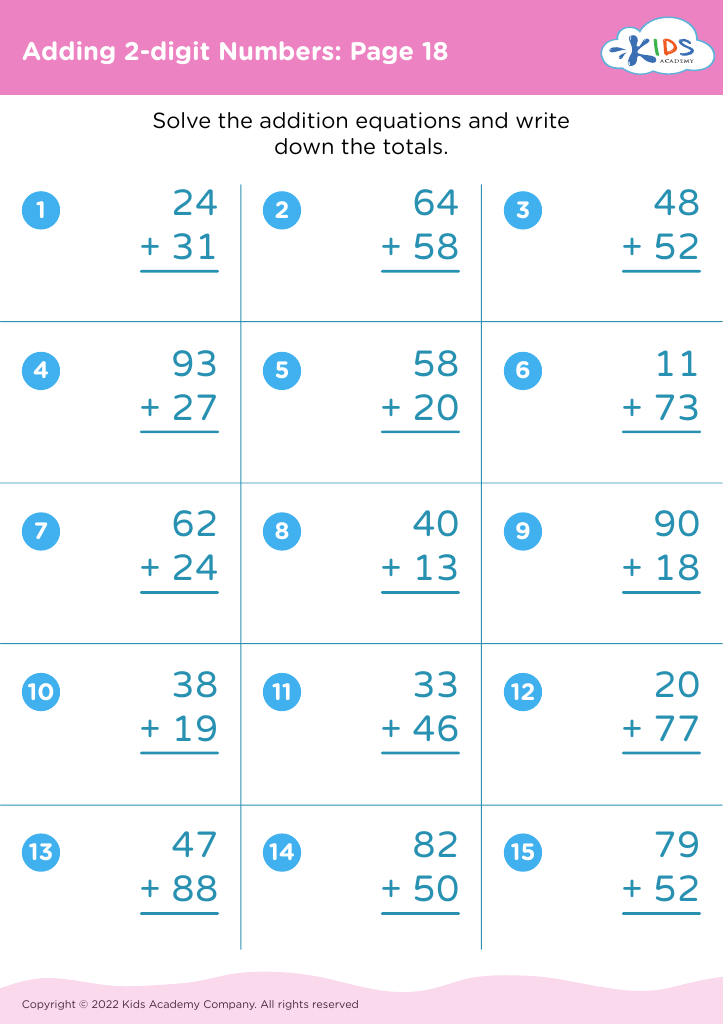
Adding 2-digit Numbers: Page 18

Adding 2-digit Numbers: Page 18

Adding 2-digit Numbers: Page 18
Worksheet
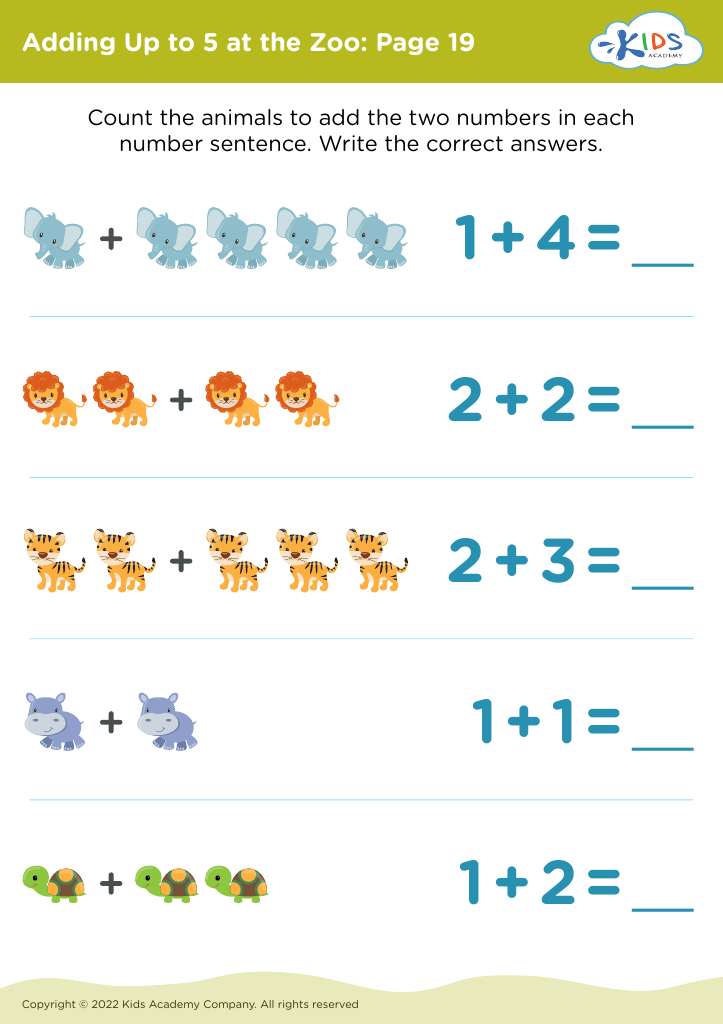
Adding Up to 5 at the Zoo: Page 19
Worksheet
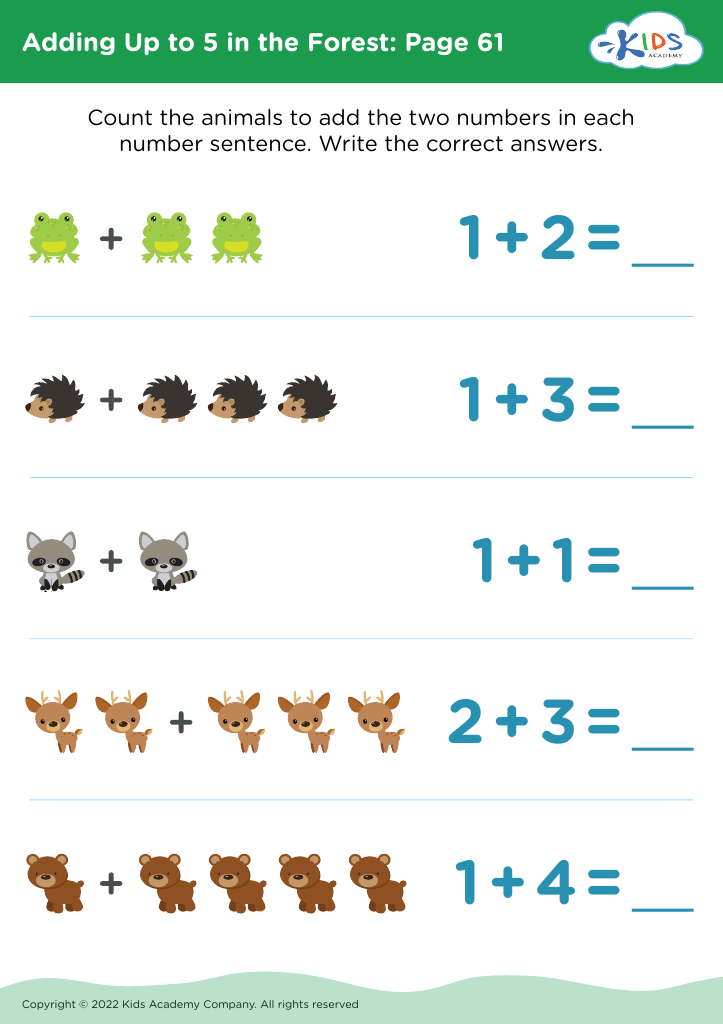
Adding Up to 5 in the Forest: Page 61
Worksheet
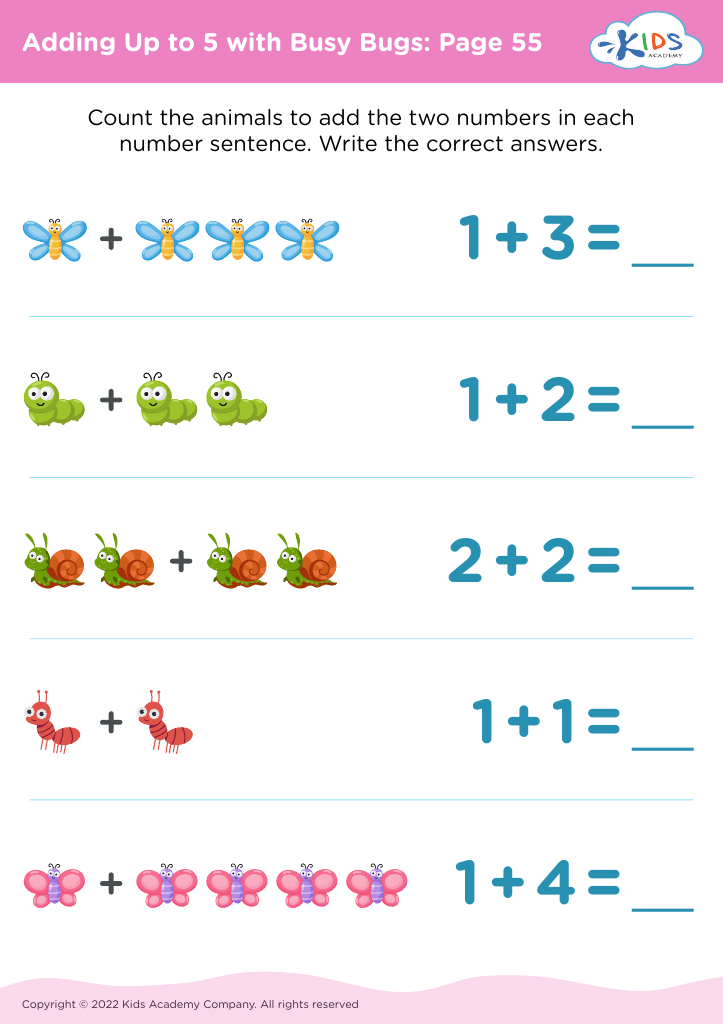
Adding Up to 5 with Busy Bugs: Page 55
Worksheet
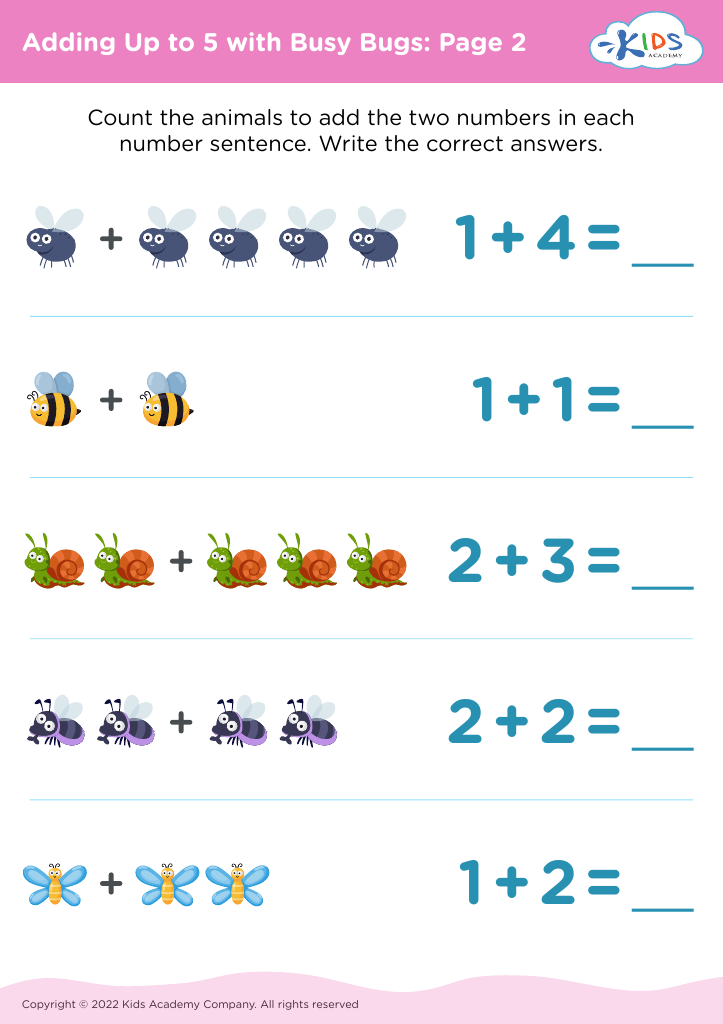
Adding Up to 5 with Busy Bugs: Page 2
Worksheet
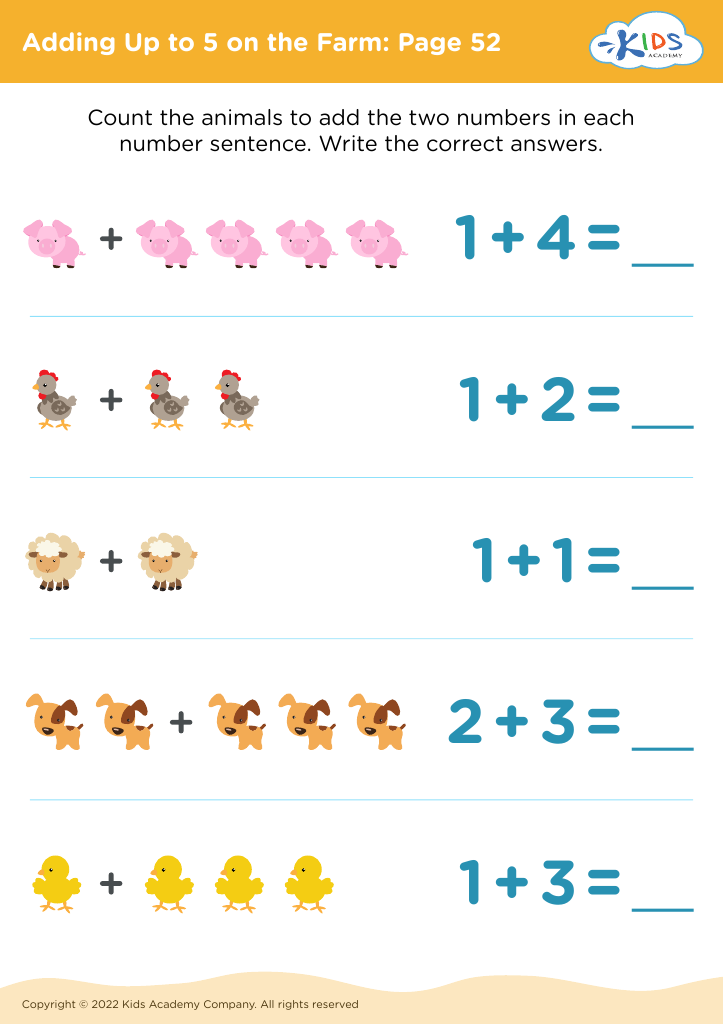
Adding Up to 5 on the Farm: Page 52
Worksheet
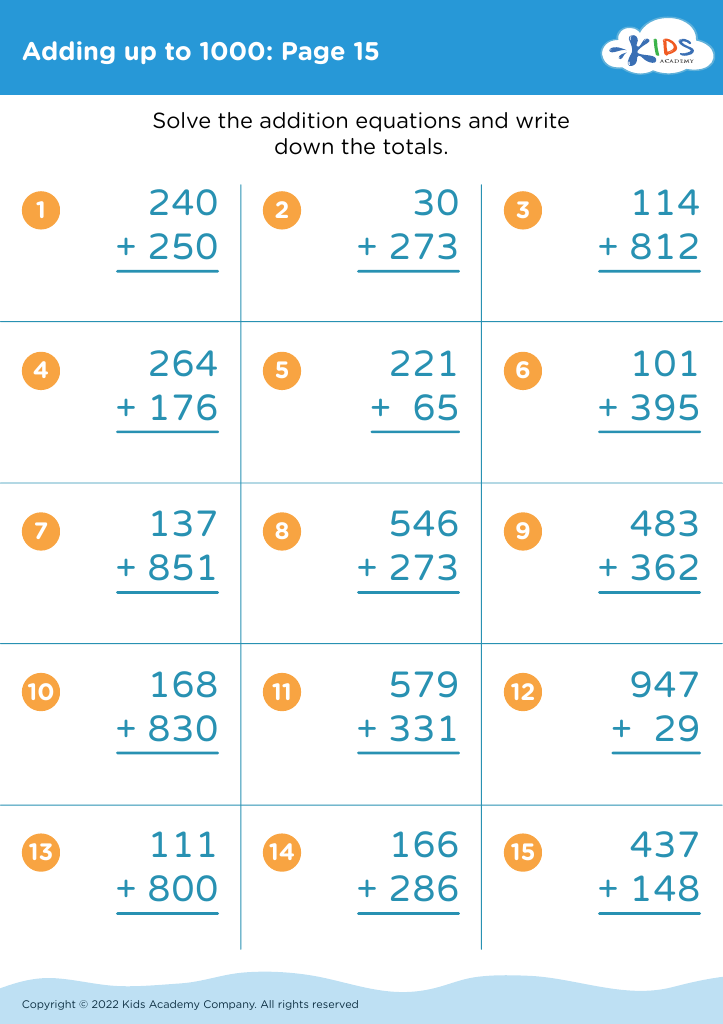
Adding up to 1000: Page 15

Adding up to 1000: Page 15

Adding up to 1000: Page 15
Worksheet
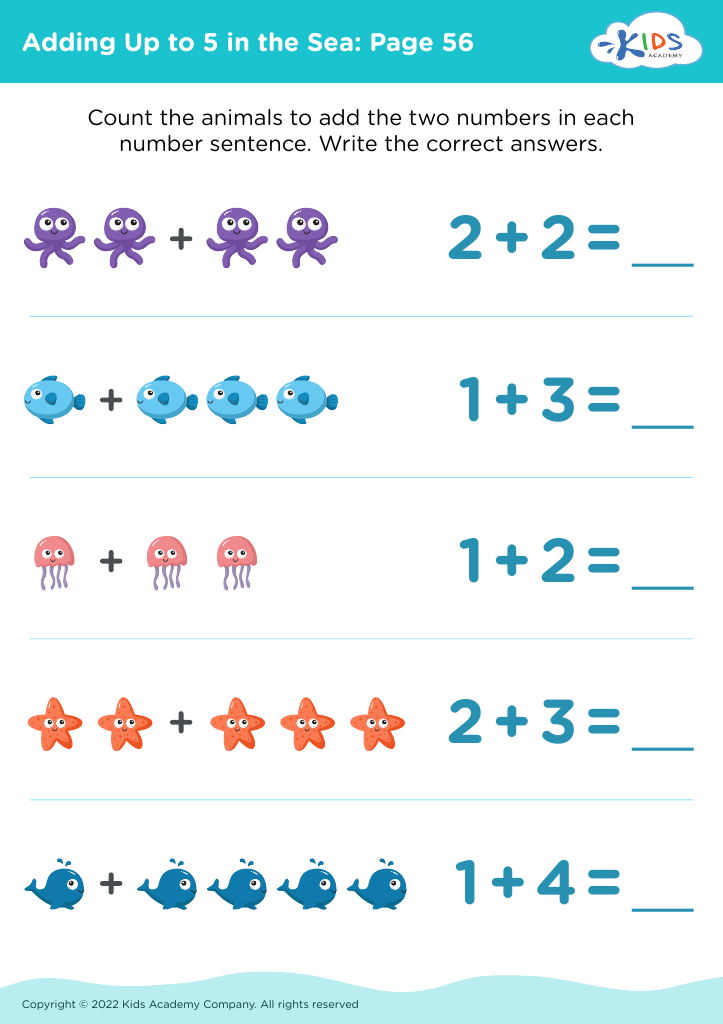
Adding Up to 5 in the Sea: Page 56
Worksheet
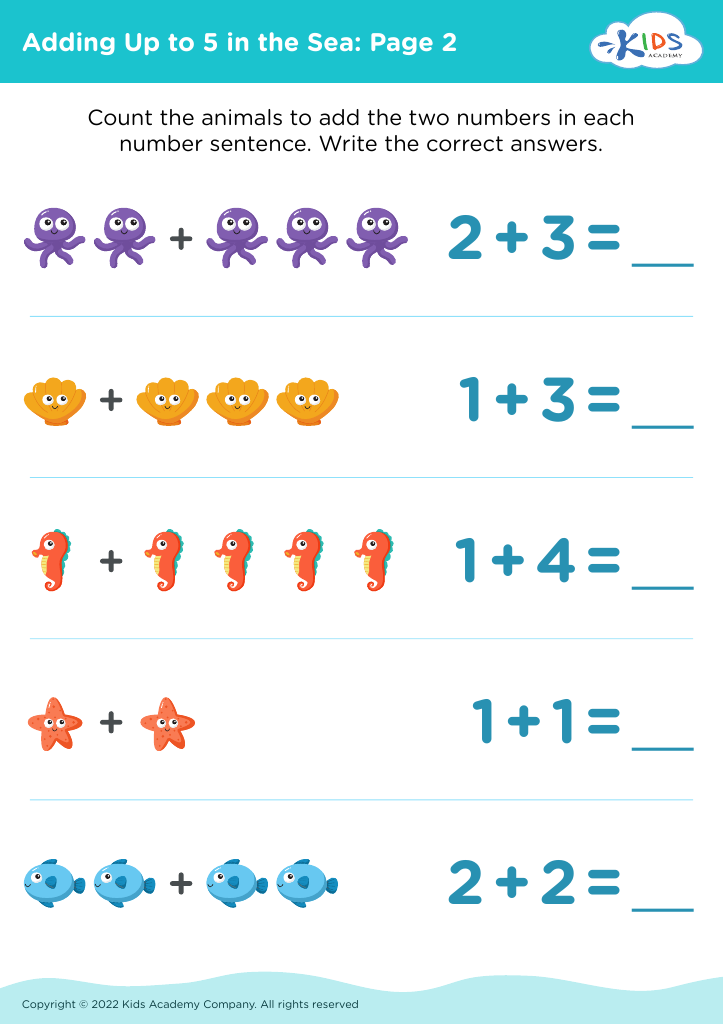
Adding Up to 5 in the Sea: Page 2

Adding Up to 5 in the Sea: Page 2

Adding Up to 5 in the Sea: Page 2
Worksheet
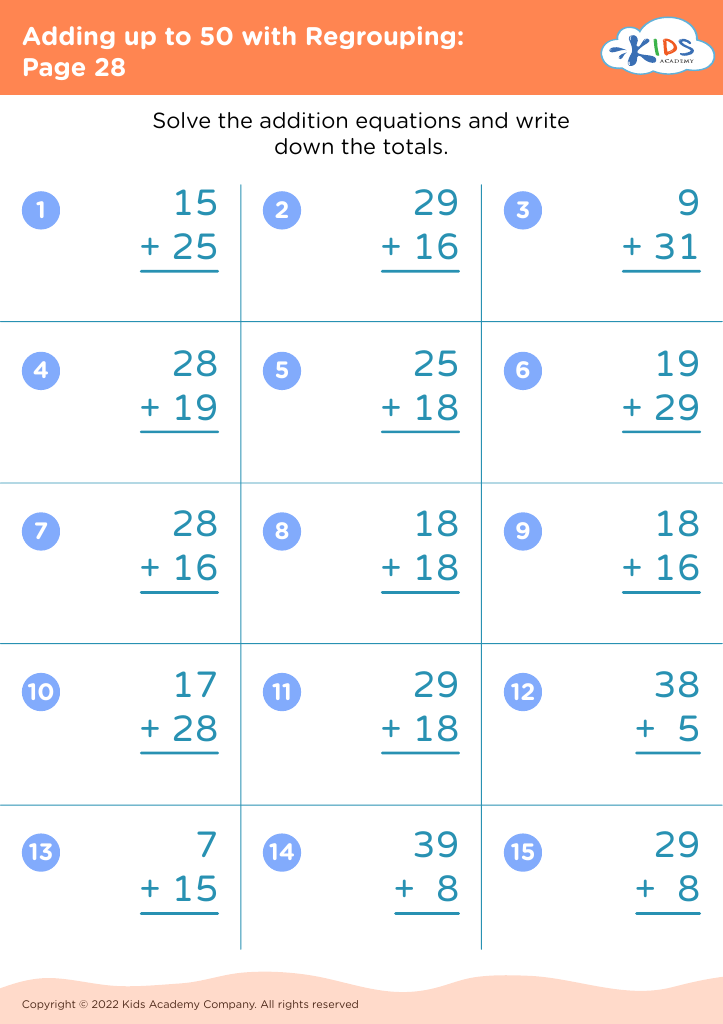
Adding up to 50 with Regrouping: Page 28
Worksheet
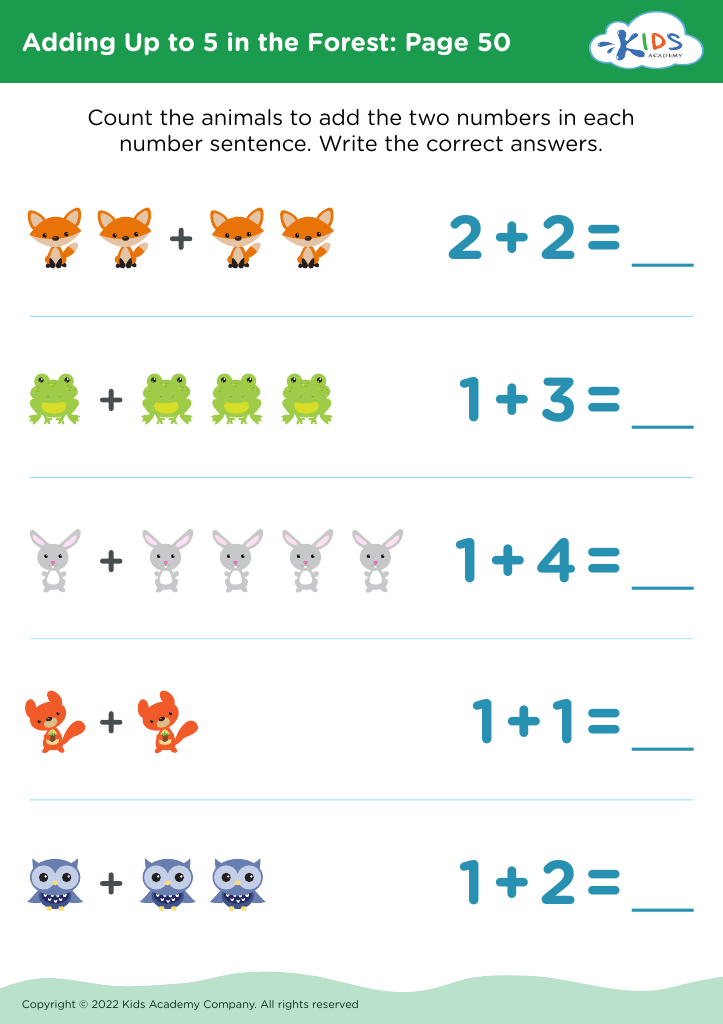
Adding Up to 5 in the Forest: Page 50
Worksheet
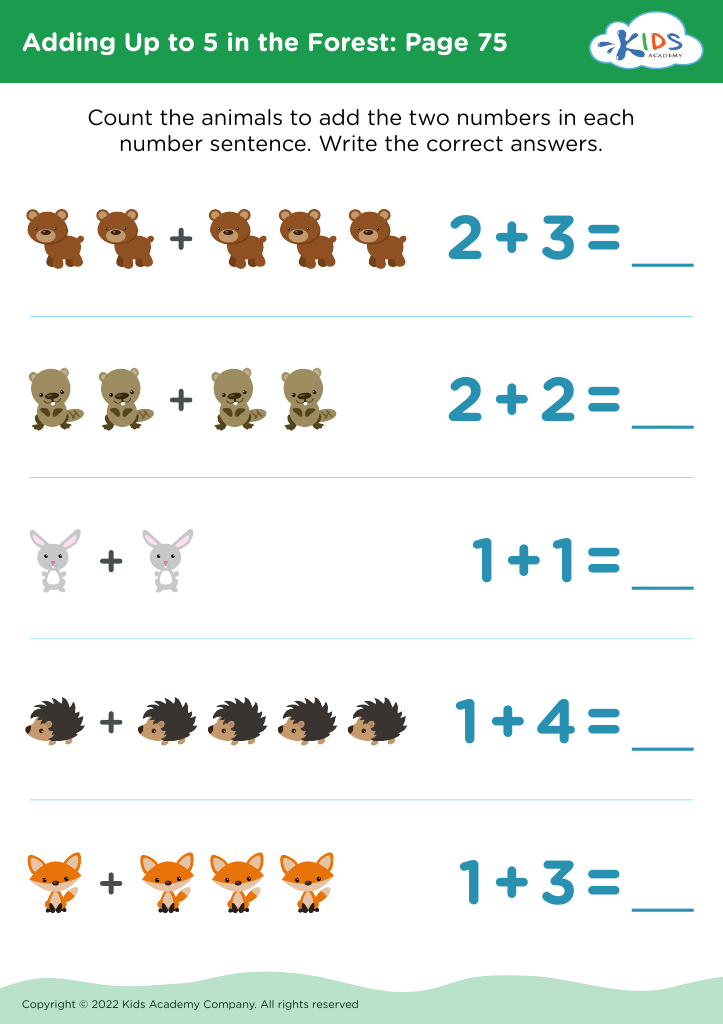
Adding Up to 5 in the Forest: Page 75
Worksheet
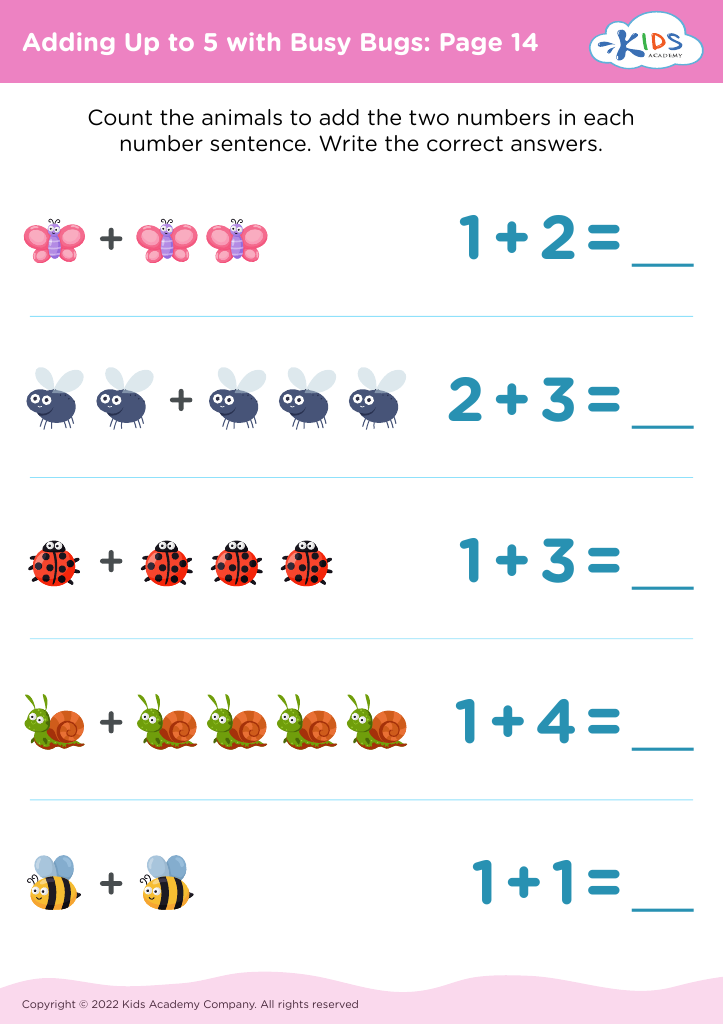
Adding Up to 5 with Busy Bugs: Page 14
Worksheet
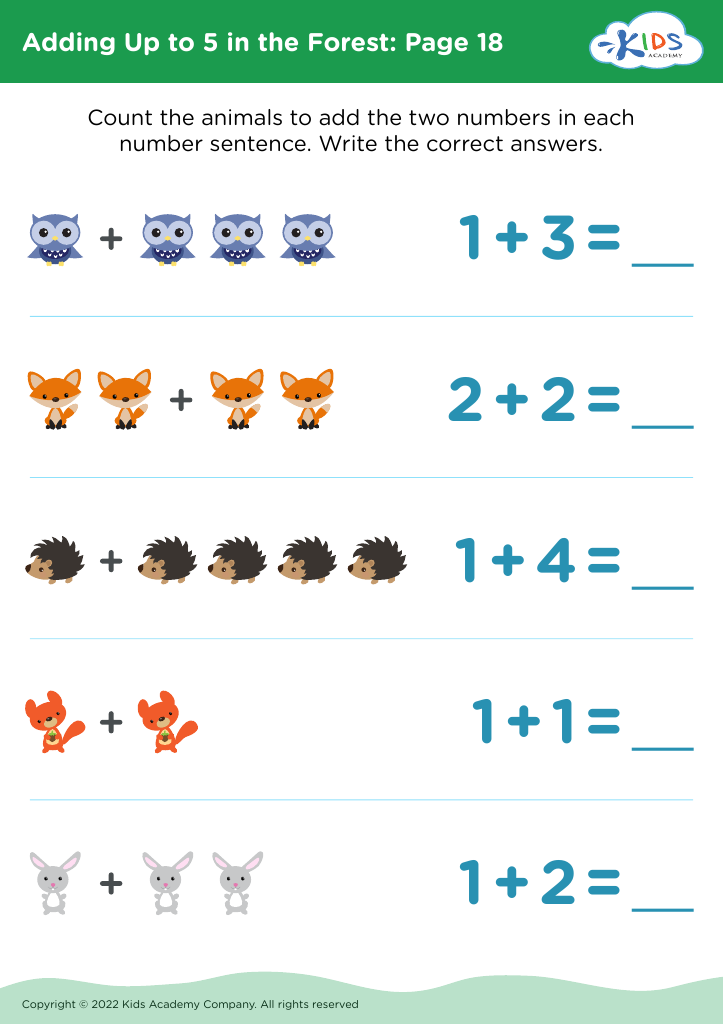
Adding Up to 5 in the Forest: Page 18
Worksheet
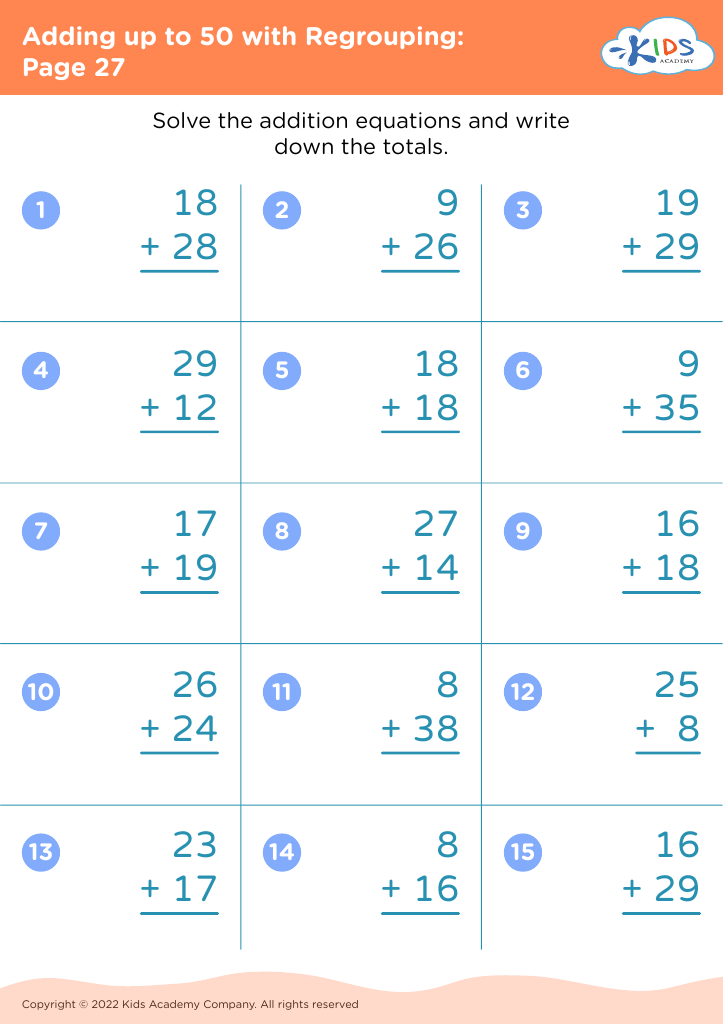
Adding up to 50 with Regrouping: Page 27
Worksheet
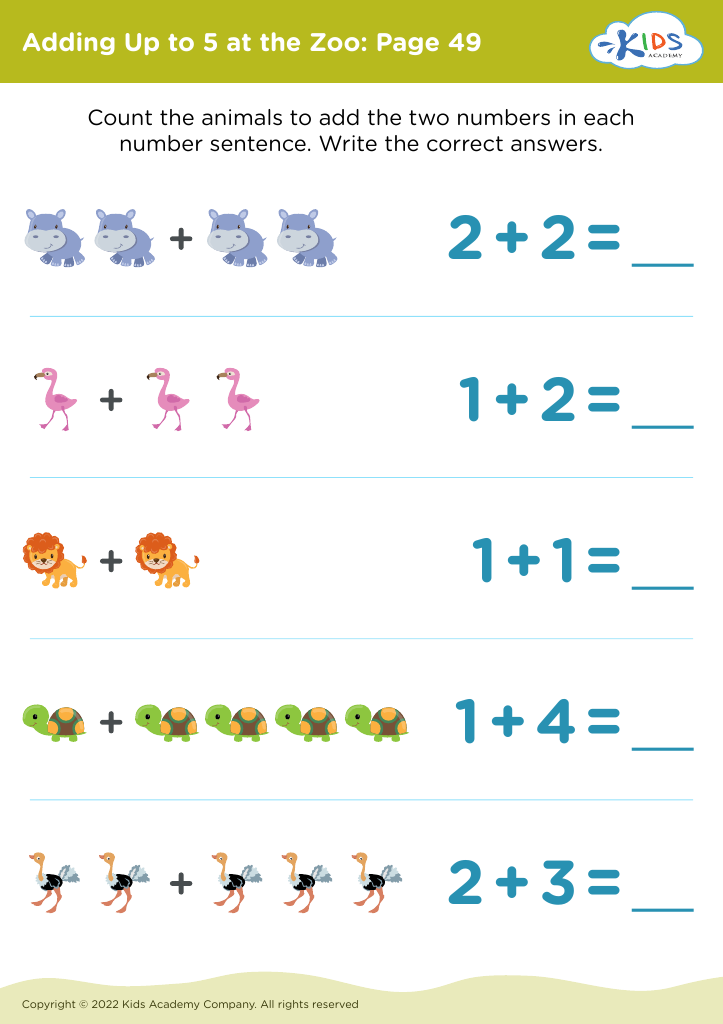
Adding Up to 5 at the Zoo: Page 49
Worksheet
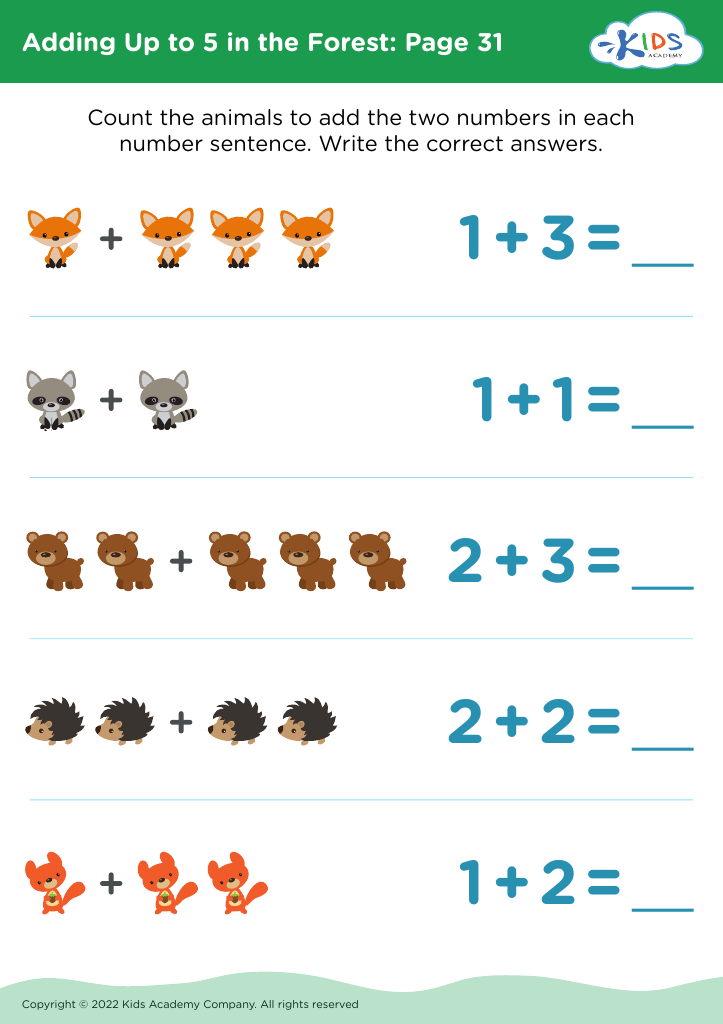
Adding Up to 5 in the Forest: Page 31
Worksheet
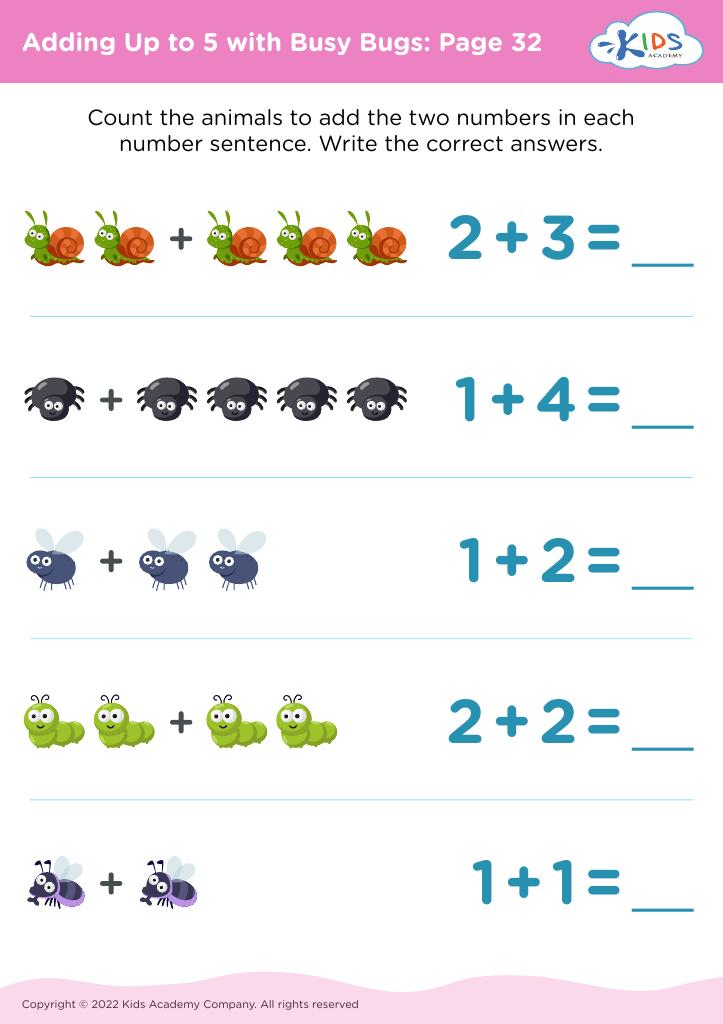
Adding Up to 5 with Busy Bugs: Page 32
Worksheet


Addition skills are foundational to a child's mathematical development and overall academic success. For children ages 3-8, these skills not only introduce them to early numeracy concepts but also enhance essential cognitive abilities such as problem-solving, critical thinking, and logical reasoning.

At this age, children are naturally curious and eager to learn, making it the perfect time for them to grasp basic addition. Mastering these skills fosters confidence in their mathematical abilities, encouraging a positive attitude towards learning. Additionally, strong addition skills support later mathematical concepts, such as subtraction, multiplication, and division, setting a solid groundwork for future success.

Furthermore, addition skills have practical applications in daily life, from counting objects and understanding quantities to managing money and making decisions. When parents and teachers prioritize these skills, they help children develop not only academic competencies but also life skills, promoting independence and critical thinking.

Encouraging an interactive and engaging approach to learning addition—with games, stories, and activities—makes the process enjoyable. When children recognize the relevance of math in their everyday lives, it cultivates a love for learning and builds a strong educational foundation that will benefit them for years to come.