Animal identification Addition Worksheets for Ages 3-8 - Page 2
27 filtered results
-
From - To
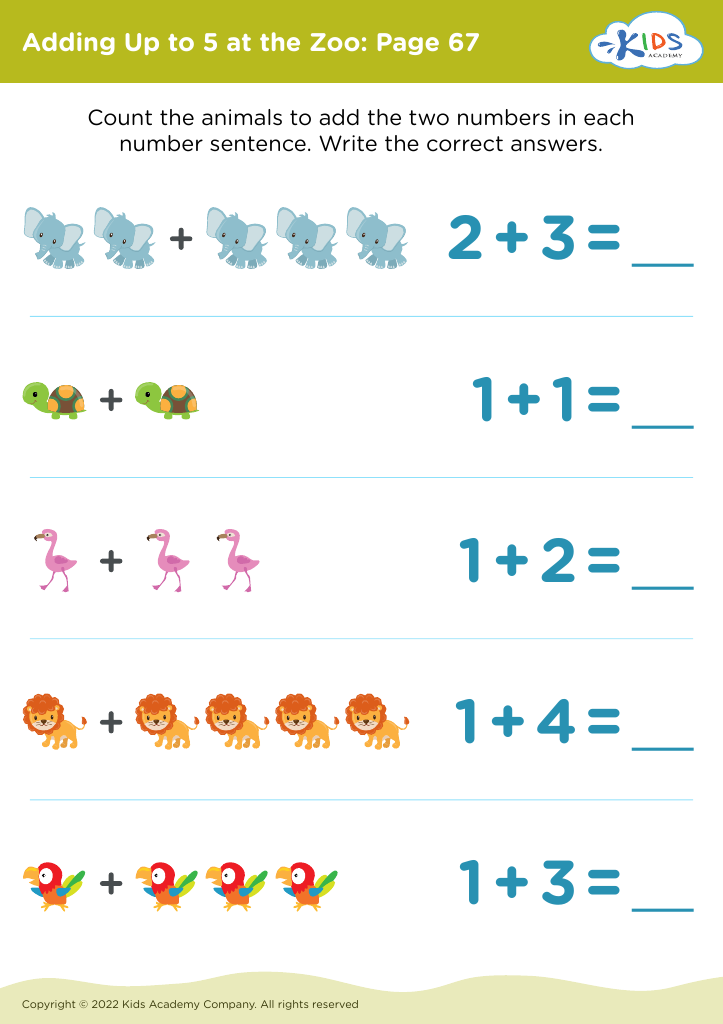
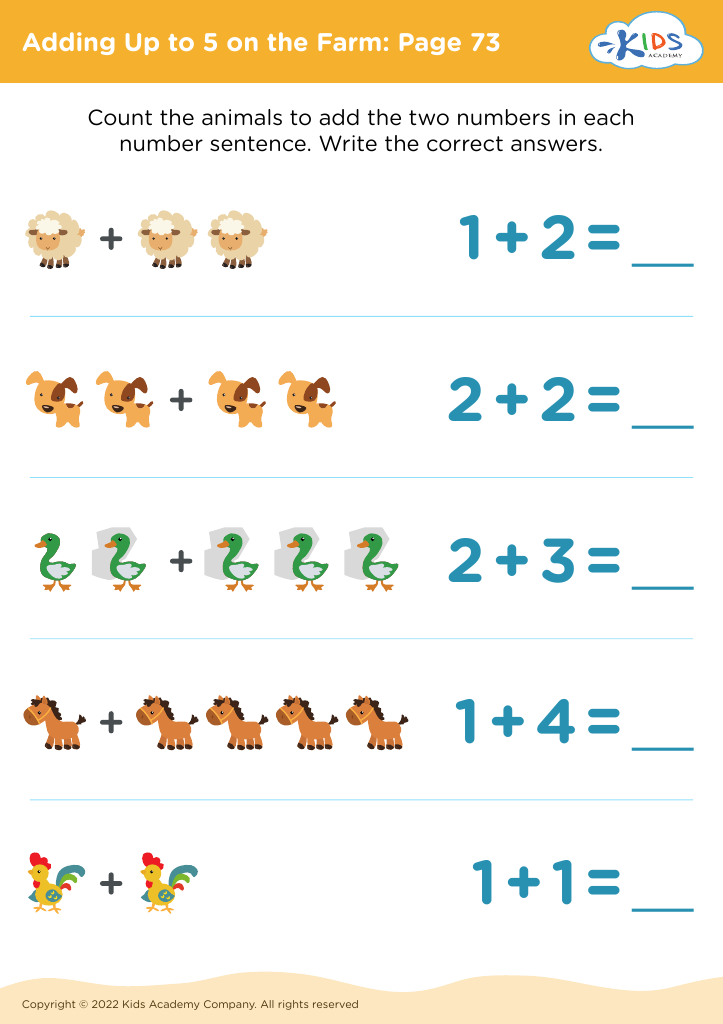
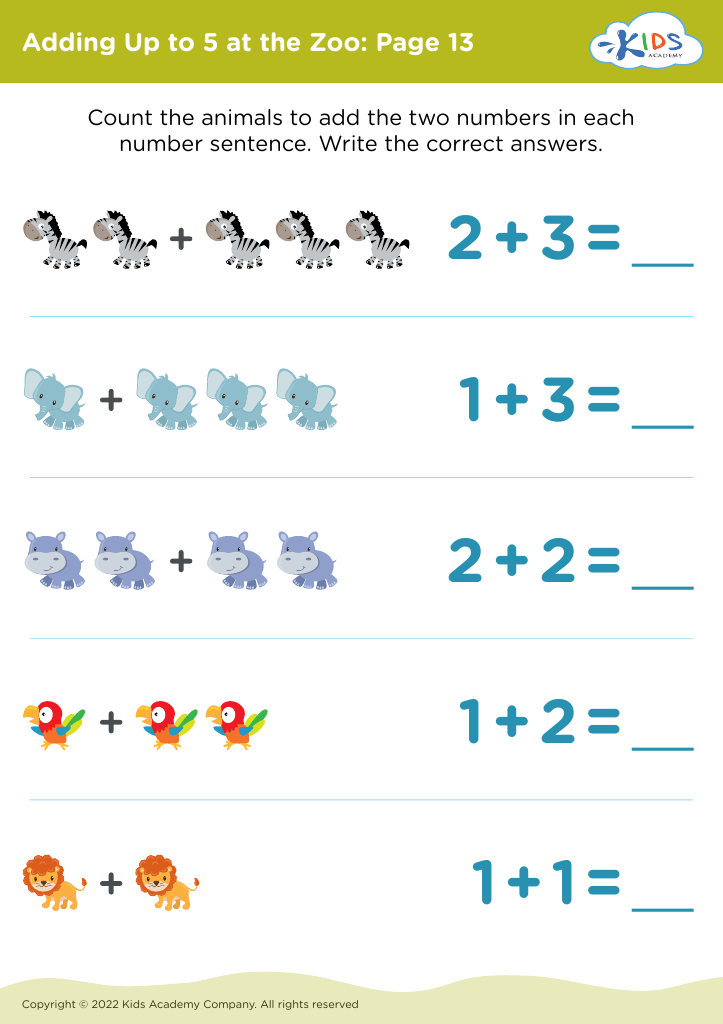








Animal identification addition for ages 3-8 is pivotal in both the cognitive and emotional development of children. Parents and teachers should care about this concept because it blends learning with fun, encourages curiosity, and strengthens foundational academic skills.
From a cognitive standpoint, integrating animal identification with basic arithmetic cultivates early mathematical understanding. Children naturally enjoy animals, so using their images to create simple math problems makes learning more engaging. For instance, asking a child to count two cats and then add three dogs beautifully synchronizes memory recall, counting, and addition practice. It makes abstract numbers more concrete by associating them with something tangible and interesting.
Emotionally, familiarizing children with various animals builds empathy and kindness towards living creatures. It also introduces basic biological knowledge, fostering respect for nature and environment. Animals captivate young minds, so using them in educational contexts enhances attentiveness and enthusiasm, fostering a positive attitude toward learning.
Furthermore, this method seeks to develop social skills and teamwork when done in group activities. It prompts discussions, sharing, and collaborative problem-solving. Plus, it sharpens observational skills, vocabulary, and goal-setting as children learn to identify and characterize various animals.
Making learning appealing through animal identification and math supports holistic growth, combining academics joyly with valuable life skills.








