Filters

271 filtered results

Clear all filters
Favorites
With answer key
Interactive

271 filtered results

Difficulty Level

Grade


Check out this FREE Trial Lesson on Addition for age 3-8!

P

Favorites
With answer key
Interactive
  • 3-8
  • Basic Addition Skills
  • Addition
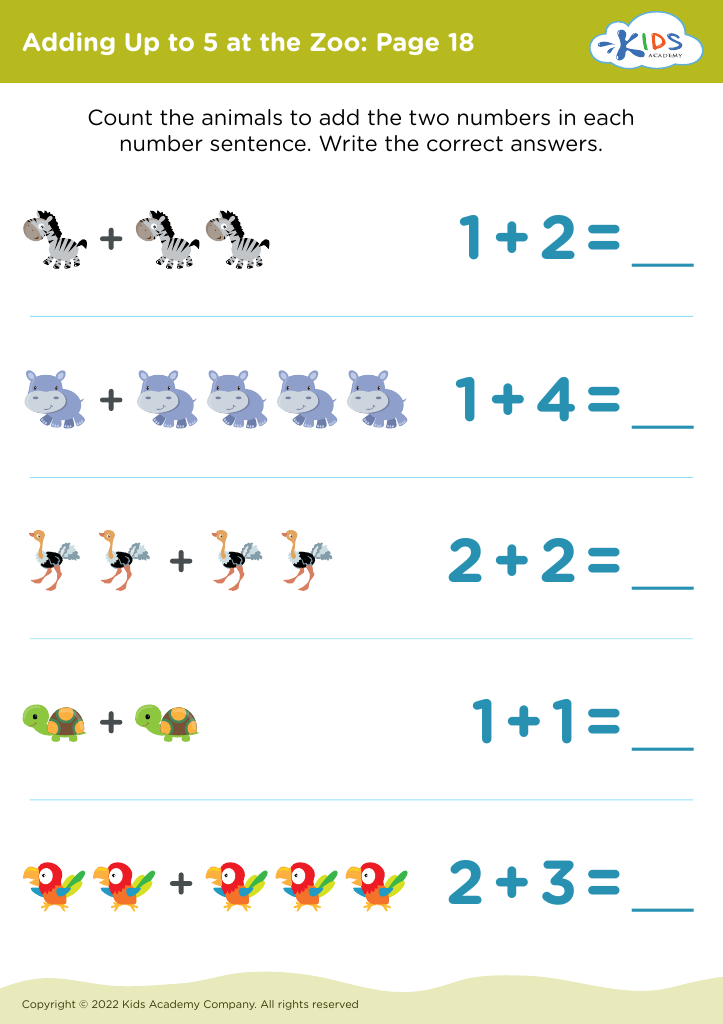
Adding Up to 5 at the Zoo: Page 18
Worksheet
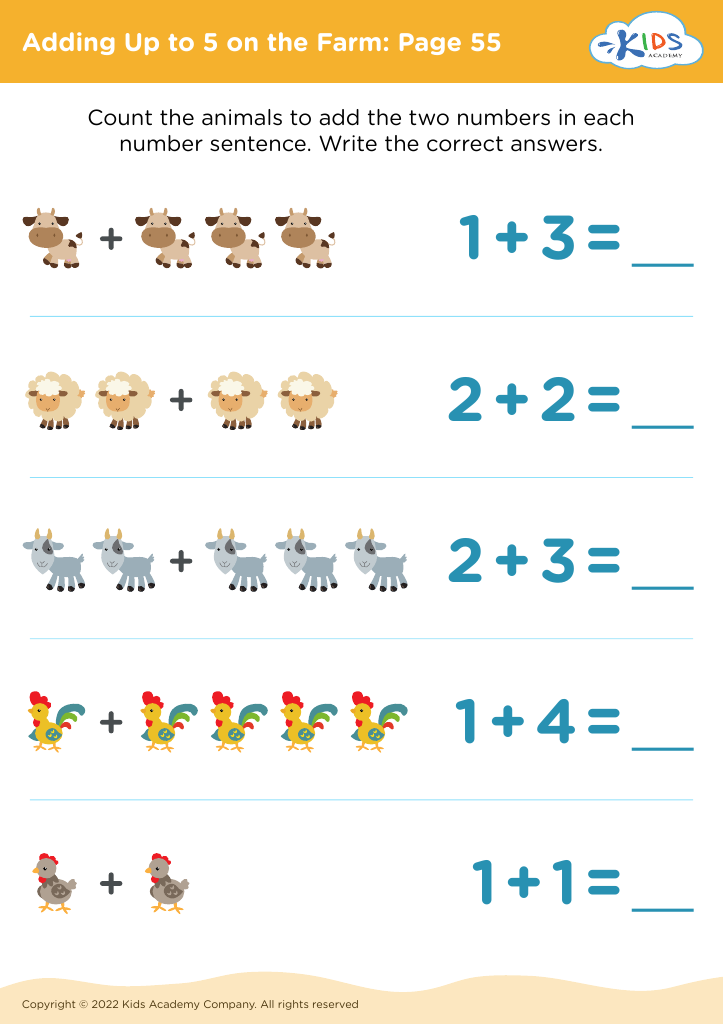
Adding Up to 5 on the Farm: Page 55
Worksheet
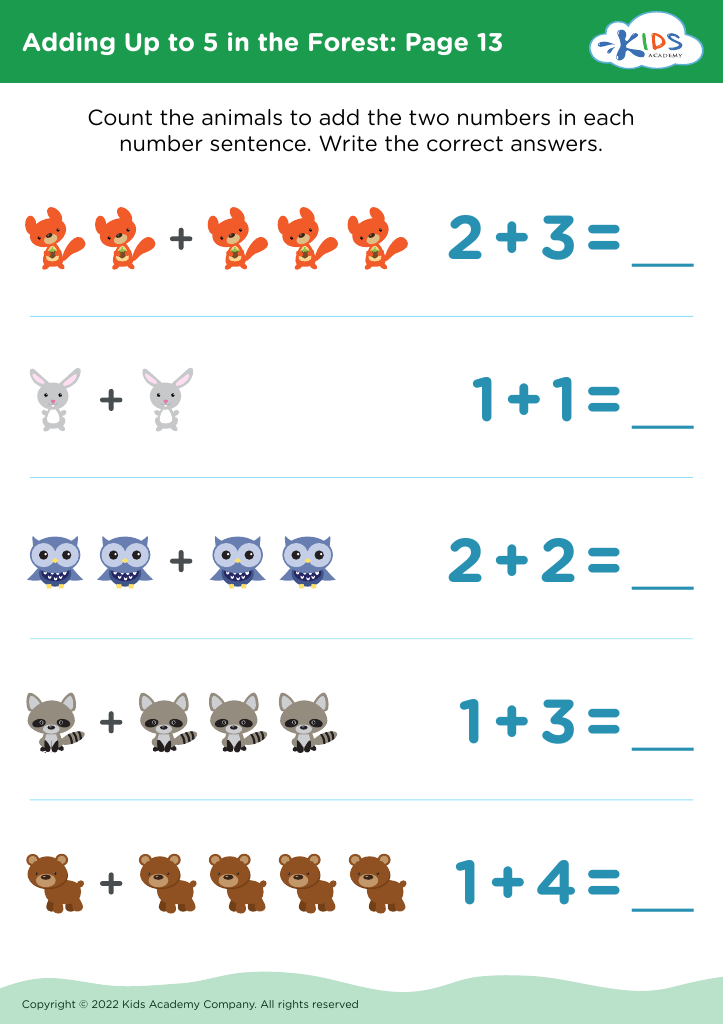
Adding Up to 5 in the Forest: Page 13
Worksheet
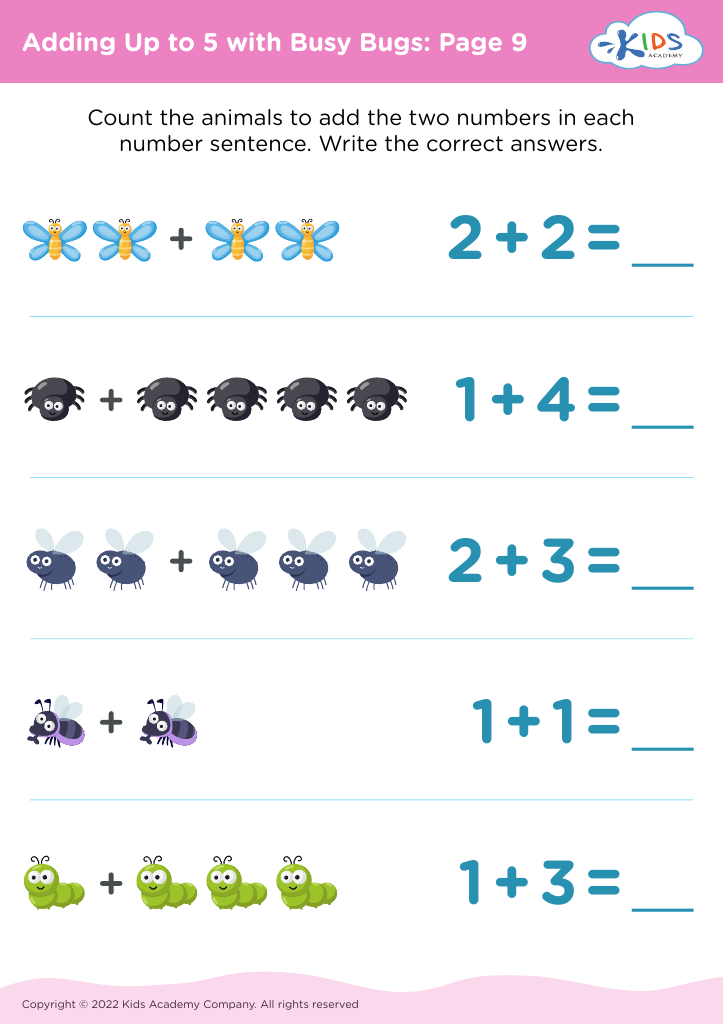
Adding Up to 5 with Busy Bugs: Page 9
Worksheet
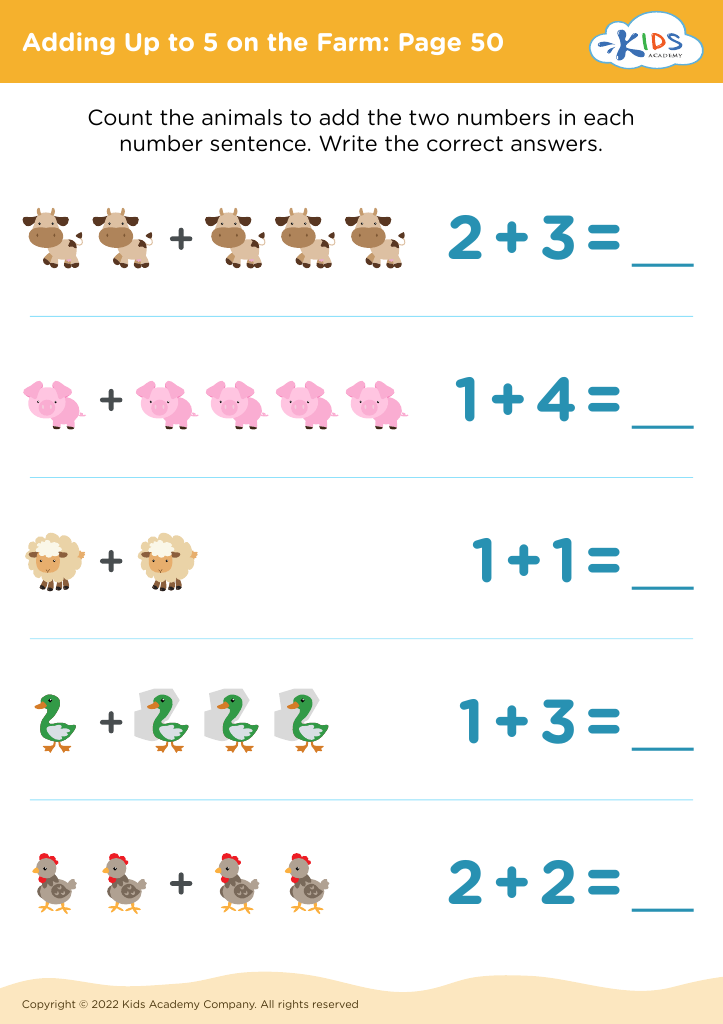
Adding Up to 5 on the Farm: Page 50
Worksheet
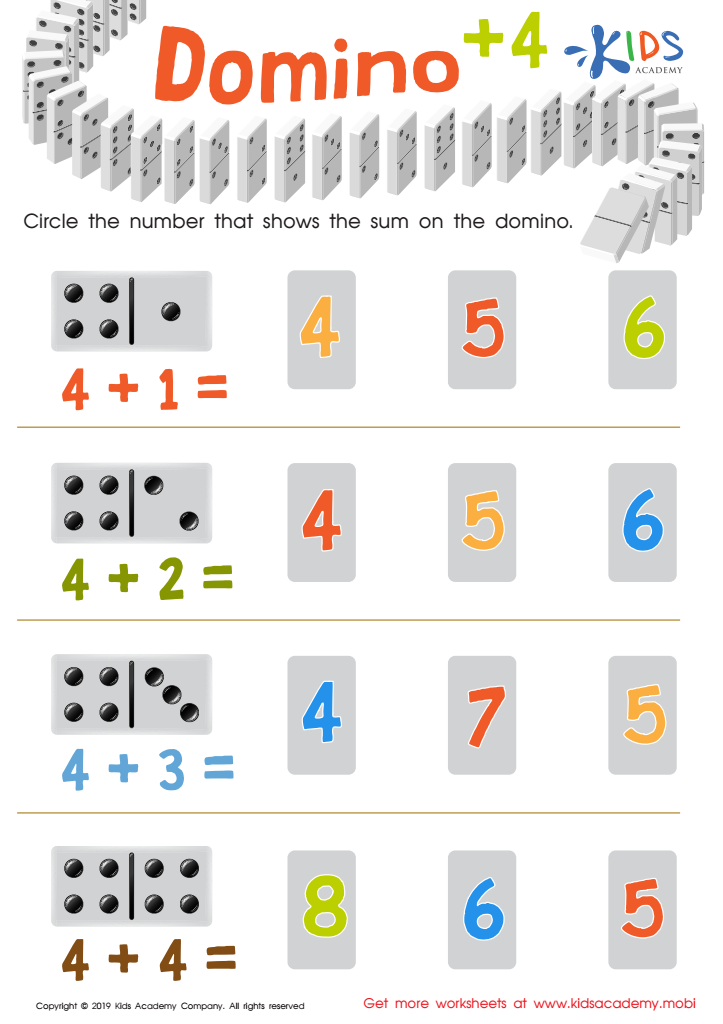
Domino +4 Worksheet
Domino +4 Worksheet

Domino +4 Worksheet

Ask your kids if they know what a domino is. Explain, then move on to solving the four simple equations on this printout, adding a number to 4. Help them find the sum and circle the number.
Domino +4 Worksheet
Worksheet
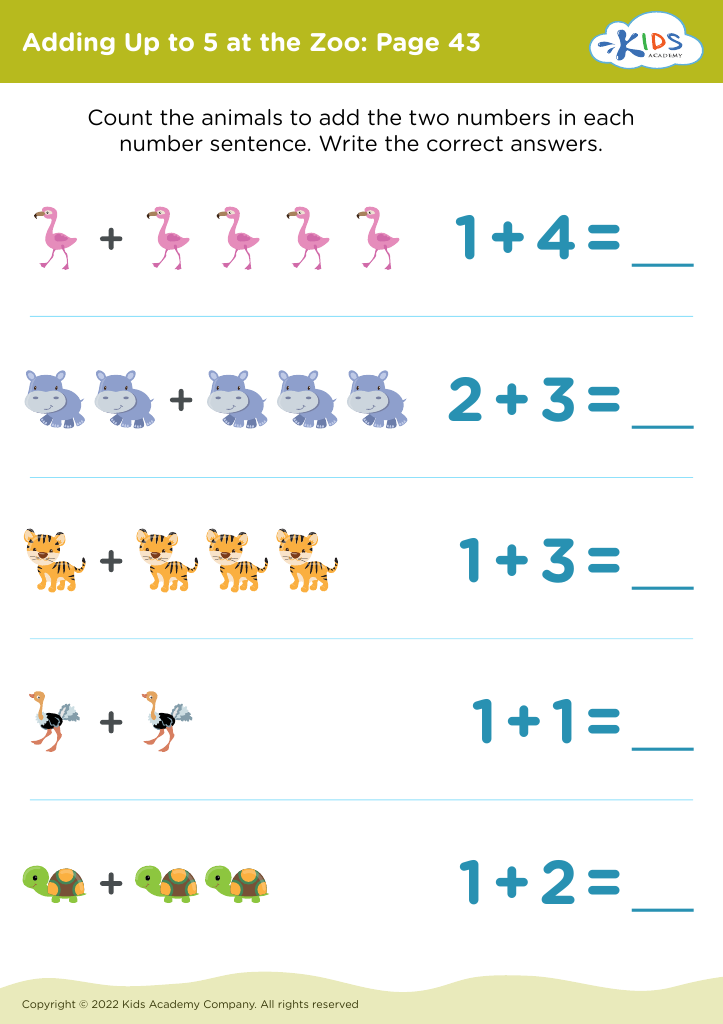
Adding Up to 5 at the Zoo: Page 43
Worksheet
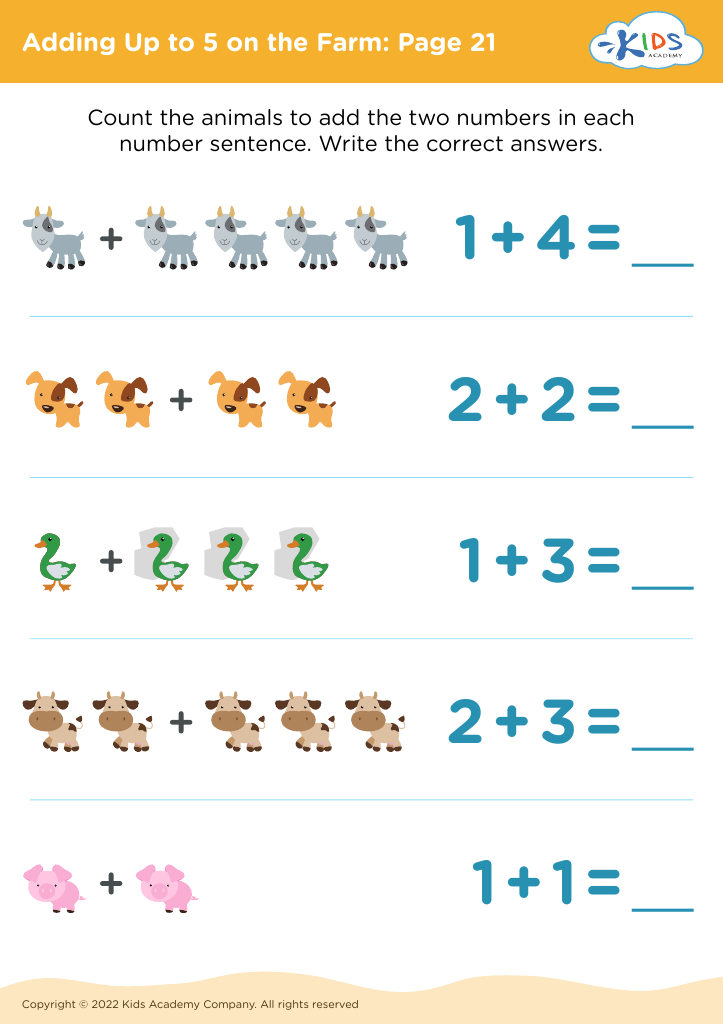
Adding Up to 5 on the Farm: Page 21
Worksheet
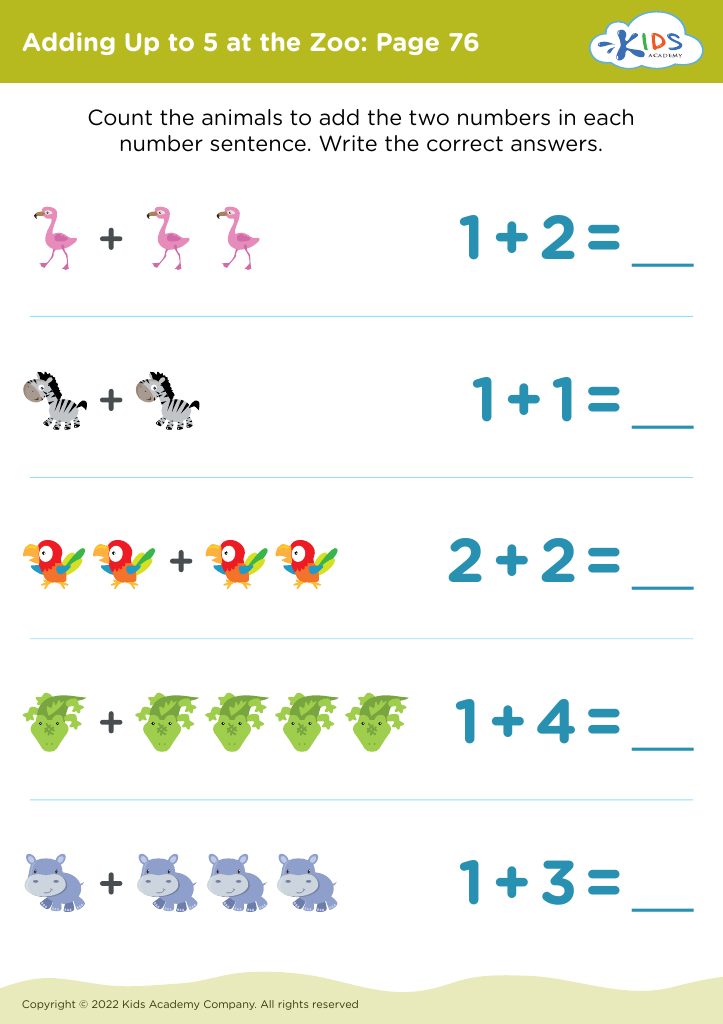
Adding Up to 5 at the Zoo: Page 76
Worksheet
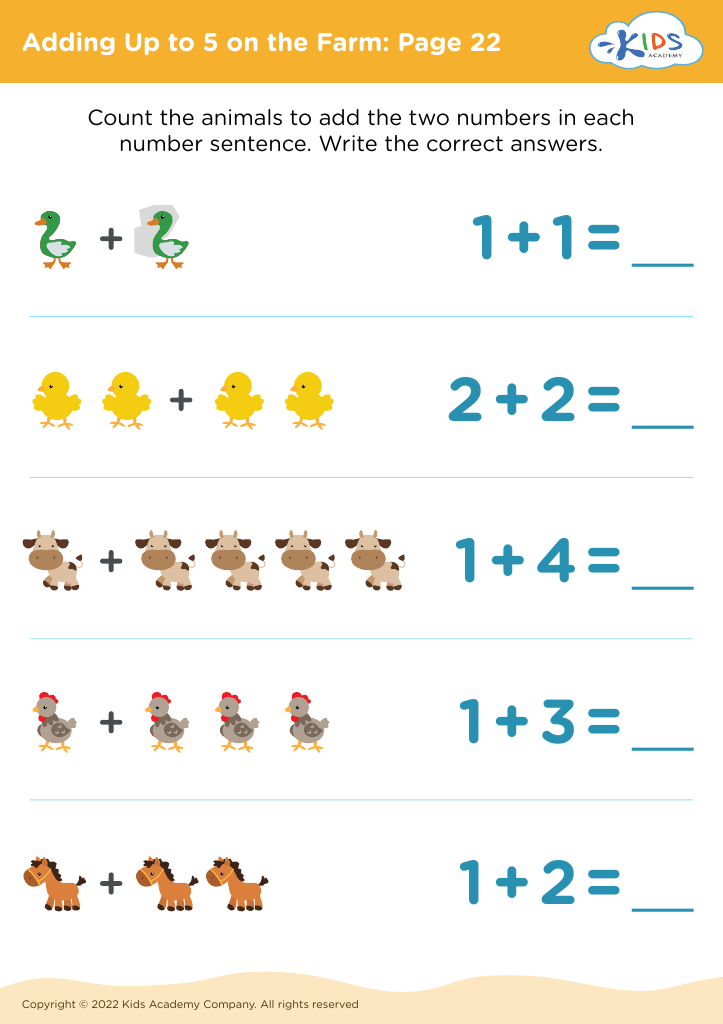
Adding Up to 5 on the Farm: Page 22
Worksheet
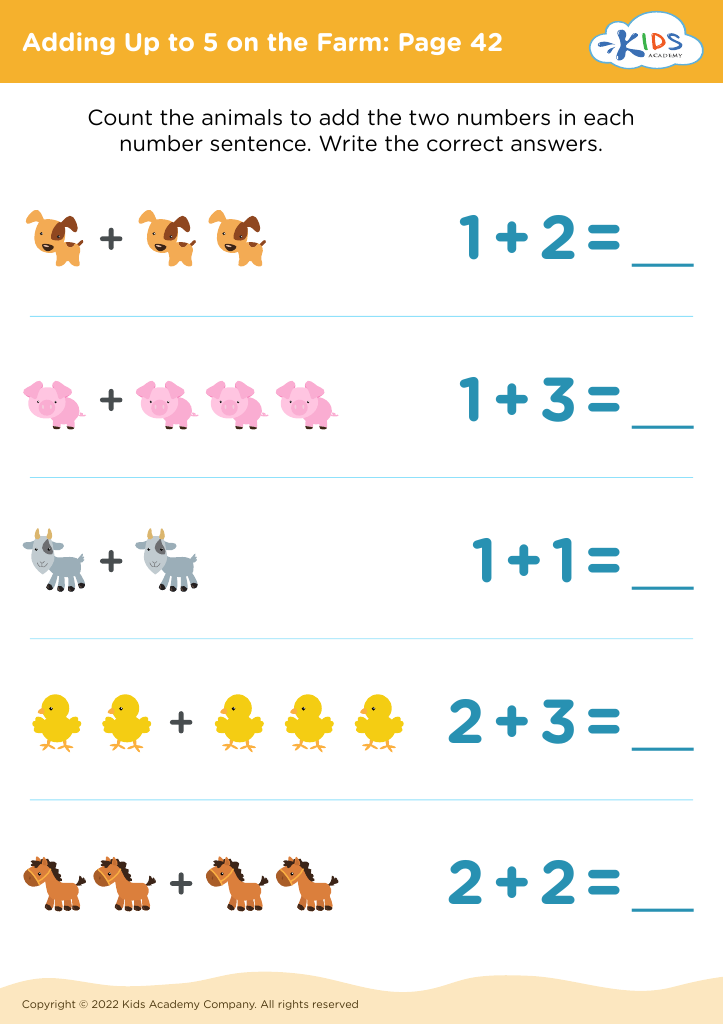
Adding Up to 5 on the Farm: Page 42
Worksheet
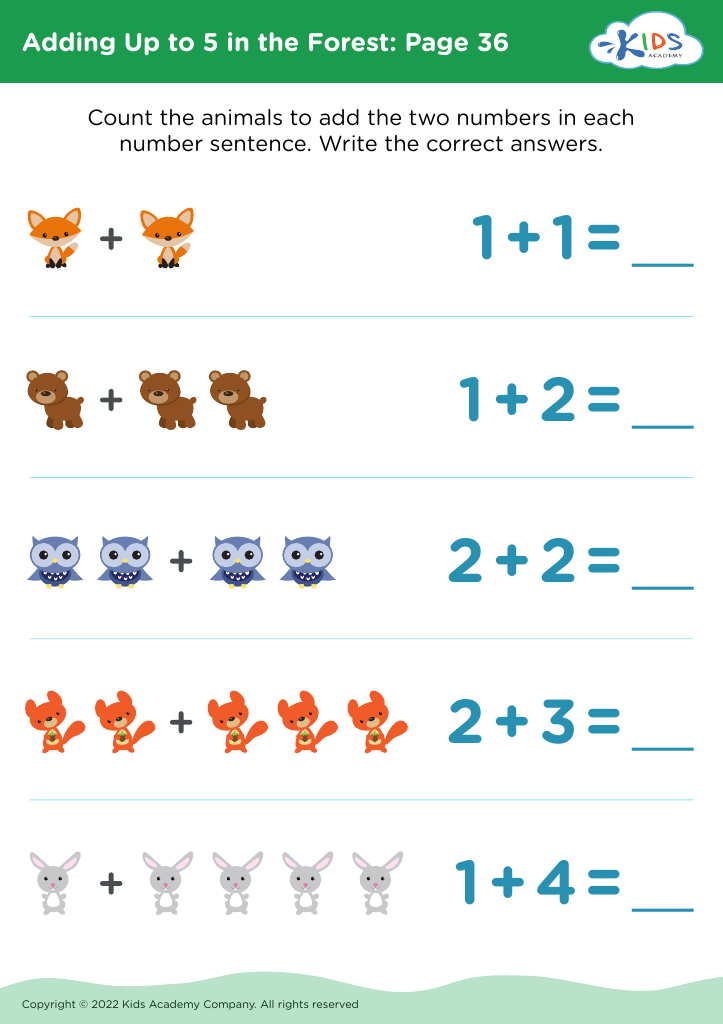
Adding Up to 5 in the Forest: Page 36
Worksheet
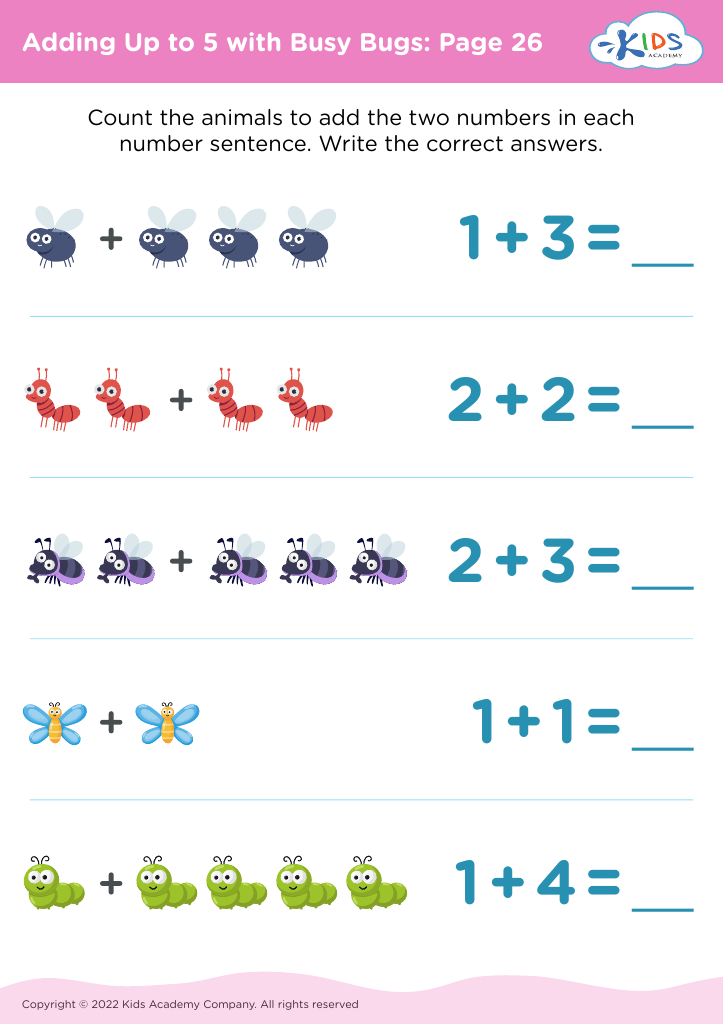
Adding Up to 5 with Busy Bugs: Page 26
Worksheet
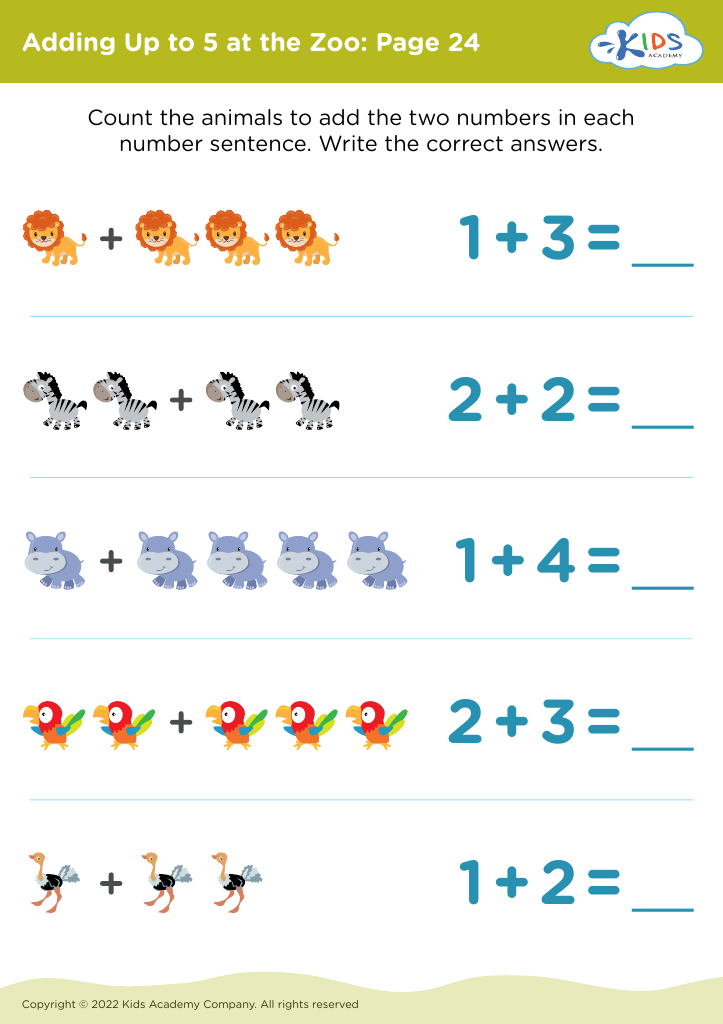
Adding Up to 5 at the Zoo: Page 24
Worksheet
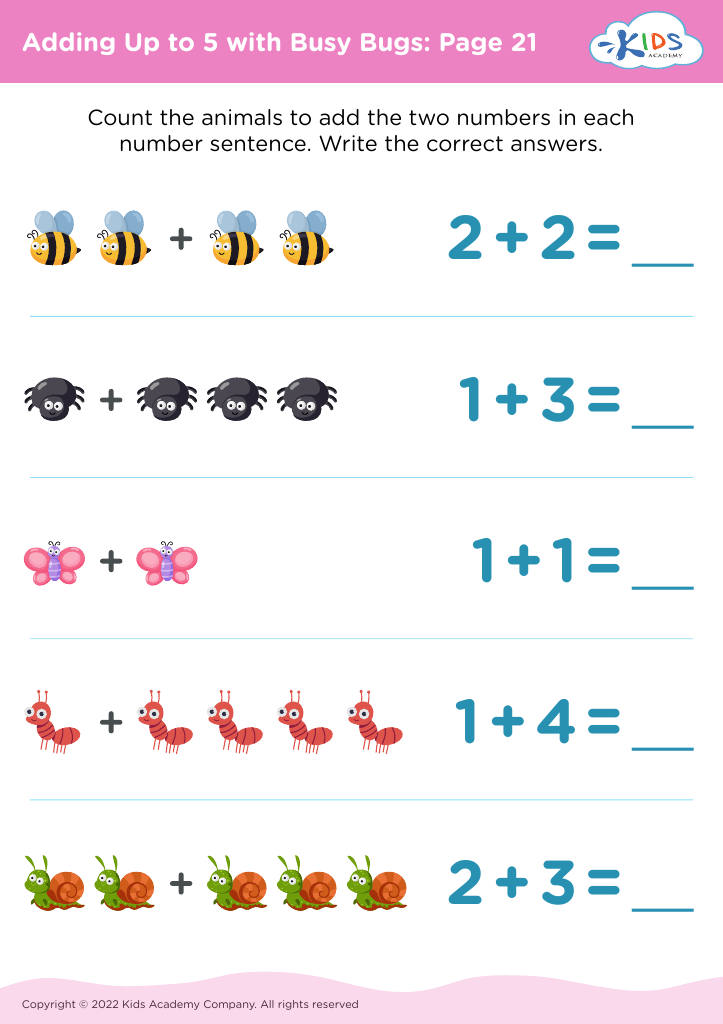
Adding Up to 5 with Busy Bugs: Page 21
Worksheet
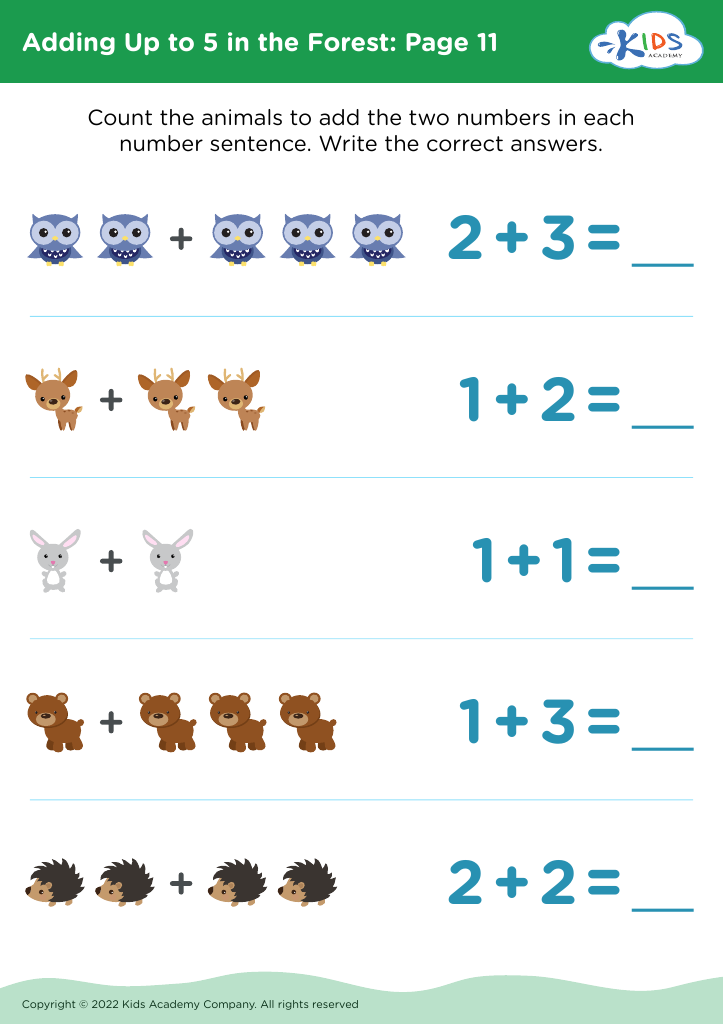
Adding Up to 5 in the Forest: Page 11
Worksheet
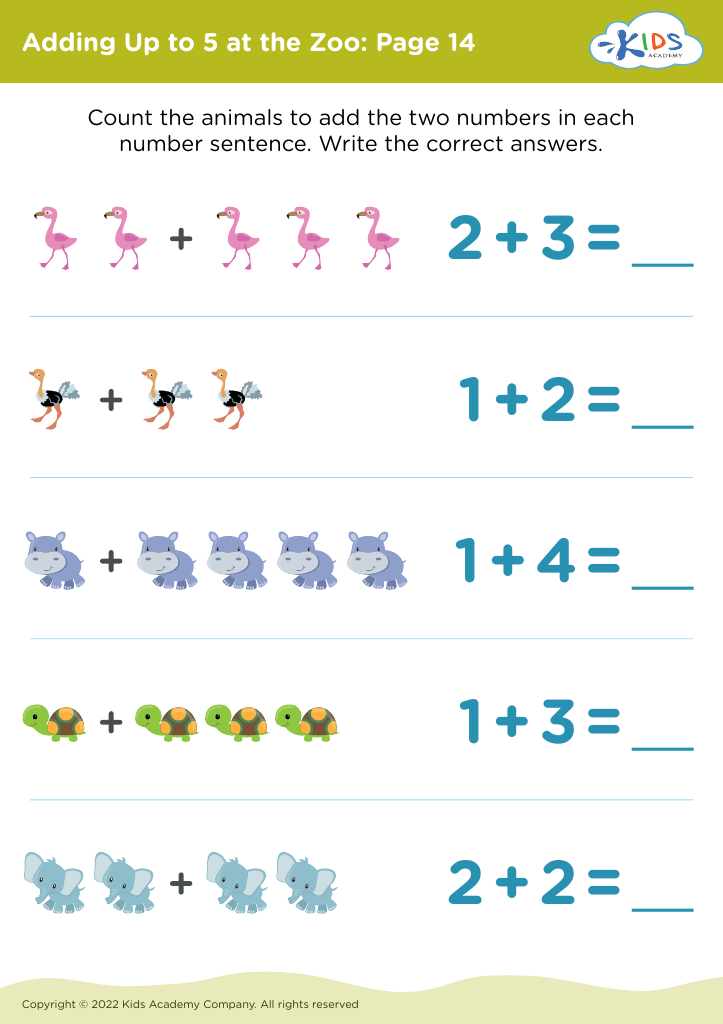
Adding Up to 5 at the Zoo: Page 14
Worksheet
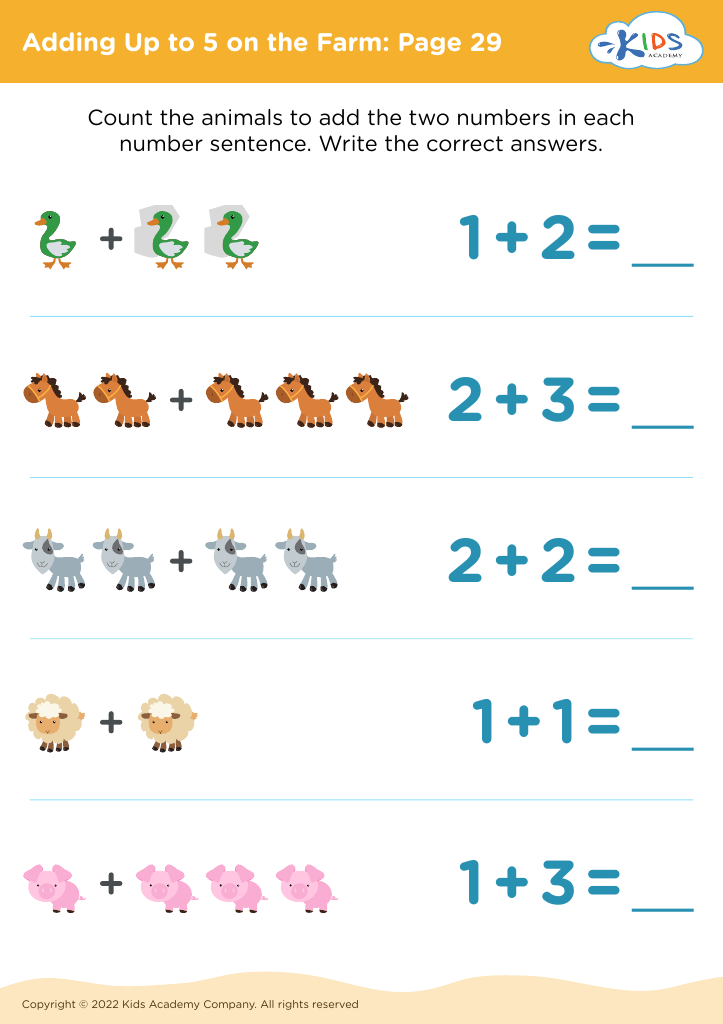
Adding Up to 5 on the Farm: Page 29
Worksheet
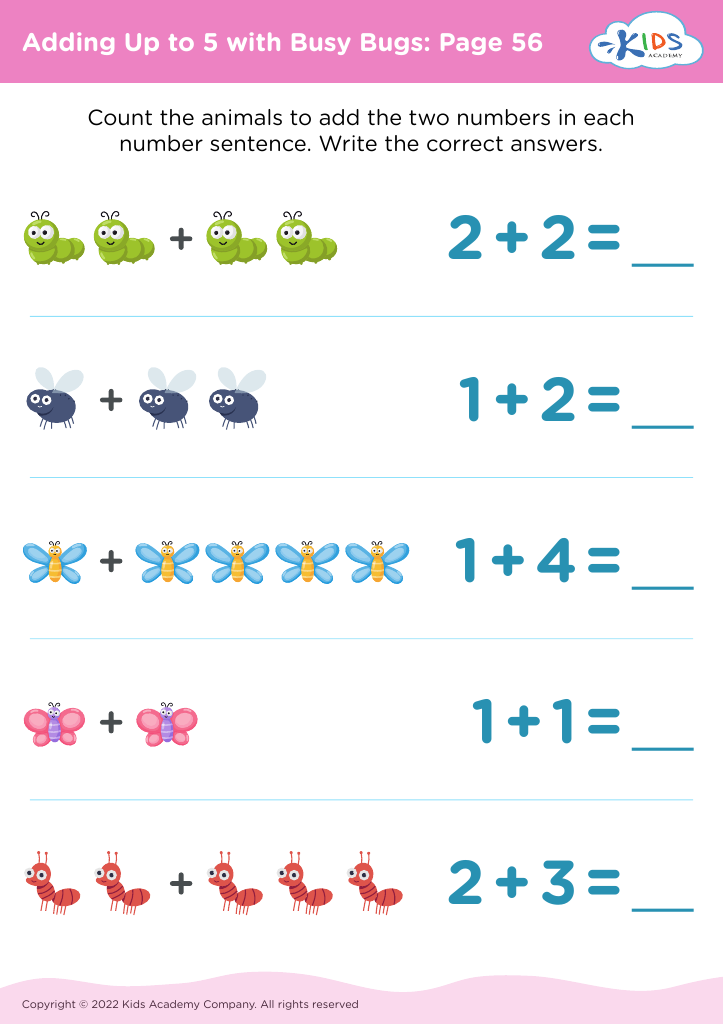
Adding Up to 5 with Busy Bugs: Page 56
Worksheet
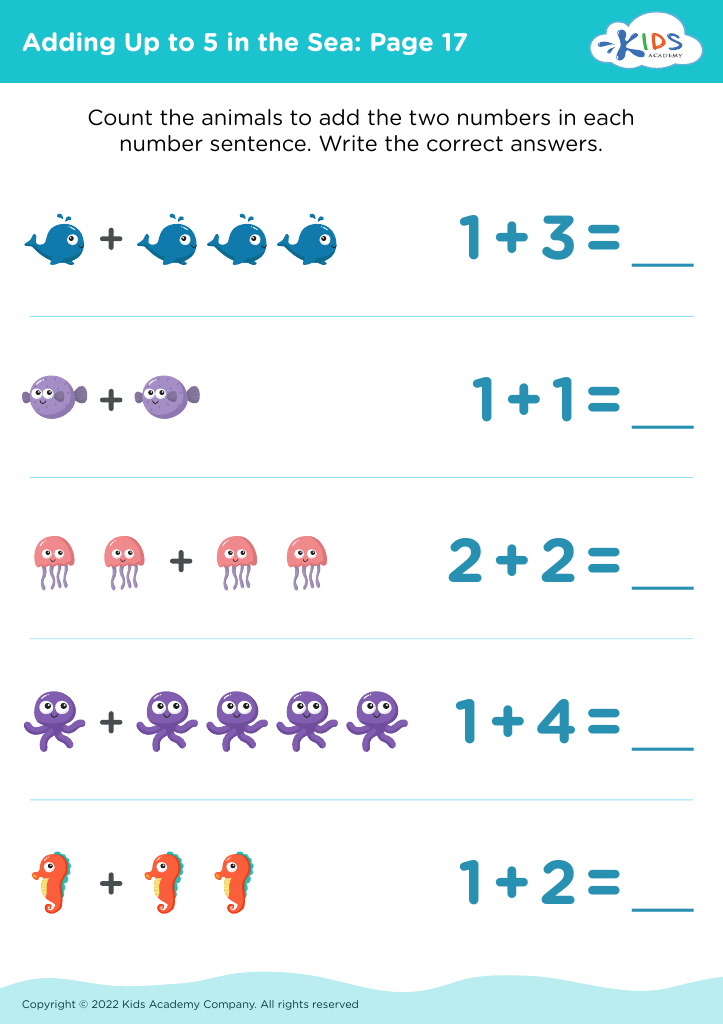
Adding Up to 5 in the Sea: Page 17
Worksheet
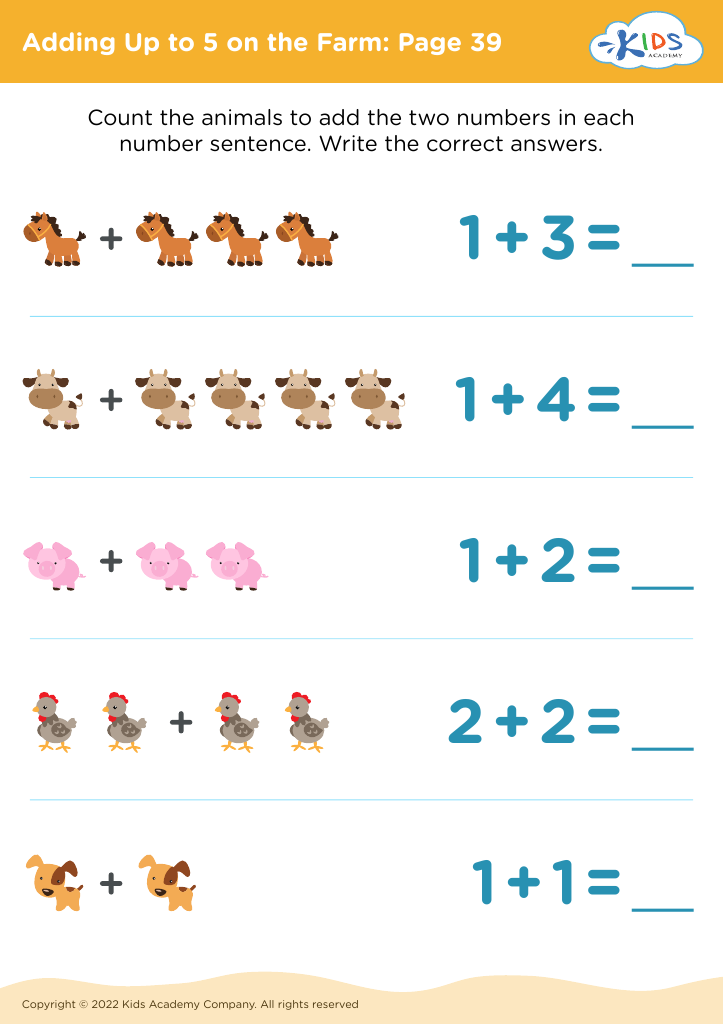
Adding Up to 5 on the Farm: Page 39
Worksheet
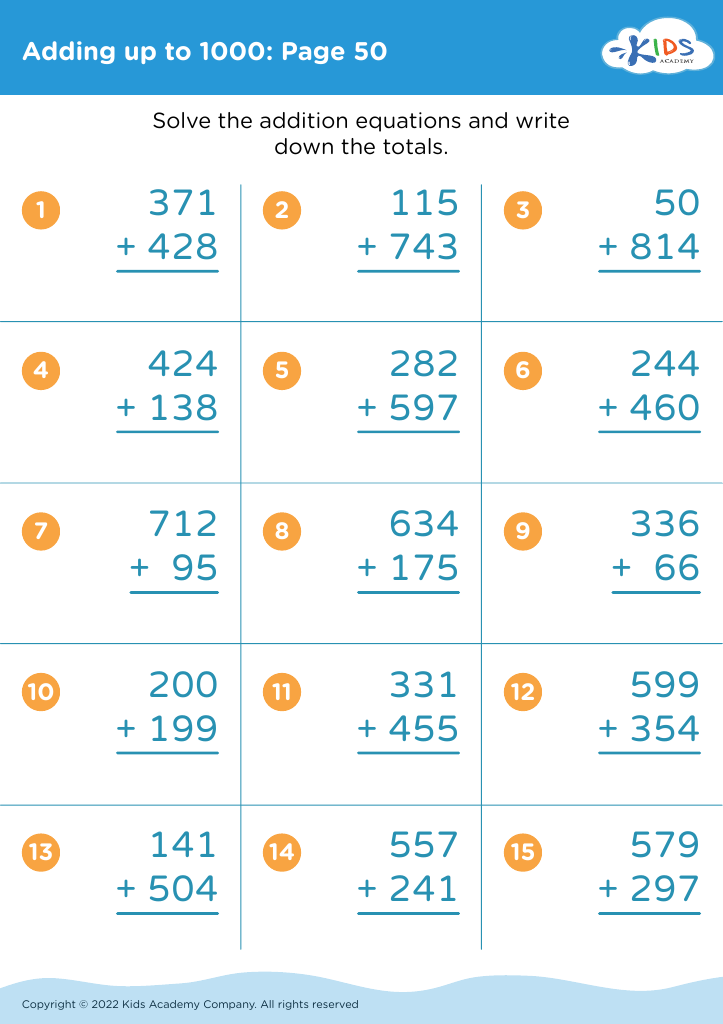
Adding up to 1000: Page 50

Adding up to 1000: Page 50

Adding up to 1000: Page 50
Worksheet
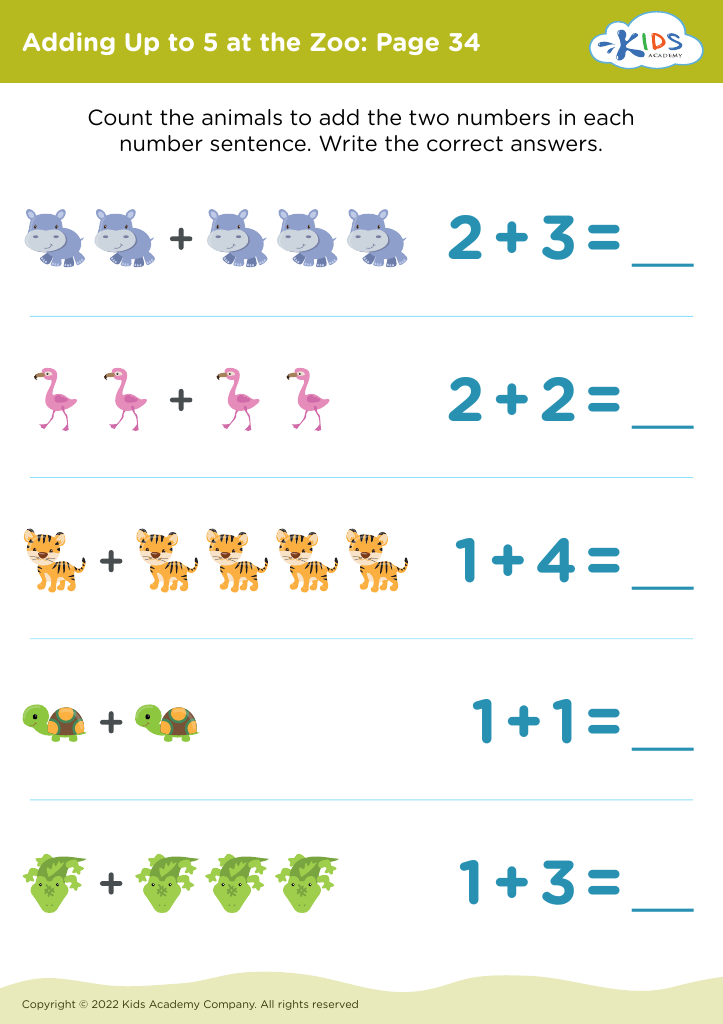
Adding Up to 5 at the Zoo: Page 34
Worksheet
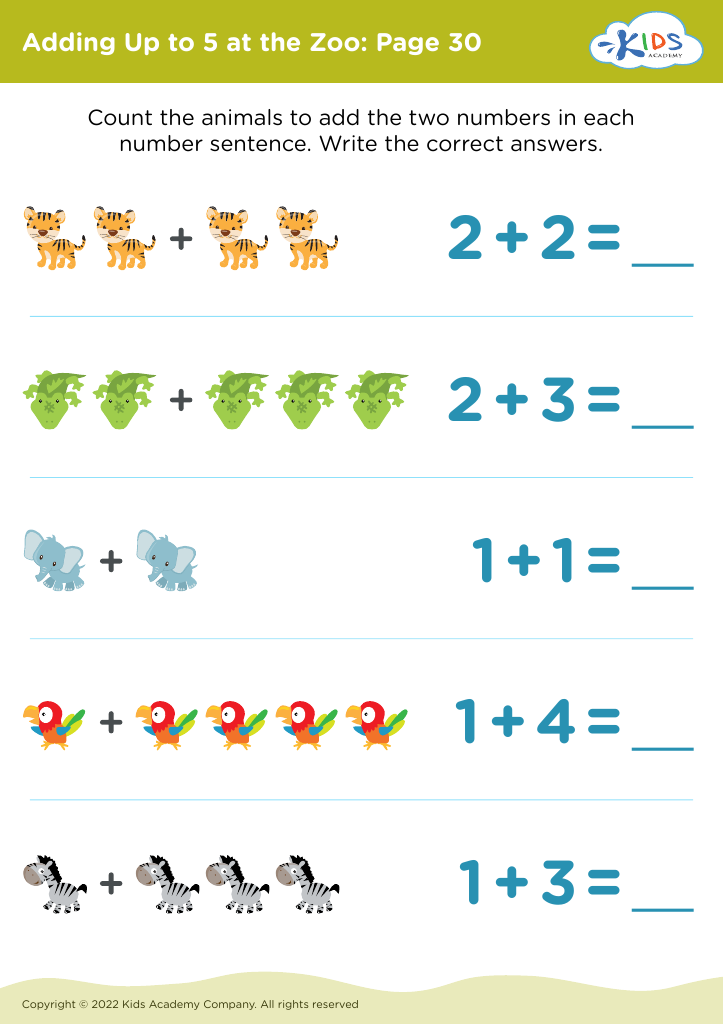
Adding Up to 5 at the Zoo: Page 30
Worksheet


Basic addition skills form a cornerstone of a child's early mathematical development and can significantly impact their future learning experiences. For ages 3-8, mastering these skills sets the stage for more complex math concepts. Firstly, addition fosters critical thinking and problem-solving abilities, which are vital across all subjects and daily life scenarios.

The development of number sense teaches children how numbers interact and the importance of numerical relationships. A strong early foundation in addition can reduce math anxiety, fostering a positive attitude towards learning. This enthusiasm spills over into other academic areas, enhancing overall education.

Early mastery of basic addition also supports cognitive development. It encourages children to recognize patterns, make predictions, and develop logical reasoning – all crucial skills not just for higher mathematics, but for navigating the world effectively.

Incorporating fun and engaging activities around addition ensures that learning feels like play. This approach keeps young learners motivated and deeply engaged.

In essence, supporting children in acquiring basic addition skills helps build their confidence and competence in math, impacts their analytical mindset positively, and sets a solid foundation for academic success and lifelong problem-solving skills. Investing tangible efforts into teaching and reinforcing these early skills benefits not just child-mindedness toward math, but supportive future learning endeavors.